Key Insights
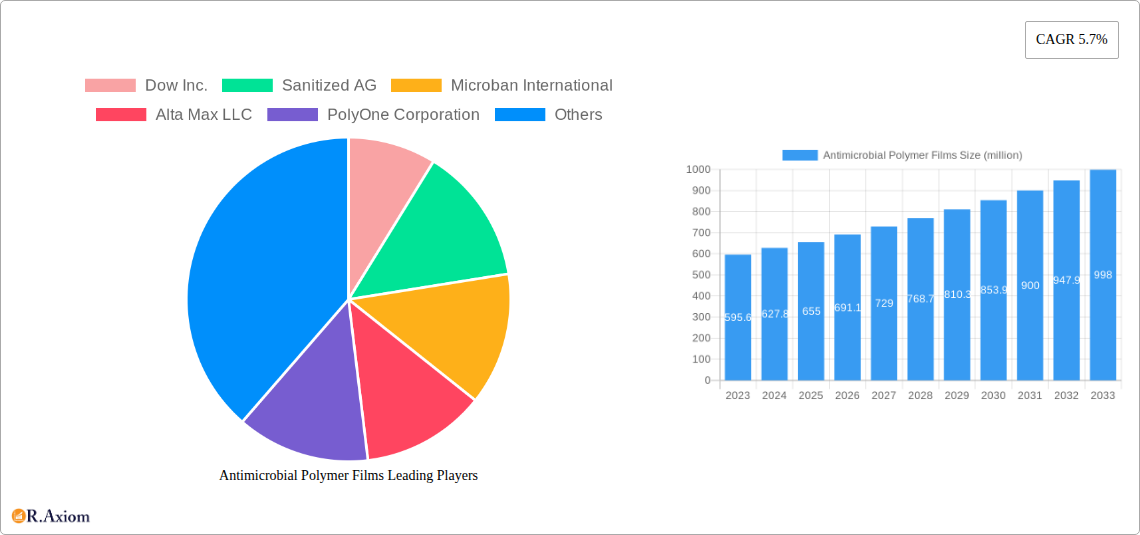
The global market for Antimicrobial Polymer Films is poised for significant expansion, projected to reach a substantial valuation driven by a robust Compound Annual Growth Rate (CAGR) of 5.7%. This dynamic growth is underpinned by an increasing awareness of hygiene and a rising demand for products that inhibit microbial contamination across various sectors. The market size, currently estimated around $655 million, is expected to witness a steady increase, fueled by technological advancements in polymer science and the integration of antimicrobial agents. Key drivers include the growing prevalence of healthcare-associated infections, the need for extended shelf-life in food packaging, and the demand for safer consumer goods. The industrial sector also presents a significant opportunity, with applications in construction, automotive, and electronics seeking to mitigate microbial degradation and enhance product longevity.
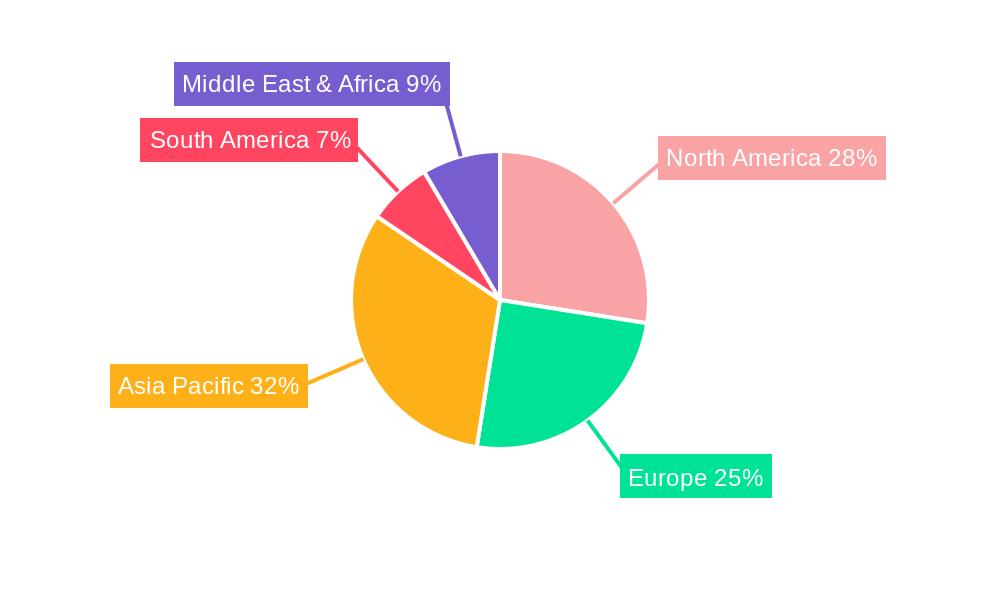
The Antimicrobial Polymer Films market is segmented into Natural Polymers and Synthetic Polymers, with both segments exhibiting promising growth trajectories. Natural polymers are gaining traction due to their biodegradability and eco-friendly attributes, while synthetic polymers continue to dominate due to their versatility and cost-effectiveness. The application landscape is diverse, with Packaging, Healthcare, and Consumer Goods emerging as the dominant end-use industries. The surge in e-commerce and the stringency of food safety regulations further propel the demand for antimicrobial packaging solutions. Geographically, the Asia Pacific region is expected to lead market growth due to rapid industrialization, increasing disposable incomes, and a large consumer base, closely followed by North America and Europe, which are characterized by high adoption rates of advanced antimicrobial technologies and stringent regulatory frameworks. Emerging economies in the Middle East & Africa and South America also present untapped potential for market penetration.
This in-depth report provides a detailed analysis of the global Antimicrobial Polymer Films market, projecting significant growth and highlighting key trends, challenges, and opportunities. The study covers the period from 2019 to 2033, with a base year of 2025, offering strategic insights for industry stakeholders. The market is segmented by application and polymer type, with leading players and recent developments meticulously documented.
Antimicrobial Polymer Films Market Concentration & Innovation
The Antimicrobial Polymer Films market exhibits moderate concentration, with a few key players holding substantial market share, estimated to be over 60% in 2025. Innovation is a critical driver, fueled by increasing demand for enhanced hygiene and reduced microbial contamination across various sectors. Major innovation hubs are observed in North America and Europe, driven by robust research and development investments from companies like Dow Inc., Sanitized AG, and Microban International. Regulatory frameworks, such as those pertaining to food contact materials and medical devices, are evolving to accommodate novel antimicrobial technologies, creating both opportunities and challenges. Product substitutes, including conventional disinfectants and surface treatments, continue to pose a competitive threat, but the inherent benefits of antimicrobial polymer films, such as long-lasting protection and ease of integration, are gaining traction. End-user trends favor solutions that offer verifiable antimicrobial efficacy and are environmentally sustainable. Mergers and acquisitions (M&A) activity is expected to increase, with estimated deal values in the hundreds of millions of dollars, as larger companies seek to consolidate market presence and acquire innovative technologies. Companies like PolyOne Corporation and Addmaster (UK) Ltd are strategically positioned to benefit from these consolidations.
Antimicrobial Polymer Films Industry Trends & Insights
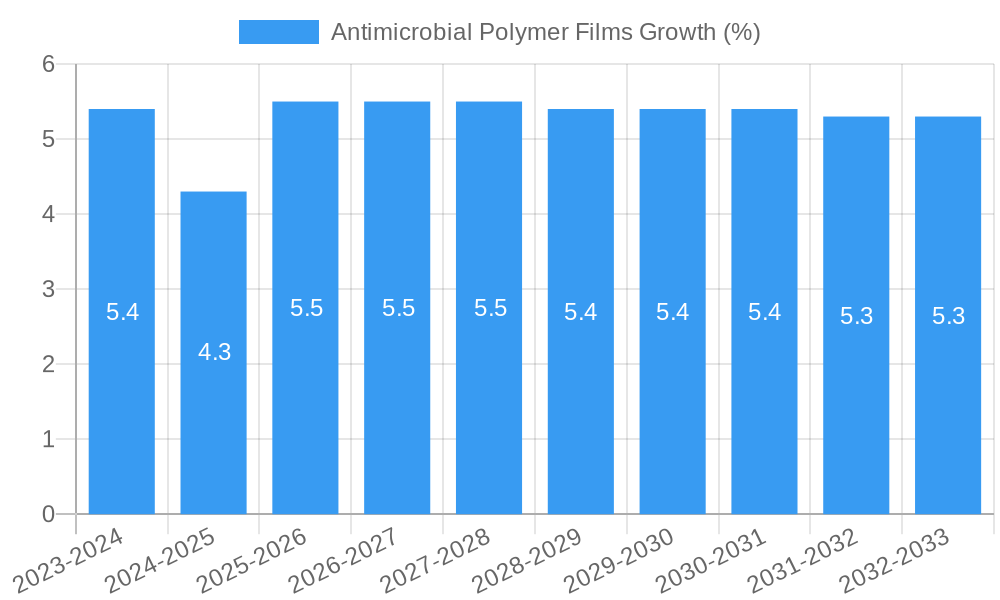
The Antimicrobial Polymer Films industry is poised for substantial expansion, driven by a confluence of factors including heightened global awareness of hygiene, increasing prevalence of healthcare-associated infections (HAIs), and the growing demand for extended shelf-life products in the food and beverage sector. The Compound Annual Growth Rate (CAGR) is projected to be around 7.8% during the forecast period of 2025–2033, with the market size expected to reach over $3,000 million by 2033. Technological advancements in polymer science and additive manufacturing are enabling the development of more effective and durable antimicrobial films. The integration of silver ions, quaternary ammonium compounds, and natural antimicrobial agents like chitosan is enhancing the efficacy and breadth of antimicrobial action. Consumer preferences are shifting towards products that offer inherent antimicrobial properties, especially in high-touch surfaces and packaging applications. The competitive landscape is intensifying, with established players and emerging innovators vying for market dominance. Market penetration is expected to deepen significantly in the industrial and healthcare segments, driven by stringent regulations and a growing emphasis on infection control. Companies such as Sciessent, Kitozyme, LLC, and Ampacet Corporation are at the forefront of these developments, introducing novel solutions tailored to specific industry needs. The industrial segment, encompassing protective coatings and textiles, is anticipated to witness robust growth, while the healthcare segment, including medical device packaging and wound care, will remain a high-value market. The packaging sector, particularly for food and pharmaceuticals, is a significant contributor, driven by the need to prevent spoilage and ensure product safety.
Dominant Markets & Segments in Antimicrobial Polymer Films
The Packaging segment is anticipated to dominate the Antimicrobial Polymer Films market, driven by its extensive applications in food, beverage, pharmaceutical, and cosmetic industries. The need to extend shelf life, reduce spoilage, and prevent microbial contamination in food packaging is a primary growth catalyst. For instance, the use of antimicrobial films in meat and poultry packaging can significantly inhibit the growth of spoilage microorganisms, leading to reduced food waste and enhanced consumer safety. Economic policies promoting food security and stringent regulations governing food safety are bolstering the demand for these advanced packaging solutions. Infrastructure development supporting the logistics and cold chain for perishable goods further amplifies the market's reliance on effective preservation technologies.
- Key Drivers in Packaging:
- Growing consumer demand for safe and longer-lasting food products.
- Stringent government regulations on food safety and waste reduction.
- Advancements in barrier properties of polymer films.
- Increasing adoption in pharmaceutical and medical device packaging for sterility.
The Healthcare segment is another major contributor, characterized by its high-value applications in medical devices, wound dressings, and hospital hygiene. The persistent threat of healthcare-associated infections (HAIs) fuels the demand for antimicrobial materials that can prevent pathogen transmission on critical surfaces and within medical equipment. The use of antimicrobial polymer films in catheters, surgical drapes, and implantable devices is becoming increasingly prevalent. Regulatory approvals from bodies like the FDA are crucial for market entry in this segment, and companies like BioCote Ltd and Plastics Color Corporation are actively developing compliant solutions.
- Key Drivers in Healthcare:
- Rising incidence of hospital-acquired infections.
- Demand for sterile medical supplies and devices.
- Development of advanced wound care solutions.
- Government initiatives to improve patient safety.
In terms of Type, Synthetic Polymers are expected to hold the largest market share due to their versatility, cost-effectiveness, and ability to incorporate a wide range of antimicrobial agents. Polyethylene (PE), polypropylene (PP), and polyethylene terephthalate (PET) are widely used as base polymers, with antimicrobial additives incorporated to impart desired properties. Natural polymers, such as chitosan and starch-based films, are gaining traction due to their biodegradability and eco-friendly attributes, particularly in niche applications and sustainable packaging solutions. Companies like Hubei Firsta Material Science and Technology Group and Mauser Packaging Solutions are significant players in the synthetic polymer domain.
- Key Drivers for Synthetic Polymers:
- Cost-effectiveness and widespread availability.
- High degree of customization and performance enhancement.
- Established manufacturing processes and infrastructure.
Antimicrobial Polymer Films Product Developments
Product innovation in antimicrobial polymer films is focused on developing advanced solutions with broad-spectrum antimicrobial efficacy, enhanced durability, and improved safety profiles. Technologies such as embedded silver nanoparticles, antimicrobial peptides, and functionalized polymer backbones are leading to films that actively inhibit the growth of bacteria, fungi, and viruses. These films are finding applications in active food packaging to extend shelf life, in medical textiles for infection prevention, and in consumer goods to maintain hygiene. Competitive advantages stem from superior antimicrobial performance, regulatory compliance, and cost-effectiveness, with companies like Parx Materials NV and Tredegar Corporation investing heavily in R&D to secure market leadership.
Report Scope & Segmentation Analysis
This report comprehensively analyzes the global Antimicrobial Polymer Films market, segmented by Application into Packaging, Industrial, Consumer goods, Healthcare, and Others. The Packaging segment, encompassing food, pharmaceutical, and industrial packaging, is projected to witness significant growth, driven by safety and shelf-life extension needs. The Industrial segment, covering textiles, coatings, and electronics, is also expected to expand due to the demand for enhanced product durability and hygiene. The Consumer goods segment includes applications in home care and personal care products. The Healthcare segment, a high-value market, focuses on medical devices, wound dressings, and sterile packaging. The Others category comprises emerging applications.
The market is further segmented by Type into Natural Polymers and Synthetic Polymers. Synthetic Polymers, including polyethylene, polypropylene, and PET, are expected to dominate due to their versatility and cost-effectiveness. Natural Polymers, such as chitosan and starch-based films, are gaining traction for their eco-friendly properties and are projected to witness steady growth, particularly in sustainable packaging solutions. Mujō and Yixing Cleanwater Chemicals Co., Ltd. are key players in these diverse segments.
Key Drivers of Antimicrobial Polymer Films Growth
The growth of the Antimicrobial Polymer Films market is primarily propelled by escalating global concerns regarding hygiene and infection control, especially in healthcare settings and food processing. Technological advancements in polymer science, enabling the development of more effective and durable antimicrobial additives, are crucial. The increasing demand for extended shelf-life products in the food and beverage industry, aimed at reducing spoilage and food waste, is a significant economic driver. Furthermore, stringent regulatory mandates across various sectors, particularly for medical devices and food packaging, are compelling manufacturers to adopt antimicrobial solutions. The rising consumer awareness about the benefits of antimicrobial surfaces in preventing the spread of pathogens is also a key influencer.
Challenges in the Antimicrobial Polymer Films Sector
Despite robust growth prospects, the Antimicrobial Polymer Films sector faces several challenges. Regulatory hurdles and the need for extensive testing and approval processes for new antimicrobial technologies can be time-consuming and costly, particularly in the healthcare sector. Supply chain disruptions and the fluctuating costs of raw materials, including specialized antimicrobial additives, can impact production costs and market stability. Intense competition from established players and the emergence of new entrants necessitate continuous innovation and cost optimization. Furthermore, consumer perception and potential concerns regarding the long-term safety and environmental impact of some antimicrobial agents need to be addressed through clear communication and sustainable product development.
Emerging Opportunities in Antimicrobial Polymer Films
Emerging opportunities in the Antimicrobial Polymer Films market are abundant, driven by innovation and evolving consumer needs. The expansion into untapped geographical markets, particularly in developing economies with growing awareness of hygiene standards, presents significant potential. The development of biodegradable and compostable antimicrobial polymer films addresses the growing demand for sustainable packaging solutions. Furthermore, advancements in smart packaging, integrating antimicrobial properties with indicators for spoilage or temperature, offer new avenues for growth. The increasing adoption of antimicrobial films in non-traditional applications, such as in public transportation, sportswear, and electronics, further broadens the market's scope. Companies like Thermofischer Scientific and AlgiPack are actively exploring these frontiers.
Leading Players in the Antimicrobial Polymer Films Market
- Dow Inc.
- Sanitized AG
- Microban International
- Alta Max LLC
- PolyOne Corporation
- Addmaster (UK) Ltd
- Sciessent
- Kitozyme, LLC
- Ampacet Corporation
- BioCote Ltd
- Plastics Color Corporation
- Hubei Firsta Material Science and Technology Group
- Mauser Packaging Solutions
- Parx Materials NV
- Tredegar Corporation
- Mujō
- Yixing Cleanwater Chemicals Co., Ltd.
- Thermofischer Scientific
- AlgiPack
- Dunmore Aerospace
- Filiriko
- Silver Polycoat Industries
Key Developments in Antimicrobial Polymer Films Industry
- 2023: Launch of novel silver-ion based antimicrobial polymer film by Sanitized AG, offering enhanced long-lasting protection for food packaging.
- 2023: Microban International announces strategic partnership with a leading packaging manufacturer to develop advanced antimicrobial solutions for consumer goods.
- 2024: PolyOne Corporation expands its portfolio with new bio-based antimicrobial polymer compounds, catering to the growing demand for sustainable materials.
- 2024: Sciessent introduces a new range of antimicrobial additives for textiles, providing superior efficacy against a broad spectrum of microbes.
- 2024: Kitozyme, LLC receives regulatory approval for its chitosan-based antimicrobial film in cosmetic packaging applications.
Strategic Outlook for Antimicrobial Polymer Films Market
- 2023: Launch of novel silver-ion based antimicrobial polymer film by Sanitized AG, offering enhanced long-lasting protection for food packaging.
- 2023: Microban International announces strategic partnership with a leading packaging manufacturer to develop advanced antimicrobial solutions for consumer goods.
- 2024: PolyOne Corporation expands its portfolio with new bio-based antimicrobial polymer compounds, catering to the growing demand for sustainable materials.
- 2024: Sciessent introduces a new range of antimicrobial additives for textiles, providing superior efficacy against a broad spectrum of microbes.
- 2024: Kitozyme, LLC receives regulatory approval for its chitosan-based antimicrobial film in cosmetic packaging applications.
Strategic Outlook for Antimicrobial Polymer Films Market
The strategic outlook for the Antimicrobial Polymer Films market is highly positive, fueled by sustained demand for enhanced hygiene and product protection. Future growth will be catalyzed by continuous innovation in antimicrobial technologies, with a focus on broader-spectrum efficacy, enhanced durability, and improved safety profiles. The increasing emphasis on sustainability will drive the development and adoption of biodegradable and bio-based antimicrobial films. Strategic collaborations, mergers, and acquisitions are expected to shape the market landscape, enabling companies to expand their product portfolios and geographic reach. Moreover, the growing consumer awareness and regulatory support for antimicrobial solutions across diverse applications will solidify the market's upward trajectory, offering significant opportunities for market participants.
Antimicrobial Polymer Films Segmentation
-
1. Application
- 1.1. Packaging
- 1.2. Industrial
- 1.3. Consumer goods
- 1.4. Healthcare
- 1.5. Others
-
2. Type
- 2.1. Natural Polymers
- 2.2. Synthetic Polymers
Antimicrobial Polymer Films Segmentation By Geography
-
1. North America
- 1.1. United States
- 1.2. Canada
- 1.3. Mexico
-
2. South America
- 2.1. Brazil
- 2.2. Argentina
- 2.3. Rest of South America
-
3. Europe
- 3.1. United Kingdom
- 3.2. Germany
- 3.3. France
- 3.4. Italy
- 3.5. Spain
- 3.6. Russia
- 3.7. Benelux
- 3.8. Nordics
- 3.9. Rest of Europe
-
4. Middle East & Africa
- 4.1. Turkey
- 4.2. Israel
- 4.3. GCC
- 4.4. North Africa
- 4.5. South Africa
- 4.6. Rest of Middle East & Africa
-
5. Asia Pacific
- 5.1. China
- 5.2. India
- 5.3. Japan
- 5.4. South Korea
- 5.5. ASEAN
- 5.6. Oceania
- 5.7. Rest of Asia Pacific
Antimicrobial Polymer Films REPORT HIGHLIGHTS
| Aspects | Details |
|---|---|
| Study Period | 2019-2033 |
| Base Year | 2024 |
| Estimated Year | 2025 |
| Forecast Period | 2025-2033 |
| Historical Period | 2019-2024 |
| Growth Rate | CAGR of 5.7% from 2019-2033 |
| Segmentation |
|
Table of Contents
- 1. Introduction
- 1.1. Research Scope
- 1.2. Market Segmentation
- 1.3. Research Methodology
- 1.4. Definitions and Assumptions
- 2. Executive Summary
- 2.1. Introduction
- 3. Market Dynamics
- 3.1. Introduction
- 3.2. Market Drivers
- 3.3. Market Restrains
- 3.4. Market Trends
- 4. Market Factor Analysis
- 4.1. Porters Five Forces
- 4.2. Supply/Value Chain
- 4.3. PESTEL analysis
- 4.4. Market Entropy
- 4.5. Patent/Trademark Analysis
- 5. Global Antimicrobial Polymer Films Analysis, Insights and Forecast, 2019-2031
- 5.1. Market Analysis, Insights and Forecast - by Application
- 5.1.1. Packaging
- 5.1.2. Industrial
- 5.1.3. Consumer goods
- 5.1.4. Healthcare
- 5.1.5. Others
- 5.2. Market Analysis, Insights and Forecast - by Type
- 5.2.1. Natural Polymers
- 5.2.2. Synthetic Polymers
- 5.3. Market Analysis, Insights and Forecast - by Region
- 5.3.1. North America
- 5.3.2. South America
- 5.3.3. Europe
- 5.3.4. Middle East & Africa
- 5.3.5. Asia Pacific
- 5.1. Market Analysis, Insights and Forecast - by Application
- 6. North America Antimicrobial Polymer Films Analysis, Insights and Forecast, 2019-2031
- 6.1. Market Analysis, Insights and Forecast - by Application
- 6.1.1. Packaging
- 6.1.2. Industrial
- 6.1.3. Consumer goods
- 6.1.4. Healthcare
- 6.1.5. Others
- 6.2. Market Analysis, Insights and Forecast - by Type
- 6.2.1. Natural Polymers
- 6.2.2. Synthetic Polymers
- 6.1. Market Analysis, Insights and Forecast - by Application
- 7. South America Antimicrobial Polymer Films Analysis, Insights and Forecast, 2019-2031
- 7.1. Market Analysis, Insights and Forecast - by Application
- 7.1.1. Packaging
- 7.1.2. Industrial
- 7.1.3. Consumer goods
- 7.1.4. Healthcare
- 7.1.5. Others
- 7.2. Market Analysis, Insights and Forecast - by Type
- 7.2.1. Natural Polymers
- 7.2.2. Synthetic Polymers
- 7.1. Market Analysis, Insights and Forecast - by Application
- 8. Europe Antimicrobial Polymer Films Analysis, Insights and Forecast, 2019-2031
- 8.1. Market Analysis, Insights and Forecast - by Application
- 8.1.1. Packaging
- 8.1.2. Industrial
- 8.1.3. Consumer goods
- 8.1.4. Healthcare
- 8.1.5. Others
- 8.2. Market Analysis, Insights and Forecast - by Type
- 8.2.1. Natural Polymers
- 8.2.2. Synthetic Polymers
- 8.1. Market Analysis, Insights and Forecast - by Application
- 9. Middle East & Africa Antimicrobial Polymer Films Analysis, Insights and Forecast, 2019-2031
- 9.1. Market Analysis, Insights and Forecast - by Application
- 9.1.1. Packaging
- 9.1.2. Industrial
- 9.1.3. Consumer goods
- 9.1.4. Healthcare
- 9.1.5. Others
- 9.2. Market Analysis, Insights and Forecast - by Type
- 9.2.1. Natural Polymers
- 9.2.2. Synthetic Polymers
- 9.1. Market Analysis, Insights and Forecast - by Application
- 10. Asia Pacific Antimicrobial Polymer Films Analysis, Insights and Forecast, 2019-2031
- 10.1. Market Analysis, Insights and Forecast - by Application
- 10.1.1. Packaging
- 10.1.2. Industrial
- 10.1.3. Consumer goods
- 10.1.4. Healthcare
- 10.1.5. Others
- 10.2. Market Analysis, Insights and Forecast - by Type
- 10.2.1. Natural Polymers
- 10.2.2. Synthetic Polymers
- 10.1. Market Analysis, Insights and Forecast - by Application
- 11. Competitive Analysis
- 11.1. Global Market Share Analysis 2024
- 11.2. Company Profiles
- 11.2.1 Dow Inc.
- 11.2.1.1. Overview
- 11.2.1.2. Products
- 11.2.1.3. SWOT Analysis
- 11.2.1.4. Recent Developments
- 11.2.1.5. Financials (Based on Availability)
- 11.2.2 Sanitized AG
- 11.2.2.1. Overview
- 11.2.2.2. Products
- 11.2.2.3. SWOT Analysis
- 11.2.2.4. Recent Developments
- 11.2.2.5. Financials (Based on Availability)
- 11.2.3 Microban International
- 11.2.3.1. Overview
- 11.2.3.2. Products
- 11.2.3.3. SWOT Analysis
- 11.2.3.4. Recent Developments
- 11.2.3.5. Financials (Based on Availability)
- 11.2.4 Alta Max LLC
- 11.2.4.1. Overview
- 11.2.4.2. Products
- 11.2.4.3. SWOT Analysis
- 11.2.4.4. Recent Developments
- 11.2.4.5. Financials (Based on Availability)
- 11.2.5 PolyOne Corporation
- 11.2.5.1. Overview
- 11.2.5.2. Products
- 11.2.5.3. SWOT Analysis
- 11.2.5.4. Recent Developments
- 11.2.5.5. Financials (Based on Availability)
- 11.2.6 Addmaster (UK) Ltd
- 11.2.6.1. Overview
- 11.2.6.2. Products
- 11.2.6.3. SWOT Analysis
- 11.2.6.4. Recent Developments
- 11.2.6.5. Financials (Based on Availability)
- 11.2.7 Sciessent
- 11.2.7.1. Overview
- 11.2.7.2. Products
- 11.2.7.3. SWOT Analysis
- 11.2.7.4. Recent Developments
- 11.2.7.5. Financials (Based on Availability)
- 11.2.8 Kitozyme LLC
- 11.2.8.1. Overview
- 11.2.8.2. Products
- 11.2.8.3. SWOT Analysis
- 11.2.8.4. Recent Developments
- 11.2.8.5. Financials (Based on Availability)
- 11.2.9 Ampacet Corporation
- 11.2.9.1. Overview
- 11.2.9.2. Products
- 11.2.9.3. SWOT Analysis
- 11.2.9.4. Recent Developments
- 11.2.9.5. Financials (Based on Availability)
- 11.2.10 BioCote Ltd
- 11.2.10.1. Overview
- 11.2.10.2. Products
- 11.2.10.3. SWOT Analysis
- 11.2.10.4. Recent Developments
- 11.2.10.5. Financials (Based on Availability)
- 11.2.11 Plastics Color Corporation
- 11.2.11.1. Overview
- 11.2.11.2. Products
- 11.2.11.3. SWOT Analysis
- 11.2.11.4. Recent Developments
- 11.2.11.5. Financials (Based on Availability)
- 11.2.12 Hubei Firsta Material Science and Technology Group
- 11.2.12.1. Overview
- 11.2.12.2. Products
- 11.2.12.3. SWOT Analysis
- 11.2.12.4. Recent Developments
- 11.2.12.5. Financials (Based on Availability)
- 11.2.13 Mauser Packaging Solutions
- 11.2.13.1. Overview
- 11.2.13.2. Products
- 11.2.13.3. SWOT Analysis
- 11.2.13.4. Recent Developments
- 11.2.13.5. Financials (Based on Availability)
- 11.2.14 Parx Materials NV
- 11.2.14.1. Overview
- 11.2.14.2. Products
- 11.2.14.3. SWOT Analysis
- 11.2.14.4. Recent Developments
- 11.2.14.5. Financials (Based on Availability)
- 11.2.15 Tredegar Corporation
- 11.2.15.1. Overview
- 11.2.15.2. Products
- 11.2.15.3. SWOT Analysis
- 11.2.15.4. Recent Developments
- 11.2.15.5. Financials (Based on Availability)
- 11.2.16 Mujō
- 11.2.16.1. Overview
- 11.2.16.2. Products
- 11.2.16.3. SWOT Analysis
- 11.2.16.4. Recent Developments
- 11.2.16.5. Financials (Based on Availability)
- 11.2.17 Yixing Cleanwater Chemicals Co. Ltd.
- 11.2.17.1. Overview
- 11.2.17.2. Products
- 11.2.17.3. SWOT Analysis
- 11.2.17.4. Recent Developments
- 11.2.17.5. Financials (Based on Availability)
- 11.2.18 Thermofischer Scientific
- 11.2.18.1. Overview
- 11.2.18.2. Products
- 11.2.18.3. SWOT Analysis
- 11.2.18.4. Recent Developments
- 11.2.18.5. Financials (Based on Availability)
- 11.2.19 AlgiPack
- 11.2.19.1. Overview
- 11.2.19.2. Products
- 11.2.19.3. SWOT Analysis
- 11.2.19.4. Recent Developments
- 11.2.19.5. Financials (Based on Availability)
- 11.2.20 Dunmore Aerospace
- 11.2.20.1. Overview
- 11.2.20.2. Products
- 11.2.20.3. SWOT Analysis
- 11.2.20.4. Recent Developments
- 11.2.20.5. Financials (Based on Availability)
- 11.2.21 Filiriko
- 11.2.21.1. Overview
- 11.2.21.2. Products
- 11.2.21.3. SWOT Analysis
- 11.2.21.4. Recent Developments
- 11.2.21.5. Financials (Based on Availability)
- 11.2.22 Silver Polycoat Industries
- 11.2.22.1. Overview
- 11.2.22.2. Products
- 11.2.22.3. SWOT Analysis
- 11.2.22.4. Recent Developments
- 11.2.22.5. Financials (Based on Availability)
- 11.2.1 Dow Inc.
List of Figures
- Figure 1: Global Antimicrobial Polymer Films Revenue Breakdown (million, %) by Region 2024 & 2032
- Figure 2: North America Antimicrobial Polymer Films Revenue (million), by Application 2024 & 2032
- Figure 3: North America Antimicrobial Polymer Films Revenue Share (%), by Application 2024 & 2032
- Figure 4: North America Antimicrobial Polymer Films Revenue (million), by Type 2024 & 2032
- Figure 5: North America Antimicrobial Polymer Films Revenue Share (%), by Type 2024 & 2032
- Figure 6: North America Antimicrobial Polymer Films Revenue (million), by Country 2024 & 2032
- Figure 7: North America Antimicrobial Polymer Films Revenue Share (%), by Country 2024 & 2032
- Figure 8: South America Antimicrobial Polymer Films Revenue (million), by Application 2024 & 2032
- Figure 9: South America Antimicrobial Polymer Films Revenue Share (%), by Application 2024 & 2032
- Figure 10: South America Antimicrobial Polymer Films Revenue (million), by Type 2024 & 2032
- Figure 11: South America Antimicrobial Polymer Films Revenue Share (%), by Type 2024 & 2032
- Figure 12: South America Antimicrobial Polymer Films Revenue (million), by Country 2024 & 2032
- Figure 13: South America Antimicrobial Polymer Films Revenue Share (%), by Country 2024 & 2032
- Figure 14: Europe Antimicrobial Polymer Films Revenue (million), by Application 2024 & 2032
- Figure 15: Europe Antimicrobial Polymer Films Revenue Share (%), by Application 2024 & 2032
- Figure 16: Europe Antimicrobial Polymer Films Revenue (million), by Type 2024 & 2032
- Figure 17: Europe Antimicrobial Polymer Films Revenue Share (%), by Type 2024 & 2032
- Figure 18: Europe Antimicrobial Polymer Films Revenue (million), by Country 2024 & 2032
- Figure 19: Europe Antimicrobial Polymer Films Revenue Share (%), by Country 2024 & 2032
- Figure 20: Middle East & Africa Antimicrobial Polymer Films Revenue (million), by Application 2024 & 2032
- Figure 21: Middle East & Africa Antimicrobial Polymer Films Revenue Share (%), by Application 2024 & 2032
- Figure 22: Middle East & Africa Antimicrobial Polymer Films Revenue (million), by Type 2024 & 2032
- Figure 23: Middle East & Africa Antimicrobial Polymer Films Revenue Share (%), by Type 2024 & 2032
- Figure 24: Middle East & Africa Antimicrobial Polymer Films Revenue (million), by Country 2024 & 2032
- Figure 25: Middle East & Africa Antimicrobial Polymer Films Revenue Share (%), by Country 2024 & 2032
- Figure 26: Asia Pacific Antimicrobial Polymer Films Revenue (million), by Application 2024 & 2032
- Figure 27: Asia Pacific Antimicrobial Polymer Films Revenue Share (%), by Application 2024 & 2032
- Figure 28: Asia Pacific Antimicrobial Polymer Films Revenue (million), by Type 2024 & 2032
- Figure 29: Asia Pacific Antimicrobial Polymer Films Revenue Share (%), by Type 2024 & 2032
- Figure 30: Asia Pacific Antimicrobial Polymer Films Revenue (million), by Country 2024 & 2032
- Figure 31: Asia Pacific Antimicrobial Polymer Films Revenue Share (%), by Country 2024 & 2032
List of Tables
- Table 1: Global Antimicrobial Polymer Films Revenue million Forecast, by Region 2019 & 2032
- Table 2: Global Antimicrobial Polymer Films Revenue million Forecast, by Application 2019 & 2032
- Table 3: Global Antimicrobial Polymer Films Revenue million Forecast, by Type 2019 & 2032
- Table 4: Global Antimicrobial Polymer Films Revenue million Forecast, by Region 2019 & 2032
- Table 5: Global Antimicrobial Polymer Films Revenue million Forecast, by Application 2019 & 2032
- Table 6: Global Antimicrobial Polymer Films Revenue million Forecast, by Type 2019 & 2032
- Table 7: Global Antimicrobial Polymer Films Revenue million Forecast, by Country 2019 & 2032
- Table 8: United States Antimicrobial Polymer Films Revenue (million) Forecast, by Application 2019 & 2032
- Table 9: Canada Antimicrobial Polymer Films Revenue (million) Forecast, by Application 2019 & 2032
- Table 10: Mexico Antimicrobial Polymer Films Revenue (million) Forecast, by Application 2019 & 2032
- Table 11: Global Antimicrobial Polymer Films Revenue million Forecast, by Application 2019 & 2032
- Table 12: Global Antimicrobial Polymer Films Revenue million Forecast, by Type 2019 & 2032
- Table 13: Global Antimicrobial Polymer Films Revenue million Forecast, by Country 2019 & 2032
- Table 14: Brazil Antimicrobial Polymer Films Revenue (million) Forecast, by Application 2019 & 2032
- Table 15: Argentina Antimicrobial Polymer Films Revenue (million) Forecast, by Application 2019 & 2032
- Table 16: Rest of South America Antimicrobial Polymer Films Revenue (million) Forecast, by Application 2019 & 2032
- Table 17: Global Antimicrobial Polymer Films Revenue million Forecast, by Application 2019 & 2032
- Table 18: Global Antimicrobial Polymer Films Revenue million Forecast, by Type 2019 & 2032
- Table 19: Global Antimicrobial Polymer Films Revenue million Forecast, by Country 2019 & 2032
- Table 20: United Kingdom Antimicrobial Polymer Films Revenue (million) Forecast, by Application 2019 & 2032
- Table 21: Germany Antimicrobial Polymer Films Revenue (million) Forecast, by Application 2019 & 2032
- Table 22: France Antimicrobial Polymer Films Revenue (million) Forecast, by Application 2019 & 2032
- Table 23: Italy Antimicrobial Polymer Films Revenue (million) Forecast, by Application 2019 & 2032
- Table 24: Spain Antimicrobial Polymer Films Revenue (million) Forecast, by Application 2019 & 2032
- Table 25: Russia Antimicrobial Polymer Films Revenue (million) Forecast, by Application 2019 & 2032
- Table 26: Benelux Antimicrobial Polymer Films Revenue (million) Forecast, by Application 2019 & 2032
- Table 27: Nordics Antimicrobial Polymer Films Revenue (million) Forecast, by Application 2019 & 2032
- Table 28: Rest of Europe Antimicrobial Polymer Films Revenue (million) Forecast, by Application 2019 & 2032
- Table 29: Global Antimicrobial Polymer Films Revenue million Forecast, by Application 2019 & 2032
- Table 30: Global Antimicrobial Polymer Films Revenue million Forecast, by Type 2019 & 2032
- Table 31: Global Antimicrobial Polymer Films Revenue million Forecast, by Country 2019 & 2032
- Table 32: Turkey Antimicrobial Polymer Films Revenue (million) Forecast, by Application 2019 & 2032
- Table 33: Israel Antimicrobial Polymer Films Revenue (million) Forecast, by Application 2019 & 2032
- Table 34: GCC Antimicrobial Polymer Films Revenue (million) Forecast, by Application 2019 & 2032
- Table 35: North Africa Antimicrobial Polymer Films Revenue (million) Forecast, by Application 2019 & 2032
- Table 36: South Africa Antimicrobial Polymer Films Revenue (million) Forecast, by Application 2019 & 2032
- Table 37: Rest of Middle East & Africa Antimicrobial Polymer Films Revenue (million) Forecast, by Application 2019 & 2032
- Table 38: Global Antimicrobial Polymer Films Revenue million Forecast, by Application 2019 & 2032
- Table 39: Global Antimicrobial Polymer Films Revenue million Forecast, by Type 2019 & 2032
- Table 40: Global Antimicrobial Polymer Films Revenue million Forecast, by Country 2019 & 2032
- Table 41: China Antimicrobial Polymer Films Revenue (million) Forecast, by Application 2019 & 2032
- Table 42: India Antimicrobial Polymer Films Revenue (million) Forecast, by Application 2019 & 2032
- Table 43: Japan Antimicrobial Polymer Films Revenue (million) Forecast, by Application 2019 & 2032
- Table 44: South Korea Antimicrobial Polymer Films Revenue (million) Forecast, by Application 2019 & 2032
- Table 45: ASEAN Antimicrobial Polymer Films Revenue (million) Forecast, by Application 2019 & 2032
- Table 46: Oceania Antimicrobial Polymer Films Revenue (million) Forecast, by Application 2019 & 2032
- Table 47: Rest of Asia Pacific Antimicrobial Polymer Films Revenue (million) Forecast, by Application 2019 & 2032
Frequently Asked Questions
1. What is the projected Compound Annual Growth Rate (CAGR) of the Antimicrobial Polymer Films?
The projected CAGR is approximately 5.7%.
2. Which companies are prominent players in the Antimicrobial Polymer Films?
Key companies in the market include Dow Inc., Sanitized AG, Microban International, Alta Max LLC, PolyOne Corporation, Addmaster (UK) Ltd, Sciessent, Kitozyme, LLC, Ampacet Corporation, BioCote Ltd, Plastics Color Corporation, Hubei Firsta Material Science and Technology Group, Mauser Packaging Solutions, Parx Materials NV, Tredegar Corporation, Mujō, Yixing Cleanwater Chemicals Co., Ltd., Thermofischer Scientific, AlgiPack, Dunmore Aerospace, Filiriko, Silver Polycoat Industries.
3. What are the main segments of the Antimicrobial Polymer Films?
The market segments include Application, Type.
4. Can you provide details about the market size?
The market size is estimated to be USD 655 million as of 2022.
5. What are some drivers contributing to market growth?
N/A
6. What are the notable trends driving market growth?
N/A
7. Are there any restraints impacting market growth?
N/A
8. Can you provide examples of recent developments in the market?
N/A
9. What pricing options are available for accessing the report?
Pricing options include single-user, multi-user, and enterprise licenses priced at USD 4250.00, USD 6375.00, and USD 8500.00 respectively.
10. Is the market size provided in terms of value or volume?
The market size is provided in terms of value, measured in million.
11. Are there any specific market keywords associated with the report?
Yes, the market keyword associated with the report is "Antimicrobial Polymer Films," which aids in identifying and referencing the specific market segment covered.
12. How do I determine which pricing option suits my needs best?
The pricing options vary based on user requirements and access needs. Individual users may opt for single-user licenses, while businesses requiring broader access may choose multi-user or enterprise licenses for cost-effective access to the report.
13. Are there any additional resources or data provided in the Antimicrobial Polymer Films report?
While the report offers comprehensive insights, it's advisable to review the specific contents or supplementary materials provided to ascertain if additional resources or data are available.
14. How can I stay updated on further developments or reports in the Antimicrobial Polymer Films?
To stay informed about further developments, trends, and reports in the Antimicrobial Polymer Films, consider subscribing to industry newsletters, following relevant companies and organizations, or regularly checking reputable industry news sources and publications.
Methodology
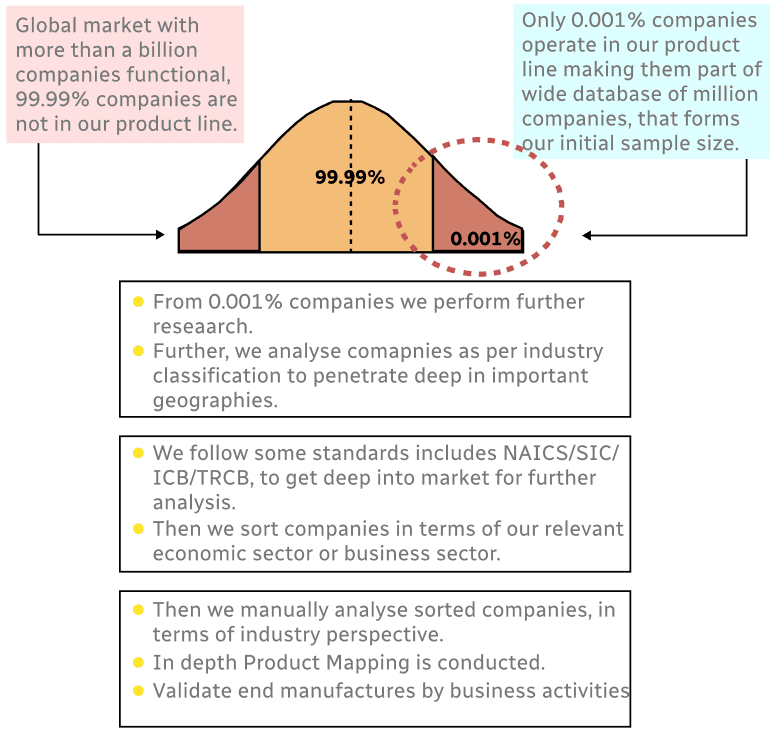
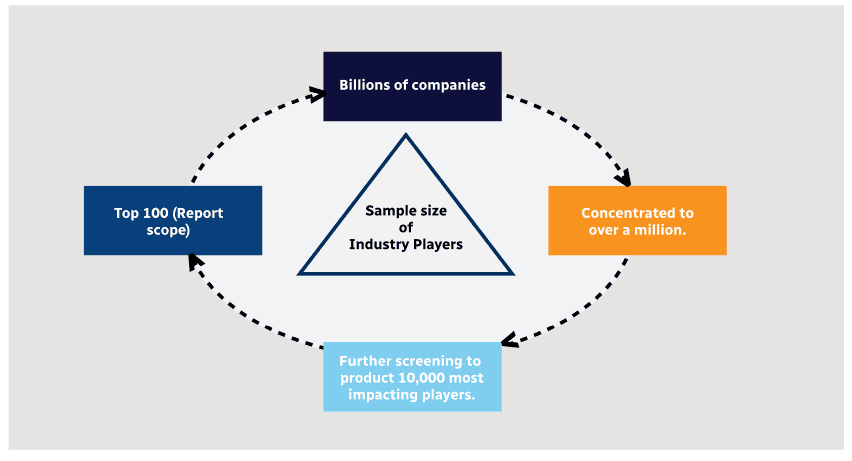
Step 1 - Identification of Relevant Samples Size from Population Database
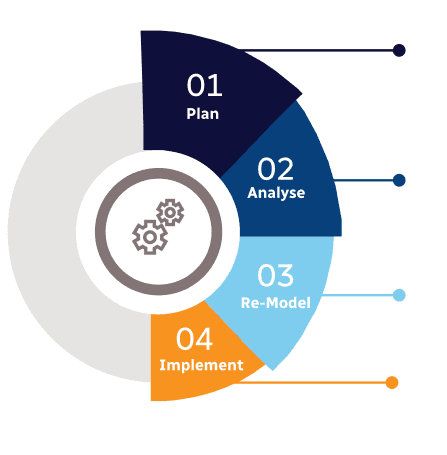
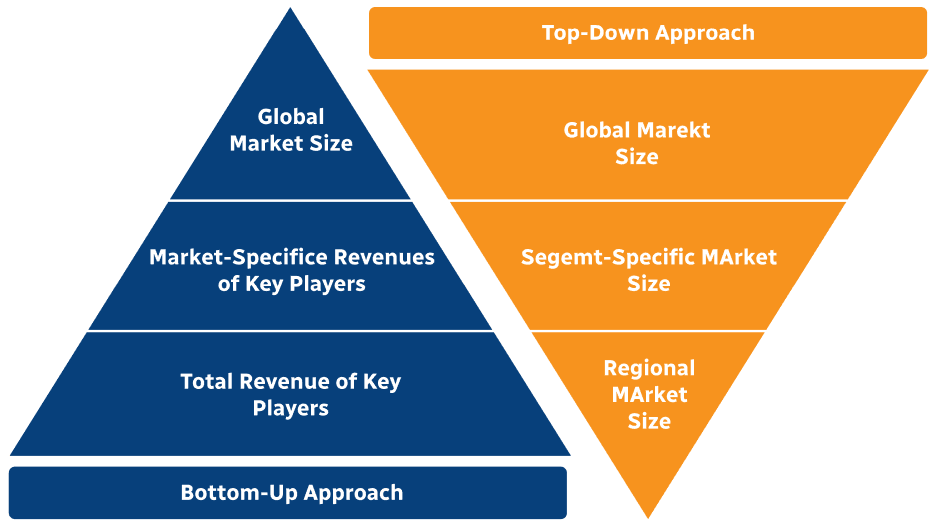
Step 2 - Approaches for Defining Global Market Size (Value, Volume* & Price*)
Note*: In applicable scenarios
Step 3 - Data Sources
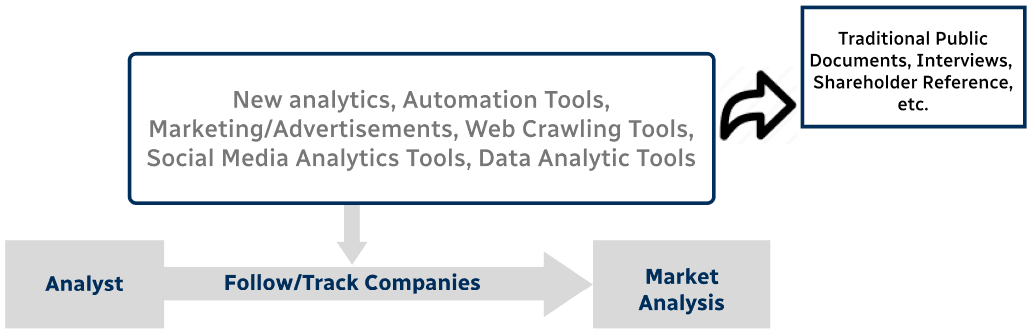
Primary Research
- Web Analytics
- Survey Reports
- Research Institute
- Latest Research Reports
- Opinion Leaders
Secondary Research
- Annual Reports
- White Paper
- Latest Press Release
- Industry Association
- Paid Database
- Investor Presentations
Step 4 - Data Triangulation
Involves using different sources of information in order to increase the validity of a study
These sources are likely to be stakeholders in a program - participants, other researchers, program staff, other community members, and so on.
Then we put all data in single framework & apply various statistical tools to find out the dynamic on the market.
During the analysis stage, feedback from the stakeholder groups would be compared to determine areas of agreement as well as areas of divergence