


Key Insights
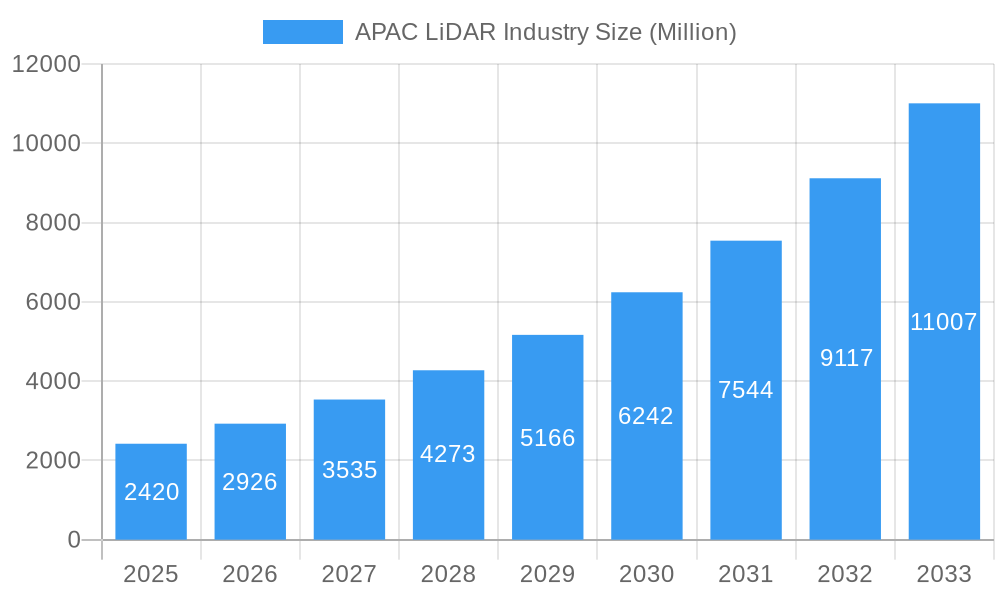
The Asia Pacific (APAC) LiDAR market is poised for remarkable expansion, projected to reach a significant valuation by 2025 and experience robust growth driven by a CAGR of 21.06% through 2033. This dynamic trajectory is fueled by the escalating adoption of advanced sensing technologies across a multitude of industries, prominently including automotive for autonomous driving advancements, and engineering for sophisticated surveying and mapping applications. The increasing demand for precision, efficiency, and safety in these sectors directly translates into a higher requirement for LiDAR solutions. Furthermore, the burgeoning industrial automation landscape, coupled with the rapid development of smart cities and infrastructure projects across APAC, further solidifies the growth potential of this market. Technological innovations, leading to more compact, cost-effective, and higher-performance LiDAR systems, are also key enablers, making these solutions accessible to a broader range of applications and end-users.
APAC LiDAR Industry Market Size (In Billion)

The competitive landscape within the APAC LiDAR market is characterized by intense innovation and strategic collaborations among both established global players and emerging regional specialists. Key companies are focusing on enhancing their product portfolios to cater to diverse application needs, ranging from aerial and ground-based LiDAR systems to critical components like laser scanners and inertial measurement units. The market's segmentation highlights the strong demand for both advanced hardware and integrated solutions. While high growth rates are anticipated, the market may encounter challenges related to the initial high cost of advanced LiDAR systems for some smaller enterprises and the need for skilled personnel to operate and interpret the data generated. However, the ongoing advancements in software and data processing, coupled with supportive government initiatives for technological adoption in countries like China and Japan, are expected to mitigate these restraints and ensure sustained market expansion throughout the forecast period.
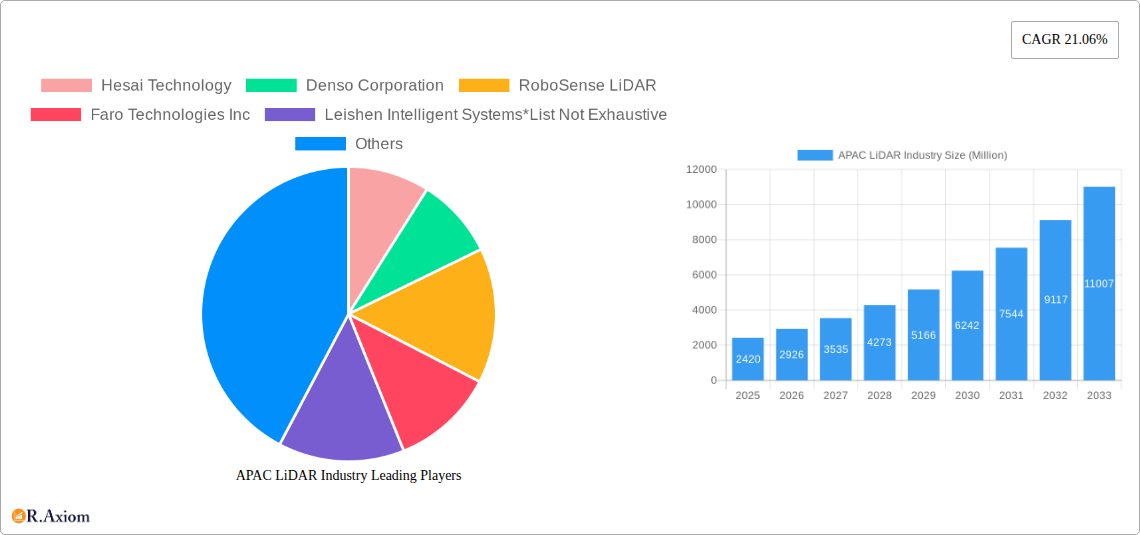
APAC LiDAR Industry Company Market Share
APAC LiDAR Industry Market Concentration & Innovation
The APAC LiDAR industry is characterized by a dynamic blend of established global players and rapidly emerging regional innovators, indicating a moderately concentrated market. Key innovation drivers include the burgeoning demand for autonomous systems in the automotive sector, advancements in 3D mapping for infrastructure development, and the increasing adoption of drone technology for surveying and inspection. Regulatory frameworks are evolving, with governments in countries like China and South Korea actively promoting smart city initiatives and autonomous vehicle testing, thereby fostering LiDAR deployment. While product substitutes exist in traditional surveying methods, their accuracy and speed are significantly outpaced by LiDAR. End-user trends highlight a strong preference for high-resolution, cost-effective LiDAR solutions capable of real-time data processing. Mergers and acquisitions (M&A) activities, though nascent, are expected to accelerate as larger companies seek to integrate cutting-edge LiDAR technologies. Recent M&A deal values are estimated to be in the tens of millions of USD, with further consolidation anticipated. The market share of leading companies like Hesai Technology is estimated at 15-20%, with RoboSense LiDAR closely following.
- Innovation Drivers:
- Autonomous vehicle development (ADAS, AVs)
- Smart city initiatives (urban planning, traffic management)
- Infrastructure inspection and maintenance
- Drone-based surveying and mapping
- Industrial automation and robotics
- Regulatory Landscape:
- Supportive government policies for AI and autonomous technologies
- Standardization efforts for LiDAR data and safety
- Data privacy regulations impacting data acquisition and usage
- Product Substitutes:
- Photogrammetry
- Radar
- Traditional surveying methods (Total Stations, GPS)
- End-User Trends:
- Demand for miniaturized, power-efficient LiDAR sensors
- Need for robust performance in diverse environmental conditions
- Integration of LiDAR with AI and machine learning for advanced analytics
- M&A Activities:
- Acquisitions focused on LiDAR sensor technology and software platforms
- Strategic partnerships for market expansion and technology co-development
APAC LiDAR Industry Industry Trends & Insights
The APAC LiDAR industry is poised for substantial growth, driven by a confluence of technological advancements, burgeoning end-user demand, and supportive governmental initiatives. The market is projected to experience a compound annual growth rate (CAGR) of approximately 22% between 2025 and 2033, reaching an estimated market size of over $8,000 million by 2033. This robust expansion is fueled by the rapid adoption of LiDAR in the automotive sector for advanced driver-assistance systems (ADAS) and the development of fully autonomous vehicles. Countries like China, Japan, and South Korea are leading this charge, investing heavily in R&D and deployment. Furthermore, the increasing use of LiDAR in infrastructure development, urban planning, and disaster management is creating significant market opportunities. Innovations in solid-state LiDAR technology are leading to more compact, cost-effective, and reliable sensors, further accelerating market penetration. Consumer preferences are shifting towards integrated LiDAR solutions that offer enhanced safety and convenience, particularly in the automotive and smart home segments. Competitive dynamics are intensifying, with both established players and agile startups vying for market share. Key players are focusing on developing higher resolution, longer-range, and more affordable LiDAR systems to cater to diverse application needs. The ongoing advancements in laser scanning technology, coupled with improvements in GPS and IMU integration, are enhancing the precision and efficiency of LiDAR-based data acquisition. The market penetration of LiDAR is expected to climb from around 10% in 2025 to over 35% by 2033 across various industrial applications, underscoring its transformative impact.
Dominant Markets & Segments in APAC LiDAR Industry
The APAC LiDAR industry is experiencing a surge in demand across various segments, with Ground-based LiDAR currently holding the dominant market share, estimated at over 65% of the total market value in 2025, projected to reach $5,200 million. This dominance is primarily driven by its widespread application in engineering, construction, and surveying for creating highly accurate 3D models of environments. The Automotive end-user segment is the fastest-growing, with a projected CAGR of 25% during the forecast period, expected to reach a market value of $2,500 million by 2033. This growth is intrinsically linked to the rapid advancements in autonomous driving technology and the increasing integration of ADAS features in vehicles across the region.
- Leading Segment: Ground-based LiDAR (Market Value: ~$5,200 Million in 2025)
- Key Drivers:
- Infrastructure Development: Massive investments in smart cities, transportation networks, and urban regeneration projects across China, India, and Southeast Asia.
- Engineering and Construction: Demand for precise site surveys, volumetric calculations, and as-built documentation for complex projects.
- Geomatics and Surveying: Essential for creating digital twins, topographic maps, and monitoring ground deformation.
- Key Drivers:
- Fastest-Growing Segment: Automotive End User (CAGR: 25%, Market Value: ~$2,500 Million by 2033)
- Key Drivers:
- Autonomous Vehicle Adoption: Strong government backing and a highly competitive automotive market pushing for AV technology.
- ADAS Integration: Increasing demand for safety features like adaptive cruise control, automatic emergency braking, and lane-keeping assist.
- Technological Advancements: Development of more affordable and robust automotive-grade LiDAR sensors.
- Key Drivers:
- Prominent Components:
- Laser Scanners: The core technology, with significant innovation in beam steering and resolution driving market adoption. Estimated market value: ~$4,500 million in 2025.
- GPS/GNSS Receivers: Crucial for georeferencing LiDAR data, with integration improving accuracy and efficiency. Estimated market value: ~$1,800 million in 2025.
- Inertial Measurement Units (IMU): Essential for motion compensation and sensor fusion, especially in dynamic environments. Estimated market value: ~$1,200 million in 2025.
- Significant End-User Segments:
- Engineering and Industrial: Continuous demand for process optimization, safety monitoring, and quality control. Estimated market value: ~$1,500 million in 2025.
- Aerospace and Defense: Applications in surveillance, reconnaissance, and autonomous systems. Estimated market value: ~$800 million in 2025.
APAC LiDAR Industry Product Developments
The APAC LiDAR industry is witnessing a wave of product innovations focused on enhanced performance, miniaturization, and cost reduction. Companies are developing solid-state LiDAR solutions that offer superior reliability and a smaller form factor, making them ideal for integration into vehicles and compact robotic systems. Key advancements include increased scanning speeds, expanded field of view, and improved resistance to adverse weather conditions. Novel materials and manufacturing techniques are also contributing to lower production costs, democratizing LiDAR technology for broader applications. The integration of LiDAR with advanced perception software is enabling more sophisticated object detection, tracking, and scene understanding, crucial for autonomous systems.
Report Scope & Segmentation Analysis
This comprehensive report analyzes the APAC LiDAR Industry across multiple dimensions, covering a study period from 2019 to 2033, with a base year of 2025. The segmentation includes:
- Product:
- Aerial LiDAR: Focuses on airborne LiDAR systems for large-scale mapping and surveying. Growth is driven by infrastructure projects and environmental monitoring. Projected market size: ~$2,000 million in 2025, with a CAGR of 18%.
- Ground-based LiDAR: Encompasses terrestrial and mobile LiDAR solutions for detailed site mapping and object scanning. Dominant segment with steady growth. Projected market size: ~$5,200 million in 2025, with a CAGR of 21%.
- Components:
- GPS/GNSS: Essential for accurate positioning. Market growth tied to overall LiDAR adoption. Projected market size: ~$1,800 million in 2025, with a CAGR of 20%.
- Laser Scanners: The core technology, with continuous innovation. Projected market size: ~$4,500 million in 2025, with a CAGR of 23%.
- Inertial Measurement Unit (IMU): Critical for dynamic applications. Projected market size: ~$1,200 million in 2025, with a CAGR of 22%.
- Other Components: Includes software, processing units, and power systems. Projected market size: ~$1,000 million in 2025, with a CAGR of 19%.
- End User:
- Engineering: Broad applications in construction and surveying. Projected market size: ~$1,500 million in 2025, with a CAGR of 20%.
- Automotive: Rapidly expanding due to autonomous driving advancements. Projected market size: ~$1,800 million in 2025, with a CAGR of 25%.
- Industrial: Focus on automation and robotics. Projected market size: ~$1,000 million in 2025, with a CAGR of 21%.
- Aerospace and Defense: Niche but growing applications. Projected market size: ~$800 million in 2025, with a CAGR of 17%.
Key Drivers of APAC LiDAR Industry Growth
The APAC LiDAR industry is propelled by several significant growth drivers. The escalating demand for autonomous driving technology in the automotive sector is a primary catalyst, with countries like China and Japan leading in research and deployment. Smart city initiatives across the region, focusing on intelligent transportation systems, urban planning, and infrastructure management, are creating substantial market opportunities. Advancements in 3D mapping and surveying technologies are essential for large-scale infrastructure development, including high-speed rail, smart grids, and smart buildings, further boosting LiDAR adoption. The increasing affordability and miniaturization of LiDAR sensors, alongside improvements in their performance and reliability, are expanding their applicability into new domains. Government support through R&D funding and favorable policies for emerging technologies also plays a crucial role.
Challenges in the APAC LiDAR Industry Sector
Despite its promising growth trajectory, the APAC LiDAR industry faces several challenges. High initial costs of advanced LiDAR systems can be a barrier for small and medium-sized enterprises, limiting widespread adoption in certain segments. The lack of standardized regulations and data formats across different countries can create complexities for interoperability and data sharing. Supply chain disruptions, particularly for critical components and raw materials, can impact production timelines and costs. Intense competition among a growing number of players may lead to price wars and affect profit margins. Furthermore, ensuring data security and privacy in the deployment of LiDAR for surveillance and mapping applications remains a significant concern that requires careful consideration and robust policy frameworks.
Emerging Opportunities in APAC LiDAR Industry
Emerging opportunities in the APAC LiDAR industry are vast and evolving. The burgeoning metaverse and augmented reality (AR) sectors present a significant avenue for LiDAR's use in creating hyper-realistic virtual environments and enhancing AR experiences. The expansion of industrial IoT and smart manufacturing necessitates precise 3D scanning for quality control, predictive maintenance, and robotic automation, areas where LiDAR excels. The increasing focus on environmental monitoring, climate change adaptation, and sustainable development is creating demand for LiDAR in applications like forest management, flood mapping, and precision agriculture. The development of next-generation LiDAR technologies, such as frequency-modulated continuous-wave (FMCW) LiDAR, promises enhanced performance and new application possibilities in areas like velocity measurement and object identification.
Leading Players in the APAC LiDAR Industry Market
- Hesai Technology
- Denso Corporation
- RoboSense LiDAR
- Faro Technologies Inc
- Leishen Intelligent Systems
- Benewake
- Leica Geosystems AG
- Sick AG
- Trimble Inc
- Topcon Corporation
- Neptec Technologies Corp
Key Developments in APAC LiDAR Industry Industry
- September 2023: Toshiba Corporation announced the development of world-first advances in LiDAR technologies that secure an unmatched accuracy of 99.9% in object tracking and object recognition of 98.9% with data acquired by the LiDAR alone. The technologies also significantly improve the environmental robustness and the potential for LiDAR in many applications.
- April 2023: Innoviz Technologies Ltd., a technology leader in high-performance, automotive-grade LiDAR sensors and perception software, announced that it signed a distribution agreement with Ascendtek Electronics Inc., an integrated provider of advanced electronic systems, to drive sales of the company's LiDAR solutions throughout the Greater China region.
Strategic Outlook for APAC LiDAR Industry Market
The strategic outlook for the APAC LiDAR industry is exceptionally positive, driven by accelerating technological innovation and expanding application horizons. The continued growth in autonomous vehicle deployment across China, Japan, and South Korea will remain a cornerstone of market expansion. Furthermore, the increasing investment in smart city infrastructure and the digital transformation of industries like manufacturing and logistics will create sustained demand for high-precision 3D sensing. Strategic partnerships and M&A activities are expected to intensify, fostering consolidation and accelerating the development of integrated LiDAR solutions. The focus on developing more affordable, robust, and high-performance LiDAR systems will be critical for unlocking new market segments and driving widespread adoption, positioning the APAC region as a global leader in LiDAR technology and its applications.
APAC LiDAR Industry Segmentation
-
1. Product
- 1.1. Aerial LiDAR
- 1.2. Ground-based LiDAR
-
2. Components
- 2.1. GPS
- 2.2. Laser Scanners
- 2.3. Inertial Measurement Unit
- 2.4. Other Components
-
3. End User
- 3.1. Engineering
- 3.2. Automotive
- 3.3. Industrial
- 3.4. Aerospace and Defense
APAC LiDAR Industry Segmentation By Geography
-
1. North America
- 1.1. United States
- 1.2. Canada
- 1.3. Mexico
-
2. South America
- 2.1. Brazil
- 2.2. Argentina
- 2.3. Rest of South America
-
3. Europe
- 3.1. United Kingdom
- 3.2. Germany
- 3.3. France
- 3.4. Italy
- 3.5. Spain
- 3.6. Russia
- 3.7. Benelux
- 3.8. Nordics
- 3.9. Rest of Europe
-
4. Middle East & Africa
- 4.1. Turkey
- 4.2. Israel
- 4.3. GCC
- 4.4. North Africa
- 4.5. South Africa
- 4.6. Rest of Middle East & Africa
-
5. Asia Pacific
- 5.1. China
- 5.2. India
- 5.3. Japan
- 5.4. South Korea
- 5.5. ASEAN
- 5.6. Oceania
- 5.7. Rest of Asia Pacific
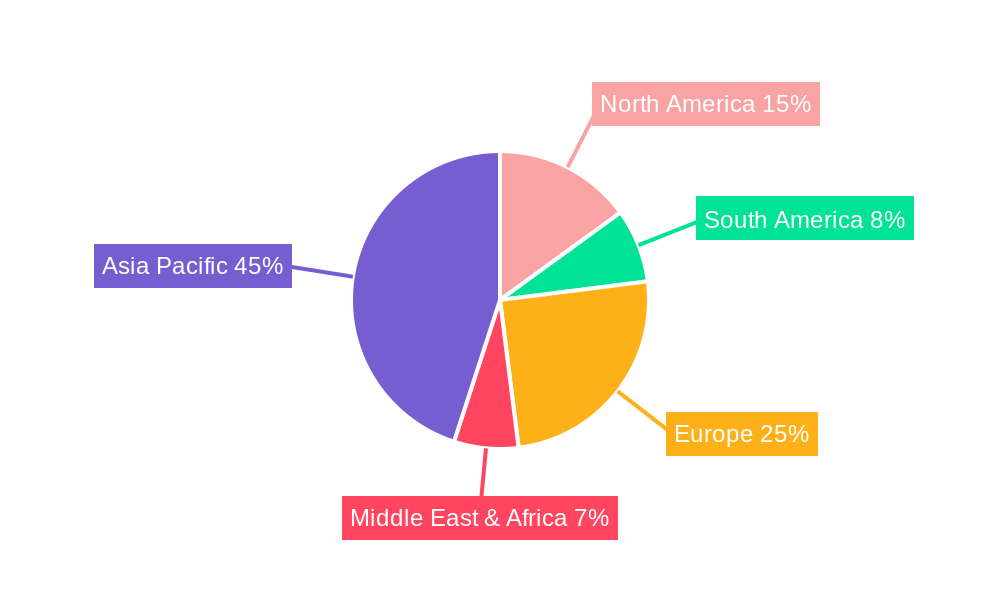
APAC LiDAR Industry Regional Market Share
Geographic Coverage of APAC LiDAR Industry
APAC LiDAR Industry REPORT HIGHLIGHTS
| Aspects | Details |
|---|---|
| Study Period | 2020-2034 |
| Base Year | 2025 |
| Estimated Year | 2026 |
| Forecast Period | 2026-2034 |
| Historical Period | 2020-2025 |
| Growth Rate | CAGR of 21.06% from 2020-2034 |
| Segmentation |
|
Table of Contents
- 1. Introduction
- 1.1. Research Scope
- 1.2. Market Segmentation
- 1.3. Research Methodology
- 1.4. Definitions and Assumptions
- 2. Executive Summary
- 2.1. Introduction
- 3. Market Dynamics
- 3.1. Introduction
- 3.2. Market Drivers
- 3.2.1. Growing Applications in the Government Sector; Increasing Adoption in the Automotive Industry
- 3.3. Market Restrains
- 3.3.1. High Cost of the LiDAR Systems
- 3.4. Market Trends
- 3.4.1. Ground-based LiDAR Expected to Witness The Highest Growth
- 4. Market Factor Analysis
- 4.1. Porters Five Forces
- 4.2. Supply/Value Chain
- 4.3. PESTEL analysis
- 4.4. Market Entropy
- 4.5. Patent/Trademark Analysis
- 5. Global APAC LiDAR Industry Analysis, Insights and Forecast, 2020-2032
- 5.1. Market Analysis, Insights and Forecast - by Product
- 5.1.1. Aerial LiDAR
- 5.1.2. Ground-based LiDAR
- 5.2. Market Analysis, Insights and Forecast - by Components
- 5.2.1. GPS
- 5.2.2. Laser Scanners
- 5.2.3. Inertial Measurement Unit
- 5.2.4. Other Components
- 5.3. Market Analysis, Insights and Forecast - by End User
- 5.3.1. Engineering
- 5.3.2. Automotive
- 5.3.3. Industrial
- 5.3.4. Aerospace and Defense
- 5.4. Market Analysis, Insights and Forecast - by Region
- 5.4.1. North America
- 5.4.2. South America
- 5.4.3. Europe
- 5.4.4. Middle East & Africa
- 5.4.5. Asia Pacific
- 5.1. Market Analysis, Insights and Forecast - by Product
- 6. North America APAC LiDAR Industry Analysis, Insights and Forecast, 2020-2032
- 6.1. Market Analysis, Insights and Forecast - by Product
- 6.1.1. Aerial LiDAR
- 6.1.2. Ground-based LiDAR
- 6.2. Market Analysis, Insights and Forecast - by Components
- 6.2.1. GPS
- 6.2.2. Laser Scanners
- 6.2.3. Inertial Measurement Unit
- 6.2.4. Other Components
- 6.3. Market Analysis, Insights and Forecast - by End User
- 6.3.1. Engineering
- 6.3.2. Automotive
- 6.3.3. Industrial
- 6.3.4. Aerospace and Defense
- 6.1. Market Analysis, Insights and Forecast - by Product
- 7. South America APAC LiDAR Industry Analysis, Insights and Forecast, 2020-2032
- 7.1. Market Analysis, Insights and Forecast - by Product
- 7.1.1. Aerial LiDAR
- 7.1.2. Ground-based LiDAR
- 7.2. Market Analysis, Insights and Forecast - by Components
- 7.2.1. GPS
- 7.2.2. Laser Scanners
- 7.2.3. Inertial Measurement Unit
- 7.2.4. Other Components
- 7.3. Market Analysis, Insights and Forecast - by End User
- 7.3.1. Engineering
- 7.3.2. Automotive
- 7.3.3. Industrial
- 7.3.4. Aerospace and Defense
- 7.1. Market Analysis, Insights and Forecast - by Product
- 8. Europe APAC LiDAR Industry Analysis, Insights and Forecast, 2020-2032
- 8.1. Market Analysis, Insights and Forecast - by Product
- 8.1.1. Aerial LiDAR
- 8.1.2. Ground-based LiDAR
- 8.2. Market Analysis, Insights and Forecast - by Components
- 8.2.1. GPS
- 8.2.2. Laser Scanners
- 8.2.3. Inertial Measurement Unit
- 8.2.4. Other Components
- 8.3. Market Analysis, Insights and Forecast - by End User
- 8.3.1. Engineering
- 8.3.2. Automotive
- 8.3.3. Industrial
- 8.3.4. Aerospace and Defense
- 8.1. Market Analysis, Insights and Forecast - by Product
- 9. Middle East & Africa APAC LiDAR Industry Analysis, Insights and Forecast, 2020-2032
- 9.1. Market Analysis, Insights and Forecast - by Product
- 9.1.1. Aerial LiDAR
- 9.1.2. Ground-based LiDAR
- 9.2. Market Analysis, Insights and Forecast - by Components
- 9.2.1. GPS
- 9.2.2. Laser Scanners
- 9.2.3. Inertial Measurement Unit
- 9.2.4. Other Components
- 9.3. Market Analysis, Insights and Forecast - by End User
- 9.3.1. Engineering
- 9.3.2. Automotive
- 9.3.3. Industrial
- 9.3.4. Aerospace and Defense
- 9.1. Market Analysis, Insights and Forecast - by Product
- 10. Asia Pacific APAC LiDAR Industry Analysis, Insights and Forecast, 2020-2032
- 10.1. Market Analysis, Insights and Forecast - by Product
- 10.1.1. Aerial LiDAR
- 10.1.2. Ground-based LiDAR
- 10.2. Market Analysis, Insights and Forecast - by Components
- 10.2.1. GPS
- 10.2.2. Laser Scanners
- 10.2.3. Inertial Measurement Unit
- 10.2.4. Other Components
- 10.3. Market Analysis, Insights and Forecast - by End User
- 10.3.1. Engineering
- 10.3.2. Automotive
- 10.3.3. Industrial
- 10.3.4. Aerospace and Defense
- 10.1. Market Analysis, Insights and Forecast - by Product
- 11. Competitive Analysis
- 11.1. Global Market Share Analysis 2025
- 11.2. Company Profiles
- 11.2.1 Hesai Technology
- 11.2.1.1. Overview
- 11.2.1.2. Products
- 11.2.1.3. SWOT Analysis
- 11.2.1.4. Recent Developments
- 11.2.1.5. Financials (Based on Availability)
- 11.2.2 Denso Corporation
- 11.2.2.1. Overview
- 11.2.2.2. Products
- 11.2.2.3. SWOT Analysis
- 11.2.2.4. Recent Developments
- 11.2.2.5. Financials (Based on Availability)
- 11.2.3 RoboSense LiDAR
- 11.2.3.1. Overview
- 11.2.3.2. Products
- 11.2.3.3. SWOT Analysis
- 11.2.3.4. Recent Developments
- 11.2.3.5. Financials (Based on Availability)
- 11.2.4 Faro Technologies Inc
- 11.2.4.1. Overview
- 11.2.4.2. Products
- 11.2.4.3. SWOT Analysis
- 11.2.4.4. Recent Developments
- 11.2.4.5. Financials (Based on Availability)
- 11.2.5 Leishen Intelligent Systems*List Not Exhaustive
- 11.2.5.1. Overview
- 11.2.5.2. Products
- 11.2.5.3. SWOT Analysis
- 11.2.5.4. Recent Developments
- 11.2.5.5. Financials (Based on Availability)
- 11.2.6 Benewake
- 11.2.6.1. Overview
- 11.2.6.2. Products
- 11.2.6.3. SWOT Analysis
- 11.2.6.4. Recent Developments
- 11.2.6.5. Financials (Based on Availability)
- 11.2.7 Leica Geosystems AG
- 11.2.7.1. Overview
- 11.2.7.2. Products
- 11.2.7.3. SWOT Analysis
- 11.2.7.4. Recent Developments
- 11.2.7.5. Financials (Based on Availability)
- 11.2.8 Sick AG
- 11.2.8.1. Overview
- 11.2.8.2. Products
- 11.2.8.3. SWOT Analysis
- 11.2.8.4. Recent Developments
- 11.2.8.5. Financials (Based on Availability)
- 11.2.9 Trimble Inc
- 11.2.9.1. Overview
- 11.2.9.2. Products
- 11.2.9.3. SWOT Analysis
- 11.2.9.4. Recent Developments
- 11.2.9.5. Financials (Based on Availability)
- 11.2.10 Topcon Corporation
- 11.2.10.1. Overview
- 11.2.10.2. Products
- 11.2.10.3. SWOT Analysis
- 11.2.10.4. Recent Developments
- 11.2.10.5. Financials (Based on Availability)
- 11.2.11 Neptec Technologies Corp
- 11.2.11.1. Overview
- 11.2.11.2. Products
- 11.2.11.3. SWOT Analysis
- 11.2.11.4. Recent Developments
- 11.2.11.5. Financials (Based on Availability)
- 11.2.1 Hesai Technology
List of Figures
- Figure 1: Global APAC LiDAR Industry Revenue Breakdown (Million, %) by Region 2025 & 2033
- Figure 2: North America APAC LiDAR Industry Revenue (Million), by Product 2025 & 2033
- Figure 3: North America APAC LiDAR Industry Revenue Share (%), by Product 2025 & 2033
- Figure 4: North America APAC LiDAR Industry Revenue (Million), by Components 2025 & 2033
- Figure 5: North America APAC LiDAR Industry Revenue Share (%), by Components 2025 & 2033
- Figure 6: North America APAC LiDAR Industry Revenue (Million), by End User 2025 & 2033
- Figure 7: North America APAC LiDAR Industry Revenue Share (%), by End User 2025 & 2033
- Figure 8: North America APAC LiDAR Industry Revenue (Million), by Country 2025 & 2033
- Figure 9: North America APAC LiDAR Industry Revenue Share (%), by Country 2025 & 2033
- Figure 10: South America APAC LiDAR Industry Revenue (Million), by Product 2025 & 2033
- Figure 11: South America APAC LiDAR Industry Revenue Share (%), by Product 2025 & 2033
- Figure 12: South America APAC LiDAR Industry Revenue (Million), by Components 2025 & 2033
- Figure 13: South America APAC LiDAR Industry Revenue Share (%), by Components 2025 & 2033
- Figure 14: South America APAC LiDAR Industry Revenue (Million), by End User 2025 & 2033
- Figure 15: South America APAC LiDAR Industry Revenue Share (%), by End User 2025 & 2033
- Figure 16: South America APAC LiDAR Industry Revenue (Million), by Country 2025 & 2033
- Figure 17: South America APAC LiDAR Industry Revenue Share (%), by Country 2025 & 2033
- Figure 18: Europe APAC LiDAR Industry Revenue (Million), by Product 2025 & 2033
- Figure 19: Europe APAC LiDAR Industry Revenue Share (%), by Product 2025 & 2033
- Figure 20: Europe APAC LiDAR Industry Revenue (Million), by Components 2025 & 2033
- Figure 21: Europe APAC LiDAR Industry Revenue Share (%), by Components 2025 & 2033
- Figure 22: Europe APAC LiDAR Industry Revenue (Million), by End User 2025 & 2033
- Figure 23: Europe APAC LiDAR Industry Revenue Share (%), by End User 2025 & 2033
- Figure 24: Europe APAC LiDAR Industry Revenue (Million), by Country 2025 & 2033
- Figure 25: Europe APAC LiDAR Industry Revenue Share (%), by Country 2025 & 2033
- Figure 26: Middle East & Africa APAC LiDAR Industry Revenue (Million), by Product 2025 & 2033
- Figure 27: Middle East & Africa APAC LiDAR Industry Revenue Share (%), by Product 2025 & 2033
- Figure 28: Middle East & Africa APAC LiDAR Industry Revenue (Million), by Components 2025 & 2033
- Figure 29: Middle East & Africa APAC LiDAR Industry Revenue Share (%), by Components 2025 & 2033
- Figure 30: Middle East & Africa APAC LiDAR Industry Revenue (Million), by End User 2025 & 2033
- Figure 31: Middle East & Africa APAC LiDAR Industry Revenue Share (%), by End User 2025 & 2033
- Figure 32: Middle East & Africa APAC LiDAR Industry Revenue (Million), by Country 2025 & 2033
- Figure 33: Middle East & Africa APAC LiDAR Industry Revenue Share (%), by Country 2025 & 2033
- Figure 34: Asia Pacific APAC LiDAR Industry Revenue (Million), by Product 2025 & 2033
- Figure 35: Asia Pacific APAC LiDAR Industry Revenue Share (%), by Product 2025 & 2033
- Figure 36: Asia Pacific APAC LiDAR Industry Revenue (Million), by Components 2025 & 2033
- Figure 37: Asia Pacific APAC LiDAR Industry Revenue Share (%), by Components 2025 & 2033
- Figure 38: Asia Pacific APAC LiDAR Industry Revenue (Million), by End User 2025 & 2033
- Figure 39: Asia Pacific APAC LiDAR Industry Revenue Share (%), by End User 2025 & 2033
- Figure 40: Asia Pacific APAC LiDAR Industry Revenue (Million), by Country 2025 & 2033
- Figure 41: Asia Pacific APAC LiDAR Industry Revenue Share (%), by Country 2025 & 2033
List of Tables
- Table 1: Global APAC LiDAR Industry Revenue Million Forecast, by Product 2020 & 2033
- Table 2: Global APAC LiDAR Industry Revenue Million Forecast, by Components 2020 & 2033
- Table 3: Global APAC LiDAR Industry Revenue Million Forecast, by End User 2020 & 2033
- Table 4: Global APAC LiDAR Industry Revenue Million Forecast, by Region 2020 & 2033
- Table 5: Global APAC LiDAR Industry Revenue Million Forecast, by Product 2020 & 2033
- Table 6: Global APAC LiDAR Industry Revenue Million Forecast, by Components 2020 & 2033
- Table 7: Global APAC LiDAR Industry Revenue Million Forecast, by End User 2020 & 2033
- Table 8: Global APAC LiDAR Industry Revenue Million Forecast, by Country 2020 & 2033
- Table 9: United States APAC LiDAR Industry Revenue (Million) Forecast, by Application 2020 & 2033
- Table 10: Canada APAC LiDAR Industry Revenue (Million) Forecast, by Application 2020 & 2033
- Table 11: Mexico APAC LiDAR Industry Revenue (Million) Forecast, by Application 2020 & 2033
- Table 12: Global APAC LiDAR Industry Revenue Million Forecast, by Product 2020 & 2033
- Table 13: Global APAC LiDAR Industry Revenue Million Forecast, by Components 2020 & 2033
- Table 14: Global APAC LiDAR Industry Revenue Million Forecast, by End User 2020 & 2033
- Table 15: Global APAC LiDAR Industry Revenue Million Forecast, by Country 2020 & 2033
- Table 16: Brazil APAC LiDAR Industry Revenue (Million) Forecast, by Application 2020 & 2033
- Table 17: Argentina APAC LiDAR Industry Revenue (Million) Forecast, by Application 2020 & 2033
- Table 18: Rest of South America APAC LiDAR Industry Revenue (Million) Forecast, by Application 2020 & 2033
- Table 19: Global APAC LiDAR Industry Revenue Million Forecast, by Product 2020 & 2033
- Table 20: Global APAC LiDAR Industry Revenue Million Forecast, by Components 2020 & 2033
- Table 21: Global APAC LiDAR Industry Revenue Million Forecast, by End User 2020 & 2033
- Table 22: Global APAC LiDAR Industry Revenue Million Forecast, by Country 2020 & 2033
- Table 23: United Kingdom APAC LiDAR Industry Revenue (Million) Forecast, by Application 2020 & 2033
- Table 24: Germany APAC LiDAR Industry Revenue (Million) Forecast, by Application 2020 & 2033
- Table 25: France APAC LiDAR Industry Revenue (Million) Forecast, by Application 2020 & 2033
- Table 26: Italy APAC LiDAR Industry Revenue (Million) Forecast, by Application 2020 & 2033
- Table 27: Spain APAC LiDAR Industry Revenue (Million) Forecast, by Application 2020 & 2033
- Table 28: Russia APAC LiDAR Industry Revenue (Million) Forecast, by Application 2020 & 2033
- Table 29: Benelux APAC LiDAR Industry Revenue (Million) Forecast, by Application 2020 & 2033
- Table 30: Nordics APAC LiDAR Industry Revenue (Million) Forecast, by Application 2020 & 2033
- Table 31: Rest of Europe APAC LiDAR Industry Revenue (Million) Forecast, by Application 2020 & 2033
- Table 32: Global APAC LiDAR Industry Revenue Million Forecast, by Product 2020 & 2033
- Table 33: Global APAC LiDAR Industry Revenue Million Forecast, by Components 2020 & 2033
- Table 34: Global APAC LiDAR Industry Revenue Million Forecast, by End User 2020 & 2033
- Table 35: Global APAC LiDAR Industry Revenue Million Forecast, by Country 2020 & 2033
- Table 36: Turkey APAC LiDAR Industry Revenue (Million) Forecast, by Application 2020 & 2033
- Table 37: Israel APAC LiDAR Industry Revenue (Million) Forecast, by Application 2020 & 2033
- Table 38: GCC APAC LiDAR Industry Revenue (Million) Forecast, by Application 2020 & 2033
- Table 39: North Africa APAC LiDAR Industry Revenue (Million) Forecast, by Application 2020 & 2033
- Table 40: South Africa APAC LiDAR Industry Revenue (Million) Forecast, by Application 2020 & 2033
- Table 41: Rest of Middle East & Africa APAC LiDAR Industry Revenue (Million) Forecast, by Application 2020 & 2033
- Table 42: Global APAC LiDAR Industry Revenue Million Forecast, by Product 2020 & 2033
- Table 43: Global APAC LiDAR Industry Revenue Million Forecast, by Components 2020 & 2033
- Table 44: Global APAC LiDAR Industry Revenue Million Forecast, by End User 2020 & 2033
- Table 45: Global APAC LiDAR Industry Revenue Million Forecast, by Country 2020 & 2033
- Table 46: China APAC LiDAR Industry Revenue (Million) Forecast, by Application 2020 & 2033
- Table 47: India APAC LiDAR Industry Revenue (Million) Forecast, by Application 2020 & 2033
- Table 48: Japan APAC LiDAR Industry Revenue (Million) Forecast, by Application 2020 & 2033
- Table 49: South Korea APAC LiDAR Industry Revenue (Million) Forecast, by Application 2020 & 2033
- Table 50: ASEAN APAC LiDAR Industry Revenue (Million) Forecast, by Application 2020 & 2033
- Table 51: Oceania APAC LiDAR Industry Revenue (Million) Forecast, by Application 2020 & 2033
- Table 52: Rest of Asia Pacific APAC LiDAR Industry Revenue (Million) Forecast, by Application 2020 & 2033
Frequently Asked Questions
1. What is the projected Compound Annual Growth Rate (CAGR) of the APAC LiDAR Industry?
The projected CAGR is approximately 21.06%.
2. Which companies are prominent players in the APAC LiDAR Industry?
Key companies in the market include Hesai Technology, Denso Corporation, RoboSense LiDAR, Faro Technologies Inc, Leishen Intelligent Systems*List Not Exhaustive, Benewake, Leica Geosystems AG, Sick AG, Trimble Inc, Topcon Corporation, Neptec Technologies Corp.
3. What are the main segments of the APAC LiDAR Industry?
The market segments include Product, Components, End User.
4. Can you provide details about the market size?
The market size is estimated to be USD 2.42 Million as of 2022.
5. What are some drivers contributing to market growth?
Growing Applications in the Government Sector; Increasing Adoption in the Automotive Industry.
6. What are the notable trends driving market growth?
Ground-based LiDAR Expected to Witness The Highest Growth.
7. Are there any restraints impacting market growth?
High Cost of the LiDAR Systems.
8. Can you provide examples of recent developments in the market?
September 2023: Toshiba Corporation announced the development of world-first advances in LiDAR technologies that secure an unmatched accuracy of 99.9% in object tracking and object recognition of 98.9% with data acquired by the LiDAR alone. The technologies also significantly improve the environmental robustness and the potential for LiDAR in many applications.
9. What pricing options are available for accessing the report?
Pricing options include single-user, multi-user, and enterprise licenses priced at USD 3800, USD 4500, and USD 5800 respectively.
10. Is the market size provided in terms of value or volume?
The market size is provided in terms of value, measured in Million.
11. Are there any specific market keywords associated with the report?
Yes, the market keyword associated with the report is "APAC LiDAR Industry," which aids in identifying and referencing the specific market segment covered.
12. How do I determine which pricing option suits my needs best?
The pricing options vary based on user requirements and access needs. Individual users may opt for single-user licenses, while businesses requiring broader access may choose multi-user or enterprise licenses for cost-effective access to the report.
13. Are there any additional resources or data provided in the APAC LiDAR Industry report?
While the report offers comprehensive insights, it's advisable to review the specific contents or supplementary materials provided to ascertain if additional resources or data are available.
14. How can I stay updated on further developments or reports in the APAC LiDAR Industry?
To stay informed about further developments, trends, and reports in the APAC LiDAR Industry, consider subscribing to industry newsletters, following relevant companies and organizations, or regularly checking reputable industry news sources and publications.
Methodology
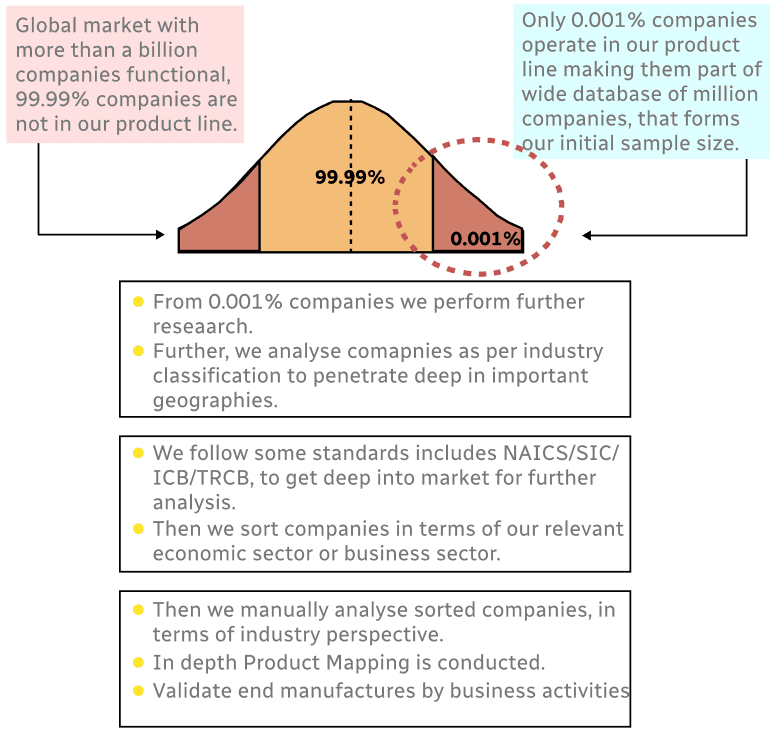
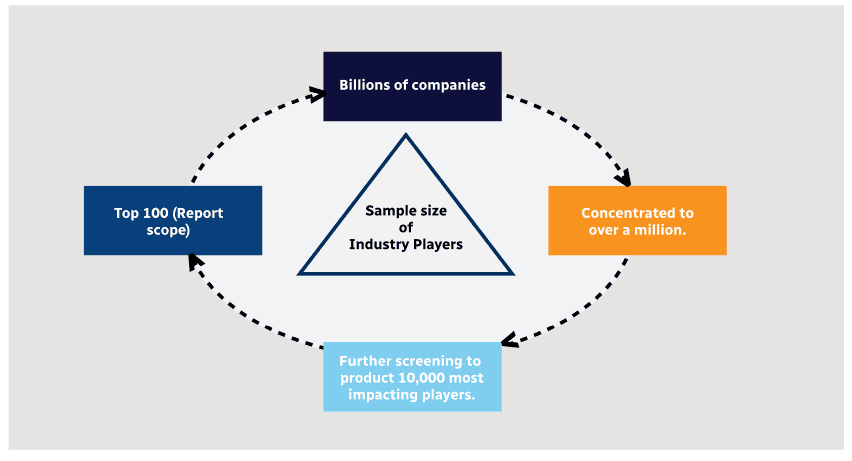
Step 1 - Identification of Relevant Samples Size from Population Database
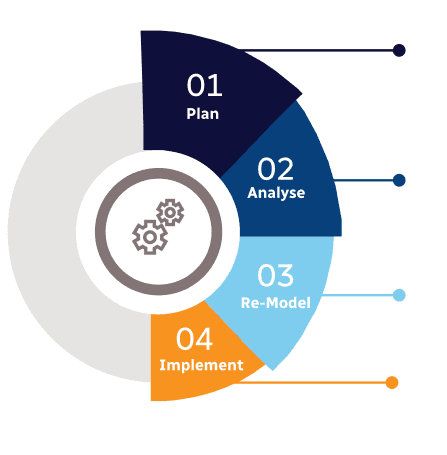
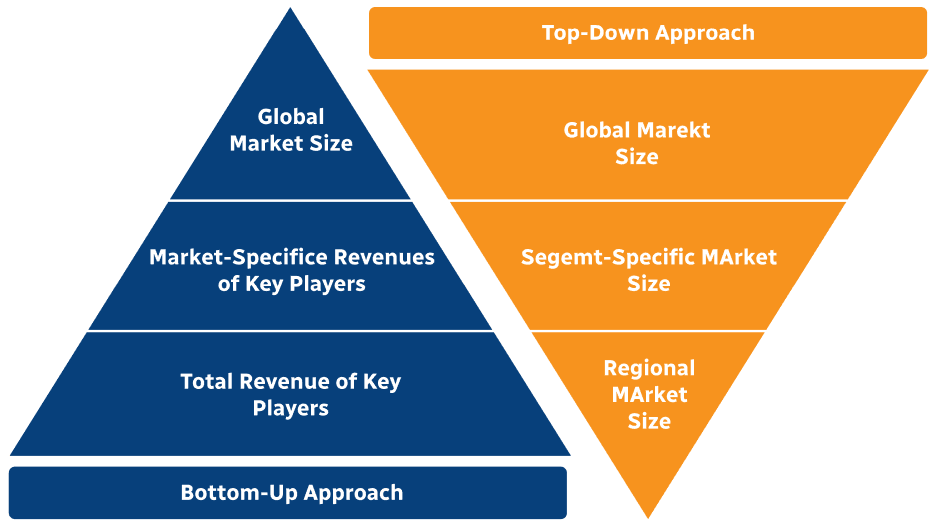
Step 2 - Approaches for Defining Global Market Size (Value, Volume* & Price*)
Note*: In applicable scenarios
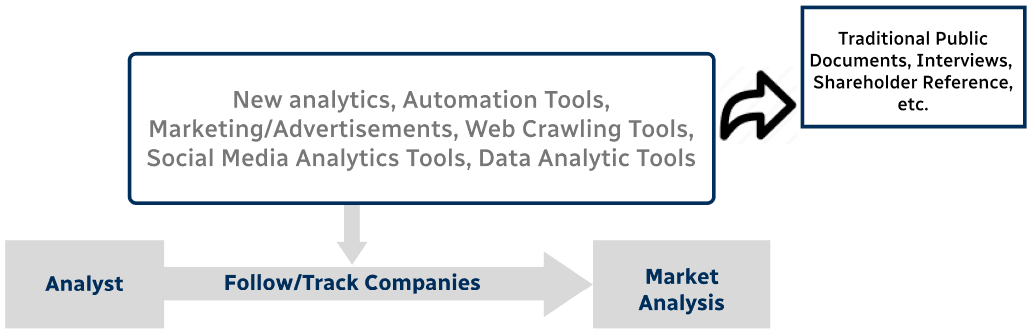
Step 3 - Data Sources
Primary Research
- Web Analytics
- Survey Reports
- Research Institute
- Latest Research Reports
- Opinion Leaders
Secondary Research
- Annual Reports
- White Paper
- Latest Press Release
- Industry Association
- Paid Database
- Investor Presentations
Step 4 - Data Triangulation
Involves using different sources of information in order to increase the validity of a study
These sources are likely to be stakeholders in a program - participants, other researchers, program staff, other community members, and so on.
Then we put all data in single framework & apply various statistical tools to find out the dynamic on the market.
During the analysis stage, feedback from the stakeholder groups would be compared to determine areas of agreement as well as areas of divergence