Key Insights
The global Intellectual Property (IP) Valuation market is experiencing robust expansion, projected to reach a substantial market size of approximately $35,000 million by 2025, with a compelling Compound Annual Growth Rate (CAGR) of around 12% anticipated through 2033. This dynamic growth is primarily fueled by several interconnected drivers. The escalating importance of intangible assets in business strategy, coupled with increasing M&A activities and cross-border licensing agreements, necessitates accurate IP valuation for strategic decision-making and financial reporting. Furthermore, the growing awareness among corporations and research institutions about the financial potential and strategic value embedded within their IP portfolios is a significant catalyst. This heightened focus translates into a greater demand for specialized IP valuation services to unlock the full commercial and economic benefits of patents, trademarks, copyrights, and other forms of intellectual property.
The market is further segmented into distinct application areas, with Corporate and University sectors emerging as dominant users of IP valuation services. These entities leverage valuation for a multitude of purposes, including facilitating investment rounds, securing funding, managing litigation, and optimizing their innovation pipelines. Within the types of IP valuation, Patent Valuation and Trademark Valuation command the largest share, reflecting their widespread commercial applicability and strategic significance in protecting brand identity and technological innovation. Emerging trends such as the increasing commoditization of IP, the rise of IP-backed financing, and the growing adoption of advanced data analytics and AI in valuation methodologies are shaping the future trajectory of this market. However, the market faces certain restraints, including the inherent subjectivity in IP valuation, the scarcity of skilled valuation professionals, and the complexity of international IP laws, which can sometimes impede consistent and standardized valuation practices.
-Valuation.png)
Intellectual Property (IP) Valuation Market Concentration & Innovation
The Intellectual Property (IP) Valuation market exhibits a moderate to high level of concentration, with prominent players such as Deloitte, PwC, Ernst & Young LLC, Black Stone IP, KPMG, and FTI Consulting holding significant market shares. These established firms leverage extensive expertise, global networks, and robust methodologies to provide comprehensive IP valuation services across diverse industries. Innovation within the IP valuation sector is primarily driven by the increasing complexity of intellectual assets, the growing importance of intangible assets in corporate balance sheets, and the evolving regulatory landscape. Companies are investing heavily in advanced analytical tools and data-driven approaches to enhance the accuracy and reliability of their valuations.
Key drivers of innovation include:
- Technological Advancements: The integration of AI, machine learning, and big data analytics to process vast datasets and identify valuation trends.
- Evolving Legal Frameworks: Adapting valuation methodologies to comply with new patentability standards, licensing regulations, and international IP treaties.
- Cross-Border Transactions: Developing specialized expertise in valuing IP for mergers, acquisitions, and joint ventures involving multiple jurisdictions.
Regulatory frameworks, particularly those governing patent protection and licensing, significantly influence IP valuation. Stricter enforcement of IP rights and increasing litigation create a greater demand for accurate valuations for damages assessment and strategic decision-making. Product substitutes, while less direct in IP valuation services, manifest as alternative methods of IP protection or monetization strategies that may reduce the perceived need for formal valuation. End-user trends point towards a rising demand for IP valuation services from technology, pharmaceutical, and biotechnology sectors, where IP forms the core of their business models. Mergers and acquisitions (M&A) activity within the IP valuation market itself has been steady, with firms consolidating to expand service offerings and geographic reach. For instance, strategic acquisitions by larger consulting firms aimed at bolstering their IP advisory capabilities are common. M&A deal values in this specialized segment can range from several million to hundreds of millions of dollars, depending on the target firm's client base, expertise, and market position. The overall market is characterized by a continuous pursuit of methodological refinement and service differentiation to cater to the unique needs of intellectual property holders.
Intellectual Property (IP) Valuation Industry Trends & Insights
The Intellectual Property (IP) Valuation market is experiencing robust growth, driven by a confluence of technological advancements, evolving business strategies, and an increasing recognition of intangible assets as critical drivers of corporate value. The historical period of 2019–2024 has witnessed a steady upward trajectory in demand for IP valuation services, a trend anticipated to accelerate through the forecast period of 2025–2033. The base year of 2025 is projected to see a market size in the tens of billions of dollars, with a Compound Annual Growth Rate (CAGR) estimated at a strong xx% for the forecast period. This expansion is fueled by the growing importance of IP in an increasingly innovation-driven global economy.
Technological disruptions are fundamentally reshaping how IP is created, managed, and valued. The rapid development of artificial intelligence (AI), machine learning, blockchain technology, and the Internet of Things (IoT) is creating new categories of intellectual property and necessitating sophisticated valuation approaches. For instance, the valuation of AI algorithms, data sets, and platform technologies requires specialized expertise that goes beyond traditional patent and trademark valuation methods. Companies are increasingly relying on IP for competitive advantage, leading to a greater emphasis on defensive patenting, strategic licensing, and the monetization of IP portfolios. This, in turn, drives the demand for accurate and defensible IP valuations for purposes such as mergers and acquisitions, fundraising, dispute resolution, and financial reporting.
Consumer preferences, while indirectly influencing IP valuation, are shifting towards products and services underpinned by unique and protected intellectual property. Brands with strong trademarks and patented innovations tend to command higher market premiums and customer loyalty. This creates an incentive for companies to invest in and effectively manage their IP assets, thereby increasing the demand for valuation services. Competitive dynamics are characterized by the presence of large, multi-disciplinary consulting firms like Deloitte, PwC, and Ernst & Young LLC, which offer end-to-end IP advisory services, alongside specialized IP valuation boutiques such as Black Stone IP, Kroll, and FTI Consulting. The market penetration of sophisticated IP valuation services is expanding, moving beyond traditional high-tech industries to encompass a broader range of sectors including consumer goods, retail, and entertainment, where brand value and unique product features are paramount.
Furthermore, the increasing complexity of global supply chains and the rise of digital marketplaces necessitate a nuanced understanding of IP rights and their associated values across different jurisdictions. Companies are actively seeking valuation expertise to navigate cross-border licensing agreements, technology transfer deals, and international IP disputes. The regulatory environment also plays a crucial role, with evolving intellectual property laws and accounting standards (such as IFRS 3 and ASC 805 for business combinations) mandating more rigorous IP valuation practices. This trend ensures that IP is accurately reflected on balance sheets, impacting financial performance and investor perception. The market for IP valuation is thus poised for sustained and significant growth, reflecting the indispensable role of intellectual property in the modern economy.
-Valuation.png)
Dominant Markets & Segments in Intellectual Property (IP) Valuation
The Intellectual Property (IP) Valuation market is characterized by regional dominance, with North America and Europe currently leading in terms of market size and activity. This dominance stems from their well-established legal frameworks for IP protection, robust innovation ecosystems, and the presence of a high concentration of multinational corporations engaged in significant R&D and M&A activities. The United States, in particular, stands out as a leading country due to its extensive patent system, active venture capital landscape, and the high value placed on intangible assets by its corporate sector. Economic policies in these regions, such as tax incentives for R&D and strong enforcement of IP rights, further bolster the demand for IP valuation services.
Within the Application segment, Corporate entities represent the largest and most dominant market for IP valuation. This is driven by a multitude of corporate activities, including mergers and acquisitions (M&A), licensing deals, fundraising, impairment testing, and financial reporting requirements. Companies across all industries, from technology and pharmaceuticals to consumer goods and manufacturing, routinely require IP valuations to understand the financial impact of their intellectual assets. The trend of intangible assets comprising an increasingly larger portion of a company's total market value amplifies the importance of accurate corporate IP valuations. The valuation of IP for corporate purposes can range from tens of millions to billions of dollars, depending on the scale of the transaction or reporting requirement.
In terms of IP Types, Patent Valuation commands the largest share of the market. Patents represent significant investments in research and development and are often at the core of a company's competitive advantage and revenue generation strategies. The ability to protect novel inventions and processes through patents makes their valuation critical for licensing, infringement litigation, and strategic decision-making. This segment alone can account for over 40% of the total IP valuation market. Trademark Valuation also holds substantial significance, particularly for consumer-facing companies, where brand recognition and goodwill are paramount. The valuation of trademarks is crucial for brand licensing, mergers, acquisitions, and assessing brand equity. Copyright Valuation, while important for industries like software, media, and publishing, generally represents a smaller segment compared to patents and trademarks. Other IP types, such as trade secrets and domain names, also contribute to the market, albeit with a more niche demand for specialized valuation services.
The Research Institute and University segments are also important, particularly in early-stage innovation and technology transfer. However, their valuation needs are often more focused on licensing potential and spin-off company valuations, making them a smaller segment compared to the broad corporate application. The dominance of corporate applications and patent valuations highlights the commercial and strategic imperatives driving the global IP valuation landscape, with North America and Europe serving as the primary hubs for these activities. The growth in these dominant segments is projected to continue, supported by ongoing technological innovation and global economic trends.
Intellectual Property (IP) Valuation Product Developments
Recent product developments in the Intellectual Property (IP) Valuation sector are focused on enhancing efficiency, accuracy, and accessibility of valuation services through technological integration. Leading firms are deploying advanced analytical platforms that leverage AI and machine learning to process vast amounts of market data, patent filings, and financial statements, enabling more sophisticated and faster valuations. These innovations offer competitive advantages by providing deeper insights into market trends, competitor IP portfolios, and potential infringement risks. Furthermore, there is a growing emphasis on developing modular valuation tools that can be customized for specific industry needs and IP types, such as specialized modules for pharmaceutical patent valuation or software copyright valuation. This trend indicates a market fit for adaptable and specialized solutions that address the nuanced challenges of valuing diverse intellectual assets in rapidly evolving technological landscapes.
Report Scope & Segmentation Analysis
This comprehensive report analyzes the Intellectual Property (IP) Valuation market, segmenting it by application and type. The application segments include Corporate, Research Institute, University, and Others. The Corporate segment is the largest, driven by M&A, licensing, and financial reporting, with projected market sizes in the tens of billions of dollars and a robust CAGR of xx% through 2033. Research Institutes and Universities represent smaller but significant segments focused on technology transfer and spin-offs, with projected growth in the hundreds of millions of dollars, driven by increased R&D funding and commercialization efforts. The Others segment encompasses individuals and smaller entities.
The market is also segmented by IP Type: Patent Valuation, Trademark Valuation, Copyright Valuation, and Other. Patent Valuation is the dominant segment, projected at over xx billion dollars by 2033 with a CAGR of xx%, due to its critical role in innovation-driven industries. Trademark Valuation is also substantial, estimated in the billions, driven by brand equity and licensing. Copyright Valuation and Other IP types contribute smaller but growing segments, reflecting the increasing diversification of intellectual assets. Competitive dynamics within each segment are intense, with specialized firms vying for market share.
Key Drivers of Intellectual Property (IP) Valuation Growth
The Intellectual Property (IP) Valuation market is propelled by several key drivers. Technological innovation is paramount, as new discoveries and digital assets necessitate formal valuation for commercialization and protection. The increasing recognition of intangible assets as significant contributors to corporate value is driving demand for accurate IP valuations for financial reporting and investment decisions. Furthermore, a robust legal and regulatory environment that protects IP rights incentivizes companies to invest in and monetize their intellectual assets, thereby increasing the need for valuation expertise. Mergers and acquisitions (M&A) activity, particularly in technology-intensive sectors, directly fuels the demand for IP valuations to assess deal value and integration strategies. The growing trend of cross-border IP transactions also necessitates specialized valuation services to navigate international legal and economic landscapes.
Challenges in the Intellectual Property (IP) Valuation Sector
Despite strong growth, the Intellectual Property (IP) Valuation sector faces several challenges. The inherent subjectivity and complexity of valuing intangible assets can lead to valuation discrepancies and disputes, requiring highly specialized expertise. Regulatory hurdles, such as evolving accounting standards and varying international IP laws, can create compliance challenges and necessitate continuous adaptation of valuation methodologies. The scarcity of qualified IP valuation professionals, particularly those with deep industry-specific knowledge, can also constrain market growth. Furthermore, the rapid pace of technological change can render traditional valuation models obsolete, requiring constant innovation and investment in new analytical tools and approaches. Competitive pressures from a crowded market, while stimulating innovation, can also lead to pricing challenges for specialized services.
Emerging Opportunities in Intellectual Property (IP) Valuation
Emerging opportunities in the Intellectual Property (IP) Valuation sector are abundant. The burgeoning field of artificial intelligence (AI) and machine learning is creating new categories of IP, such as algorithms and data sets, demanding novel valuation approaches. The increasing focus on ESG (Environmental, Social, and Governance) factors presents an opportunity to value IP related to sustainability innovations and social impact initiatives. The growth of the digital economy and the metaverse opens up new avenues for valuing digital assets, virtual intellectual property, and associated licensing opportunities. Furthermore, the rising global demand for IP protection and monetization in emerging economies presents significant expansion potential for IP valuation services. Advancements in blockchain technology also offer opportunities for secure tracking and transparent valuation of digital intellectual assets.
Leading Players in the Intellectual Property (IP) Valuation Market
- Deloitte
- PwC
- Ernst & Young LLC
- Black Stone IP
- KPMG
- Pellegrino & Associates
- Coller IP
- FTI Consulting
- Kroll
- Alix Partners
- Parallel North IP
- IPmetrics Intellectual Property Consulting
- Duff & Phelps
- Berkeley Research Group
- CONSOR
- Keystone Strategy
- Valuation Consulting
- CTY-DH Financials
- Ip21 Limited
- ClearView IP
- Metis Partners
- Stout Risius Ross
- Hilco Valuation Services
- Great American Group
- Foresight Valuation Group
- Moss Adams
Key Developments in Intellectual Property (IP) Valuation Industry
- 2024/01: Launch of AI-powered IP analytics platform by major consulting firms, enhancing valuation accuracy and speed.
- 2023/11: Increased regulatory scrutiny on IP disclosures for public companies, driving demand for standardized valuation methodologies.
- 2023/07: Significant M&A activity in the IP valuation sector, with larger firms acquiring specialized boutiques to expand service portfolios.
- 2023/04: Growing adoption of blockchain for IP asset tracking and licensing, creating new valuation challenges and opportunities.
- 2022/12: Rise in patent litigation funding, necessitating more robust and defensible IP valuations for investment assessment.
- 2022/09: Development of specialized valuation models for emerging technologies like quantum computing and advanced biotechnology.
- 2021/06: Enhanced focus on valuing IP related to sustainability and green technologies in response to market demand.
Strategic Outlook for Intellectual Property (IP) Valuation Market
- 2024/01: Launch of AI-powered IP analytics platform by major consulting firms, enhancing valuation accuracy and speed.
- 2023/11: Increased regulatory scrutiny on IP disclosures for public companies, driving demand for standardized valuation methodologies.
- 2023/07: Significant M&A activity in the IP valuation sector, with larger firms acquiring specialized boutiques to expand service portfolios.
- 2023/04: Growing adoption of blockchain for IP asset tracking and licensing, creating new valuation challenges and opportunities.
- 2022/12: Rise in patent litigation funding, necessitating more robust and defensible IP valuations for investment assessment.
- 2022/09: Development of specialized valuation models for emerging technologies like quantum computing and advanced biotechnology.
- 2021/06: Enhanced focus on valuing IP related to sustainability and green technologies in response to market demand.
Strategic Outlook for Intellectual Property (IP) Valuation Market
The strategic outlook for the Intellectual Property (IP) Valuation market remains exceptionally positive, characterized by sustained growth driven by innovation, evolving business models, and increasing regulatory emphasis on intangible assets. The forecast period of 2025–2033 is expected to witness accelerated expansion, fueled by the ongoing digital transformation and the proliferation of new technologies that create novel forms of intellectual property. Strategic initiatives for market players will likely involve deepening expertise in niche IP areas, investing in advanced analytical technologies like AI and machine learning to enhance valuation precision and efficiency, and expanding geographic reach to cater to globalized R&D and M&A activities. Partnerships and collaborations with legal firms, technology developers, and financial institutions will also be crucial for comprehensive service delivery. The growing importance of IP in corporate strategy and financial reporting ensures a continuous and increasing demand for reliable and sophisticated IP valuation services, positioning the market for significant future value creation.
Intellectual Property (IP) Valuation Segmentation
-
1. Application
- 1.1. Corporate
- 1.2. Research Institute
- 1.3. University
- 1.4. Others
-
2. Types
- 2.1. Patent Valuation
- 2.2. Trademark Valuation
- 2.3. Copyright Valuation
- 2.4. Other
Intellectual Property (IP) Valuation Segmentation By Geography
-
1. North America
- 1.1. United States
- 1.2. Canada
- 1.3. Mexico
-
2. South America
- 2.1. Brazil
- 2.2. Argentina
- 2.3. Rest of South America
-
3. Europe
- 3.1. United Kingdom
- 3.2. Germany
- 3.3. France
- 3.4. Italy
- 3.5. Spain
- 3.6. Russia
- 3.7. Benelux
- 3.8. Nordics
- 3.9. Rest of Europe
-
4. Middle East & Africa
- 4.1. Turkey
- 4.2. Israel
- 4.3. GCC
- 4.4. North Africa
- 4.5. South Africa
- 4.6. Rest of Middle East & Africa
-
5. Asia Pacific
- 5.1. China
- 5.2. India
- 5.3. Japan
- 5.4. South Korea
- 5.5. ASEAN
- 5.6. Oceania
- 5.7. Rest of Asia Pacific
-Valuation.png)
Intellectual Property (IP) Valuation REPORT HIGHLIGHTS
| Aspects | Details |
|---|---|
| Study Period | 2019-2033 |
| Base Year | 2024 |
| Estimated Year | 2025 |
| Forecast Period | 2025-2033 |
| Historical Period | 2019-2024 |
| Growth Rate | CAGR of XX% from 2019-2033 |
| Segmentation |
|
Table of Contents
- 1. Introduction
- 1.1. Research Scope
- 1.2. Market Segmentation
- 1.3. Research Methodology
- 1.4. Definitions and Assumptions
- 2. Executive Summary
- 2.1. Introduction
- 3. Market Dynamics
- 3.1. Introduction
- 3.2. Market Drivers
- 3.3. Market Restrains
- 3.4. Market Trends
- 4. Market Factor Analysis
- 4.1. Porters Five Forces
- 4.2. Supply/Value Chain
- 4.3. PESTEL analysis
- 4.4. Market Entropy
- 4.5. Patent/Trademark Analysis
- 5. Global Intellectual Property (IP) Valuation Analysis, Insights and Forecast, 2019-2031
- 5.1. Market Analysis, Insights and Forecast - by Application
- 5.1.1. Corporate
- 5.1.2. Research Institute
- 5.1.3. University
- 5.1.4. Others
- 5.2. Market Analysis, Insights and Forecast - by Types
- 5.2.1. Patent Valuation
- 5.2.2. Trademark Valuation
- 5.2.3. Copyright Valuation
- 5.2.4. Other
- 5.3. Market Analysis, Insights and Forecast - by Region
- 5.3.1. North America
- 5.3.2. South America
- 5.3.3. Europe
- 5.3.4. Middle East & Africa
- 5.3.5. Asia Pacific
- 5.1. Market Analysis, Insights and Forecast - by Application
- 6. North America Intellectual Property (IP) Valuation Analysis, Insights and Forecast, 2019-2031
- 6.1. Market Analysis, Insights and Forecast - by Application
- 6.1.1. Corporate
- 6.1.2. Research Institute
- 6.1.3. University
- 6.1.4. Others
- 6.2. Market Analysis, Insights and Forecast - by Types
- 6.2.1. Patent Valuation
- 6.2.2. Trademark Valuation
- 6.2.3. Copyright Valuation
- 6.2.4. Other
- 6.1. Market Analysis, Insights and Forecast - by Application
- 7. South America Intellectual Property (IP) Valuation Analysis, Insights and Forecast, 2019-2031
- 7.1. Market Analysis, Insights and Forecast - by Application
- 7.1.1. Corporate
- 7.1.2. Research Institute
- 7.1.3. University
- 7.1.4. Others
- 7.2. Market Analysis, Insights and Forecast - by Types
- 7.2.1. Patent Valuation
- 7.2.2. Trademark Valuation
- 7.2.3. Copyright Valuation
- 7.2.4. Other
- 7.1. Market Analysis, Insights and Forecast - by Application
- 8. Europe Intellectual Property (IP) Valuation Analysis, Insights and Forecast, 2019-2031
- 8.1. Market Analysis, Insights and Forecast - by Application
- 8.1.1. Corporate
- 8.1.2. Research Institute
- 8.1.3. University
- 8.1.4. Others
- 8.2. Market Analysis, Insights and Forecast - by Types
- 8.2.1. Patent Valuation
- 8.2.2. Trademark Valuation
- 8.2.3. Copyright Valuation
- 8.2.4. Other
- 8.1. Market Analysis, Insights and Forecast - by Application
- 9. Middle East & Africa Intellectual Property (IP) Valuation Analysis, Insights and Forecast, 2019-2031
- 9.1. Market Analysis, Insights and Forecast - by Application
- 9.1.1. Corporate
- 9.1.2. Research Institute
- 9.1.3. University
- 9.1.4. Others
- 9.2. Market Analysis, Insights and Forecast - by Types
- 9.2.1. Patent Valuation
- 9.2.2. Trademark Valuation
- 9.2.3. Copyright Valuation
- 9.2.4. Other
- 9.1. Market Analysis, Insights and Forecast - by Application
- 10. Asia Pacific Intellectual Property (IP) Valuation Analysis, Insights and Forecast, 2019-2031
- 10.1. Market Analysis, Insights and Forecast - by Application
- 10.1.1. Corporate
- 10.1.2. Research Institute
- 10.1.3. University
- 10.1.4. Others
- 10.2. Market Analysis, Insights and Forecast - by Types
- 10.2.1. Patent Valuation
- 10.2.2. Trademark Valuation
- 10.2.3. Copyright Valuation
- 10.2.4. Other
- 10.1. Market Analysis, Insights and Forecast - by Application
- 11. Competitive Analysis
- 11.1. Global Market Share Analysis 2024
- 11.2. Company Profiles
- 11.2.1 Deloitte
- 11.2.1.1. Overview
- 11.2.1.2. Products
- 11.2.1.3. SWOT Analysis
- 11.2.1.4. Recent Developments
- 11.2.1.5. Financials (Based on Availability)
- 11.2.2 PwC
- 11.2.2.1. Overview
- 11.2.2.2. Products
- 11.2.2.3. SWOT Analysis
- 11.2.2.4. Recent Developments
- 11.2.2.5. Financials (Based on Availability)
- 11.2.3 Ernst & Young LLC
- 11.2.3.1. Overview
- 11.2.3.2. Products
- 11.2.3.3. SWOT Analysis
- 11.2.3.4. Recent Developments
- 11.2.3.5. Financials (Based on Availability)
- 11.2.4 Black Stone IP
- 11.2.4.1. Overview
- 11.2.4.2. Products
- 11.2.4.3. SWOT Analysis
- 11.2.4.4. Recent Developments
- 11.2.4.5. Financials (Based on Availability)
- 11.2.5 KPMG
- 11.2.5.1. Overview
- 11.2.5.2. Products
- 11.2.5.3. SWOT Analysis
- 11.2.5.4. Recent Developments
- 11.2.5.5. Financials (Based on Availability)
- 11.2.6 Pellegrino & Associates
- 11.2.6.1. Overview
- 11.2.6.2. Products
- 11.2.6.3. SWOT Analysis
- 11.2.6.4. Recent Developments
- 11.2.6.5. Financials (Based on Availability)
- 11.2.7 Coller IP
- 11.2.7.1. Overview
- 11.2.7.2. Products
- 11.2.7.3. SWOT Analysis
- 11.2.7.4. Recent Developments
- 11.2.7.5. Financials (Based on Availability)
- 11.2.8 FTI Consulting
- 11.2.8.1. Overview
- 11.2.8.2. Products
- 11.2.8.3. SWOT Analysis
- 11.2.8.4. Recent Developments
- 11.2.8.5. Financials (Based on Availability)
- 11.2.9 Kroll
- 11.2.9.1. Overview
- 11.2.9.2. Products
- 11.2.9.3. SWOT Analysis
- 11.2.9.4. Recent Developments
- 11.2.9.5. Financials (Based on Availability)
- 11.2.10 Alix Partners
- 11.2.10.1. Overview
- 11.2.10.2. Products
- 11.2.10.3. SWOT Analysis
- 11.2.10.4. Recent Developments
- 11.2.10.5. Financials (Based on Availability)
- 11.2.11 Parallel North IP
- 11.2.11.1. Overview
- 11.2.11.2. Products
- 11.2.11.3. SWOT Analysis
- 11.2.11.4. Recent Developments
- 11.2.11.5. Financials (Based on Availability)
- 11.2.12 IPmetrics Intellectual Property Consulting
- 11.2.12.1. Overview
- 11.2.12.2. Products
- 11.2.12.3. SWOT Analysis
- 11.2.12.4. Recent Developments
- 11.2.12.5. Financials (Based on Availability)
- 11.2.13 Duff & Phelps
- 11.2.13.1. Overview
- 11.2.13.2. Products
- 11.2.13.3. SWOT Analysis
- 11.2.13.4. Recent Developments
- 11.2.13.5. Financials (Based on Availability)
- 11.2.14 Berkeley Research Group
- 11.2.14.1. Overview
- 11.2.14.2. Products
- 11.2.14.3. SWOT Analysis
- 11.2.14.4. Recent Developments
- 11.2.14.5. Financials (Based on Availability)
- 11.2.15 CONSOR
- 11.2.15.1. Overview
- 11.2.15.2. Products
- 11.2.15.3. SWOT Analysis
- 11.2.15.4. Recent Developments
- 11.2.15.5. Financials (Based on Availability)
- 11.2.16 Keystone Strategy
- 11.2.16.1. Overview
- 11.2.16.2. Products
- 11.2.16.3. SWOT Analysis
- 11.2.16.4. Recent Developments
- 11.2.16.5. Financials (Based on Availability)
- 11.2.17 Valuation Consulting
- 11.2.17.1. Overview
- 11.2.17.2. Products
- 11.2.17.3. SWOT Analysis
- 11.2.17.4. Recent Developments
- 11.2.17.5. Financials (Based on Availability)
- 11.2.18 CTY-DH Financials
- 11.2.18.1. Overview
- 11.2.18.2. Products
- 11.2.18.3. SWOT Analysis
- 11.2.18.4. Recent Developments
- 11.2.18.5. Financials (Based on Availability)
- 11.2.19 Ip21 Limited
- 11.2.19.1. Overview
- 11.2.19.2. Products
- 11.2.19.3. SWOT Analysis
- 11.2.19.4. Recent Developments
- 11.2.19.5. Financials (Based on Availability)
- 11.2.20 ClearView IP
- 11.2.20.1. Overview
- 11.2.20.2. Products
- 11.2.20.3. SWOT Analysis
- 11.2.20.4. Recent Developments
- 11.2.20.5. Financials (Based on Availability)
- 11.2.21 Metis Partners
- 11.2.21.1. Overview
- 11.2.21.2. Products
- 11.2.21.3. SWOT Analysis
- 11.2.21.4. Recent Developments
- 11.2.21.5. Financials (Based on Availability)
- 11.2.22 Stout Risius Ross
- 11.2.22.1. Overview
- 11.2.22.2. Products
- 11.2.22.3. SWOT Analysis
- 11.2.22.4. Recent Developments
- 11.2.22.5. Financials (Based on Availability)
- 11.2.23 Hilco Valuation Services
- 11.2.23.1. Overview
- 11.2.23.2. Products
- 11.2.23.3. SWOT Analysis
- 11.2.23.4. Recent Developments
- 11.2.23.5. Financials (Based on Availability)
- 11.2.24 Great American Group
- 11.2.24.1. Overview
- 11.2.24.2. Products
- 11.2.24.3. SWOT Analysis
- 11.2.24.4. Recent Developments
- 11.2.24.5. Financials (Based on Availability)
- 11.2.25 Foresight Valuation Group
- 11.2.25.1. Overview
- 11.2.25.2. Products
- 11.2.25.3. SWOT Analysis
- 11.2.25.4. Recent Developments
- 11.2.25.5. Financials (Based on Availability)
- 11.2.26 Moss Adams
- 11.2.26.1. Overview
- 11.2.26.2. Products
- 11.2.26.3. SWOT Analysis
- 11.2.26.4. Recent Developments
- 11.2.26.5. Financials (Based on Availability)
- 11.2.1 Deloitte
List of Figures
- Figure 1: Global Intellectual Property (IP) Valuation Revenue Breakdown (million, %) by Region 2024 & 2032
- Figure 2: North America Intellectual Property (IP) Valuation Revenue (million), by Application 2024 & 2032
- Figure 3: North America Intellectual Property (IP) Valuation Revenue Share (%), by Application 2024 & 2032
- Figure 4: North America Intellectual Property (IP) Valuation Revenue (million), by Types 2024 & 2032
- Figure 5: North America Intellectual Property (IP) Valuation Revenue Share (%), by Types 2024 & 2032
- Figure 6: North America Intellectual Property (IP) Valuation Revenue (million), by Country 2024 & 2032
- Figure 7: North America Intellectual Property (IP) Valuation Revenue Share (%), by Country 2024 & 2032
- Figure 8: South America Intellectual Property (IP) Valuation Revenue (million), by Application 2024 & 2032
- Figure 9: South America Intellectual Property (IP) Valuation Revenue Share (%), by Application 2024 & 2032
- Figure 10: South America Intellectual Property (IP) Valuation Revenue (million), by Types 2024 & 2032
- Figure 11: South America Intellectual Property (IP) Valuation Revenue Share (%), by Types 2024 & 2032
- Figure 12: South America Intellectual Property (IP) Valuation Revenue (million), by Country 2024 & 2032
- Figure 13: South America Intellectual Property (IP) Valuation Revenue Share (%), by Country 2024 & 2032
- Figure 14: Europe Intellectual Property (IP) Valuation Revenue (million), by Application 2024 & 2032
- Figure 15: Europe Intellectual Property (IP) Valuation Revenue Share (%), by Application 2024 & 2032
- Figure 16: Europe Intellectual Property (IP) Valuation Revenue (million), by Types 2024 & 2032
- Figure 17: Europe Intellectual Property (IP) Valuation Revenue Share (%), by Types 2024 & 2032
- Figure 18: Europe Intellectual Property (IP) Valuation Revenue (million), by Country 2024 & 2032
- Figure 19: Europe Intellectual Property (IP) Valuation Revenue Share (%), by Country 2024 & 2032
- Figure 20: Middle East & Africa Intellectual Property (IP) Valuation Revenue (million), by Application 2024 & 2032
- Figure 21: Middle East & Africa Intellectual Property (IP) Valuation Revenue Share (%), by Application 2024 & 2032
- Figure 22: Middle East & Africa Intellectual Property (IP) Valuation Revenue (million), by Types 2024 & 2032
- Figure 23: Middle East & Africa Intellectual Property (IP) Valuation Revenue Share (%), by Types 2024 & 2032
- Figure 24: Middle East & Africa Intellectual Property (IP) Valuation Revenue (million), by Country 2024 & 2032
- Figure 25: Middle East & Africa Intellectual Property (IP) Valuation Revenue Share (%), by Country 2024 & 2032
- Figure 26: Asia Pacific Intellectual Property (IP) Valuation Revenue (million), by Application 2024 & 2032
- Figure 27: Asia Pacific Intellectual Property (IP) Valuation Revenue Share (%), by Application 2024 & 2032
- Figure 28: Asia Pacific Intellectual Property (IP) Valuation Revenue (million), by Types 2024 & 2032
- Figure 29: Asia Pacific Intellectual Property (IP) Valuation Revenue Share (%), by Types 2024 & 2032
- Figure 30: Asia Pacific Intellectual Property (IP) Valuation Revenue (million), by Country 2024 & 2032
- Figure 31: Asia Pacific Intellectual Property (IP) Valuation Revenue Share (%), by Country 2024 & 2032
List of Tables
- Table 1: Global Intellectual Property (IP) Valuation Revenue million Forecast, by Region 2019 & 2032
- Table 2: Global Intellectual Property (IP) Valuation Revenue million Forecast, by Application 2019 & 2032
- Table 3: Global Intellectual Property (IP) Valuation Revenue million Forecast, by Types 2019 & 2032
- Table 4: Global Intellectual Property (IP) Valuation Revenue million Forecast, by Region 2019 & 2032
- Table 5: Global Intellectual Property (IP) Valuation Revenue million Forecast, by Application 2019 & 2032
- Table 6: Global Intellectual Property (IP) Valuation Revenue million Forecast, by Types 2019 & 2032
- Table 7: Global Intellectual Property (IP) Valuation Revenue million Forecast, by Country 2019 & 2032
- Table 8: United States Intellectual Property (IP) Valuation Revenue (million) Forecast, by Application 2019 & 2032
- Table 9: Canada Intellectual Property (IP) Valuation Revenue (million) Forecast, by Application 2019 & 2032
- Table 10: Mexico Intellectual Property (IP) Valuation Revenue (million) Forecast, by Application 2019 & 2032
- Table 11: Global Intellectual Property (IP) Valuation Revenue million Forecast, by Application 2019 & 2032
- Table 12: Global Intellectual Property (IP) Valuation Revenue million Forecast, by Types 2019 & 2032
- Table 13: Global Intellectual Property (IP) Valuation Revenue million Forecast, by Country 2019 & 2032
- Table 14: Brazil Intellectual Property (IP) Valuation Revenue (million) Forecast, by Application 2019 & 2032
- Table 15: Argentina Intellectual Property (IP) Valuation Revenue (million) Forecast, by Application 2019 & 2032
- Table 16: Rest of South America Intellectual Property (IP) Valuation Revenue (million) Forecast, by Application 2019 & 2032
- Table 17: Global Intellectual Property (IP) Valuation Revenue million Forecast, by Application 2019 & 2032
- Table 18: Global Intellectual Property (IP) Valuation Revenue million Forecast, by Types 2019 & 2032
- Table 19: Global Intellectual Property (IP) Valuation Revenue million Forecast, by Country 2019 & 2032
- Table 20: United Kingdom Intellectual Property (IP) Valuation Revenue (million) Forecast, by Application 2019 & 2032
- Table 21: Germany Intellectual Property (IP) Valuation Revenue (million) Forecast, by Application 2019 & 2032
- Table 22: France Intellectual Property (IP) Valuation Revenue (million) Forecast, by Application 2019 & 2032
- Table 23: Italy Intellectual Property (IP) Valuation Revenue (million) Forecast, by Application 2019 & 2032
- Table 24: Spain Intellectual Property (IP) Valuation Revenue (million) Forecast, by Application 2019 & 2032
- Table 25: Russia Intellectual Property (IP) Valuation Revenue (million) Forecast, by Application 2019 & 2032
- Table 26: Benelux Intellectual Property (IP) Valuation Revenue (million) Forecast, by Application 2019 & 2032
- Table 27: Nordics Intellectual Property (IP) Valuation Revenue (million) Forecast, by Application 2019 & 2032
- Table 28: Rest of Europe Intellectual Property (IP) Valuation Revenue (million) Forecast, by Application 2019 & 2032
- Table 29: Global Intellectual Property (IP) Valuation Revenue million Forecast, by Application 2019 & 2032
- Table 30: Global Intellectual Property (IP) Valuation Revenue million Forecast, by Types 2019 & 2032
- Table 31: Global Intellectual Property (IP) Valuation Revenue million Forecast, by Country 2019 & 2032
- Table 32: Turkey Intellectual Property (IP) Valuation Revenue (million) Forecast, by Application 2019 & 2032
- Table 33: Israel Intellectual Property (IP) Valuation Revenue (million) Forecast, by Application 2019 & 2032
- Table 34: GCC Intellectual Property (IP) Valuation Revenue (million) Forecast, by Application 2019 & 2032
- Table 35: North Africa Intellectual Property (IP) Valuation Revenue (million) Forecast, by Application 2019 & 2032
- Table 36: South Africa Intellectual Property (IP) Valuation Revenue (million) Forecast, by Application 2019 & 2032
- Table 37: Rest of Middle East & Africa Intellectual Property (IP) Valuation Revenue (million) Forecast, by Application 2019 & 2032
- Table 38: Global Intellectual Property (IP) Valuation Revenue million Forecast, by Application 2019 & 2032
- Table 39: Global Intellectual Property (IP) Valuation Revenue million Forecast, by Types 2019 & 2032
- Table 40: Global Intellectual Property (IP) Valuation Revenue million Forecast, by Country 2019 & 2032
- Table 41: China Intellectual Property (IP) Valuation Revenue (million) Forecast, by Application 2019 & 2032
- Table 42: India Intellectual Property (IP) Valuation Revenue (million) Forecast, by Application 2019 & 2032
- Table 43: Japan Intellectual Property (IP) Valuation Revenue (million) Forecast, by Application 2019 & 2032
- Table 44: South Korea Intellectual Property (IP) Valuation Revenue (million) Forecast, by Application 2019 & 2032
- Table 45: ASEAN Intellectual Property (IP) Valuation Revenue (million) Forecast, by Application 2019 & 2032
- Table 46: Oceania Intellectual Property (IP) Valuation Revenue (million) Forecast, by Application 2019 & 2032
- Table 47: Rest of Asia Pacific Intellectual Property (IP) Valuation Revenue (million) Forecast, by Application 2019 & 2032
Frequently Asked Questions
1. What is the projected Compound Annual Growth Rate (CAGR) of the Intellectual Property (IP) Valuation?
The projected CAGR is approximately XX%.
2. Which companies are prominent players in the Intellectual Property (IP) Valuation?
Key companies in the market include Deloitte, PwC, Ernst & Young LLC, Black Stone IP, KPMG, Pellegrino & Associates, Coller IP, FTI Consulting, Kroll, Alix Partners, Parallel North IP, IPmetrics Intellectual Property Consulting, Duff & Phelps, Berkeley Research Group, CONSOR, Keystone Strategy, Valuation Consulting, CTY-DH Financials, Ip21 Limited, ClearView IP, Metis Partners, Stout Risius Ross, Hilco Valuation Services, Great American Group, Foresight Valuation Group, Moss Adams.
3. What are the main segments of the Intellectual Property (IP) Valuation?
The market segments include Application, Types.
4. Can you provide details about the market size?
The market size is estimated to be USD XXX million as of 2022.
5. What are some drivers contributing to market growth?
N/A
6. What are the notable trends driving market growth?
N/A
7. Are there any restraints impacting market growth?
N/A
8. Can you provide examples of recent developments in the market?
N/A
9. What pricing options are available for accessing the report?
Pricing options include single-user, multi-user, and enterprise licenses priced at USD 4900.00, USD 7350.00, and USD 9800.00 respectively.
10. Is the market size provided in terms of value or volume?
The market size is provided in terms of value, measured in million.
11. Are there any specific market keywords associated with the report?
Yes, the market keyword associated with the report is "Intellectual Property (IP) Valuation," which aids in identifying and referencing the specific market segment covered.
12. How do I determine which pricing option suits my needs best?
The pricing options vary based on user requirements and access needs. Individual users may opt for single-user licenses, while businesses requiring broader access may choose multi-user or enterprise licenses for cost-effective access to the report.
13. Are there any additional resources or data provided in the Intellectual Property (IP) Valuation report?
While the report offers comprehensive insights, it's advisable to review the specific contents or supplementary materials provided to ascertain if additional resources or data are available.
14. How can I stay updated on further developments or reports in the Intellectual Property (IP) Valuation?
To stay informed about further developments, trends, and reports in the Intellectual Property (IP) Valuation, consider subscribing to industry newsletters, following relevant companies and organizations, or regularly checking reputable industry news sources and publications.
Methodology
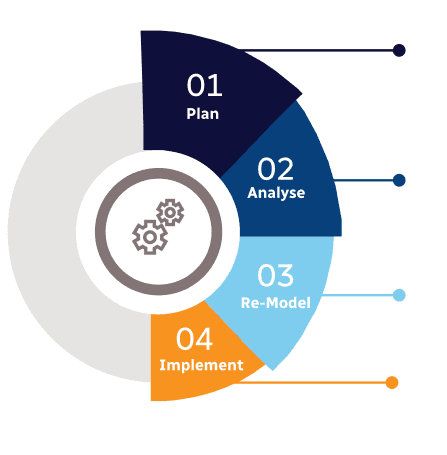
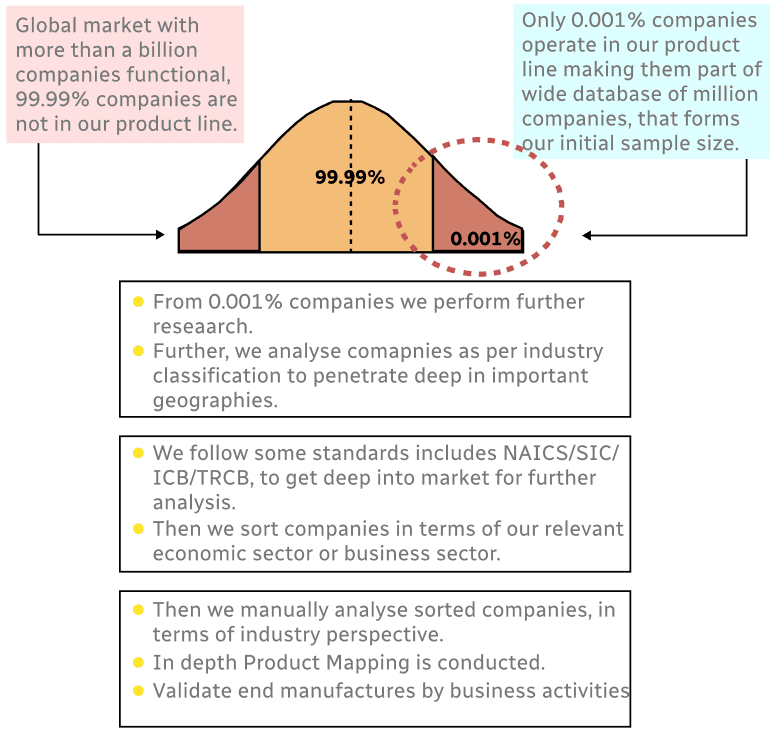
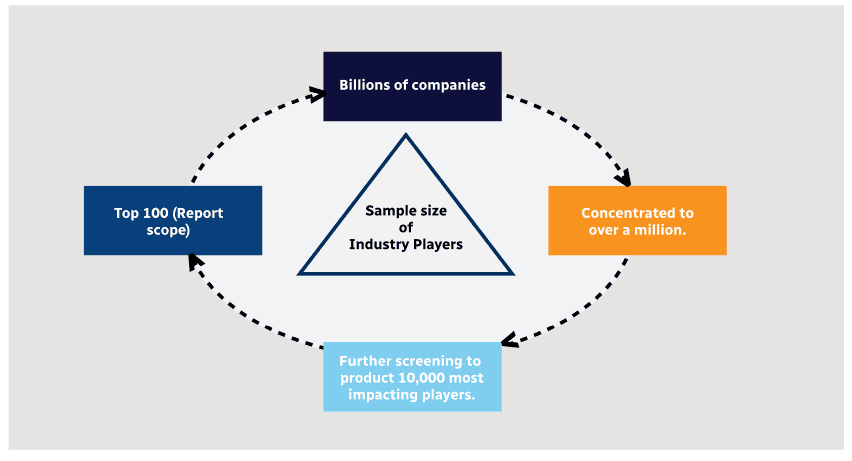
Step 1 - Identification of Relevant Samples Size from Population Database
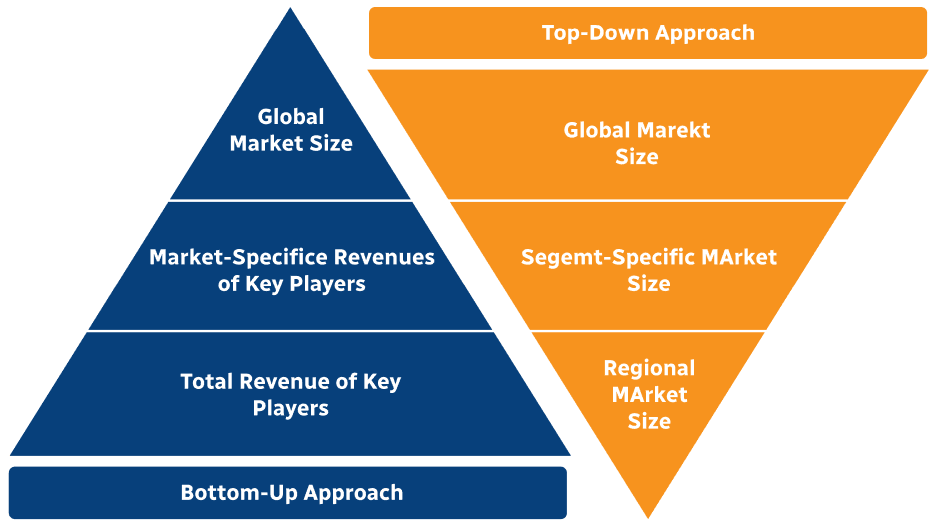
Step 2 - Approaches for Defining Global Market Size (Value, Volume* & Price*)
Note*: In applicable scenarios
Step 3 - Data Sources
Primary Research
- Web Analytics
- Survey Reports
- Research Institute
- Latest Research Reports
- Opinion Leaders
Secondary Research
- Annual Reports
- White Paper
- Latest Press Release
- Industry Association
- Paid Database
- Investor Presentations
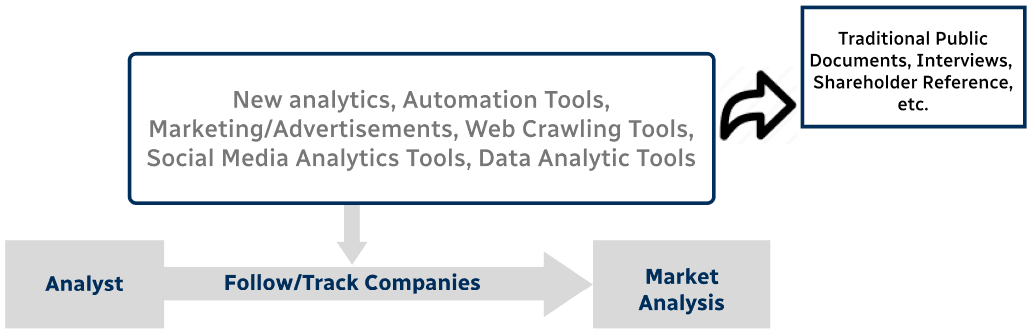
Step 4 - Data Triangulation
Involves using different sources of information in order to increase the validity of a study
These sources are likely to be stakeholders in a program - participants, other researchers, program staff, other community members, and so on.
Then we put all data in single framework & apply various statistical tools to find out the dynamic on the market.
During the analysis stage, feedback from the stakeholder groups would be compared to determine areas of agreement as well as areas of divergence