Key Insights
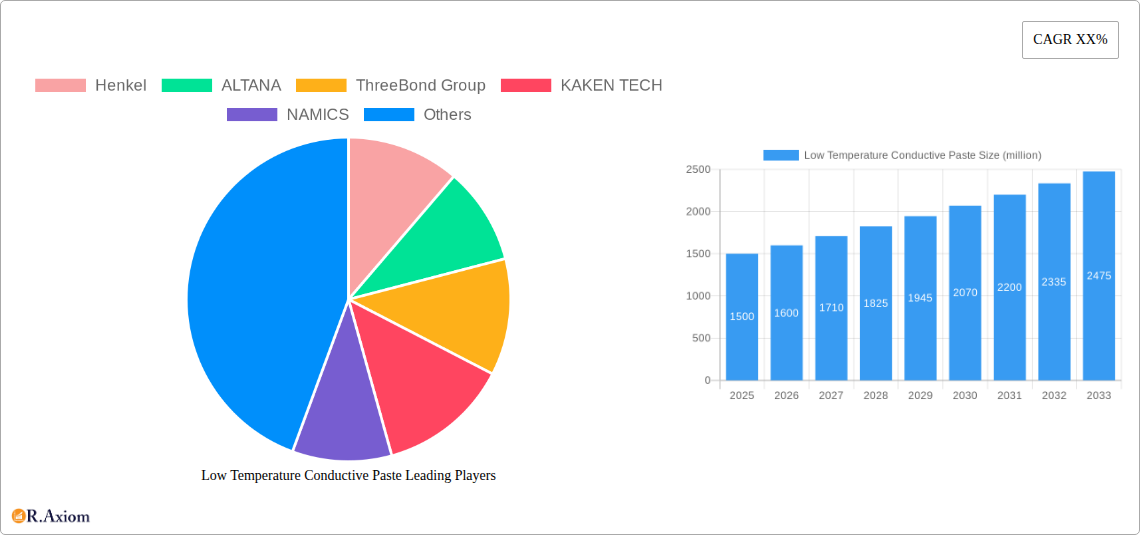
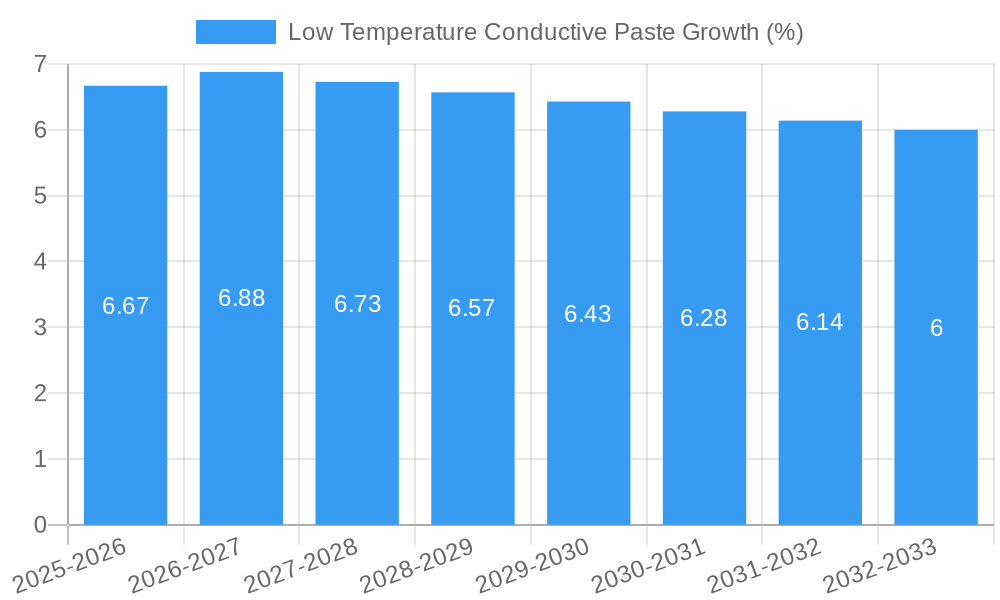
The global Low Temperature Conductive Paste market is poised for significant expansion, projected to reach approximately $1,500 million by 2025 and further grow to an estimated $2,500 million by 2033. This upward trajectory is underpinned by a robust Compound Annual Growth Rate (CAGR) of roughly 6.5% during the forecast period of 2025-2033. This dynamic growth is primarily fueled by the escalating demand across key industries such as Automotive, Electronics, and Aerospace. The increasing adoption of advanced driver-assistance systems (ADAS), the miniaturization of electronic components, and the need for lightweight yet robust materials in aerospace are major drivers. Furthermore, the evolving landscape of flexible electronics and wearable devices, which necessitate conductive pastes curable at lower temperatures to protect sensitive substrates, will also significantly contribute to market expansion. The "Fast Curing Halogen Free Conductive Paste" segment, in particular, is expected to witness substantial growth due to increasing environmental regulations and the demand for safer, more sustainable materials in manufacturing processes.
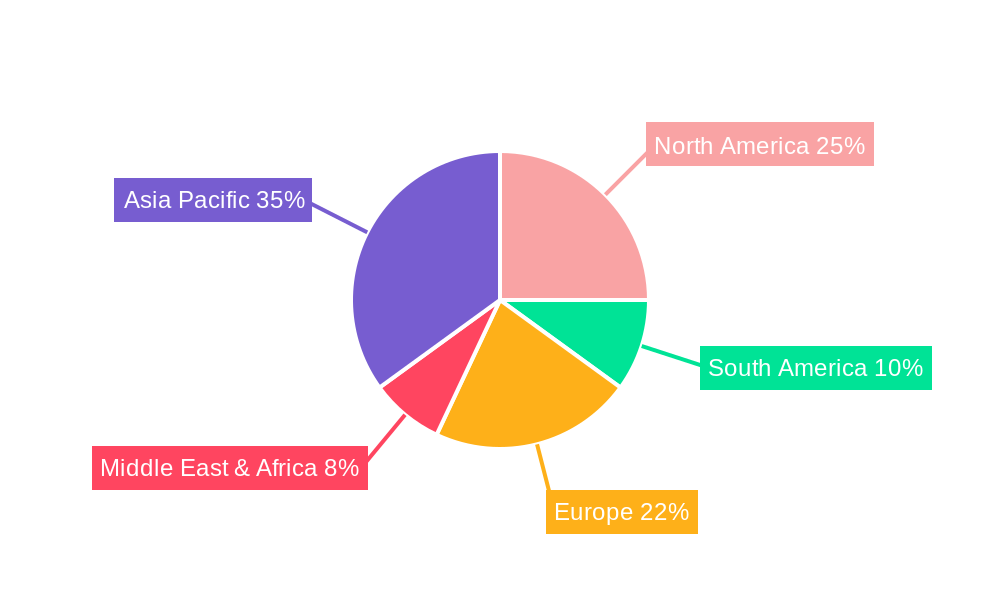
Despite the promising outlook, certain factors present challenges. The high initial cost of raw materials, particularly specialized nanomaterials, and the stringent quality control required for high-performance applications can act as restraints. Intense competition among established players and emerging entrants, as well as the need for continuous research and development to keep pace with technological advancements, also contribute to the competitive intensity. However, the market is actively addressing these through innovation in material science and manufacturing processes. The development of novel conductive paste formulations with enhanced electrical and thermal conductivity at lower curing temperatures, coupled with cost-optimization strategies, are key trends. Companies are focusing on creating tailored solutions for specific applications, such as screen printing, inkjet printing, and dispensing, to cater to diverse manufacturing needs. Asia Pacific is expected to lead the market in terms of both production and consumption, driven by its strong manufacturing base in electronics and automotive sectors, followed by North America and Europe, which are at the forefront of technological innovation and premium applications.
Report Description: Low Temperature Conductive Paste Market Analysis & Forecast (2019-2033)
This comprehensive report offers an in-depth analysis of the global Low Temperature Conductive Paste market, providing crucial insights for industry stakeholders. With a study period spanning from 2019 to 2033, encompassing a base year of 2025, an estimated year of 2025, and a forecast period from 2025 to 2033, this report leverages historical data from 2019-2024 to deliver robust market projections. We delve into the intricacies of conductive paste technologies, their applications across critical sectors like Automotive, Electronics, and Aerospace Industries, and the various product types including Fast Curing Halogen Free Conductive Paste, High Conductivity Printing Conductive Paste, and Nano formulations.
Low Temperature Conductive Paste Market Concentration & Innovation
The Low Temperature Conductive Paste market exhibits a moderate concentration, with key players like Henkel, ALTANA, and ThreeBond Group holding significant market share, estimated at over 20 million. Innovation remains a primary driver, fueled by the demand for advanced materials in high-growth sectors. Regulatory frameworks, particularly concerning halogen-free and environmentally friendly formulations, are shaping product development. Substitutes, while present, often lack the specific performance characteristics required for specialized applications. End-user trends highlight a strong preference for pastes offering enhanced conductivity, lower curing temperatures, and improved reliability. Mergers and Acquisitions (M&A) activity is projected to accelerate, with estimated deal values potentially reaching several hundred million, aimed at consolidating market positions and expanding technological capabilities. The market is characterized by ongoing R&D investment, with companies striving to develop next-generation conductive pastes that meet increasingly stringent performance demands.
Low Temperature Conductive Paste Industry Trends & Insights
The global Low Temperature Conductive Paste market is poised for substantial growth, driven by the escalating demand from the burgeoning electronics and automotive sectors. The compound annual growth rate (CAGR) is projected to be approximately 8.5%, leading to a market size of over 2,500 million by 2033. Technological advancements, particularly in nano-conductive materials and low-temperature curing formulations, are revolutionizing product capabilities and opening new application avenues. Consumer preferences are shifting towards miniaturized and high-performance electronic devices, requiring conductive pastes that can facilitate complex circuitry and efficient heat dissipation. The automotive industry's transition towards electric vehicles (EVs) and advanced driver-assistance systems (ADAS) is a significant growth catalyst, necessitating reliable and durable conductive solutions for battery packs, sensors, and control modules. Furthermore, the increasing adoption of flexible electronics and the Internet of Things (IoT) devices further amplifies the need for versatile and high-performance conductive pastes. Market penetration is steadily increasing across all regions, indicating a strong and sustained demand. Competitive dynamics are characterized by intense innovation and strategic partnerships between material suppliers and device manufacturers, aiming to co-develop solutions tailored to specific application needs. The development of novel binder systems and filler materials is crucial for enhancing conductivity, thermal stability, and adhesion properties, thereby addressing critical performance requirements across diverse end-use industries.
Dominant Markets & Segments in Low Temperature Conductive Paste
The Electronics segment is a dominant force in the Low Temperature Conductive Paste market, projected to account for over 60% of the total market value, estimated at approximately 1,500 million. This dominance is driven by the ever-expanding demand for smartphones, wearables, semiconductors, and advanced computing devices, all of which rely heavily on efficient and reliable conductive interconnections. Within the electronics sector, applications in advanced packaging, printed circuit boards (PCBs), and flexible displays are particularly significant. The Automotive industry represents the second-largest segment, with projected market share exceeding 25%, estimated at over 600 million. The rapid electrification of vehicles, adoption of ADAS, and increasing integration of electronic components in vehicle interiors are key growth drivers. The demand for robust and high-temperature resistant conductive pastes for battery thermal management, sensor integration, and power electronics is substantial. The Aerospace Industries segment, while smaller in volume, is characterized by high-value applications requiring exceptional reliability and performance under extreme conditions, contributing an estimated 150 million.
Among product types, Nano conductive pastes are emerging as a high-growth category due to their superior conductivity and ability to form fine conductive patterns, estimated to grow at a CAGR of over 9%. High Conductivity Printing Conductive Paste is crucial for mass production in electronics, with applications in RFID tags and printed sensors. Fast Curing Halogen Free Conductive Paste is gaining traction due to increasing environmental regulations and the need for efficient manufacturing processes, catering to both automotive and consumer electronics. Regional dominance is observed in Asia Pacific, particularly China, South Korea, and Japan, driven by their robust electronics manufacturing base and significant automotive production. Economic policies promoting technological advancement and infrastructure development further bolster this region's leadership.
Low Temperature Conductive Paste Product Developments
Recent product developments in Low Temperature Conductive Paste are focused on enhancing electrical conductivity, reducing curing temperatures, and improving thermal stability. Innovations in nano-silver and nano-copper formulations are enabling finer circuit printing and improved performance in flexible electronics. The development of halogen-free conductive pastes addresses growing environmental concerns and regulatory compliance. Companies are also introducing pastes with enhanced adhesion to various substrates, including plastics and polymers, expanding their application scope in consumer electronics and automotive components. These advancements offer significant competitive advantages by meeting the evolving demands for miniaturization, higher power density, and increased device reliability.
Report Scope & Segmentation Analysis
This report provides a granular segmentation of the Low Temperature Conductive Paste market. The Application segments include Automotive, Electronics, and Aerospace Industries, each with specific performance requirements and growth trajectories. The Types segmentation covers Fast Curing Halogen Free Conductive Paste, High Conductivity Printing Conductive Paste, and Nano conductive pastes, reflecting the diverse technological approaches and performance characteristics available. Growth projections and market sizes are detailed for each segment, offering a clear understanding of their respective contributions and future potential within the overall market landscape.
- Automotive: This segment is driven by the increasing demand for electric vehicle components, advanced driver-assistance systems, and integrated electronics, with strong growth expected due to vehicle electrification trends.
- Electronics: This is a significant segment driven by consumer electronics, telecommunications, and computing, with continuous innovation in miniaturization and performance requirements.
- Aerospace Industries: This segment demands high-reliability, extreme-condition resistant conductive pastes for critical applications, offering niche but high-value market opportunities.
- Fast Curing Halogen Free Conductive Paste: This type addresses environmental regulations and manufacturing efficiency, finding broad applicability across electronics and automotive.
- High Conductivity Printing Conductive Paste: Essential for large-scale production of printed electronics, RFID, and sensors, it offers cost-effective conductivity solutions.
- Nano Conductive Paste: Represents the cutting edge, offering superior conductivity and fine-patterning capabilities for advanced applications in high-end electronics and emerging technologies.
Key Drivers of Low Temperature Conductive Paste Growth
The growth of the Low Temperature Conductive Paste market is primarily propelled by the rapid expansion of the electronics industry, particularly in areas like 5G technology, Internet of Things (IoT) devices, and advanced semiconductor packaging. The automotive sector's transition towards electric vehicles and autonomous driving systems significantly boosts demand for conductive pastes in battery systems, sensors, and power electronics. Furthermore, increasing government initiatives and regulations favoring environmentally friendly materials, such as halogen-free formulations, are driving innovation and adoption. Technological advancements in nano-materials and low-temperature curing processes are enabling the development of higher-performing and more versatile conductive pastes, catering to evolving application needs and expanding market penetration.
Challenges in the Low Temperature Conductive Paste Sector
Despite robust growth, the Low Temperature Conductive Paste sector faces several challenges. The high cost of raw materials, particularly precious metals like silver, can impact pricing and limit adoption in cost-sensitive applications. Stringent regulatory compliance for material composition and environmental impact adds complexity to product development and manufacturing. Supply chain disruptions, exacerbated by geopolitical factors, can lead to material shortages and price volatility. Intense competition among established players and emerging manufacturers also puts pressure on profit margins. Furthermore, the need for specialized application expertise and equipment for optimal utilization of advanced conductive pastes can pose a barrier to entry for some smaller industries.
Emerging Opportunities in Low Temperature Conductive Paste
Emerging opportunities in the Low Temperature Conductive Paste market are abundant, driven by ongoing technological advancements and evolving industry demands. The growing demand for flexible and wearable electronics presents significant opportunities for highly flexible and stretchable conductive pastes. The expansion of the 5G infrastructure and the proliferation of IoT devices will create a sustained need for high-performance conductive materials for connectivity and sensor applications. Furthermore, advancements in additive manufacturing (3D printing) are opening new avenues for printing complex electronic components, requiring novel conductive pastes with specific rheological properties and printability. The increasing focus on renewable energy solutions, such as solar panels and energy storage systems, also presents a substantial growth area for conductive pastes.
Leading Players in the Low Temperature Conductive Paste Market
- Henkel
- ALTANA
- ThreeBond Group
- KAKEN TECH
- NAMICS
- Asahi Chemical Research Laboratory
- Ajinomoto
- Mitsuboshi Belting
- NIPPON LIGHT METAL
- SEKISUI CHEMICAL
- Ample Electronic Technology
- Suzhou Betely Polymer Materials
- Advanced Electronic Materials
- Guangzhou three electronic material
Key Developments in Low Temperature Conductive Paste Industry
- 2023/11: Launch of a new series of ultra-low temperature curing halogen-free conductive pastes by Henkel, enhancing safety and energy efficiency in electronics manufacturing.
- 2023/09: ALTANA announces strategic investment in nano-material research to accelerate the development of next-generation conductive pastes with enhanced conductivity.
- 2023/07: ThreeBond Group introduces a high-conductivity printing conductive paste optimized for flexible PCBs, enabling finer circuit designs.
- 2023/05: KAKEN TECH expands its product portfolio with advanced nano-conductive pastes for 5G antenna applications.
- 2023/03: NAMICS develops a novel conductive paste with improved adhesion properties for automotive electronic components, enhancing durability.
- 2022/12: Asahi Chemical Research Laboratory showcases a breakthrough in conductive paste formulation, achieving record-low resistivity at ambient temperatures.
- 2022/10: Ajinomoto collaborates with leading electronics manufacturers to develop custom conductive paste solutions for advanced semiconductor packaging.
- 2022/08: Mitsuboshi Belting focuses on developing sustainable conductive paste solutions, utilizing eco-friendly materials and processes.
- 2022/06: NIPPON LIGHT METAL introduces a new range of conductive pastes with enhanced thermal dissipation capabilities for power electronics.
- 2022/04: SEKISUI CHEMICAL announces the acquisition of a specialized conductive material company, strengthening its market position.
- 2022/02: Ample Electronic Technology launches a cost-effective conductive paste solution for mass production of IoT devices.
- 2021/12: Suzhou Betely Polymer Materials invests in advanced R&D to produce high-performance conductive pastes for the rapidly growing Chinese electronics market.
- 2021/10: Advanced Electronic Materials focuses on developing conductive pastes for micro-LED displays, enabling higher resolution and brightness.
- 2021/08: Guangzhou three electronic material strengthens its distribution network to cater to the increasing demand for conductive pastes in the automotive sector.
Strategic Outlook for Low Temperature Conductive Paste Market
The strategic outlook for the Low Temperature Conductive Paste market is exceptionally promising, driven by relentless innovation and expanding application frontiers. The continued evolution of electronic devices towards higher performance, smaller form factors, and increased functionality will sustain robust demand. The transition to electric vehicles and autonomous systems represents a long-term growth engine. Strategic partnerships, focused R&D on novel materials and curing technologies, and a commitment to sustainability will be critical for market leaders. Emerging markets and applications, such as printed electronics and advanced medical devices, offer significant untapped potential, positioning the Low Temperature Conductive Paste market for sustained and dynamic growth in the coming years.
Low Temperature Conductive Paste Segmentation
-
1. Application
- 1.1. Automotive
- 1.2. Electronics
- 1.3. Aerospace Industries
- 1.4. Others
-
2. Types
- 2.1. Fast Curing Halogen Free Conductive Paste
- 2.2. High Conductivity Printing Conductive Paste
- 2.3. Nano
Low Temperature Conductive Paste Segmentation By Geography
-
1. North America
- 1.1. United States
- 1.2. Canada
- 1.3. Mexico
-
2. South America
- 2.1. Brazil
- 2.2. Argentina
- 2.3. Rest of South America
-
3. Europe
- 3.1. United Kingdom
- 3.2. Germany
- 3.3. France
- 3.4. Italy
- 3.5. Spain
- 3.6. Russia
- 3.7. Benelux
- 3.8. Nordics
- 3.9. Rest of Europe
-
4. Middle East & Africa
- 4.1. Turkey
- 4.2. Israel
- 4.3. GCC
- 4.4. North Africa
- 4.5. South Africa
- 4.6. Rest of Middle East & Africa
-
5. Asia Pacific
- 5.1. China
- 5.2. India
- 5.3. Japan
- 5.4. South Korea
- 5.5. ASEAN
- 5.6. Oceania
- 5.7. Rest of Asia Pacific
Low Temperature Conductive Paste REPORT HIGHLIGHTS
| Aspects | Details |
|---|---|
| Study Period | 2019-2033 |
| Base Year | 2024 |
| Estimated Year | 2025 |
| Forecast Period | 2025-2033 |
| Historical Period | 2019-2024 |
| Growth Rate | CAGR of XX% from 2019-2033 |
| Segmentation |
|
Table of Contents
- 1. Introduction
- 1.1. Research Scope
- 1.2. Market Segmentation
- 1.3. Research Methodology
- 1.4. Definitions and Assumptions
- 2. Executive Summary
- 2.1. Introduction
- 3. Market Dynamics
- 3.1. Introduction
- 3.2. Market Drivers
- 3.3. Market Restrains
- 3.4. Market Trends
- 4. Market Factor Analysis
- 4.1. Porters Five Forces
- 4.2. Supply/Value Chain
- 4.3. PESTEL analysis
- 4.4. Market Entropy
- 4.5. Patent/Trademark Analysis
- 5. Global Low Temperature Conductive Paste Analysis, Insights and Forecast, 2019-2031
- 5.1. Market Analysis, Insights and Forecast - by Application
- 5.1.1. Automotive
- 5.1.2. Electronics
- 5.1.3. Aerospace Industries
- 5.1.4. Others
- 5.2. Market Analysis, Insights and Forecast - by Types
- 5.2.1. Fast Curing Halogen Free Conductive Paste
- 5.2.2. High Conductivity Printing Conductive Paste
- 5.2.3. Nano
- 5.3. Market Analysis, Insights and Forecast - by Region
- 5.3.1. North America
- 5.3.2. South America
- 5.3.3. Europe
- 5.3.4. Middle East & Africa
- 5.3.5. Asia Pacific
- 5.1. Market Analysis, Insights and Forecast - by Application
- 6. North America Low Temperature Conductive Paste Analysis, Insights and Forecast, 2019-2031
- 6.1. Market Analysis, Insights and Forecast - by Application
- 6.1.1. Automotive
- 6.1.2. Electronics
- 6.1.3. Aerospace Industries
- 6.1.4. Others
- 6.2. Market Analysis, Insights and Forecast - by Types
- 6.2.1. Fast Curing Halogen Free Conductive Paste
- 6.2.2. High Conductivity Printing Conductive Paste
- 6.2.3. Nano
- 6.1. Market Analysis, Insights and Forecast - by Application
- 7. South America Low Temperature Conductive Paste Analysis, Insights and Forecast, 2019-2031
- 7.1. Market Analysis, Insights and Forecast - by Application
- 7.1.1. Automotive
- 7.1.2. Electronics
- 7.1.3. Aerospace Industries
- 7.1.4. Others
- 7.2. Market Analysis, Insights and Forecast - by Types
- 7.2.1. Fast Curing Halogen Free Conductive Paste
- 7.2.2. High Conductivity Printing Conductive Paste
- 7.2.3. Nano
- 7.1. Market Analysis, Insights and Forecast - by Application
- 8. Europe Low Temperature Conductive Paste Analysis, Insights and Forecast, 2019-2031
- 8.1. Market Analysis, Insights and Forecast - by Application
- 8.1.1. Automotive
- 8.1.2. Electronics
- 8.1.3. Aerospace Industries
- 8.1.4. Others
- 8.2. Market Analysis, Insights and Forecast - by Types
- 8.2.1. Fast Curing Halogen Free Conductive Paste
- 8.2.2. High Conductivity Printing Conductive Paste
- 8.2.3. Nano
- 8.1. Market Analysis, Insights and Forecast - by Application
- 9. Middle East & Africa Low Temperature Conductive Paste Analysis, Insights and Forecast, 2019-2031
- 9.1. Market Analysis, Insights and Forecast - by Application
- 9.1.1. Automotive
- 9.1.2. Electronics
- 9.1.3. Aerospace Industries
- 9.1.4. Others
- 9.2. Market Analysis, Insights and Forecast - by Types
- 9.2.1. Fast Curing Halogen Free Conductive Paste
- 9.2.2. High Conductivity Printing Conductive Paste
- 9.2.3. Nano
- 9.1. Market Analysis, Insights and Forecast - by Application
- 10. Asia Pacific Low Temperature Conductive Paste Analysis, Insights and Forecast, 2019-2031
- 10.1. Market Analysis, Insights and Forecast - by Application
- 10.1.1. Automotive
- 10.1.2. Electronics
- 10.1.3. Aerospace Industries
- 10.1.4. Others
- 10.2. Market Analysis, Insights and Forecast - by Types
- 10.2.1. Fast Curing Halogen Free Conductive Paste
- 10.2.2. High Conductivity Printing Conductive Paste
- 10.2.3. Nano
- 10.1. Market Analysis, Insights and Forecast - by Application
- 11. Competitive Analysis
- 11.1. Global Market Share Analysis 2024
- 11.2. Company Profiles
- 11.2.1 Henkel
- 11.2.1.1. Overview
- 11.2.1.2. Products
- 11.2.1.3. SWOT Analysis
- 11.2.1.4. Recent Developments
- 11.2.1.5. Financials (Based on Availability)
- 11.2.2 ALTANA
- 11.2.2.1. Overview
- 11.2.2.2. Products
- 11.2.2.3. SWOT Analysis
- 11.2.2.4. Recent Developments
- 11.2.2.5. Financials (Based on Availability)
- 11.2.3 ThreeBond Group
- 11.2.3.1. Overview
- 11.2.3.2. Products
- 11.2.3.3. SWOT Analysis
- 11.2.3.4. Recent Developments
- 11.2.3.5. Financials (Based on Availability)
- 11.2.4 KAKEN TECH
- 11.2.4.1. Overview
- 11.2.4.2. Products
- 11.2.4.3. SWOT Analysis
- 11.2.4.4. Recent Developments
- 11.2.4.5. Financials (Based on Availability)
- 11.2.5 NAMICS
- 11.2.5.1. Overview
- 11.2.5.2. Products
- 11.2.5.3. SWOT Analysis
- 11.2.5.4. Recent Developments
- 11.2.5.5. Financials (Based on Availability)
- 11.2.6 Asahi Chemical Research Laboratory
- 11.2.6.1. Overview
- 11.2.6.2. Products
- 11.2.6.3. SWOT Analysis
- 11.2.6.4. Recent Developments
- 11.2.6.5. Financials (Based on Availability)
- 11.2.7 Ajinomoto
- 11.2.7.1. Overview
- 11.2.7.2. Products
- 11.2.7.3. SWOT Analysis
- 11.2.7.4. Recent Developments
- 11.2.7.5. Financials (Based on Availability)
- 11.2.8 Mitsuboshi Belting
- 11.2.8.1. Overview
- 11.2.8.2. Products
- 11.2.8.3. SWOT Analysis
- 11.2.8.4. Recent Developments
- 11.2.8.5. Financials (Based on Availability)
- 11.2.9 NIPPON LIGHT METAL
- 11.2.9.1. Overview
- 11.2.9.2. Products
- 11.2.9.3. SWOT Analysis
- 11.2.9.4. Recent Developments
- 11.2.9.5. Financials (Based on Availability)
- 11.2.10 SEKISUI CHEMICAL
- 11.2.10.1. Overview
- 11.2.10.2. Products
- 11.2.10.3. SWOT Analysis
- 11.2.10.4. Recent Developments
- 11.2.10.5. Financials (Based on Availability)
- 11.2.11 Ample Electronic Technology
- 11.2.11.1. Overview
- 11.2.11.2. Products
- 11.2.11.3. SWOT Analysis
- 11.2.11.4. Recent Developments
- 11.2.11.5. Financials (Based on Availability)
- 11.2.12 Suzhou Betely Polymer Materials
- 11.2.12.1. Overview
- 11.2.12.2. Products
- 11.2.12.3. SWOT Analysis
- 11.2.12.4. Recent Developments
- 11.2.12.5. Financials (Based on Availability)
- 11.2.13 Advanced Electronic Materials
- 11.2.13.1. Overview
- 11.2.13.2. Products
- 11.2.13.3. SWOT Analysis
- 11.2.13.4. Recent Developments
- 11.2.13.5. Financials (Based on Availability)
- 11.2.14 Guangzhou three electronic material
- 11.2.14.1. Overview
- 11.2.14.2. Products
- 11.2.14.3. SWOT Analysis
- 11.2.14.4. Recent Developments
- 11.2.14.5. Financials (Based on Availability)
- 11.2.1 Henkel
List of Figures
- Figure 1: Global Low Temperature Conductive Paste Revenue Breakdown (million, %) by Region 2024 & 2032
- Figure 2: North America Low Temperature Conductive Paste Revenue (million), by Application 2024 & 2032
- Figure 3: North America Low Temperature Conductive Paste Revenue Share (%), by Application 2024 & 2032
- Figure 4: North America Low Temperature Conductive Paste Revenue (million), by Types 2024 & 2032
- Figure 5: North America Low Temperature Conductive Paste Revenue Share (%), by Types 2024 & 2032
- Figure 6: North America Low Temperature Conductive Paste Revenue (million), by Country 2024 & 2032
- Figure 7: North America Low Temperature Conductive Paste Revenue Share (%), by Country 2024 & 2032
- Figure 8: South America Low Temperature Conductive Paste Revenue (million), by Application 2024 & 2032
- Figure 9: South America Low Temperature Conductive Paste Revenue Share (%), by Application 2024 & 2032
- Figure 10: South America Low Temperature Conductive Paste Revenue (million), by Types 2024 & 2032
- Figure 11: South America Low Temperature Conductive Paste Revenue Share (%), by Types 2024 & 2032
- Figure 12: South America Low Temperature Conductive Paste Revenue (million), by Country 2024 & 2032
- Figure 13: South America Low Temperature Conductive Paste Revenue Share (%), by Country 2024 & 2032
- Figure 14: Europe Low Temperature Conductive Paste Revenue (million), by Application 2024 & 2032
- Figure 15: Europe Low Temperature Conductive Paste Revenue Share (%), by Application 2024 & 2032
- Figure 16: Europe Low Temperature Conductive Paste Revenue (million), by Types 2024 & 2032
- Figure 17: Europe Low Temperature Conductive Paste Revenue Share (%), by Types 2024 & 2032
- Figure 18: Europe Low Temperature Conductive Paste Revenue (million), by Country 2024 & 2032
- Figure 19: Europe Low Temperature Conductive Paste Revenue Share (%), by Country 2024 & 2032
- Figure 20: Middle East & Africa Low Temperature Conductive Paste Revenue (million), by Application 2024 & 2032
- Figure 21: Middle East & Africa Low Temperature Conductive Paste Revenue Share (%), by Application 2024 & 2032
- Figure 22: Middle East & Africa Low Temperature Conductive Paste Revenue (million), by Types 2024 & 2032
- Figure 23: Middle East & Africa Low Temperature Conductive Paste Revenue Share (%), by Types 2024 & 2032
- Figure 24: Middle East & Africa Low Temperature Conductive Paste Revenue (million), by Country 2024 & 2032
- Figure 25: Middle East & Africa Low Temperature Conductive Paste Revenue Share (%), by Country 2024 & 2032
- Figure 26: Asia Pacific Low Temperature Conductive Paste Revenue (million), by Application 2024 & 2032
- Figure 27: Asia Pacific Low Temperature Conductive Paste Revenue Share (%), by Application 2024 & 2032
- Figure 28: Asia Pacific Low Temperature Conductive Paste Revenue (million), by Types 2024 & 2032
- Figure 29: Asia Pacific Low Temperature Conductive Paste Revenue Share (%), by Types 2024 & 2032
- Figure 30: Asia Pacific Low Temperature Conductive Paste Revenue (million), by Country 2024 & 2032
- Figure 31: Asia Pacific Low Temperature Conductive Paste Revenue Share (%), by Country 2024 & 2032
List of Tables
- Table 1: Global Low Temperature Conductive Paste Revenue million Forecast, by Region 2019 & 2032
- Table 2: Global Low Temperature Conductive Paste Revenue million Forecast, by Application 2019 & 2032
- Table 3: Global Low Temperature Conductive Paste Revenue million Forecast, by Types 2019 & 2032
- Table 4: Global Low Temperature Conductive Paste Revenue million Forecast, by Region 2019 & 2032
- Table 5: Global Low Temperature Conductive Paste Revenue million Forecast, by Application 2019 & 2032
- Table 6: Global Low Temperature Conductive Paste Revenue million Forecast, by Types 2019 & 2032
- Table 7: Global Low Temperature Conductive Paste Revenue million Forecast, by Country 2019 & 2032
- Table 8: United States Low Temperature Conductive Paste Revenue (million) Forecast, by Application 2019 & 2032
- Table 9: Canada Low Temperature Conductive Paste Revenue (million) Forecast, by Application 2019 & 2032
- Table 10: Mexico Low Temperature Conductive Paste Revenue (million) Forecast, by Application 2019 & 2032
- Table 11: Global Low Temperature Conductive Paste Revenue million Forecast, by Application 2019 & 2032
- Table 12: Global Low Temperature Conductive Paste Revenue million Forecast, by Types 2019 & 2032
- Table 13: Global Low Temperature Conductive Paste Revenue million Forecast, by Country 2019 & 2032
- Table 14: Brazil Low Temperature Conductive Paste Revenue (million) Forecast, by Application 2019 & 2032
- Table 15: Argentina Low Temperature Conductive Paste Revenue (million) Forecast, by Application 2019 & 2032
- Table 16: Rest of South America Low Temperature Conductive Paste Revenue (million) Forecast, by Application 2019 & 2032
- Table 17: Global Low Temperature Conductive Paste Revenue million Forecast, by Application 2019 & 2032
- Table 18: Global Low Temperature Conductive Paste Revenue million Forecast, by Types 2019 & 2032
- Table 19: Global Low Temperature Conductive Paste Revenue million Forecast, by Country 2019 & 2032
- Table 20: United Kingdom Low Temperature Conductive Paste Revenue (million) Forecast, by Application 2019 & 2032
- Table 21: Germany Low Temperature Conductive Paste Revenue (million) Forecast, by Application 2019 & 2032
- Table 22: France Low Temperature Conductive Paste Revenue (million) Forecast, by Application 2019 & 2032
- Table 23: Italy Low Temperature Conductive Paste Revenue (million) Forecast, by Application 2019 & 2032
- Table 24: Spain Low Temperature Conductive Paste Revenue (million) Forecast, by Application 2019 & 2032
- Table 25: Russia Low Temperature Conductive Paste Revenue (million) Forecast, by Application 2019 & 2032
- Table 26: Benelux Low Temperature Conductive Paste Revenue (million) Forecast, by Application 2019 & 2032
- Table 27: Nordics Low Temperature Conductive Paste Revenue (million) Forecast, by Application 2019 & 2032
- Table 28: Rest of Europe Low Temperature Conductive Paste Revenue (million) Forecast, by Application 2019 & 2032
- Table 29: Global Low Temperature Conductive Paste Revenue million Forecast, by Application 2019 & 2032
- Table 30: Global Low Temperature Conductive Paste Revenue million Forecast, by Types 2019 & 2032
- Table 31: Global Low Temperature Conductive Paste Revenue million Forecast, by Country 2019 & 2032
- Table 32: Turkey Low Temperature Conductive Paste Revenue (million) Forecast, by Application 2019 & 2032
- Table 33: Israel Low Temperature Conductive Paste Revenue (million) Forecast, by Application 2019 & 2032
- Table 34: GCC Low Temperature Conductive Paste Revenue (million) Forecast, by Application 2019 & 2032
- Table 35: North Africa Low Temperature Conductive Paste Revenue (million) Forecast, by Application 2019 & 2032
- Table 36: South Africa Low Temperature Conductive Paste Revenue (million) Forecast, by Application 2019 & 2032
- Table 37: Rest of Middle East & Africa Low Temperature Conductive Paste Revenue (million) Forecast, by Application 2019 & 2032
- Table 38: Global Low Temperature Conductive Paste Revenue million Forecast, by Application 2019 & 2032
- Table 39: Global Low Temperature Conductive Paste Revenue million Forecast, by Types 2019 & 2032
- Table 40: Global Low Temperature Conductive Paste Revenue million Forecast, by Country 2019 & 2032
- Table 41: China Low Temperature Conductive Paste Revenue (million) Forecast, by Application 2019 & 2032
- Table 42: India Low Temperature Conductive Paste Revenue (million) Forecast, by Application 2019 & 2032
- Table 43: Japan Low Temperature Conductive Paste Revenue (million) Forecast, by Application 2019 & 2032
- Table 44: South Korea Low Temperature Conductive Paste Revenue (million) Forecast, by Application 2019 & 2032
- Table 45: ASEAN Low Temperature Conductive Paste Revenue (million) Forecast, by Application 2019 & 2032
- Table 46: Oceania Low Temperature Conductive Paste Revenue (million) Forecast, by Application 2019 & 2032
- Table 47: Rest of Asia Pacific Low Temperature Conductive Paste Revenue (million) Forecast, by Application 2019 & 2032
Frequently Asked Questions
1. What is the projected Compound Annual Growth Rate (CAGR) of the Low Temperature Conductive Paste?
The projected CAGR is approximately XX%.
2. Which companies are prominent players in the Low Temperature Conductive Paste?
Key companies in the market include Henkel, ALTANA, ThreeBond Group, KAKEN TECH, NAMICS, Asahi Chemical Research Laboratory, Ajinomoto, Mitsuboshi Belting, NIPPON LIGHT METAL, SEKISUI CHEMICAL, Ample Electronic Technology, Suzhou Betely Polymer Materials, Advanced Electronic Materials, Guangzhou three electronic material.
3. What are the main segments of the Low Temperature Conductive Paste?
The market segments include Application, Types.
4. Can you provide details about the market size?
The market size is estimated to be USD XXX million as of 2022.
5. What are some drivers contributing to market growth?
N/A
6. What are the notable trends driving market growth?
N/A
7. Are there any restraints impacting market growth?
N/A
8. Can you provide examples of recent developments in the market?
N/A
9. What pricing options are available for accessing the report?
Pricing options include single-user, multi-user, and enterprise licenses priced at USD 4900.00, USD 7350.00, and USD 9800.00 respectively.
10. Is the market size provided in terms of value or volume?
The market size is provided in terms of value, measured in million.
11. Are there any specific market keywords associated with the report?
Yes, the market keyword associated with the report is "Low Temperature Conductive Paste," which aids in identifying and referencing the specific market segment covered.
12. How do I determine which pricing option suits my needs best?
The pricing options vary based on user requirements and access needs. Individual users may opt for single-user licenses, while businesses requiring broader access may choose multi-user or enterprise licenses for cost-effective access to the report.
13. Are there any additional resources or data provided in the Low Temperature Conductive Paste report?
While the report offers comprehensive insights, it's advisable to review the specific contents or supplementary materials provided to ascertain if additional resources or data are available.
14. How can I stay updated on further developments or reports in the Low Temperature Conductive Paste?
To stay informed about further developments, trends, and reports in the Low Temperature Conductive Paste, consider subscribing to industry newsletters, following relevant companies and organizations, or regularly checking reputable industry news sources and publications.
Methodology
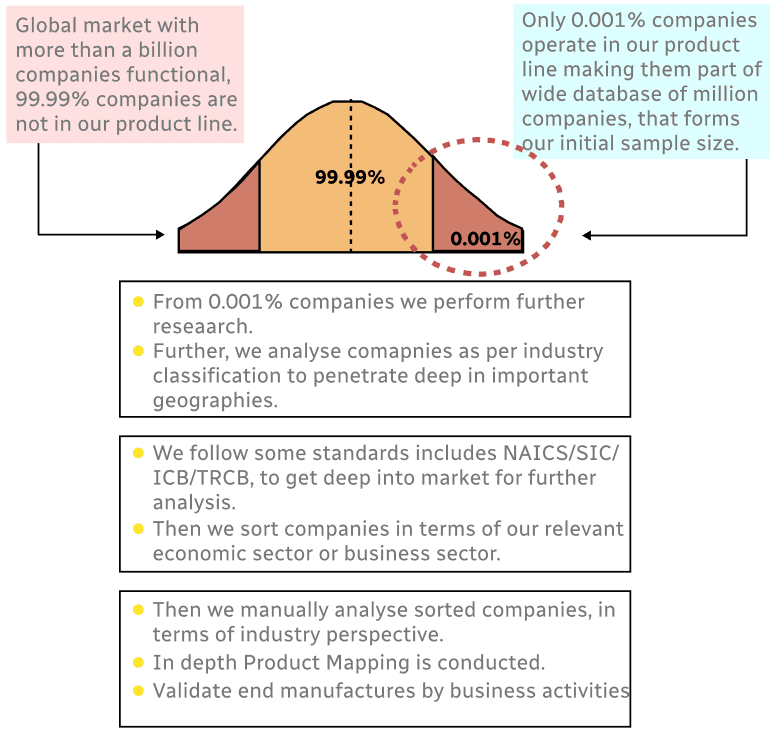
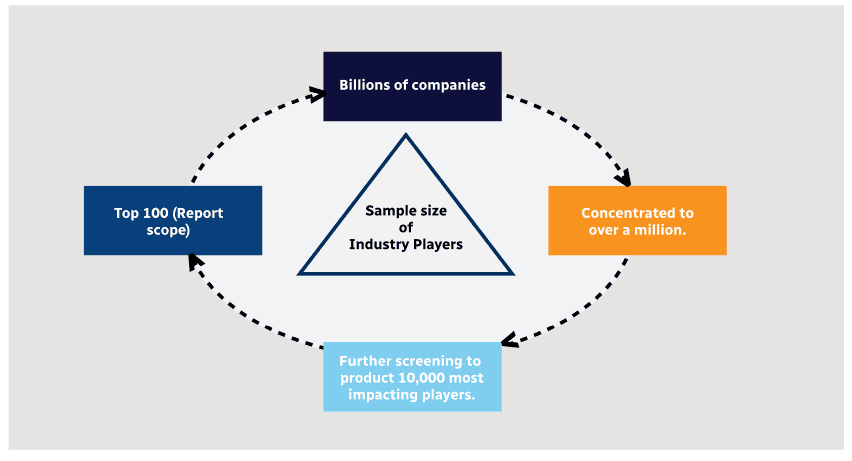
Step 1 - Identification of Relevant Samples Size from Population Database
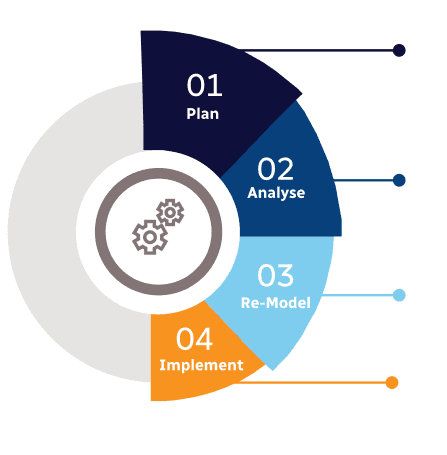
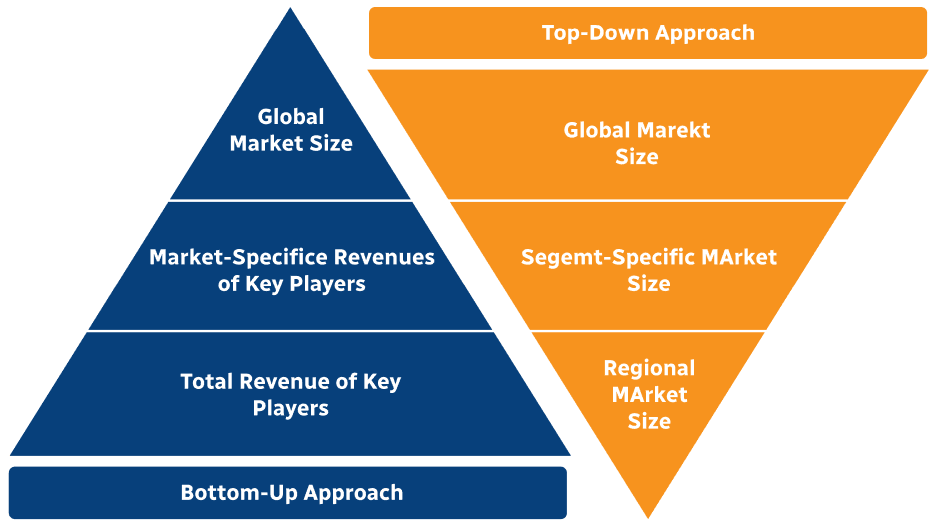
Step 2 - Approaches for Defining Global Market Size (Value, Volume* & Price*)
Note*: In applicable scenarios
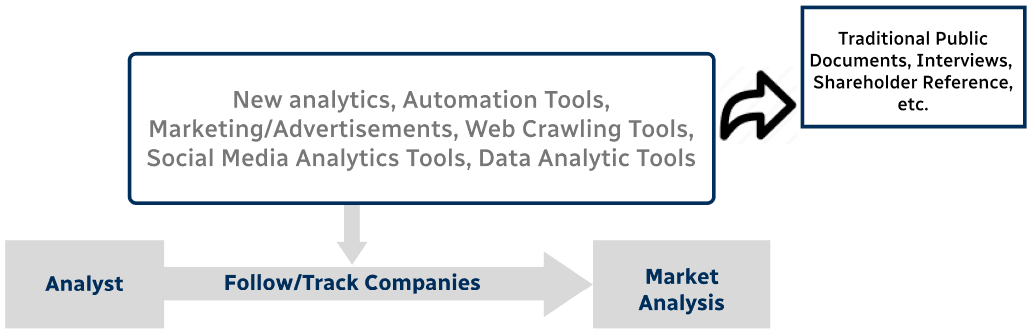
Step 3 - Data Sources
Primary Research
- Web Analytics
- Survey Reports
- Research Institute
- Latest Research Reports
- Opinion Leaders
Secondary Research
- Annual Reports
- White Paper
- Latest Press Release
- Industry Association
- Paid Database
- Investor Presentations
Step 4 - Data Triangulation
Involves using different sources of information in order to increase the validity of a study
These sources are likely to be stakeholders in a program - participants, other researchers, program staff, other community members, and so on.
Then we put all data in single framework & apply various statistical tools to find out the dynamic on the market.
During the analysis stage, feedback from the stakeholder groups would be compared to determine areas of agreement as well as areas of divergence