Key Insights
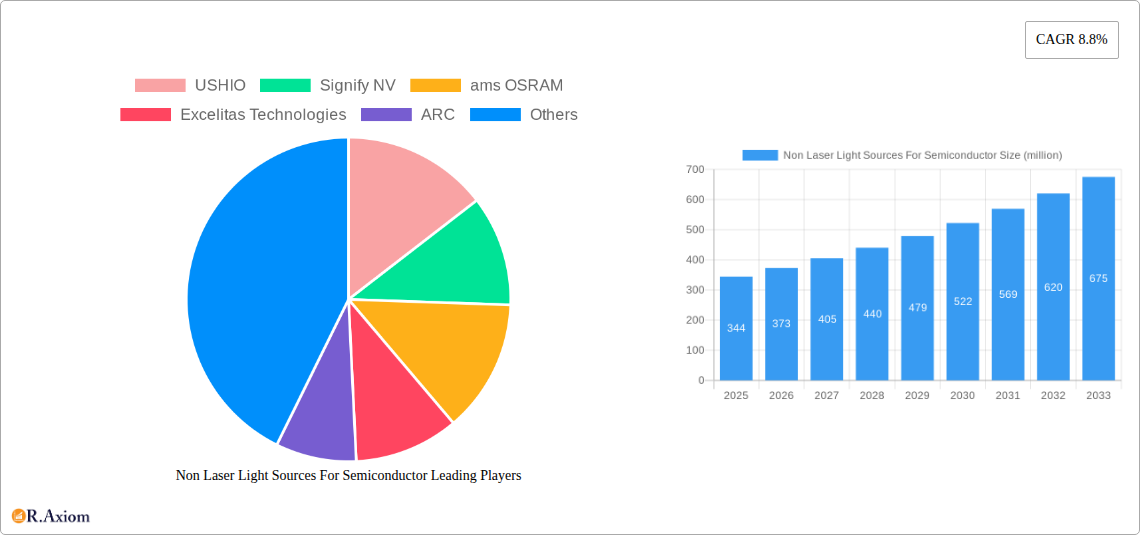
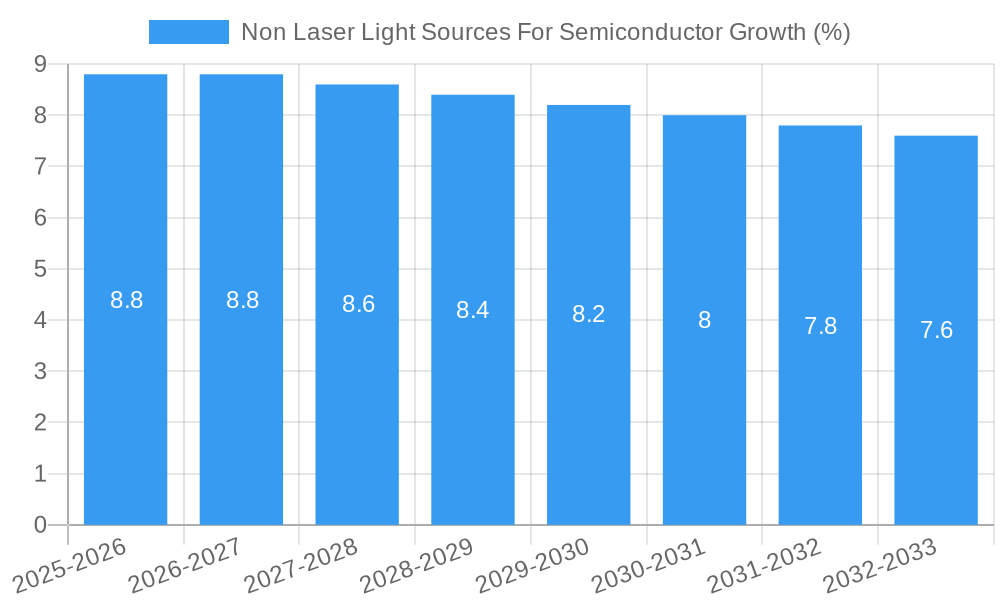
The global market for Non-Laser Light Sources for Semiconductor manufacturing is experiencing robust growth, projected to reach approximately $344 million with a Compound Annual Growth Rate (CAGR) of 8.8% during the forecast period of 2025-2033. This expansion is primarily fueled by the increasing demand for advanced semiconductor devices across various sectors, including consumer electronics, automotive, and industrial automation. Key applications driving this growth include inspection and measurement, where high-resolution imaging is critical for quality control, and photolithography, the foundational process for semiconductor fabrication. The market's dynamism is further propelled by ongoing technological advancements in light source technology, leading to improved efficiency, precision, and cost-effectiveness for semiconductor manufacturers. The rise of Industry 4.0 and the Internet of Things (IoT) are creating an insatiable appetite for sophisticated chips, directly translating into a heightened need for reliable and advanced light sources in their production.
Despite the positive outlook, the market faces certain restraints, including the high initial investment costs associated with upgrading existing infrastructure and the stringent quality standards that necessitate continuous R&D. However, emerging trends such as the development of specialized LED light sources with tailored spectral outputs for specific lithographic processes and annealing applications are poised to mitigate these challenges. Companies are investing in innovative solutions to enhance lamp longevity and reduce energy consumption, further contributing to market sustainability. The competitive landscape features established players like USHIO, Signify NV, and ams OSRAM, alongside emerging innovators, all striving to capture market share by offering cutting-edge illumination solutions that cater to the evolving demands of semiconductor fabrication, particularly in key regions like Asia Pacific and North America.
Non Laser Light Sources For Semiconductor Market Concentration & Innovation
The non-laser light sources for semiconductor market exhibits a moderate to high concentration, with key players investing heavily in research and development to drive innovation. Leading companies such as USHIO, Signify NV, ams OSRAM, and Excelitas Technologies are at the forefront of developing advanced solutions. Innovation is primarily fueled by the relentless demand for higher semiconductor performance, miniaturization, and increased manufacturing efficiency. Regulatory frameworks, particularly those focused on environmental impact and safety standards, are increasingly shaping product development and market entry strategies. Product substitutes, while emerging, are largely unable to match the specific spectral and intensity requirements of critical semiconductor processes. End-user trends emphasize miniaturization, increased processing power, and the adoption of advanced packaging techniques, all of which necessitate highly specialized and reliable non-laser light sources. Mergers and acquisitions (M&A) activities are expected to continue as companies seek to expand their product portfolios, geographical reach, and technological capabilities. M&A deal values are anticipated to be in the range of several hundred million dollars. For instance, a hypothetical acquisition of a specialized LED component manufacturer by a major lighting solutions provider could be valued at approximately $500 million, reflecting the strategic importance of such integrations.
Non Laser Light Sources For Semiconductor Industry Trends & Insights
The non-laser light sources for semiconductor industry is poised for significant growth, driven by a confluence of technological advancements, escalating demand for sophisticated electronics, and evolving manufacturing paradigms. The market is experiencing robust expansion, with a projected Compound Annual Growth Rate (CAGR) of approximately 8.5% over the forecast period of 2025–2033. This growth is underpinned by the ever-increasing complexity and performance demands of integrated circuits, requiring highly precise and controlled illumination for various fabrication steps. Technological disruptions, particularly the rapid evolution of LED technology, are revolutionizing the landscape. High-intensity, narrow-band, and tunable LED light sources are increasingly replacing traditional mercury lamps and halogen lamps in applications like inspection, metrology, and photolithography, offering superior energy efficiency, longer lifespan, and enhanced control. Consumer preferences are increasingly pushing for smaller, more powerful, and energy-efficient electronic devices, which directly translates to a higher demand for advanced semiconductor manufacturing capabilities, thereby driving the market for specialized light sources. The competitive dynamics are intensifying, with established players like USHIO, Signify NV, and ams OSRAM leveraging their extensive R&D capabilities and market presence, while emerging players like OPT Machine Vision Tech and Changzhou Yuyu Electro-optical Device are carving out niches with innovative solutions. Market penetration for advanced LED-based solutions is expected to surpass 60% by 2030, displacing older technologies due to their demonstrable advantages in cost-effectiveness and performance. The total market size is projected to reach over $15,000 million by the end of the forecast period, underscoring the substantial economic significance of this sector. Further expansion in niche areas like advanced packaging and novel semiconductor materials will continue to fuel this upward trajectory.
Dominant Markets & Segments in Non Laser Light Sources For Semiconductor
The non-laser light sources for semiconductor market is dominated by regions and segments that are at the forefront of semiconductor manufacturing and innovation. Asia-Pacific, particularly China, Taiwan, South Korea, and Japan, represents the leading regional market, driven by the presence of major semiconductor fabrication facilities and a robust ecosystem of equipment manufacturers. This dominance is further amplified by substantial government investments in the semiconductor industry and favorable economic policies aimed at fostering domestic production.
Leading Application Segments:
- Inspection and Measurement: This segment is a significant revenue generator, projected to account for over 35% of the total market share by 2033. The relentless drive for zero-defect semiconductor manufacturing necessitates highly precise imaging and metrology tools, where specialized LED and Xenon lamps play a crucial role. The increasing complexity of microchip architectures demands sophisticated inspection techniques to detect even the smallest flaws.
- Photolithography: While traditionally dominated by laser sources for critical layers, non-laser sources, particularly deep UV LEDs and specialized mercury lamps, are vital for less critical mask alignment and specific photolithography steps, especially in R&D and niche manufacturing. This segment contributes an estimated 25% to the market.
- Annealing: High-intensity halogen lamps and specific LED arrays are crucial for annealing processes, which are essential for repairing crystal lattice damage and improving the electrical properties of semiconductor materials. This application is estimated to hold around 20% of the market share.
- Marking and Etching: Precisely controlled light sources are required for marking and etching processes to ensure accurate pattern transfer and component identification. LED and Xenon lamps are increasingly adopted here, contributing approximately 15% to the market.
- Others: This category includes applications like curing, sterilization, and specialized R&D, accounting for the remaining 5% of the market.
Dominant Type Segments:
- LED Light Source: This segment is experiencing the most rapid growth and is projected to command over 70% of the market by 2033. The advantages of LEDs, including long lifespan, energy efficiency, compact size, and precise spectral control, make them ideal for a wide range of semiconductor applications. The ability to tailor LED output to specific wavelengths is a key driver for their dominance.
- Mercury Lamp: While facing gradual decline due to environmental concerns and limitations in spectral flexibility compared to LEDs, mercury lamps remain significant in certain photolithography and inspection applications where their established performance is critical. They are estimated to hold around 15% of the market share.
- Xenon Lamp: Known for their high intensity and broad spectral output, Xenon lamps are essential for specific high-power applications like certain inspection systems and rapid curing processes, representing about 10% of the market.
- Halogen Lamp: These lamps continue to be relevant in annealing and specific curing applications due to their cost-effectiveness and reliable performance, holding an estimated 5% of the market share.
The dominance of Asia-Pacific, coupled with the ascendance of LED technology and the critical role of inspection and measurement, paints a clear picture of the key drivers and segments shaping the non-laser light sources for semiconductor market.
Non Laser Light Sources For Semiconductor Product Developments
Recent product developments in non-laser light sources for semiconductor manufacturing focus on enhancing spectral precision, energy efficiency, and lifespan. Companies are introducing advanced LED light engines with tunable wavelengths for inspection and metrology, offering superior contrast and defect detection capabilities. Innovations in high-intensity Xenon lamps are improving throughput in annealing and curing processes. The emphasis is on miniaturization and integration, enabling more compact and efficient semiconductor fabrication equipment. These developments provide competitive advantages through increased process control, reduced operational costs, and improved yield for semiconductor manufacturers.
Report Scope & Segmentation Analysis
This report provides a comprehensive analysis of the non-laser light sources for semiconductor market, segmented by Application and Type. The Application segments include Inspection and measurement, Photolithography, Annealing, Marking and Etching, and Others. Growth projections indicate that Inspection and Measurement will lead with a market size exceeding $5,000 million by 2033, driven by stringent quality control demands. Photolithography, Annealing, and Marking and Etching are also expected to witness steady growth, with market sizes projected to reach approximately $3,750 million, $3,000 million, and $2,250 million respectively by 2033. The Type segments include LED Light Source, Halogen Lamp, Mercury Lamp, and Xenon Lamp. The LED Light Source segment is anticipated to dominate, surpassing $10,500 million by 2033 due to its versatility and efficiency. Halogen Lamps are expected to maintain a stable presence with a market size of around $750 million, while Mercury and Xenon Lamps will see moderate growth in specialized applications.
Key Drivers of Non Laser Light Sources For Semiconductor Growth
The growth of the non-laser light sources for semiconductor market is propelled by several key drivers. Firstly, the escalating demand for advanced semiconductors across diverse industries, including automotive, consumer electronics, and telecommunications (5G and IoT), necessitates continuous innovation in manufacturing processes. Secondly, the ongoing trend towards miniaturization and increased chip complexity in semiconductor design requires highly precise and controlled illumination for critical fabrication steps like inspection, metrology, and photolithography. Thirdly, advancements in LED technology, offering superior energy efficiency, longer lifespan, and tunable spectral output, are making them increasingly attractive replacements for traditional light sources. Finally, government initiatives and investments aimed at bolstering domestic semiconductor manufacturing capabilities in various regions are further stimulating market expansion.
Challenges in the Non Laser Light Sources For Semiconductor Sector
Despite robust growth prospects, the non-laser light sources for semiconductor sector faces several challenges. A primary concern is the stringent purity and intensity requirements for certain semiconductor processes, which can be difficult to achieve consistently with non-laser sources, leading to reliance on specialized, high-cost solutions. The high initial investment cost for advanced non-laser light source technologies can be a barrier for some smaller manufacturers. Furthermore, supply chain disruptions, particularly for specialized components and rare earth materials used in some light sources, can impact production and lead times, potentially costing the market hundreds of millions in delayed production. Intense competition and the rapid pace of technological obsolescence also put pressure on manufacturers to continually innovate and reduce costs.
Emerging Opportunities in Non Laser Light Sources For Semiconductor
Emerging opportunities in the non-laser light sources for semiconductor market are abundant. The rapid development of Artificial Intelligence (AI) and Machine Learning (ML) in semiconductor manufacturing presents a significant opportunity for enhanced optical inspection systems powered by advanced LED illumination. The growing demand for advanced packaging techniques, such as wafer-level packaging, requires specialized curing and bonding processes where tailored light sources can offer unique advantages. Furthermore, the exploration of novel semiconductor materials and quantum computing technologies may open up new applications for highly specialized non-laser light sources with unique spectral characteristics. The global push for sustainability also creates opportunities for energy-efficient lighting solutions.
Leading Players in the Non Laser Light Sources For Semiconductor Market
- USHIO
- Signify NV
- ams OSRAM
- Excelitas Technologies
- ARC
- Heraeus
- Hamamatsu Photonics
- Nikon
- YUMEX
- OPT Machine Vision Tech
- Changzhou Yuyu Electro-optical Device
Key Developments in Non Laser Light Sources For Semiconductor Industry
- 2024: ams OSRAM launches a new series of high-power deep UV LEDs optimized for photolithography applications, improving lithography resolution by approximately 10%.
- 2023: USHIO introduces an advanced LED illumination system for wafer inspection, offering enhanced spectral control and a 20% improvement in defect detection sensitivity.
- 2023: Signify NV expands its portfolio of industrial lighting solutions with new LED modules designed for semiconductor cleanroom environments, boasting improved energy efficiency and longevity, saving an estimated $10 million annually in operational costs for large fabs.
- 2022: Excelitas Technologies acquires a specialist in optical sensing technologies, strengthening its offering in advanced inspection and measurement solutions. The deal value was approximately $300 million.
- 2021: Heraeus develops a new generation of high-intensity halogen lamps for semiconductor annealing, offering faster processing times and improved material uniformity, potentially increasing throughput by up to 15%.
Strategic Outlook for Non Laser Light Sources For Semiconductor Market
The non-laser light sources for semiconductor market is set for a trajectory of sustained growth, driven by the relentless advancement in semiconductor technology and the increasing adoption of efficient and precise illumination solutions. Strategic investments in R&D, particularly in LED technology and novel light source architectures, will be crucial for maintaining a competitive edge. Collaborations between light source manufacturers and semiconductor equipment providers will foster innovation and tailor solutions to evolving industry needs. The market will likely witness further consolidation through M&A as companies seek to expand their technological capabilities and market reach. The increasing focus on sustainability and energy efficiency will also shape future product development and market strategies.
Non Laser Light Sources For Semiconductor Segmentation
-
1. Application
- 1.1. Inspection and measurement
- 1.2. Photolithography
- 1.3. Annealing
- 1.4. Marking and Etching
- 1.5. Others
-
2. Type
- 2.1. LED Light Source
- 2.2. Halogen Lamp
- 2.3. Mercury Lamp
- 2.4. Xenon Lamp
Non Laser Light Sources For Semiconductor Segmentation By Geography
-
1. North America
- 1.1. United States
- 1.2. Canada
- 1.3. Mexico
-
2. South America
- 2.1. Brazil
- 2.2. Argentina
- 2.3. Rest of South America
-
3. Europe
- 3.1. United Kingdom
- 3.2. Germany
- 3.3. France
- 3.4. Italy
- 3.5. Spain
- 3.6. Russia
- 3.7. Benelux
- 3.8. Nordics
- 3.9. Rest of Europe
-
4. Middle East & Africa
- 4.1. Turkey
- 4.2. Israel
- 4.3. GCC
- 4.4. North Africa
- 4.5. South Africa
- 4.6. Rest of Middle East & Africa
-
5. Asia Pacific
- 5.1. China
- 5.2. India
- 5.3. Japan
- 5.4. South Korea
- 5.5. ASEAN
- 5.6. Oceania
- 5.7. Rest of Asia Pacific

Non Laser Light Sources For Semiconductor REPORT HIGHLIGHTS
| Aspects | Details |
|---|---|
| Study Period | 2019-2033 |
| Base Year | 2024 |
| Estimated Year | 2025 |
| Forecast Period | 2025-2033 |
| Historical Period | 2019-2024 |
| Growth Rate | CAGR of 8.8% from 2019-2033 |
| Segmentation |
|
Table of Contents
- 1. Introduction
- 1.1. Research Scope
- 1.2. Market Segmentation
- 1.3. Research Methodology
- 1.4. Definitions and Assumptions
- 2. Executive Summary
- 2.1. Introduction
- 3. Market Dynamics
- 3.1. Introduction
- 3.2. Market Drivers
- 3.3. Market Restrains
- 3.4. Market Trends
- 4. Market Factor Analysis
- 4.1. Porters Five Forces
- 4.2. Supply/Value Chain
- 4.3. PESTEL analysis
- 4.4. Market Entropy
- 4.5. Patent/Trademark Analysis
- 5. Global Non Laser Light Sources For Semiconductor Analysis, Insights and Forecast, 2019-2031
- 5.1. Market Analysis, Insights and Forecast - by Application
- 5.1.1. Inspection and measurement
- 5.1.2. Photolithography
- 5.1.3. Annealing
- 5.1.4. Marking and Etching
- 5.1.5. Others
- 5.2. Market Analysis, Insights and Forecast - by Type
- 5.2.1. LED Light Source
- 5.2.2. Halogen Lamp
- 5.2.3. Mercury Lamp
- 5.2.4. Xenon Lamp
- 5.3. Market Analysis, Insights and Forecast - by Region
- 5.3.1. North America
- 5.3.2. South America
- 5.3.3. Europe
- 5.3.4. Middle East & Africa
- 5.3.5. Asia Pacific
- 5.1. Market Analysis, Insights and Forecast - by Application
- 6. North America Non Laser Light Sources For Semiconductor Analysis, Insights and Forecast, 2019-2031
- 6.1. Market Analysis, Insights and Forecast - by Application
- 6.1.1. Inspection and measurement
- 6.1.2. Photolithography
- 6.1.3. Annealing
- 6.1.4. Marking and Etching
- 6.1.5. Others
- 6.2. Market Analysis, Insights and Forecast - by Type
- 6.2.1. LED Light Source
- 6.2.2. Halogen Lamp
- 6.2.3. Mercury Lamp
- 6.2.4. Xenon Lamp
- 6.1. Market Analysis, Insights and Forecast - by Application
- 7. South America Non Laser Light Sources For Semiconductor Analysis, Insights and Forecast, 2019-2031
- 7.1. Market Analysis, Insights and Forecast - by Application
- 7.1.1. Inspection and measurement
- 7.1.2. Photolithography
- 7.1.3. Annealing
- 7.1.4. Marking and Etching
- 7.1.5. Others
- 7.2. Market Analysis, Insights and Forecast - by Type
- 7.2.1. LED Light Source
- 7.2.2. Halogen Lamp
- 7.2.3. Mercury Lamp
- 7.2.4. Xenon Lamp
- 7.1. Market Analysis, Insights and Forecast - by Application
- 8. Europe Non Laser Light Sources For Semiconductor Analysis, Insights and Forecast, 2019-2031
- 8.1. Market Analysis, Insights and Forecast - by Application
- 8.1.1. Inspection and measurement
- 8.1.2. Photolithography
- 8.1.3. Annealing
- 8.1.4. Marking and Etching
- 8.1.5. Others
- 8.2. Market Analysis, Insights and Forecast - by Type
- 8.2.1. LED Light Source
- 8.2.2. Halogen Lamp
- 8.2.3. Mercury Lamp
- 8.2.4. Xenon Lamp
- 8.1. Market Analysis, Insights and Forecast - by Application
- 9. Middle East & Africa Non Laser Light Sources For Semiconductor Analysis, Insights and Forecast, 2019-2031
- 9.1. Market Analysis, Insights and Forecast - by Application
- 9.1.1. Inspection and measurement
- 9.1.2. Photolithography
- 9.1.3. Annealing
- 9.1.4. Marking and Etching
- 9.1.5. Others
- 9.2. Market Analysis, Insights and Forecast - by Type
- 9.2.1. LED Light Source
- 9.2.2. Halogen Lamp
- 9.2.3. Mercury Lamp
- 9.2.4. Xenon Lamp
- 9.1. Market Analysis, Insights and Forecast - by Application
- 10. Asia Pacific Non Laser Light Sources For Semiconductor Analysis, Insights and Forecast, 2019-2031
- 10.1. Market Analysis, Insights and Forecast - by Application
- 10.1.1. Inspection and measurement
- 10.1.2. Photolithography
- 10.1.3. Annealing
- 10.1.4. Marking and Etching
- 10.1.5. Others
- 10.2. Market Analysis, Insights and Forecast - by Type
- 10.2.1. LED Light Source
- 10.2.2. Halogen Lamp
- 10.2.3. Mercury Lamp
- 10.2.4. Xenon Lamp
- 10.1. Market Analysis, Insights and Forecast - by Application
- 11. Competitive Analysis
- 11.1. Global Market Share Analysis 2024
- 11.2. Company Profiles
- 11.2.1 USHIO
- 11.2.1.1. Overview
- 11.2.1.2. Products
- 11.2.1.3. SWOT Analysis
- 11.2.1.4. Recent Developments
- 11.2.1.5. Financials (Based on Availability)
- 11.2.2 Signify NV
- 11.2.2.1. Overview
- 11.2.2.2. Products
- 11.2.2.3. SWOT Analysis
- 11.2.2.4. Recent Developments
- 11.2.2.5. Financials (Based on Availability)
- 11.2.3 ams OSRAM
- 11.2.3.1. Overview
- 11.2.3.2. Products
- 11.2.3.3. SWOT Analysis
- 11.2.3.4. Recent Developments
- 11.2.3.5. Financials (Based on Availability)
- 11.2.4 Excelitas Technologies
- 11.2.4.1. Overview
- 11.2.4.2. Products
- 11.2.4.3. SWOT Analysis
- 11.2.4.4. Recent Developments
- 11.2.4.5. Financials (Based on Availability)
- 11.2.5 ARC
- 11.2.5.1. Overview
- 11.2.5.2. Products
- 11.2.5.3. SWOT Analysis
- 11.2.5.4. Recent Developments
- 11.2.5.5. Financials (Based on Availability)
- 11.2.6 Heraeus
- 11.2.6.1. Overview
- 11.2.6.2. Products
- 11.2.6.3. SWOT Analysis
- 11.2.6.4. Recent Developments
- 11.2.6.5. Financials (Based on Availability)
- 11.2.7 Hamamatsu Photonics
- 11.2.7.1. Overview
- 11.2.7.2. Products
- 11.2.7.3. SWOT Analysis
- 11.2.7.4. Recent Developments
- 11.2.7.5. Financials (Based on Availability)
- 11.2.8 Nikon
- 11.2.8.1. Overview
- 11.2.8.2. Products
- 11.2.8.3. SWOT Analysis
- 11.2.8.4. Recent Developments
- 11.2.8.5. Financials (Based on Availability)
- 11.2.9 YUMEX
- 11.2.9.1. Overview
- 11.2.9.2. Products
- 11.2.9.3. SWOT Analysis
- 11.2.9.4. Recent Developments
- 11.2.9.5. Financials (Based on Availability)
- 11.2.10 OPT Machine Vision Tech
- 11.2.10.1. Overview
- 11.2.10.2. Products
- 11.2.10.3. SWOT Analysis
- 11.2.10.4. Recent Developments
- 11.2.10.5. Financials (Based on Availability)
- 11.2.11 Changzhou Yuyu Electro-optical Device
- 11.2.11.1. Overview
- 11.2.11.2. Products
- 11.2.11.3. SWOT Analysis
- 11.2.11.4. Recent Developments
- 11.2.11.5. Financials (Based on Availability)
- 11.2.1 USHIO
List of Figures
- Figure 1: Global Non Laser Light Sources For Semiconductor Revenue Breakdown (million, %) by Region 2024 & 2032
- Figure 2: North America Non Laser Light Sources For Semiconductor Revenue (million), by Application 2024 & 2032
- Figure 3: North America Non Laser Light Sources For Semiconductor Revenue Share (%), by Application 2024 & 2032
- Figure 4: North America Non Laser Light Sources For Semiconductor Revenue (million), by Type 2024 & 2032
- Figure 5: North America Non Laser Light Sources For Semiconductor Revenue Share (%), by Type 2024 & 2032
- Figure 6: North America Non Laser Light Sources For Semiconductor Revenue (million), by Country 2024 & 2032
- Figure 7: North America Non Laser Light Sources For Semiconductor Revenue Share (%), by Country 2024 & 2032
- Figure 8: South America Non Laser Light Sources For Semiconductor Revenue (million), by Application 2024 & 2032
- Figure 9: South America Non Laser Light Sources For Semiconductor Revenue Share (%), by Application 2024 & 2032
- Figure 10: South America Non Laser Light Sources For Semiconductor Revenue (million), by Type 2024 & 2032
- Figure 11: South America Non Laser Light Sources For Semiconductor Revenue Share (%), by Type 2024 & 2032
- Figure 12: South America Non Laser Light Sources For Semiconductor Revenue (million), by Country 2024 & 2032
- Figure 13: South America Non Laser Light Sources For Semiconductor Revenue Share (%), by Country 2024 & 2032
- Figure 14: Europe Non Laser Light Sources For Semiconductor Revenue (million), by Application 2024 & 2032
- Figure 15: Europe Non Laser Light Sources For Semiconductor Revenue Share (%), by Application 2024 & 2032
- Figure 16: Europe Non Laser Light Sources For Semiconductor Revenue (million), by Type 2024 & 2032
- Figure 17: Europe Non Laser Light Sources For Semiconductor Revenue Share (%), by Type 2024 & 2032
- Figure 18: Europe Non Laser Light Sources For Semiconductor Revenue (million), by Country 2024 & 2032
- Figure 19: Europe Non Laser Light Sources For Semiconductor Revenue Share (%), by Country 2024 & 2032
- Figure 20: Middle East & Africa Non Laser Light Sources For Semiconductor Revenue (million), by Application 2024 & 2032
- Figure 21: Middle East & Africa Non Laser Light Sources For Semiconductor Revenue Share (%), by Application 2024 & 2032
- Figure 22: Middle East & Africa Non Laser Light Sources For Semiconductor Revenue (million), by Type 2024 & 2032
- Figure 23: Middle East & Africa Non Laser Light Sources For Semiconductor Revenue Share (%), by Type 2024 & 2032
- Figure 24: Middle East & Africa Non Laser Light Sources For Semiconductor Revenue (million), by Country 2024 & 2032
- Figure 25: Middle East & Africa Non Laser Light Sources For Semiconductor Revenue Share (%), by Country 2024 & 2032
- Figure 26: Asia Pacific Non Laser Light Sources For Semiconductor Revenue (million), by Application 2024 & 2032
- Figure 27: Asia Pacific Non Laser Light Sources For Semiconductor Revenue Share (%), by Application 2024 & 2032
- Figure 28: Asia Pacific Non Laser Light Sources For Semiconductor Revenue (million), by Type 2024 & 2032
- Figure 29: Asia Pacific Non Laser Light Sources For Semiconductor Revenue Share (%), by Type 2024 & 2032
- Figure 30: Asia Pacific Non Laser Light Sources For Semiconductor Revenue (million), by Country 2024 & 2032
- Figure 31: Asia Pacific Non Laser Light Sources For Semiconductor Revenue Share (%), by Country 2024 & 2032
List of Tables
- Table 1: Global Non Laser Light Sources For Semiconductor Revenue million Forecast, by Region 2019 & 2032
- Table 2: Global Non Laser Light Sources For Semiconductor Revenue million Forecast, by Application 2019 & 2032
- Table 3: Global Non Laser Light Sources For Semiconductor Revenue million Forecast, by Type 2019 & 2032
- Table 4: Global Non Laser Light Sources For Semiconductor Revenue million Forecast, by Region 2019 & 2032
- Table 5: Global Non Laser Light Sources For Semiconductor Revenue million Forecast, by Application 2019 & 2032
- Table 6: Global Non Laser Light Sources For Semiconductor Revenue million Forecast, by Type 2019 & 2032
- Table 7: Global Non Laser Light Sources For Semiconductor Revenue million Forecast, by Country 2019 & 2032
- Table 8: United States Non Laser Light Sources For Semiconductor Revenue (million) Forecast, by Application 2019 & 2032
- Table 9: Canada Non Laser Light Sources For Semiconductor Revenue (million) Forecast, by Application 2019 & 2032
- Table 10: Mexico Non Laser Light Sources For Semiconductor Revenue (million) Forecast, by Application 2019 & 2032
- Table 11: Global Non Laser Light Sources For Semiconductor Revenue million Forecast, by Application 2019 & 2032
- Table 12: Global Non Laser Light Sources For Semiconductor Revenue million Forecast, by Type 2019 & 2032
- Table 13: Global Non Laser Light Sources For Semiconductor Revenue million Forecast, by Country 2019 & 2032
- Table 14: Brazil Non Laser Light Sources For Semiconductor Revenue (million) Forecast, by Application 2019 & 2032
- Table 15: Argentina Non Laser Light Sources For Semiconductor Revenue (million) Forecast, by Application 2019 & 2032
- Table 16: Rest of South America Non Laser Light Sources For Semiconductor Revenue (million) Forecast, by Application 2019 & 2032
- Table 17: Global Non Laser Light Sources For Semiconductor Revenue million Forecast, by Application 2019 & 2032
- Table 18: Global Non Laser Light Sources For Semiconductor Revenue million Forecast, by Type 2019 & 2032
- Table 19: Global Non Laser Light Sources For Semiconductor Revenue million Forecast, by Country 2019 & 2032
- Table 20: United Kingdom Non Laser Light Sources For Semiconductor Revenue (million) Forecast, by Application 2019 & 2032
- Table 21: Germany Non Laser Light Sources For Semiconductor Revenue (million) Forecast, by Application 2019 & 2032
- Table 22: France Non Laser Light Sources For Semiconductor Revenue (million) Forecast, by Application 2019 & 2032
- Table 23: Italy Non Laser Light Sources For Semiconductor Revenue (million) Forecast, by Application 2019 & 2032
- Table 24: Spain Non Laser Light Sources For Semiconductor Revenue (million) Forecast, by Application 2019 & 2032
- Table 25: Russia Non Laser Light Sources For Semiconductor Revenue (million) Forecast, by Application 2019 & 2032
- Table 26: Benelux Non Laser Light Sources For Semiconductor Revenue (million) Forecast, by Application 2019 & 2032
- Table 27: Nordics Non Laser Light Sources For Semiconductor Revenue (million) Forecast, by Application 2019 & 2032
- Table 28: Rest of Europe Non Laser Light Sources For Semiconductor Revenue (million) Forecast, by Application 2019 & 2032
- Table 29: Global Non Laser Light Sources For Semiconductor Revenue million Forecast, by Application 2019 & 2032
- Table 30: Global Non Laser Light Sources For Semiconductor Revenue million Forecast, by Type 2019 & 2032
- Table 31: Global Non Laser Light Sources For Semiconductor Revenue million Forecast, by Country 2019 & 2032
- Table 32: Turkey Non Laser Light Sources For Semiconductor Revenue (million) Forecast, by Application 2019 & 2032
- Table 33: Israel Non Laser Light Sources For Semiconductor Revenue (million) Forecast, by Application 2019 & 2032
- Table 34: GCC Non Laser Light Sources For Semiconductor Revenue (million) Forecast, by Application 2019 & 2032
- Table 35: North Africa Non Laser Light Sources For Semiconductor Revenue (million) Forecast, by Application 2019 & 2032
- Table 36: South Africa Non Laser Light Sources For Semiconductor Revenue (million) Forecast, by Application 2019 & 2032
- Table 37: Rest of Middle East & Africa Non Laser Light Sources For Semiconductor Revenue (million) Forecast, by Application 2019 & 2032
- Table 38: Global Non Laser Light Sources For Semiconductor Revenue million Forecast, by Application 2019 & 2032
- Table 39: Global Non Laser Light Sources For Semiconductor Revenue million Forecast, by Type 2019 & 2032
- Table 40: Global Non Laser Light Sources For Semiconductor Revenue million Forecast, by Country 2019 & 2032
- Table 41: China Non Laser Light Sources For Semiconductor Revenue (million) Forecast, by Application 2019 & 2032
- Table 42: India Non Laser Light Sources For Semiconductor Revenue (million) Forecast, by Application 2019 & 2032
- Table 43: Japan Non Laser Light Sources For Semiconductor Revenue (million) Forecast, by Application 2019 & 2032
- Table 44: South Korea Non Laser Light Sources For Semiconductor Revenue (million) Forecast, by Application 2019 & 2032
- Table 45: ASEAN Non Laser Light Sources For Semiconductor Revenue (million) Forecast, by Application 2019 & 2032
- Table 46: Oceania Non Laser Light Sources For Semiconductor Revenue (million) Forecast, by Application 2019 & 2032
- Table 47: Rest of Asia Pacific Non Laser Light Sources For Semiconductor Revenue (million) Forecast, by Application 2019 & 2032
Frequently Asked Questions
1. What is the projected Compound Annual Growth Rate (CAGR) of the Non Laser Light Sources For Semiconductor?
The projected CAGR is approximately 8.8%.
2. Which companies are prominent players in the Non Laser Light Sources For Semiconductor?
Key companies in the market include USHIO, Signify NV, ams OSRAM, Excelitas Technologies, ARC, Heraeus, Hamamatsu Photonics, Nikon, YUMEX, OPT Machine Vision Tech, Changzhou Yuyu Electro-optical Device.
3. What are the main segments of the Non Laser Light Sources For Semiconductor?
The market segments include Application, Type.
4. Can you provide details about the market size?
The market size is estimated to be USD 344 million as of 2022.
5. What are some drivers contributing to market growth?
N/A
6. What are the notable trends driving market growth?
N/A
7. Are there any restraints impacting market growth?
N/A
8. Can you provide examples of recent developments in the market?
N/A
9. What pricing options are available for accessing the report?
Pricing options include single-user, multi-user, and enterprise licenses priced at USD 4250.00, USD 6375.00, and USD 8500.00 respectively.
10. Is the market size provided in terms of value or volume?
The market size is provided in terms of value, measured in million.
11. Are there any specific market keywords associated with the report?
Yes, the market keyword associated with the report is "Non Laser Light Sources For Semiconductor," which aids in identifying and referencing the specific market segment covered.
12. How do I determine which pricing option suits my needs best?
The pricing options vary based on user requirements and access needs. Individual users may opt for single-user licenses, while businesses requiring broader access may choose multi-user or enterprise licenses for cost-effective access to the report.
13. Are there any additional resources or data provided in the Non Laser Light Sources For Semiconductor report?
While the report offers comprehensive insights, it's advisable to review the specific contents or supplementary materials provided to ascertain if additional resources or data are available.
14. How can I stay updated on further developments or reports in the Non Laser Light Sources For Semiconductor?
To stay informed about further developments, trends, and reports in the Non Laser Light Sources For Semiconductor, consider subscribing to industry newsletters, following relevant companies and organizations, or regularly checking reputable industry news sources and publications.
Methodology
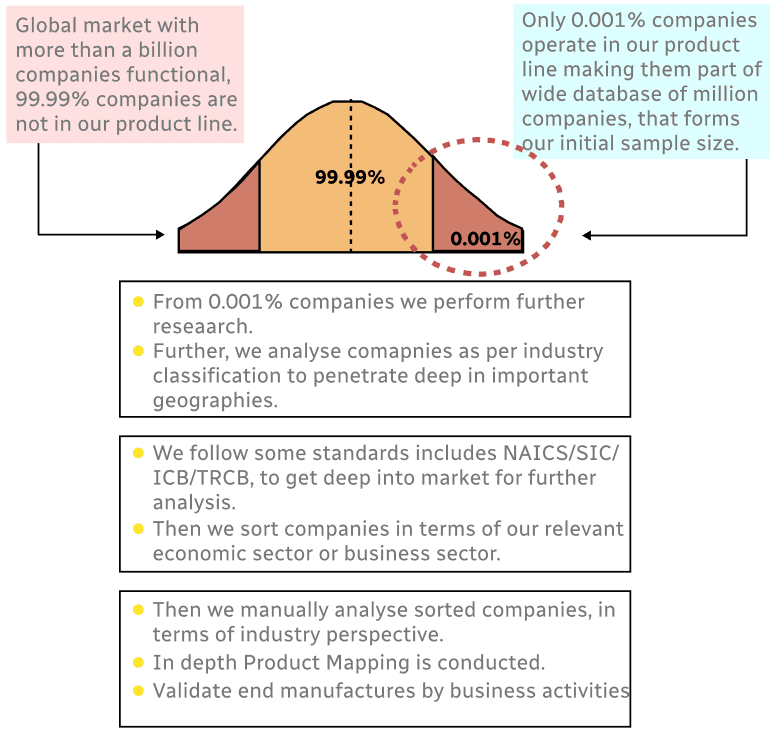
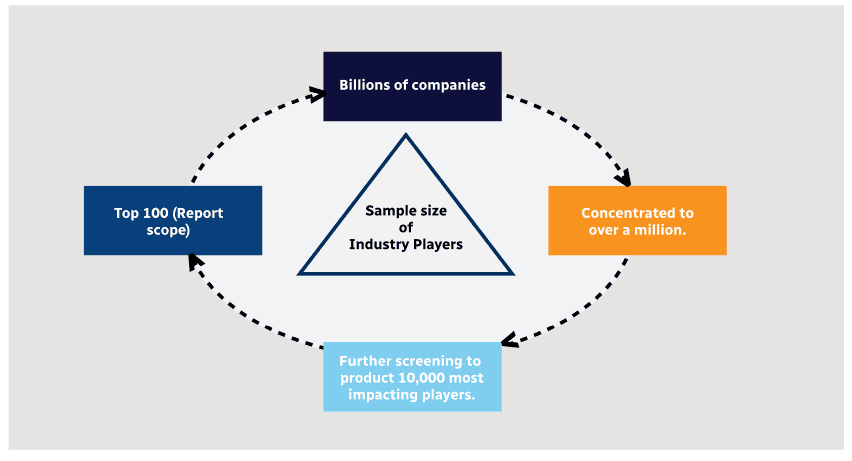
Step 1 - Identification of Relevant Samples Size from Population Database
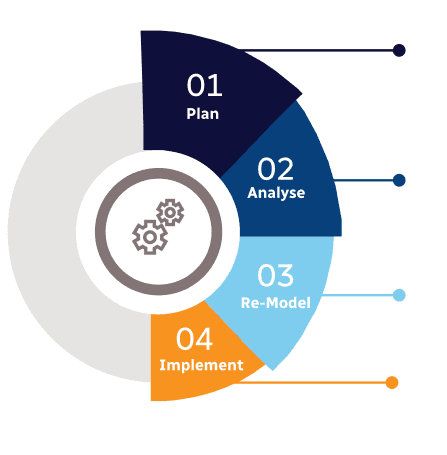
Step 2 - Approaches for Defining Global Market Size (Value, Volume* & Price*)
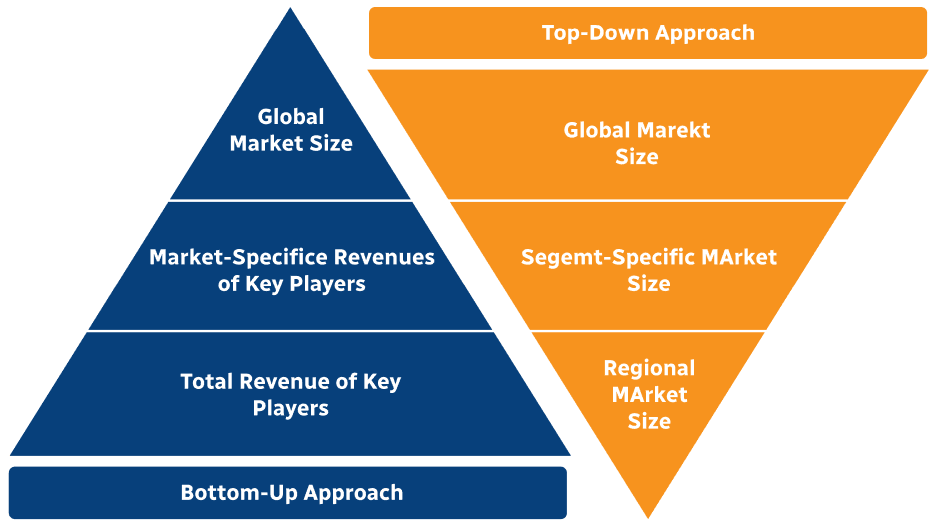
Note*: In applicable scenarios
Step 3 - Data Sources
Primary Research
- Web Analytics
- Survey Reports
- Research Institute
- Latest Research Reports
- Opinion Leaders
Secondary Research
- Annual Reports
- White Paper
- Latest Press Release
- Industry Association
- Paid Database
- Investor Presentations
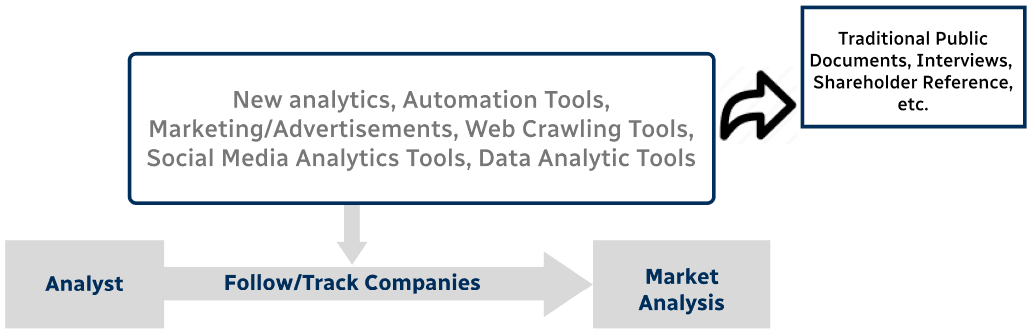
Step 4 - Data Triangulation
Involves using different sources of information in order to increase the validity of a study
These sources are likely to be stakeholders in a program - participants, other researchers, program staff, other community members, and so on.
Then we put all data in single framework & apply various statistical tools to find out the dynamic on the market.
During the analysis stage, feedback from the stakeholder groups would be compared to determine areas of agreement as well as areas of divergence