Key Insights
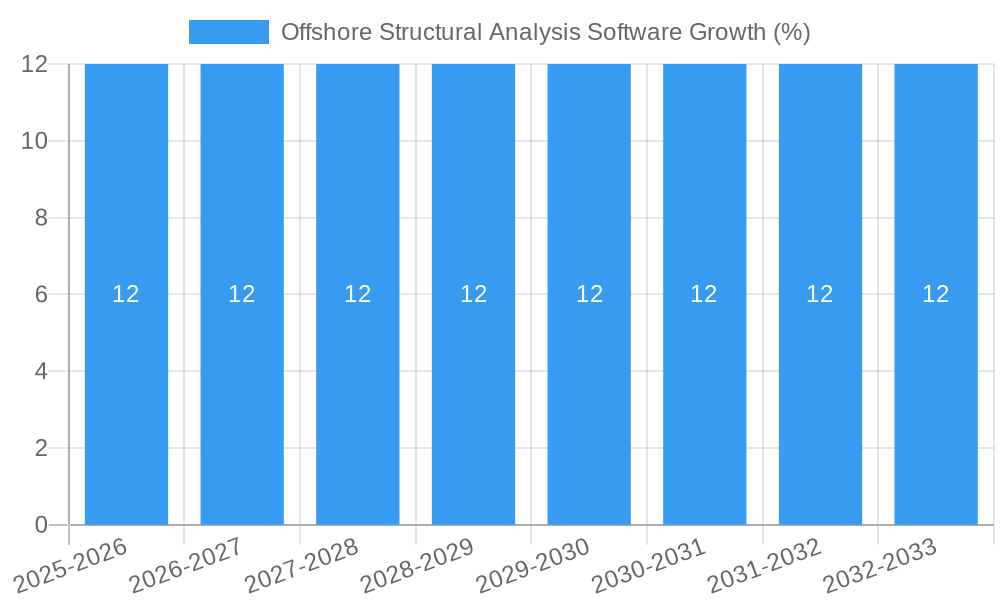
The global Offshore Structural Analysis Software market is poised for substantial growth, projected to reach a valuation of approximately $2,500 million by 2025, with an anticipated Compound Annual Growth Rate (CAGR) of around 12% through 2033. This robust expansion is fueled by the increasing complexity and scale of offshore projects across vital sectors such as oil and gas, maritime, power generation, and government/defense. The escalating demand for renewable energy, particularly offshore wind farms, is a significant catalyst, driving the need for sophisticated software to ensure the structural integrity and safety of offshore installations in challenging environments. Furthermore, advancements in computational capabilities and the integration of AI and machine learning are enhancing the analytical power and efficiency of these software solutions, making them indispensable for accurate risk assessment, design optimization, and operational planning.
The market is bifurcated into cloud-based and on-premise software solutions, with cloud offerings gaining traction due to their scalability, accessibility, and cost-effectiveness. Key players like DNV GL AS, John Wood Group PLC, and Bentley Systems are at the forefront, investing in R&D to develop innovative features and expanding their market reach. However, the market faces certain restraints, including the high initial investment costs associated with advanced software and the need for skilled professionals to operate them. Geographically, North America and Europe are expected to dominate the market, driven by substantial investments in offshore energy infrastructure and stringent regulatory requirements for structural safety. The Asia Pacific region, with its rapidly developing offshore capabilities and growing renewable energy ambitions, presents a significant growth opportunity.
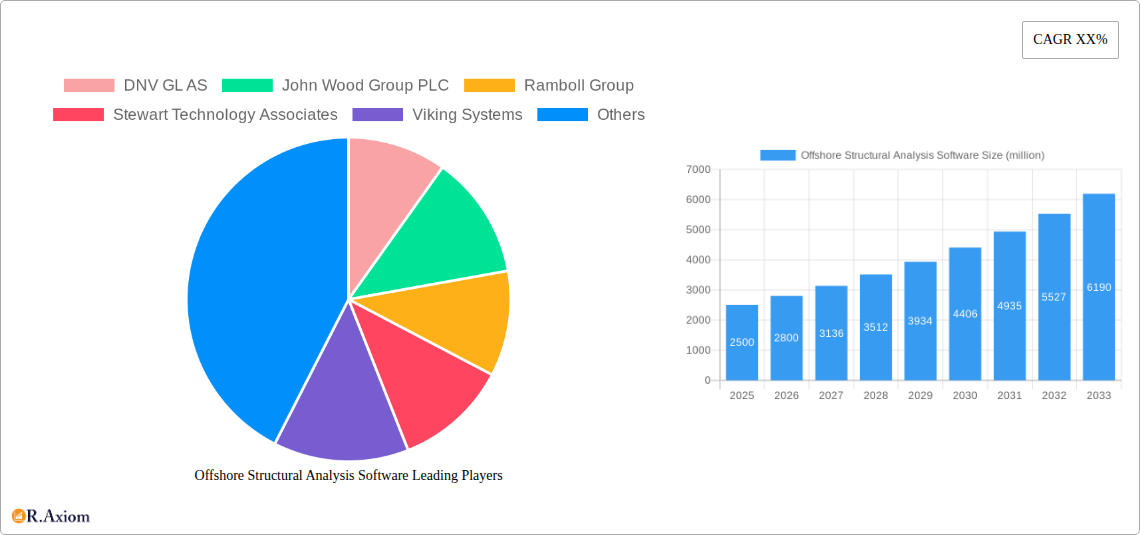
Offshore Structural Analysis Software Market Concentration & Innovation
The offshore structural analysis software market exhibits a moderate to high concentration, with a few key players like DNV GL AS, Bentley Systems, and BMT Group holding significant market share, estimated to be over 40% combined. Innovation is a primary driver, fueled by advancements in computational fluid dynamics (CFD), finite element analysis (FEA), and the increasing adoption of cloud-based solutions offering enhanced scalability and accessibility. Regulatory frameworks, particularly for safety and environmental compliance in the oil and gas, and renewable energy sectors, also play a crucial role in shaping product development and market entry. The increasing demand for robust and efficient structural integrity assessment for offshore wind farms and aging oil and gas platforms is pushing innovation towards AI-driven predictive maintenance and digital twin technologies. Product substitutes, such as advanced manual analysis or less sophisticated simulation tools, are gradually being phased out due to their inefficiency and inability to meet stringent performance requirements. End-user trends indicate a strong preference for integrated software suites that offer end-to-end solutions from design to operational monitoring. Mergers and acquisitions (M&A) activities, while not extensively documented with specific deal values in public domain for this niche segment, are expected to increase as larger engineering firms seek to consolidate their offerings and acquire specialized expertise. Recent M&A activity, estimated to be in the range of tens to hundreds of million dollars annually, aims to expand market reach and enhance technological capabilities.
Offshore Structural Analysis Software Industry Trends & Insights
The global offshore structural analysis software market is poised for substantial growth, driven by a confluence of factors that underscore the increasing complexity and criticality of offshore infrastructure. The market is projected to witness a Compound Annual Growth Rate (CAGR) of approximately 7.5% from 2025 to 2033, reaching an estimated market size of over $2,500 million by the end of the forecast period. This robust growth is primarily propelled by the escalating demand for renewable energy sources, particularly offshore wind, necessitating advanced structural analysis for turbines, foundations, and substations. The persistent need for maintaining and extending the lifespan of aging oil and gas platforms further fuels the demand for sophisticated integrity management and risk assessment tools. Technological disruptions are at the forefront, with the integration of Artificial Intelligence (AI) and Machine Learning (ML) into software platforms promising enhanced predictive capabilities, anomaly detection, and optimized design processes. Cloud-based solutions are gaining significant traction, offering greater flexibility, scalability, and collaboration capabilities for engineering teams spread across different geographical locations, leading to increased market penetration of Software-as-a-Service (SaaS) models. Consumer preferences are shifting towards user-friendly interfaces, comprehensive simulation capabilities, and seamless integration with other engineering workflows. The competitive landscape is characterized by continuous innovation and strategic partnerships aimed at enhancing product offerings and expanding market reach. Key players are investing heavily in R&D to incorporate advanced simulation techniques and to cater to evolving industry standards and environmental regulations. The market penetration of specialized offshore structural analysis software is estimated to be around 60% in developed economies, with significant untapped potential in emerging regions. The shift from on-premise to cloud solutions is a defining trend, driven by cost-effectiveness and accessibility.
Dominant Markets & Segments in Offshore Structural Analysis Software
The offshore structural analysis software market is dominated by the Oil and Gas segment, which accounts for an estimated market share of over 50% of the total market value in the base year of 2025, projected to exceed $1,250 million. This dominance is driven by the extensive existing infrastructure of offshore platforms, pipelines, and subsea facilities that require continuous monitoring, maintenance, and integrity assessment. Furthermore, the ongoing exploration and development of new deep-water reserves necessitate sophisticated analysis tools to ensure the safety and efficiency of operations. Economic policies related to energy security and fluctuating oil prices indirectly influence investment in offshore exploration and, consequently, the demand for structural analysis software. Infrastructure development, including the construction of new production platforms and subsea networks, directly boosts the market.
The Maritime segment is the second-largest contributor, with an estimated market share of around 25%, projected to reach over $625 million by 2025. This segment encompasses the structural analysis of offshore vessels, support vessels, FPSOs (Floating Production, Storage, and Offloading units), and other marine structures. The increasing global trade and the expansion of maritime activities, including offshore logistics and transportation, are key drivers.
Power Generation, particularly the rapidly expanding offshore wind sector, represents a significant and rapidly growing segment, estimated to capture approximately 15% of the market by 2025, valued at over $375 million. Government initiatives promoting renewable energy, coupled with advancements in turbine technology and larger-scale offshore wind farm developments, are fueling this growth. Infrastructure investments in substations, foundations, and transmission cables are critical drivers.
The Government and Defense segment, while smaller, holds strategic importance, accounting for an estimated 10% of the market, projected to be over $250 million by 2025. This segment involves the analysis of naval structures, offshore defense installations, and research vessels, driven by national security priorities and geopolitical considerations.
In terms of software types, Cloud Software is emerging as the dominant model, projected to capture over 60% of the market by 2025, valued at over $1,500 million. Its scalability, cost-effectiveness, and accessibility for remote teams make it highly attractive. On-premise Software still holds a significant share, estimated at around 40%, valued at over $1,000 million, particularly for organizations with stringent data security requirements or existing on-premise infrastructure.
Offshore Structural Analysis Software Product Developments
Recent product developments in offshore structural analysis software focus on enhancing computational efficiency, improving user experience, and integrating advanced simulation capabilities. Innovations include the development of AI-powered predictive maintenance modules, real-time monitoring systems leveraging IoT data, and enhanced finite element analysis (FEA) solvers for complex geometries and extreme load conditions. Companies like Dlubal Software GmbH and Bentley Systems are actively incorporating machine learning algorithms to automate design optimization and identify potential structural weaknesses before they manifest. The integration of digital twin technology allows for a virtual replica of offshore structures, enabling real-time performance monitoring and scenario analysis. These advancements provide significant competitive advantages by reducing design cycles, minimizing operational risks, and improving the overall lifespan and reliability of offshore assets.
Report Scope & Segmentation Analysis
This report provides a comprehensive analysis of the global offshore structural analysis software market. The market is segmented by Application into Maritime, Oil and Gas, Power Generation, and Government and Defense. The Maritime segment is expected to witness steady growth, driven by increased maritime trade and offshore support activities, with an estimated market size of over $625 million by 2025. The Oil and Gas segment, currently dominant, will continue its strong performance due to ongoing platform maintenance and new field developments, projected to exceed $1,250 million by 2025. The Power Generation segment, primarily driven by offshore wind, is poised for the highest growth rate, with projections exceeding $375 million by 2025. The Government and Defense segment will see stable growth, driven by defense spending and naval modernization, estimated at over $250 million by 2025. The market is also segmented by Type into Cloud Software and On-premise Software. Cloud Software is projected to lead the market with over $1,500 million by 2025, owing to its scalability and accessibility. On-premise Software will remain relevant, with an estimated market size of over $1,000 million by 2025, especially for organizations with strict data security needs.
Key Drivers of Offshore Structural Analysis Software Growth
The offshore structural analysis software market is propelled by several key drivers. The significant global push towards renewable energy, particularly the expansion of offshore wind farms, necessitates sophisticated structural analysis for turbine foundations, substations, and inter-array cables. The ongoing need for integrity management and life extension of aging oil and gas infrastructure, including platforms and pipelines, also drives demand for advanced monitoring and predictive maintenance software. Technological advancements in AI, machine learning, and cloud computing are enabling the development of more powerful, efficient, and user-friendly analysis tools. Furthermore, increasingly stringent safety and environmental regulations in offshore operations worldwide mandate robust structural assessment to ensure compliance and mitigate risks.
Challenges in the Offshore Structural Analysis Software Sector
Despite robust growth, the offshore structural analysis software sector faces several challenges. The high cost of specialized software licenses and the need for highly skilled personnel to operate them can be a barrier to adoption for smaller companies. The complexity of offshore environments, involving extreme weather conditions, seismic activity, and corrosive marine elements, necessitates continuous software updates and validation, which can be resource-intensive. Cybersecurity threats to cloud-based platforms and the protection of sensitive engineering data are also growing concerns. Furthermore, the cyclical nature of the oil and gas industry, with its inherent price volatility, can impact investment decisions in new software and technology.
Emerging Opportunities in Offshore Structural Analysis Software
Emerging opportunities in the offshore structural analysis software market are abundant. The growing trend of digitalization and the adoption of Industry 4.0 principles are creating demand for integrated platforms that offer end-to-end solutions, from design and simulation to operational monitoring and asset management. The development of specialized software for subsea infrastructure analysis, including pipelines and wellheads, presents a significant growth avenue. Furthermore, the increasing focus on decommissioning of old offshore structures is opening up new markets for specialized analysis and planning tools. The expansion of offshore aquaculture and emerging offshore renewable energy technologies, such as tidal and wave energy converters, also offer untapped potential for tailored structural analysis solutions.
Leading Players in the Offshore Structural Analysis Software Market
- DNV GL AS
- John Wood Group PLC
- Ramboll Group
- Stewart Technology Associates
- Viking Systems
- Zebec Marine Consultant and Services
- Dlubal Software GmbH
- Baker Engineering and Risk Consultants
- Bentley Systems
- BMT Group
Key Developments in Offshore Structural Analysis Software Industry
- 2023 December: DNV GL AS launched an enhanced AI-powered structural integrity management module for offshore wind turbines, improving predictive maintenance capabilities.
- 2024 January: Bentley Systems announced a strategic partnership with a leading offshore engineering firm to integrate its structural analysis software with digital twin technologies.
- 2024 February: BMT Group acquired a specialized subsea analysis software company to expand its portfolio in deep-water exploration and production.
- 2024 March: Dlubal Software GmbH released a new version of its structural analysis software with advanced FEA capabilities for complex offshore structures.
- 2024 April: Viking Systems unveiled a cloud-based platform offering real-time structural health monitoring for offshore assets, enhancing operational safety.
- 2024 May: Ramboll Group announced significant investment in R&D for AI-driven design optimization tools for offshore wind foundations.
- 2024 June: John Wood Group PLC expanded its digital services offerings, integrating advanced structural analysis into its comprehensive asset integrity management solutions.
- 2024 July: Stewart Technology Associates introduced a new suite of software for the assessment of aging offshore oil and gas platforms.
- 2024 August: Baker Engineering and Risk Consultants developed a specialized module for assessing the impact of extreme weather events on offshore structures.
- 2024 September: Zebec Marine Consultant and Services partnered with a technology provider to offer integrated marine and structural analysis services.
Strategic Outlook for Offshore Structural Analysis Software Market
The strategic outlook for the offshore structural analysis software market remains highly positive, driven by sustained global investments in offshore energy, both traditional and renewable. The increasing emphasis on digitalization, automation, and data-driven decision-making will continue to fuel the adoption of advanced software solutions. Companies that can offer integrated, AI-enabled platforms with robust analytical capabilities and seamless user experiences are best positioned for future success. Strategic collaborations and M&A activities are expected to shape the market landscape further, as players strive to enhance their technological prowess and market reach. The growing demand for sustainable energy solutions will particularly benefit providers of specialized offshore wind analysis software, making it a key growth catalyst for the foreseeable future.
Offshore Structural Analysis Software Segmentation
-
1. Application
- 1.1. Maritime
- 1.2. Oil and Gas
- 1.3. Power Generation
- 1.4. Government and Defense
-
2. Types
- 2.1. Cloud Software
- 2.2. On-premise Software
Offshore Structural Analysis Software Segmentation By Geography
-
1. North America
- 1.1. United States
- 1.2. Canada
- 1.3. Mexico
-
2. South America
- 2.1. Brazil
- 2.2. Argentina
- 2.3. Rest of South America
-
3. Europe
- 3.1. United Kingdom
- 3.2. Germany
- 3.3. France
- 3.4. Italy
- 3.5. Spain
- 3.6. Russia
- 3.7. Benelux
- 3.8. Nordics
- 3.9. Rest of Europe
-
4. Middle East & Africa
- 4.1. Turkey
- 4.2. Israel
- 4.3. GCC
- 4.4. North Africa
- 4.5. South Africa
- 4.6. Rest of Middle East & Africa
-
5. Asia Pacific
- 5.1. China
- 5.2. India
- 5.3. Japan
- 5.4. South Korea
- 5.5. ASEAN
- 5.6. Oceania
- 5.7. Rest of Asia Pacific
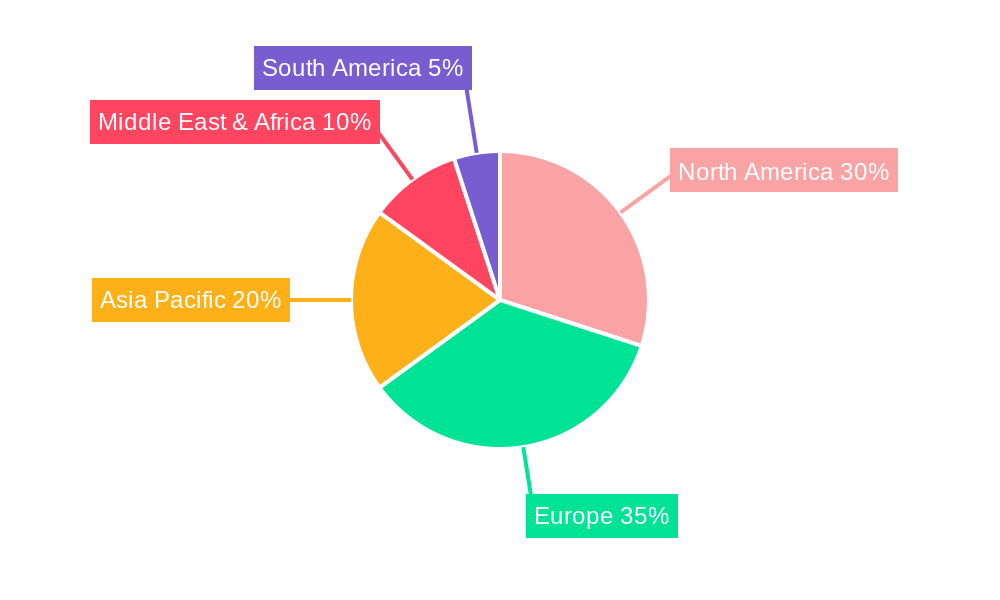
Offshore Structural Analysis Software REPORT HIGHLIGHTS
| Aspects | Details |
|---|---|
| Study Period | 2019-2033 |
| Base Year | 2024 |
| Estimated Year | 2025 |
| Forecast Period | 2025-2033 |
| Historical Period | 2019-2024 |
| Growth Rate | CAGR of XX% from 2019-2033 |
| Segmentation |
|
Table of Contents
- 1. Introduction
- 1.1. Research Scope
- 1.2. Market Segmentation
- 1.3. Research Methodology
- 1.4. Definitions and Assumptions
- 2. Executive Summary
- 2.1. Introduction
- 3. Market Dynamics
- 3.1. Introduction
- 3.2. Market Drivers
- 3.3. Market Restrains
- 3.4. Market Trends
- 4. Market Factor Analysis
- 4.1. Porters Five Forces
- 4.2. Supply/Value Chain
- 4.3. PESTEL analysis
- 4.4. Market Entropy
- 4.5. Patent/Trademark Analysis
- 5. Global Offshore Structural Analysis Software Analysis, Insights and Forecast, 2019-2031
- 5.1. Market Analysis, Insights and Forecast - by Application
- 5.1.1. Maritime
- 5.1.2. Oil and Gas
- 5.1.3. Power Generation
- 5.1.4. Government and Defense
- 5.2. Market Analysis, Insights and Forecast - by Types
- 5.2.1. Cloud Software
- 5.2.2. On-premise Software
- 5.3. Market Analysis, Insights and Forecast - by Region
- 5.3.1. North America
- 5.3.2. South America
- 5.3.3. Europe
- 5.3.4. Middle East & Africa
- 5.3.5. Asia Pacific
- 5.1. Market Analysis, Insights and Forecast - by Application
- 6. North America Offshore Structural Analysis Software Analysis, Insights and Forecast, 2019-2031
- 6.1. Market Analysis, Insights and Forecast - by Application
- 6.1.1. Maritime
- 6.1.2. Oil and Gas
- 6.1.3. Power Generation
- 6.1.4. Government and Defense
- 6.2. Market Analysis, Insights and Forecast - by Types
- 6.2.1. Cloud Software
- 6.2.2. On-premise Software
- 6.1. Market Analysis, Insights and Forecast - by Application
- 7. South America Offshore Structural Analysis Software Analysis, Insights and Forecast, 2019-2031
- 7.1. Market Analysis, Insights and Forecast - by Application
- 7.1.1. Maritime
- 7.1.2. Oil and Gas
- 7.1.3. Power Generation
- 7.1.4. Government and Defense
- 7.2. Market Analysis, Insights and Forecast - by Types
- 7.2.1. Cloud Software
- 7.2.2. On-premise Software
- 7.1. Market Analysis, Insights and Forecast - by Application
- 8. Europe Offshore Structural Analysis Software Analysis, Insights and Forecast, 2019-2031
- 8.1. Market Analysis, Insights and Forecast - by Application
- 8.1.1. Maritime
- 8.1.2. Oil and Gas
- 8.1.3. Power Generation
- 8.1.4. Government and Defense
- 8.2. Market Analysis, Insights and Forecast - by Types
- 8.2.1. Cloud Software
- 8.2.2. On-premise Software
- 8.1. Market Analysis, Insights and Forecast - by Application
- 9. Middle East & Africa Offshore Structural Analysis Software Analysis, Insights and Forecast, 2019-2031
- 9.1. Market Analysis, Insights and Forecast - by Application
- 9.1.1. Maritime
- 9.1.2. Oil and Gas
- 9.1.3. Power Generation
- 9.1.4. Government and Defense
- 9.2. Market Analysis, Insights and Forecast - by Types
- 9.2.1. Cloud Software
- 9.2.2. On-premise Software
- 9.1. Market Analysis, Insights and Forecast - by Application
- 10. Asia Pacific Offshore Structural Analysis Software Analysis, Insights and Forecast, 2019-2031
- 10.1. Market Analysis, Insights and Forecast - by Application
- 10.1.1. Maritime
- 10.1.2. Oil and Gas
- 10.1.3. Power Generation
- 10.1.4. Government and Defense
- 10.2. Market Analysis, Insights and Forecast - by Types
- 10.2.1. Cloud Software
- 10.2.2. On-premise Software
- 10.1. Market Analysis, Insights and Forecast - by Application
- 11. Competitive Analysis
- 11.1. Global Market Share Analysis 2024
- 11.2. Company Profiles
- 11.2.1 DNV GL AS
- 11.2.1.1. Overview
- 11.2.1.2. Products
- 11.2.1.3. SWOT Analysis
- 11.2.1.4. Recent Developments
- 11.2.1.5. Financials (Based on Availability)
- 11.2.2 John Wood Group PLC
- 11.2.2.1. Overview
- 11.2.2.2. Products
- 11.2.2.3. SWOT Analysis
- 11.2.2.4. Recent Developments
- 11.2.2.5. Financials (Based on Availability)
- 11.2.3 Ramboll Group
- 11.2.3.1. Overview
- 11.2.3.2. Products
- 11.2.3.3. SWOT Analysis
- 11.2.3.4. Recent Developments
- 11.2.3.5. Financials (Based on Availability)
- 11.2.4 Stewart Technology Associates
- 11.2.4.1. Overview
- 11.2.4.2. Products
- 11.2.4.3. SWOT Analysis
- 11.2.4.4. Recent Developments
- 11.2.4.5. Financials (Based on Availability)
- 11.2.5 Viking Systems
- 11.2.5.1. Overview
- 11.2.5.2. Products
- 11.2.5.3. SWOT Analysis
- 11.2.5.4. Recent Developments
- 11.2.5.5. Financials (Based on Availability)
- 11.2.6 Zebec Marine Consultant and Services
- 11.2.6.1. Overview
- 11.2.6.2. Products
- 11.2.6.3. SWOT Analysis
- 11.2.6.4. Recent Developments
- 11.2.6.5. Financials (Based on Availability)
- 11.2.7 Dlubal Software GmbH
- 11.2.7.1. Overview
- 11.2.7.2. Products
- 11.2.7.3. SWOT Analysis
- 11.2.7.4. Recent Developments
- 11.2.7.5. Financials (Based on Availability)
- 11.2.8 Baker Engineering and Risk Consultants
- 11.2.8.1. Overview
- 11.2.8.2. Products
- 11.2.8.3. SWOT Analysis
- 11.2.8.4. Recent Developments
- 11.2.8.5. Financials (Based on Availability)
- 11.2.9 Bentley Systems
- 11.2.9.1. Overview
- 11.2.9.2. Products
- 11.2.9.3. SWOT Analysis
- 11.2.9.4. Recent Developments
- 11.2.9.5. Financials (Based on Availability)
- 11.2.10 BMT Group
- 11.2.10.1. Overview
- 11.2.10.2. Products
- 11.2.10.3. SWOT Analysis
- 11.2.10.4. Recent Developments
- 11.2.10.5. Financials (Based on Availability)
- 11.2.1 DNV GL AS
List of Figures
- Figure 1: Global Offshore Structural Analysis Software Revenue Breakdown (million, %) by Region 2024 & 2032
- Figure 2: North America Offshore Structural Analysis Software Revenue (million), by Application 2024 & 2032
- Figure 3: North America Offshore Structural Analysis Software Revenue Share (%), by Application 2024 & 2032
- Figure 4: North America Offshore Structural Analysis Software Revenue (million), by Types 2024 & 2032
- Figure 5: North America Offshore Structural Analysis Software Revenue Share (%), by Types 2024 & 2032
- Figure 6: North America Offshore Structural Analysis Software Revenue (million), by Country 2024 & 2032
- Figure 7: North America Offshore Structural Analysis Software Revenue Share (%), by Country 2024 & 2032
- Figure 8: South America Offshore Structural Analysis Software Revenue (million), by Application 2024 & 2032
- Figure 9: South America Offshore Structural Analysis Software Revenue Share (%), by Application 2024 & 2032
- Figure 10: South America Offshore Structural Analysis Software Revenue (million), by Types 2024 & 2032
- Figure 11: South America Offshore Structural Analysis Software Revenue Share (%), by Types 2024 & 2032
- Figure 12: South America Offshore Structural Analysis Software Revenue (million), by Country 2024 & 2032
- Figure 13: South America Offshore Structural Analysis Software Revenue Share (%), by Country 2024 & 2032
- Figure 14: Europe Offshore Structural Analysis Software Revenue (million), by Application 2024 & 2032
- Figure 15: Europe Offshore Structural Analysis Software Revenue Share (%), by Application 2024 & 2032
- Figure 16: Europe Offshore Structural Analysis Software Revenue (million), by Types 2024 & 2032
- Figure 17: Europe Offshore Structural Analysis Software Revenue Share (%), by Types 2024 & 2032
- Figure 18: Europe Offshore Structural Analysis Software Revenue (million), by Country 2024 & 2032
- Figure 19: Europe Offshore Structural Analysis Software Revenue Share (%), by Country 2024 & 2032
- Figure 20: Middle East & Africa Offshore Structural Analysis Software Revenue (million), by Application 2024 & 2032
- Figure 21: Middle East & Africa Offshore Structural Analysis Software Revenue Share (%), by Application 2024 & 2032
- Figure 22: Middle East & Africa Offshore Structural Analysis Software Revenue (million), by Types 2024 & 2032
- Figure 23: Middle East & Africa Offshore Structural Analysis Software Revenue Share (%), by Types 2024 & 2032
- Figure 24: Middle East & Africa Offshore Structural Analysis Software Revenue (million), by Country 2024 & 2032
- Figure 25: Middle East & Africa Offshore Structural Analysis Software Revenue Share (%), by Country 2024 & 2032
- Figure 26: Asia Pacific Offshore Structural Analysis Software Revenue (million), by Application 2024 & 2032
- Figure 27: Asia Pacific Offshore Structural Analysis Software Revenue Share (%), by Application 2024 & 2032
- Figure 28: Asia Pacific Offshore Structural Analysis Software Revenue (million), by Types 2024 & 2032
- Figure 29: Asia Pacific Offshore Structural Analysis Software Revenue Share (%), by Types 2024 & 2032
- Figure 30: Asia Pacific Offshore Structural Analysis Software Revenue (million), by Country 2024 & 2032
- Figure 31: Asia Pacific Offshore Structural Analysis Software Revenue Share (%), by Country 2024 & 2032
List of Tables
- Table 1: Global Offshore Structural Analysis Software Revenue million Forecast, by Region 2019 & 2032
- Table 2: Global Offshore Structural Analysis Software Revenue million Forecast, by Application 2019 & 2032
- Table 3: Global Offshore Structural Analysis Software Revenue million Forecast, by Types 2019 & 2032
- Table 4: Global Offshore Structural Analysis Software Revenue million Forecast, by Region 2019 & 2032
- Table 5: Global Offshore Structural Analysis Software Revenue million Forecast, by Application 2019 & 2032
- Table 6: Global Offshore Structural Analysis Software Revenue million Forecast, by Types 2019 & 2032
- Table 7: Global Offshore Structural Analysis Software Revenue million Forecast, by Country 2019 & 2032
- Table 8: United States Offshore Structural Analysis Software Revenue (million) Forecast, by Application 2019 & 2032
- Table 9: Canada Offshore Structural Analysis Software Revenue (million) Forecast, by Application 2019 & 2032
- Table 10: Mexico Offshore Structural Analysis Software Revenue (million) Forecast, by Application 2019 & 2032
- Table 11: Global Offshore Structural Analysis Software Revenue million Forecast, by Application 2019 & 2032
- Table 12: Global Offshore Structural Analysis Software Revenue million Forecast, by Types 2019 & 2032
- Table 13: Global Offshore Structural Analysis Software Revenue million Forecast, by Country 2019 & 2032
- Table 14: Brazil Offshore Structural Analysis Software Revenue (million) Forecast, by Application 2019 & 2032
- Table 15: Argentina Offshore Structural Analysis Software Revenue (million) Forecast, by Application 2019 & 2032
- Table 16: Rest of South America Offshore Structural Analysis Software Revenue (million) Forecast, by Application 2019 & 2032
- Table 17: Global Offshore Structural Analysis Software Revenue million Forecast, by Application 2019 & 2032
- Table 18: Global Offshore Structural Analysis Software Revenue million Forecast, by Types 2019 & 2032
- Table 19: Global Offshore Structural Analysis Software Revenue million Forecast, by Country 2019 & 2032
- Table 20: United Kingdom Offshore Structural Analysis Software Revenue (million) Forecast, by Application 2019 & 2032
- Table 21: Germany Offshore Structural Analysis Software Revenue (million) Forecast, by Application 2019 & 2032
- Table 22: France Offshore Structural Analysis Software Revenue (million) Forecast, by Application 2019 & 2032
- Table 23: Italy Offshore Structural Analysis Software Revenue (million) Forecast, by Application 2019 & 2032
- Table 24: Spain Offshore Structural Analysis Software Revenue (million) Forecast, by Application 2019 & 2032
- Table 25: Russia Offshore Structural Analysis Software Revenue (million) Forecast, by Application 2019 & 2032
- Table 26: Benelux Offshore Structural Analysis Software Revenue (million) Forecast, by Application 2019 & 2032
- Table 27: Nordics Offshore Structural Analysis Software Revenue (million) Forecast, by Application 2019 & 2032
- Table 28: Rest of Europe Offshore Structural Analysis Software Revenue (million) Forecast, by Application 2019 & 2032
- Table 29: Global Offshore Structural Analysis Software Revenue million Forecast, by Application 2019 & 2032
- Table 30: Global Offshore Structural Analysis Software Revenue million Forecast, by Types 2019 & 2032
- Table 31: Global Offshore Structural Analysis Software Revenue million Forecast, by Country 2019 & 2032
- Table 32: Turkey Offshore Structural Analysis Software Revenue (million) Forecast, by Application 2019 & 2032
- Table 33: Israel Offshore Structural Analysis Software Revenue (million) Forecast, by Application 2019 & 2032
- Table 34: GCC Offshore Structural Analysis Software Revenue (million) Forecast, by Application 2019 & 2032
- Table 35: North Africa Offshore Structural Analysis Software Revenue (million) Forecast, by Application 2019 & 2032
- Table 36: South Africa Offshore Structural Analysis Software Revenue (million) Forecast, by Application 2019 & 2032
- Table 37: Rest of Middle East & Africa Offshore Structural Analysis Software Revenue (million) Forecast, by Application 2019 & 2032
- Table 38: Global Offshore Structural Analysis Software Revenue million Forecast, by Application 2019 & 2032
- Table 39: Global Offshore Structural Analysis Software Revenue million Forecast, by Types 2019 & 2032
- Table 40: Global Offshore Structural Analysis Software Revenue million Forecast, by Country 2019 & 2032
- Table 41: China Offshore Structural Analysis Software Revenue (million) Forecast, by Application 2019 & 2032
- Table 42: India Offshore Structural Analysis Software Revenue (million) Forecast, by Application 2019 & 2032
- Table 43: Japan Offshore Structural Analysis Software Revenue (million) Forecast, by Application 2019 & 2032
- Table 44: South Korea Offshore Structural Analysis Software Revenue (million) Forecast, by Application 2019 & 2032
- Table 45: ASEAN Offshore Structural Analysis Software Revenue (million) Forecast, by Application 2019 & 2032
- Table 46: Oceania Offshore Structural Analysis Software Revenue (million) Forecast, by Application 2019 & 2032
- Table 47: Rest of Asia Pacific Offshore Structural Analysis Software Revenue (million) Forecast, by Application 2019 & 2032
Frequently Asked Questions
1. What is the projected Compound Annual Growth Rate (CAGR) of the Offshore Structural Analysis Software?
The projected CAGR is approximately XX%.
2. Which companies are prominent players in the Offshore Structural Analysis Software?
Key companies in the market include DNV GL AS, John Wood Group PLC, Ramboll Group, Stewart Technology Associates, Viking Systems, Zebec Marine Consultant and Services, Dlubal Software GmbH, Baker Engineering and Risk Consultants, Bentley Systems, BMT Group.
3. What are the main segments of the Offshore Structural Analysis Software?
The market segments include Application, Types.
4. Can you provide details about the market size?
The market size is estimated to be USD XXX million as of 2022.
5. What are some drivers contributing to market growth?
N/A
6. What are the notable trends driving market growth?
N/A
7. Are there any restraints impacting market growth?
N/A
8. Can you provide examples of recent developments in the market?
N/A
9. What pricing options are available for accessing the report?
Pricing options include single-user, multi-user, and enterprise licenses priced at USD 4900.00, USD 7350.00, and USD 9800.00 respectively.
10. Is the market size provided in terms of value or volume?
The market size is provided in terms of value, measured in million.
11. Are there any specific market keywords associated with the report?
Yes, the market keyword associated with the report is "Offshore Structural Analysis Software," which aids in identifying and referencing the specific market segment covered.
12. How do I determine which pricing option suits my needs best?
The pricing options vary based on user requirements and access needs. Individual users may opt for single-user licenses, while businesses requiring broader access may choose multi-user or enterprise licenses for cost-effective access to the report.
13. Are there any additional resources or data provided in the Offshore Structural Analysis Software report?
While the report offers comprehensive insights, it's advisable to review the specific contents or supplementary materials provided to ascertain if additional resources or data are available.
14. How can I stay updated on further developments or reports in the Offshore Structural Analysis Software?
To stay informed about further developments, trends, and reports in the Offshore Structural Analysis Software, consider subscribing to industry newsletters, following relevant companies and organizations, or regularly checking reputable industry news sources and publications.
Methodology
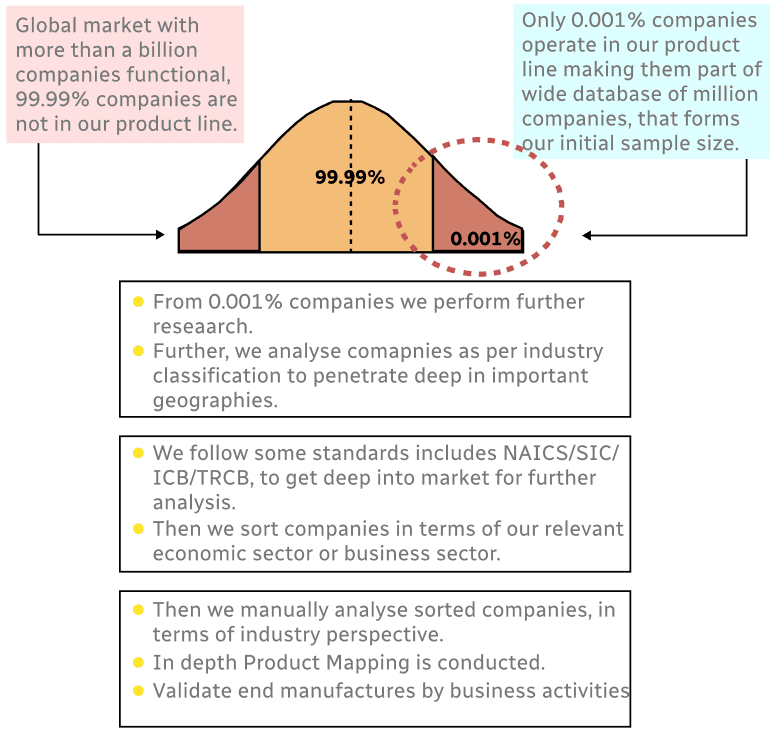
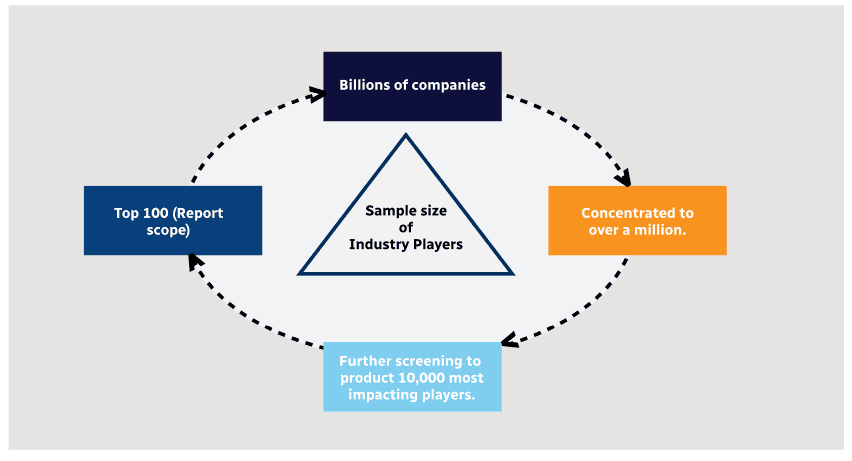
Step 1 - Identification of Relevant Samples Size from Population Database
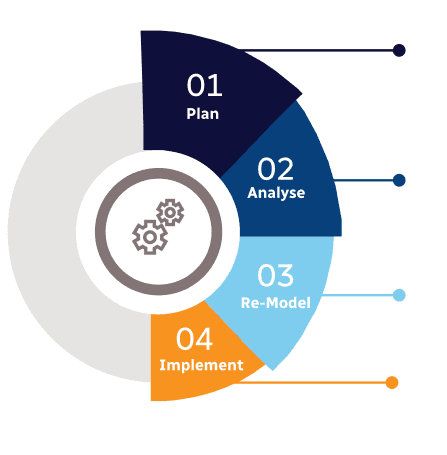
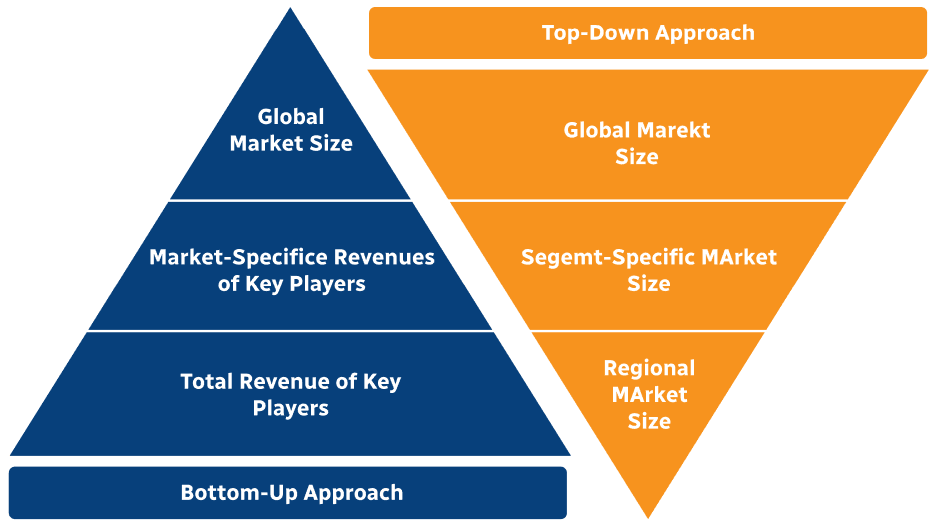
Step 2 - Approaches for Defining Global Market Size (Value, Volume* & Price*)
Note*: In applicable scenarios
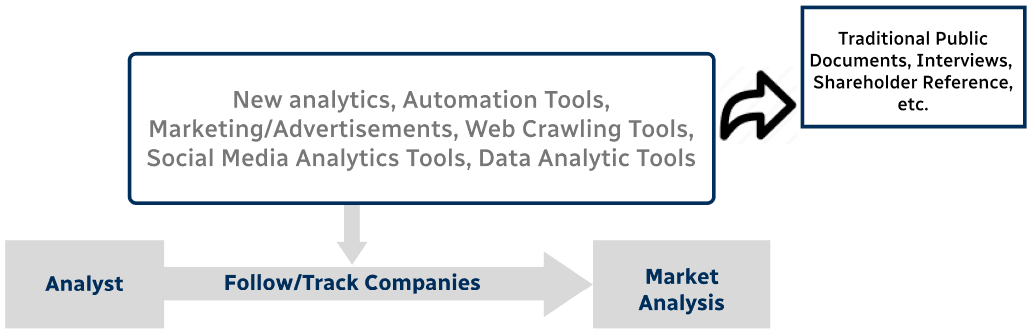
Step 3 - Data Sources
Primary Research
- Web Analytics
- Survey Reports
- Research Institute
- Latest Research Reports
- Opinion Leaders
Secondary Research
- Annual Reports
- White Paper
- Latest Press Release
- Industry Association
- Paid Database
- Investor Presentations
Step 4 - Data Triangulation
Involves using different sources of information in order to increase the validity of a study
These sources are likely to be stakeholders in a program - participants, other researchers, program staff, other community members, and so on.
Then we put all data in single framework & apply various statistical tools to find out the dynamic on the market.
During the analysis stage, feedback from the stakeholder groups would be compared to determine areas of agreement as well as areas of divergence