Key Insights
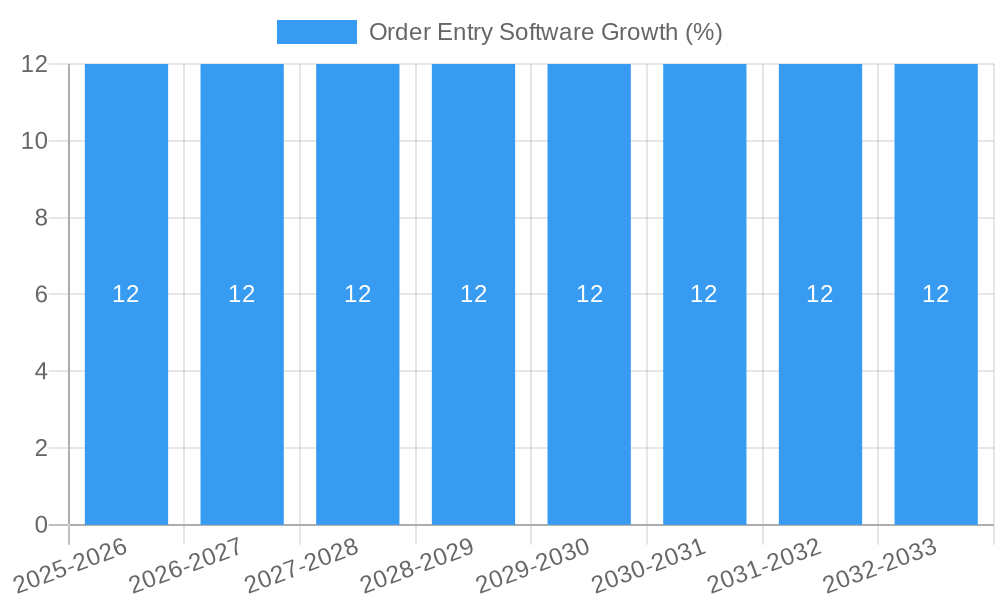
The Global Order Entry Software market is poised for substantial growth, projected to reach an estimated USD 3.2 billion by 2025, with a robust Compound Annual Growth Rate (CAGR) of 12% from 2025 to 2033. This expansion is primarily fueled by the increasing need for streamlined sales processes and enhanced customer relationship management across various industries. Small and Medium Enterprises (SMEs) represent a significant segment, driven by their growing adoption of digital tools to compete effectively with larger corporations. The shift towards cloud-based solutions is a dominant trend, offering scalability, accessibility, and cost-efficiency, appealing to businesses of all sizes. Web-based and on-premise solutions also maintain relevance, catering to specific security and operational requirements. Key market drivers include the demand for real-time data synchronization, improved inventory management, and the reduction of manual errors in order processing. The adoption of mobile order entry capabilities further bolsters market growth, enabling sales teams to operate more efficiently in the field.
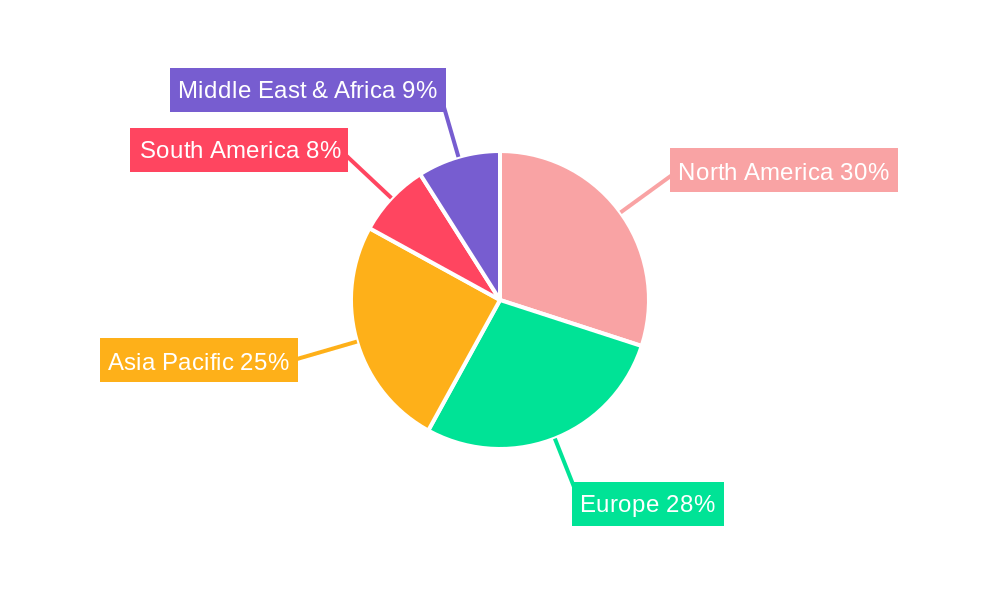
However, the market faces certain restraints, including the initial implementation costs associated with sophisticated order entry systems and the ongoing need for skilled IT personnel to manage and maintain these platforms. Data security and privacy concerns also pose challenges, particularly for cloud-based solutions, necessitating robust security protocols. Despite these hurdles, the market is expected to witness continuous innovation, with a focus on AI-powered features for sales forecasting, personalized customer interactions, and automated order validation. Companies like SAP, Cin7 Ltd., and TradeGecko are at the forefront, offering advanced solutions that cater to diverse business needs. The Asia Pacific region is anticipated to emerge as a high-growth market, driven by rapid digitalization and the burgeoning SME sector. North America and Europe will continue to hold significant market share due to established technological infrastructure and a mature business environment.
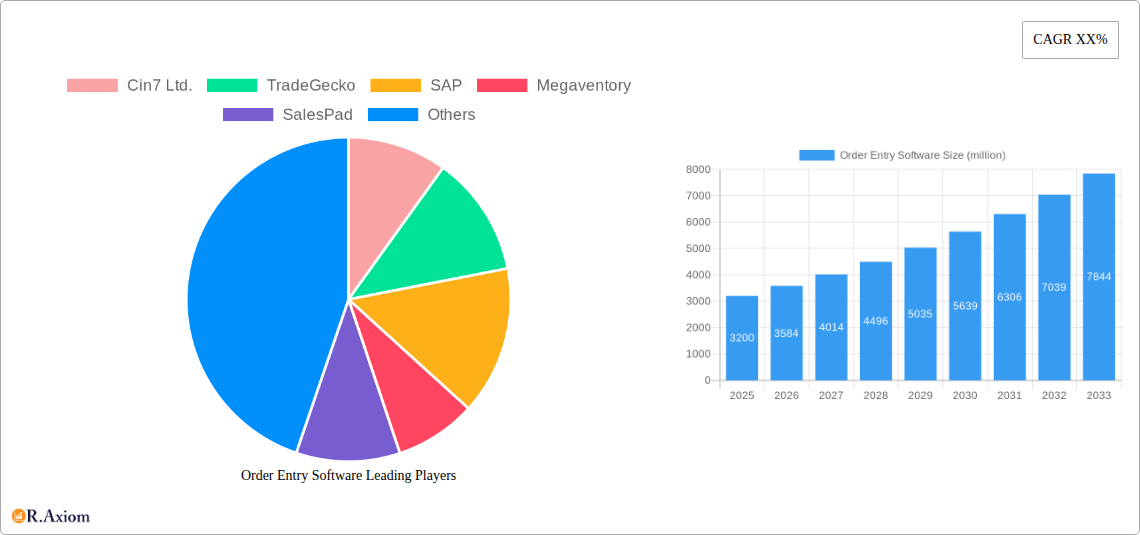
Order Entry Software Market Concentration & Innovation
The global Order Entry Software market exhibits a moderate to high concentration driven by a blend of established giants and agile innovators. Key players like SAP and Cin7 Ltd. command significant market share, leveraged through extensive feature sets and strong enterprise adoption. TradeGecko, now integrated with QuickBooks Commerce, focuses on the SME segment, demonstrating a strategic shift towards broader accessibility. SalesPad and Megaventory also hold substantial positions, particularly within their niche markets, by offering specialized functionalities. Innovation is a critical differentiator, fueled by the relentless pursuit of enhanced automation, real-time data synchronization, and AI-powered analytics. Regulatory frameworks, while not overly restrictive, demand robust data security and compliance, subtly shaping product development. Product substitutes, such as manual order processing or basic spreadsheet solutions, are gradually being phased out as businesses recognize the efficiency gains of dedicated software. End-user trends highlight a growing demand for seamless integration with CRM and ERP systems, mobile accessibility, and personalized customer experiences. Mergers and Acquisitions (M&A) activity is a significant indicator of market consolidation and strategic expansion. For instance, the acquisition of TradeGecko by Intuit underscored the value placed on comprehensive order management for SMEs. Forecasted M&A deal values are estimated to reach xx million over the forecast period, signaling continued industry restructuring. The market share of the top 5 players is projected to be around 60-70% by 2033.
Order Entry Software Industry Trends & Insights
The global Order Entry Software market is poised for substantial growth, driven by a confluence of accelerating digital transformation initiatives and an increasing reliance on streamlined business processes. The Compound Annual Growth Rate (CAGR) for this sector is projected to be a robust 12.5% between 2025 and 2033. Market penetration is rapidly expanding, particularly within the SME segment, as businesses of all sizes recognize the imperative to optimize their sales cycles, reduce errors, and improve customer satisfaction. Technological disruptions are at the forefront of this evolution. The integration of Artificial Intelligence (AI) and Machine Learning (ML) is revolutionizing order entry by enabling predictive analytics for demand forecasting, intelligent order routing, and automated fraud detection. Cloud-based solutions are becoming the de facto standard, offering unparalleled scalability, accessibility, and cost-effectiveness compared to traditional on-premise deployments. This shift is further amplified by the increasing demand for real-time data visibility and seamless integration across various business functions, including inventory management, accounting, and customer relationship management. Consumer preferences are evolving towards frictionless purchasing experiences, pushing businesses to adopt order entry systems that can facilitate quick, accurate, and personalized order placement, whether through web portals, mobile apps, or even B2B e-commerce platforms. Competitive dynamics are intensifying, with established vendors like SAP continuously innovating and new entrants, such as Cin7 Ltd. and Megaventory, carving out niches by offering specialized features and more accessible pricing models. Companies are also focusing on API-driven ecosystems to ensure interoperability with a wide range of complementary software solutions. The increasing adoption of B2B e-commerce, coupled with the growing complexity of supply chains, necessitates sophisticated order entry capabilities to manage high volumes and diverse order types efficiently. The ongoing shift towards digital sales channels and the need for enhanced operational efficiency are the primary catalysts for this market's upward trajectory. Market penetration is expected to reach xx% by 2033.
Dominant Markets & Segments in Order Entry Software
The North America region is currently the dominant market for Order Entry Software, with the United States leading in terms of market size and adoption rates. This dominance is attributed to several interconnected factors, including a mature economic landscape, a high prevalence of technology adoption across industries, and a strong emphasis on business process optimization. The substantial presence of Small and Medium Enterprises (SMEs) in the US economy, coupled with their increasing need to compete with larger organizations through efficient operations, makes them a prime segment for order entry solutions.
- Key Drivers of Dominance in North America:
- Economic Policies: Pro-business economic policies and significant investment in technology infrastructure have fostered a conducive environment for software adoption.
- Technological Advancement: Early adoption and rapid innovation in cloud computing, AI, and automation technologies have propelled the demand for advanced order entry systems.
- Competitive Landscape: A highly competitive business environment compels companies to seek efficiency gains through technology.
- E-commerce Growth: The booming e-commerce sector, both B2C and B2B, directly drives the need for robust order management solutions.
- Regulatory Environment: While not overly restrictive, data privacy regulations encourage the adoption of secure and compliant order entry software.
Within the application segment, SME (Small and Medium Enterprises) represents the fastest-growing and increasingly dominant force. While Large Enterprises have historically been the primary adopters, the evolving needs and accessibility of advanced software are shifting the balance. SMEs, comprising millions of businesses, are now actively seeking cost-effective, scalable, and user-friendly order entry solutions to level the playing field and enhance their operational agility. The widespread availability of Cloud-based solutions further empowers SMEs by reducing upfront investment and IT infrastructure burdens. This segment's growth is further fueled by the need to automate manual processes, reduce order errors, and improve customer service, all critical for survival and growth in today's competitive market. The market size for the SME segment is projected to reach xx million by 2033.
The Web-Based deployment type is witnessing significant traction, driven by its inherent flexibility, accessibility from any internet-connected device, and ease of updates and maintenance. While On-Premise solutions still cater to specific security or integration needs, the trend is overwhelmingly towards cloud-native and web-accessible platforms. This preference is particularly strong among SMEs and businesses with distributed workforces. The market share for cloud-based solutions is projected to exceed 75% by 2033.
Order Entry Software Product Developments
Recent product developments in the Order Entry Software market are focused on enhancing automation, artificial intelligence integration, and seamless connectivity. Vendors like Cin7 Ltd. are continually refining their platforms to offer advanced inventory management alongside order processing, while SAP continues to bolster its enterprise-grade solutions with AI-driven insights. TradeGecko's integration into QuickBooks Commerce signifies a push for unified business management. Innovations include real-time order syncing across multiple sales channels, predictive sales analytics, and personalized customer portals. These advancements provide businesses with a significant competitive advantage by reducing manual data entry, minimizing errors, and accelerating the order fulfillment cycle. The emphasis is on creating intuitive user interfaces and robust APIs for effortless integration with existing business ecosystems, thereby driving efficiency and improving customer experiences.
Report Scope & Segmentation Analysis
This report provides a comprehensive analysis of the global Order Entry Software market, segmented across key dimensions to offer granular insights into market dynamics and growth trajectories. The segmentation includes:
Application:
- SME (Small and Medium Enterprises): This segment encompasses businesses with typically 10 to 500 employees. The market size for SMEs is projected to reach xx million by 2033, driven by the increasing affordability and accessibility of cloud-based solutions. Competitive dynamics are characterized by a focus on ease of use, rapid implementation, and strong value propositions.
- Large Enterprise: This segment includes organizations with over 500 employees. The market size for large enterprises is estimated to be xx million by 2033. Dominant players in this segment focus on robust customization, scalability, extensive integration capabilities, and advanced security features.
Types:
- Web-Based: Solutions accessed through a web browser. This segment is expected to dominate the market, with a projected market size of xx million by 2033, owing to its flexibility and accessibility.
- On-Premise: Software installed and operated from the user's own servers. While still relevant for specific needs, its market share is projected to decline to xx% by 2033.
- Cloud-based: Software delivered via the internet. This segment, often overlapping with Web-Based, is a primary growth driver, with a projected market size of xx million by 2033, emphasizing scalability and reduced IT overhead.
Key Drivers of Order Entry Software Growth
The growth of the Order Entry Software market is propelled by several critical factors:
- Digital Transformation Initiatives: Businesses across all sectors are increasingly embracing digital solutions to enhance operational efficiency and competitiveness.
- Automation Imperative: The drive to automate manual order processing, reduce human errors, and accelerate sales cycles is a primary catalyst.
- E-commerce Expansion: The burgeoning growth of online sales channels, both B2C and B2B, necessitates robust and scalable order management systems.
- Demand for Real-time Data & Integration: Businesses require seamless integration with CRM, ERP, and inventory management systems for holistic operational visibility.
- Cloud Computing Adoption: The scalability, accessibility, and cost-effectiveness of cloud-based solutions make them highly attractive, particularly for SMEs.
- AI and Machine Learning Integration: The incorporation of AI for predictive analytics, fraud detection, and intelligent order routing is enhancing functionality and driving adoption.
Challenges in the Order Entry Software Sector
Despite the positive growth outlook, the Order Entry Software sector faces several challenges:
- Integration Complexity: Integrating new order entry systems with legacy ERP and CRM systems can be complex and time-consuming.
- Data Security and Privacy Concerns: Ensuring robust data security and compliance with evolving privacy regulations (e.g., GDPR, CCPA) is paramount and can be a significant undertaking.
- Resistance to Change: Some organizations may exhibit resistance to adopting new technologies due to established workflows or perceived disruption.
- Cost of Implementation and Training: For some enterprise-level solutions, the initial investment and ongoing training can be substantial, posing a barrier for smaller businesses.
- Market Saturation and Vendor Lock-in: The increasing number of vendors can lead to confusion, and poorly chosen solutions might result in vendor lock-in, hindering future flexibility.
- Cybersecurity Threats: The increasing reliance on digital platforms makes order entry systems vulnerable to cyberattacks, necessitating continuous security investment. The estimated cost of data breaches in this sector is xx million annually.
Emerging Opportunities in Order Entry Software
The Order Entry Software market presents numerous emerging opportunities for growth and innovation:
- AI-Powered Personalization: Leveraging AI to personalize product recommendations and offer tailored order experiences for B2B clients.
- Blockchain for Supply Chain Transparency: Exploring the use of blockchain technology to enhance the traceability and security of orders throughout the supply chain.
- IoT Integration for Real-time Inventory: Integrating with Internet of Things (IoT) devices for automated inventory updates, directly impacting order fulfillment.
- Expansion into Emerging Markets: Tapping into the growing demand for digital solutions in developing economies undergoing digital transformation.
- Niche Industry Solutions: Developing specialized order entry software tailored to the unique needs of specific industries (e.g., healthcare, manufacturing).
- Subscription-based Models: Offering flexible subscription models to cater to the varying needs and budgets of SMEs.
Leading Players in the Order Entry Software Market
- Cin7 Ltd.
- TradeGecko
- SAP
- Megaventory
- SalesPad
- Sofon Guided Solutions
- Aptus Systems
- Elastic Suite
- CORESense
- NuOrder
- Perenso
- Esker
- Envoy B2B
Key Developments in Order Entry Software Industry
- 2023/2024: Increased adoption of AI and machine learning for predictive analytics and fraud detection in order processing.
- 2023/2024: Continued consolidation through mergers and acquisitions, with larger players acquiring innovative startups to expand their capabilities.
- 2022/2023: Enhanced focus on integration capabilities, with vendors prioritizing seamless API connections to CRM, ERP, and accounting software.
- 2021/2022: Rise of B2B e-commerce platforms and marketplaces, driving demand for specialized order entry solutions within these ecosystems.
- 2020/2021: Accelerated shift towards cloud-based solutions driven by the global pandemic and the need for remote work capabilities.
- 2019/2020: Introduction of advanced mobile order entry applications, enabling sales representatives to capture orders on the go.
Strategic Outlook for Order Entry Software Market
The strategic outlook for the Order Entry Software market remains exceptionally positive, driven by the persistent need for operational efficiency and digital agility. Key growth catalysts include the continued integration of advanced technologies like AI and blockchain, which will further automate processes and enhance security. The expansion of B2B e-commerce and the increasing adoption of cloud-based solutions will fuel market penetration, especially within the SME segment. Vendors that prioritize seamless integration, offer scalable and user-friendly platforms, and invest in niche industry solutions are well-positioned for sustained success. The market's future lies in its ability to provide intelligent, connected, and adaptable order management experiences that empower businesses to thrive in an increasingly digital and competitive global landscape. The projected market size for order entry software is expected to reach xx million by 2033.
Order Entry Software Segmentation
-
1. Application
- 1.1. SME (Small and Medium Enterprises)
- 1.2. Large Enterprise
-
2. Types
- 2.1. Web-Based
- 2.2. On-Premise
- 2.3. Cloud-based
Order Entry Software Segmentation By Geography
-
1. North America
- 1.1. United States
- 1.2. Canada
- 1.3. Mexico
-
2. South America
- 2.1. Brazil
- 2.2. Argentina
- 2.3. Rest of South America
-
3. Europe
- 3.1. United Kingdom
- 3.2. Germany
- 3.3. France
- 3.4. Italy
- 3.5. Spain
- 3.6. Russia
- 3.7. Benelux
- 3.8. Nordics
- 3.9. Rest of Europe
-
4. Middle East & Africa
- 4.1. Turkey
- 4.2. Israel
- 4.3. GCC
- 4.4. North Africa
- 4.5. South Africa
- 4.6. Rest of Middle East & Africa
-
5. Asia Pacific
- 5.1. China
- 5.2. India
- 5.3. Japan
- 5.4. South Korea
- 5.5. ASEAN
- 5.6. Oceania
- 5.7. Rest of Asia Pacific
Order Entry Software REPORT HIGHLIGHTS
| Aspects | Details |
|---|---|
| Study Period | 2019-2033 |
| Base Year | 2024 |
| Estimated Year | 2025 |
| Forecast Period | 2025-2033 |
| Historical Period | 2019-2024 |
| Growth Rate | CAGR of XX% from 2019-2033 |
| Segmentation |
|
Table of Contents
- 1. Introduction
- 1.1. Research Scope
- 1.2. Market Segmentation
- 1.3. Research Methodology
- 1.4. Definitions and Assumptions
- 2. Executive Summary
- 2.1. Introduction
- 3. Market Dynamics
- 3.1. Introduction
- 3.2. Market Drivers
- 3.3. Market Restrains
- 3.4. Market Trends
- 4. Market Factor Analysis
- 4.1. Porters Five Forces
- 4.2. Supply/Value Chain
- 4.3. PESTEL analysis
- 4.4. Market Entropy
- 4.5. Patent/Trademark Analysis
- 5. Global Order Entry Software Analysis, Insights and Forecast, 2019-2031
- 5.1. Market Analysis, Insights and Forecast - by Application
- 5.1.1. SME (Small and Medium Enterprises)
- 5.1.2. Large Enterprise
- 5.2. Market Analysis, Insights and Forecast - by Types
- 5.2.1. Web-Based
- 5.2.2. On-Premise
- 5.2.3. Cloud-based
- 5.3. Market Analysis, Insights and Forecast - by Region
- 5.3.1. North America
- 5.3.2. South America
- 5.3.3. Europe
- 5.3.4. Middle East & Africa
- 5.3.5. Asia Pacific
- 5.1. Market Analysis, Insights and Forecast - by Application
- 6. North America Order Entry Software Analysis, Insights and Forecast, 2019-2031
- 6.1. Market Analysis, Insights and Forecast - by Application
- 6.1.1. SME (Small and Medium Enterprises)
- 6.1.2. Large Enterprise
- 6.2. Market Analysis, Insights and Forecast - by Types
- 6.2.1. Web-Based
- 6.2.2. On-Premise
- 6.2.3. Cloud-based
- 6.1. Market Analysis, Insights and Forecast - by Application
- 7. South America Order Entry Software Analysis, Insights and Forecast, 2019-2031
- 7.1. Market Analysis, Insights and Forecast - by Application
- 7.1.1. SME (Small and Medium Enterprises)
- 7.1.2. Large Enterprise
- 7.2. Market Analysis, Insights and Forecast - by Types
- 7.2.1. Web-Based
- 7.2.2. On-Premise
- 7.2.3. Cloud-based
- 7.1. Market Analysis, Insights and Forecast - by Application
- 8. Europe Order Entry Software Analysis, Insights and Forecast, 2019-2031
- 8.1. Market Analysis, Insights and Forecast - by Application
- 8.1.1. SME (Small and Medium Enterprises)
- 8.1.2. Large Enterprise
- 8.2. Market Analysis, Insights and Forecast - by Types
- 8.2.1. Web-Based
- 8.2.2. On-Premise
- 8.2.3. Cloud-based
- 8.1. Market Analysis, Insights and Forecast - by Application
- 9. Middle East & Africa Order Entry Software Analysis, Insights and Forecast, 2019-2031
- 9.1. Market Analysis, Insights and Forecast - by Application
- 9.1.1. SME (Small and Medium Enterprises)
- 9.1.2. Large Enterprise
- 9.2. Market Analysis, Insights and Forecast - by Types
- 9.2.1. Web-Based
- 9.2.2. On-Premise
- 9.2.3. Cloud-based
- 9.1. Market Analysis, Insights and Forecast - by Application
- 10. Asia Pacific Order Entry Software Analysis, Insights and Forecast, 2019-2031
- 10.1. Market Analysis, Insights and Forecast - by Application
- 10.1.1. SME (Small and Medium Enterprises)
- 10.1.2. Large Enterprise
- 10.2. Market Analysis, Insights and Forecast - by Types
- 10.2.1. Web-Based
- 10.2.2. On-Premise
- 10.2.3. Cloud-based
- 10.1. Market Analysis, Insights and Forecast - by Application
- 11. Competitive Analysis
- 11.1. Global Market Share Analysis 2024
- 11.2. Company Profiles
- 11.2.1 Cin7 Ltd.
- 11.2.1.1. Overview
- 11.2.1.2. Products
- 11.2.1.3. SWOT Analysis
- 11.2.1.4. Recent Developments
- 11.2.1.5. Financials (Based on Availability)
- 11.2.2 TradeGecko
- 11.2.2.1. Overview
- 11.2.2.2. Products
- 11.2.2.3. SWOT Analysis
- 11.2.2.4. Recent Developments
- 11.2.2.5. Financials (Based on Availability)
- 11.2.3 SAP
- 11.2.3.1. Overview
- 11.2.3.2. Products
- 11.2.3.3. SWOT Analysis
- 11.2.3.4. Recent Developments
- 11.2.3.5. Financials (Based on Availability)
- 11.2.4 Megaventory
- 11.2.4.1. Overview
- 11.2.4.2. Products
- 11.2.4.3. SWOT Analysis
- 11.2.4.4. Recent Developments
- 11.2.4.5. Financials (Based on Availability)
- 11.2.5 SalesPad
- 11.2.5.1. Overview
- 11.2.5.2. Products
- 11.2.5.3. SWOT Analysis
- 11.2.5.4. Recent Developments
- 11.2.5.5. Financials (Based on Availability)
- 11.2.6 Sofon Guided Solutions
- 11.2.6.1. Overview
- 11.2.6.2. Products
- 11.2.6.3. SWOT Analysis
- 11.2.6.4. Recent Developments
- 11.2.6.5. Financials (Based on Availability)
- 11.2.7 Aptus Systems
- 11.2.7.1. Overview
- 11.2.7.2. Products
- 11.2.7.3. SWOT Analysis
- 11.2.7.4. Recent Developments
- 11.2.7.5. Financials (Based on Availability)
- 11.2.8 Elastic Suite
- 11.2.8.1. Overview
- 11.2.8.2. Products
- 11.2.8.3. SWOT Analysis
- 11.2.8.4. Recent Developments
- 11.2.8.5. Financials (Based on Availability)
- 11.2.9 CORESense
- 11.2.9.1. Overview
- 11.2.9.2. Products
- 11.2.9.3. SWOT Analysis
- 11.2.9.4. Recent Developments
- 11.2.9.5. Financials (Based on Availability)
- 11.2.10 NuOrder
- 11.2.10.1. Overview
- 11.2.10.2. Products
- 11.2.10.3. SWOT Analysis
- 11.2.10.4. Recent Developments
- 11.2.10.5. Financials (Based on Availability)
- 11.2.11 Perenso
- 11.2.11.1. Overview
- 11.2.11.2. Products
- 11.2.11.3. SWOT Analysis
- 11.2.11.4. Recent Developments
- 11.2.11.5. Financials (Based on Availability)
- 11.2.12 Esker
- 11.2.12.1. Overview
- 11.2.12.2. Products
- 11.2.12.3. SWOT Analysis
- 11.2.12.4. Recent Developments
- 11.2.12.5. Financials (Based on Availability)
- 11.2.13 Envoy B2B
- 11.2.13.1. Overview
- 11.2.13.2. Products
- 11.2.13.3. SWOT Analysis
- 11.2.13.4. Recent Developments
- 11.2.13.5. Financials (Based on Availability)
- 11.2.1 Cin7 Ltd.
List of Figures
- Figure 1: Global Order Entry Software Revenue Breakdown (million, %) by Region 2024 & 2032
- Figure 2: North America Order Entry Software Revenue (million), by Application 2024 & 2032
- Figure 3: North America Order Entry Software Revenue Share (%), by Application 2024 & 2032
- Figure 4: North America Order Entry Software Revenue (million), by Types 2024 & 2032
- Figure 5: North America Order Entry Software Revenue Share (%), by Types 2024 & 2032
- Figure 6: North America Order Entry Software Revenue (million), by Country 2024 & 2032
- Figure 7: North America Order Entry Software Revenue Share (%), by Country 2024 & 2032
- Figure 8: South America Order Entry Software Revenue (million), by Application 2024 & 2032
- Figure 9: South America Order Entry Software Revenue Share (%), by Application 2024 & 2032
- Figure 10: South America Order Entry Software Revenue (million), by Types 2024 & 2032
- Figure 11: South America Order Entry Software Revenue Share (%), by Types 2024 & 2032
- Figure 12: South America Order Entry Software Revenue (million), by Country 2024 & 2032
- Figure 13: South America Order Entry Software Revenue Share (%), by Country 2024 & 2032
- Figure 14: Europe Order Entry Software Revenue (million), by Application 2024 & 2032
- Figure 15: Europe Order Entry Software Revenue Share (%), by Application 2024 & 2032
- Figure 16: Europe Order Entry Software Revenue (million), by Types 2024 & 2032
- Figure 17: Europe Order Entry Software Revenue Share (%), by Types 2024 & 2032
- Figure 18: Europe Order Entry Software Revenue (million), by Country 2024 & 2032
- Figure 19: Europe Order Entry Software Revenue Share (%), by Country 2024 & 2032
- Figure 20: Middle East & Africa Order Entry Software Revenue (million), by Application 2024 & 2032
- Figure 21: Middle East & Africa Order Entry Software Revenue Share (%), by Application 2024 & 2032
- Figure 22: Middle East & Africa Order Entry Software Revenue (million), by Types 2024 & 2032
- Figure 23: Middle East & Africa Order Entry Software Revenue Share (%), by Types 2024 & 2032
- Figure 24: Middle East & Africa Order Entry Software Revenue (million), by Country 2024 & 2032
- Figure 25: Middle East & Africa Order Entry Software Revenue Share (%), by Country 2024 & 2032
- Figure 26: Asia Pacific Order Entry Software Revenue (million), by Application 2024 & 2032
- Figure 27: Asia Pacific Order Entry Software Revenue Share (%), by Application 2024 & 2032
- Figure 28: Asia Pacific Order Entry Software Revenue (million), by Types 2024 & 2032
- Figure 29: Asia Pacific Order Entry Software Revenue Share (%), by Types 2024 & 2032
- Figure 30: Asia Pacific Order Entry Software Revenue (million), by Country 2024 & 2032
- Figure 31: Asia Pacific Order Entry Software Revenue Share (%), by Country 2024 & 2032
List of Tables
- Table 1: Global Order Entry Software Revenue million Forecast, by Region 2019 & 2032
- Table 2: Global Order Entry Software Revenue million Forecast, by Application 2019 & 2032
- Table 3: Global Order Entry Software Revenue million Forecast, by Types 2019 & 2032
- Table 4: Global Order Entry Software Revenue million Forecast, by Region 2019 & 2032
- Table 5: Global Order Entry Software Revenue million Forecast, by Application 2019 & 2032
- Table 6: Global Order Entry Software Revenue million Forecast, by Types 2019 & 2032
- Table 7: Global Order Entry Software Revenue million Forecast, by Country 2019 & 2032
- Table 8: United States Order Entry Software Revenue (million) Forecast, by Application 2019 & 2032
- Table 9: Canada Order Entry Software Revenue (million) Forecast, by Application 2019 & 2032
- Table 10: Mexico Order Entry Software Revenue (million) Forecast, by Application 2019 & 2032
- Table 11: Global Order Entry Software Revenue million Forecast, by Application 2019 & 2032
- Table 12: Global Order Entry Software Revenue million Forecast, by Types 2019 & 2032
- Table 13: Global Order Entry Software Revenue million Forecast, by Country 2019 & 2032
- Table 14: Brazil Order Entry Software Revenue (million) Forecast, by Application 2019 & 2032
- Table 15: Argentina Order Entry Software Revenue (million) Forecast, by Application 2019 & 2032
- Table 16: Rest of South America Order Entry Software Revenue (million) Forecast, by Application 2019 & 2032
- Table 17: Global Order Entry Software Revenue million Forecast, by Application 2019 & 2032
- Table 18: Global Order Entry Software Revenue million Forecast, by Types 2019 & 2032
- Table 19: Global Order Entry Software Revenue million Forecast, by Country 2019 & 2032
- Table 20: United Kingdom Order Entry Software Revenue (million) Forecast, by Application 2019 & 2032
- Table 21: Germany Order Entry Software Revenue (million) Forecast, by Application 2019 & 2032
- Table 22: France Order Entry Software Revenue (million) Forecast, by Application 2019 & 2032
- Table 23: Italy Order Entry Software Revenue (million) Forecast, by Application 2019 & 2032
- Table 24: Spain Order Entry Software Revenue (million) Forecast, by Application 2019 & 2032
- Table 25: Russia Order Entry Software Revenue (million) Forecast, by Application 2019 & 2032
- Table 26: Benelux Order Entry Software Revenue (million) Forecast, by Application 2019 & 2032
- Table 27: Nordics Order Entry Software Revenue (million) Forecast, by Application 2019 & 2032
- Table 28: Rest of Europe Order Entry Software Revenue (million) Forecast, by Application 2019 & 2032
- Table 29: Global Order Entry Software Revenue million Forecast, by Application 2019 & 2032
- Table 30: Global Order Entry Software Revenue million Forecast, by Types 2019 & 2032
- Table 31: Global Order Entry Software Revenue million Forecast, by Country 2019 & 2032
- Table 32: Turkey Order Entry Software Revenue (million) Forecast, by Application 2019 & 2032
- Table 33: Israel Order Entry Software Revenue (million) Forecast, by Application 2019 & 2032
- Table 34: GCC Order Entry Software Revenue (million) Forecast, by Application 2019 & 2032
- Table 35: North Africa Order Entry Software Revenue (million) Forecast, by Application 2019 & 2032
- Table 36: South Africa Order Entry Software Revenue (million) Forecast, by Application 2019 & 2032
- Table 37: Rest of Middle East & Africa Order Entry Software Revenue (million) Forecast, by Application 2019 & 2032
- Table 38: Global Order Entry Software Revenue million Forecast, by Application 2019 & 2032
- Table 39: Global Order Entry Software Revenue million Forecast, by Types 2019 & 2032
- Table 40: Global Order Entry Software Revenue million Forecast, by Country 2019 & 2032
- Table 41: China Order Entry Software Revenue (million) Forecast, by Application 2019 & 2032
- Table 42: India Order Entry Software Revenue (million) Forecast, by Application 2019 & 2032
- Table 43: Japan Order Entry Software Revenue (million) Forecast, by Application 2019 & 2032
- Table 44: South Korea Order Entry Software Revenue (million) Forecast, by Application 2019 & 2032
- Table 45: ASEAN Order Entry Software Revenue (million) Forecast, by Application 2019 & 2032
- Table 46: Oceania Order Entry Software Revenue (million) Forecast, by Application 2019 & 2032
- Table 47: Rest of Asia Pacific Order Entry Software Revenue (million) Forecast, by Application 2019 & 2032
Frequently Asked Questions
1. What is the projected Compound Annual Growth Rate (CAGR) of the Order Entry Software?
The projected CAGR is approximately XX%.
2. Which companies are prominent players in the Order Entry Software?
Key companies in the market include Cin7 Ltd., TradeGecko, SAP, Megaventory, SalesPad, Sofon Guided Solutions, Aptus Systems, Elastic Suite, CORESense, NuOrder, Perenso, Esker, Envoy B2B.
3. What are the main segments of the Order Entry Software?
The market segments include Application, Types.
4. Can you provide details about the market size?
The market size is estimated to be USD XXX million as of 2022.
5. What are some drivers contributing to market growth?
N/A
6. What are the notable trends driving market growth?
N/A
7. Are there any restraints impacting market growth?
N/A
8. Can you provide examples of recent developments in the market?
N/A
9. What pricing options are available for accessing the report?
Pricing options include single-user, multi-user, and enterprise licenses priced at USD 2900.00, USD 4350.00, and USD 5800.00 respectively.
10. Is the market size provided in terms of value or volume?
The market size is provided in terms of value, measured in million.
11. Are there any specific market keywords associated with the report?
Yes, the market keyword associated with the report is "Order Entry Software," which aids in identifying and referencing the specific market segment covered.
12. How do I determine which pricing option suits my needs best?
The pricing options vary based on user requirements and access needs. Individual users may opt for single-user licenses, while businesses requiring broader access may choose multi-user or enterprise licenses for cost-effective access to the report.
13. Are there any additional resources or data provided in the Order Entry Software report?
While the report offers comprehensive insights, it's advisable to review the specific contents or supplementary materials provided to ascertain if additional resources or data are available.
14. How can I stay updated on further developments or reports in the Order Entry Software?
To stay informed about further developments, trends, and reports in the Order Entry Software, consider subscribing to industry newsletters, following relevant companies and organizations, or regularly checking reputable industry news sources and publications.
Methodology
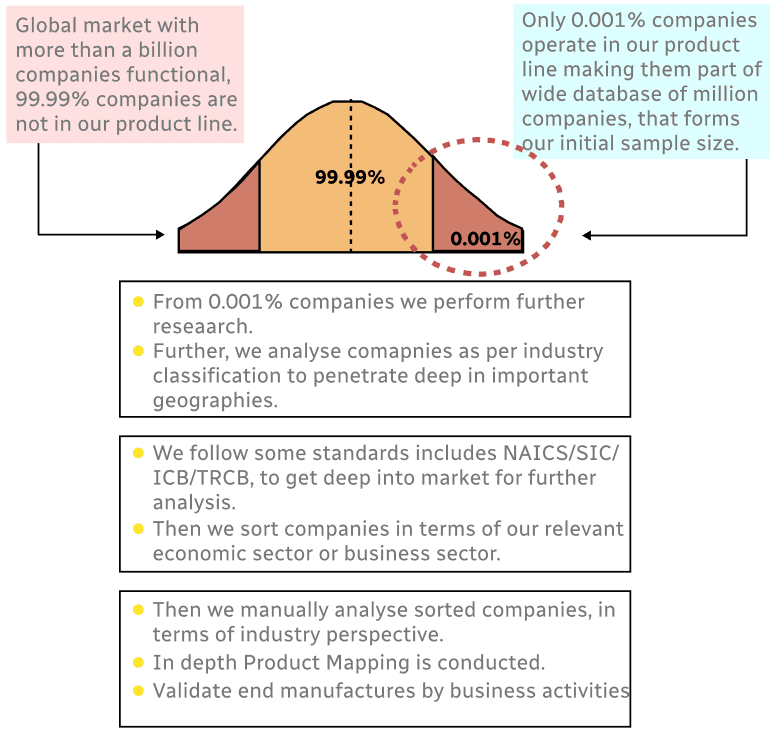
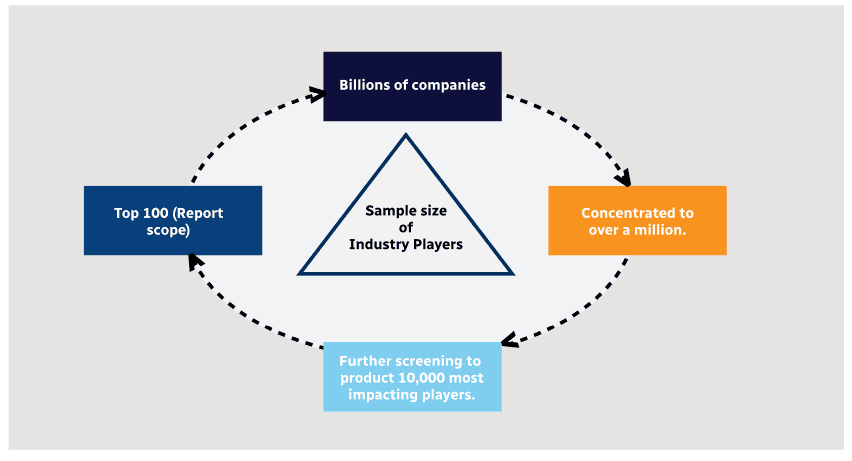
Step 1 - Identification of Relevant Samples Size from Population Database
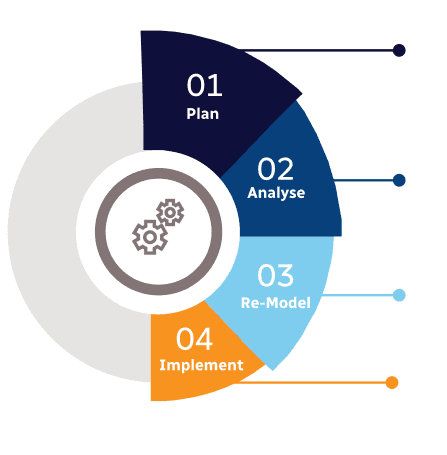
Step 2 - Approaches for Defining Global Market Size (Value, Volume* & Price*)
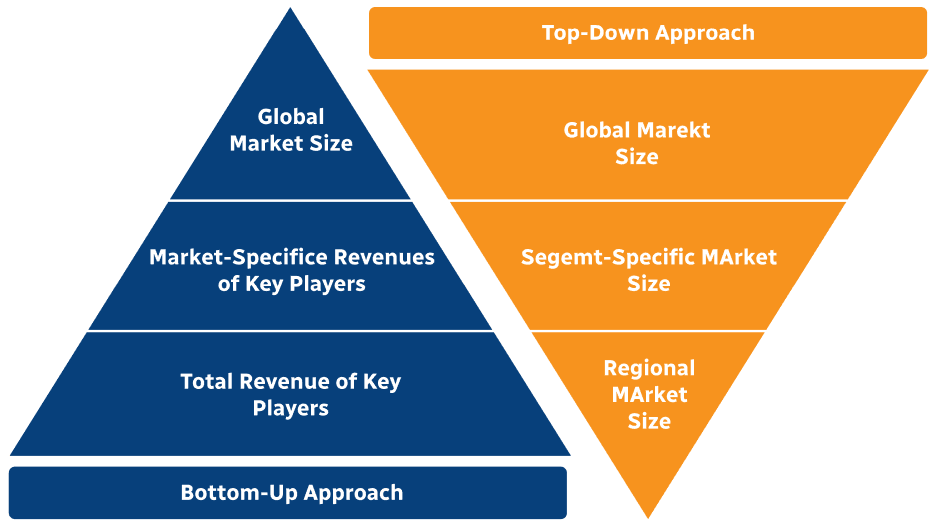
Note*: In applicable scenarios
Step 3 - Data Sources
Primary Research
- Web Analytics
- Survey Reports
- Research Institute
- Latest Research Reports
- Opinion Leaders
Secondary Research
- Annual Reports
- White Paper
- Latest Press Release
- Industry Association
- Paid Database
- Investor Presentations
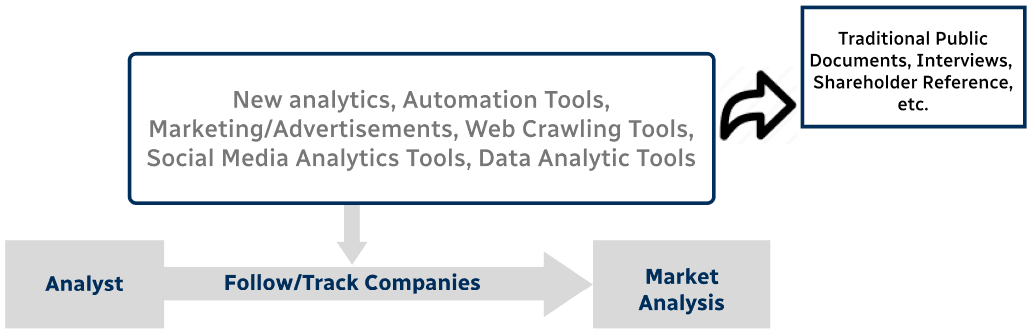
Step 4 - Data Triangulation
Involves using different sources of information in order to increase the validity of a study
These sources are likely to be stakeholders in a program - participants, other researchers, program staff, other community members, and so on.
Then we put all data in single framework & apply various statistical tools to find out the dynamic on the market.
During the analysis stage, feedback from the stakeholder groups would be compared to determine areas of agreement as well as areas of divergence