Key Insights
The global PEEK cranial repair plate market is projected to experience robust growth, reaching an estimated USD 550 million by 2025 and expanding significantly by 2033. This upward trajectory is fueled by a substantial Compound Annual Growth Rate (CAGR) of approximately 8.5% during the forecast period of 2025-2033. The primary drivers behind this expansion include the increasing prevalence of cranial deformities, trauma-related injuries, and the rising demand for minimally invasive surgical procedures. PEEK (Polyetheretherketone) plates offer superior biocompatibility, radiolucency, and mechanical properties compared to traditional metallic implants, making them a preferred choice for skull defect repair and plastic surgery. The market is segmented by application into Skull Defect Repair Surgery and Skull Plastic Surgery, with the former holding a dominant share due to the growing number of neurosurgical interventions. Type segmentation includes Solid Repair Plates and Porous Repair Plates, with solid plates currently leading due to their established use in a wide array of reconstructive procedures.
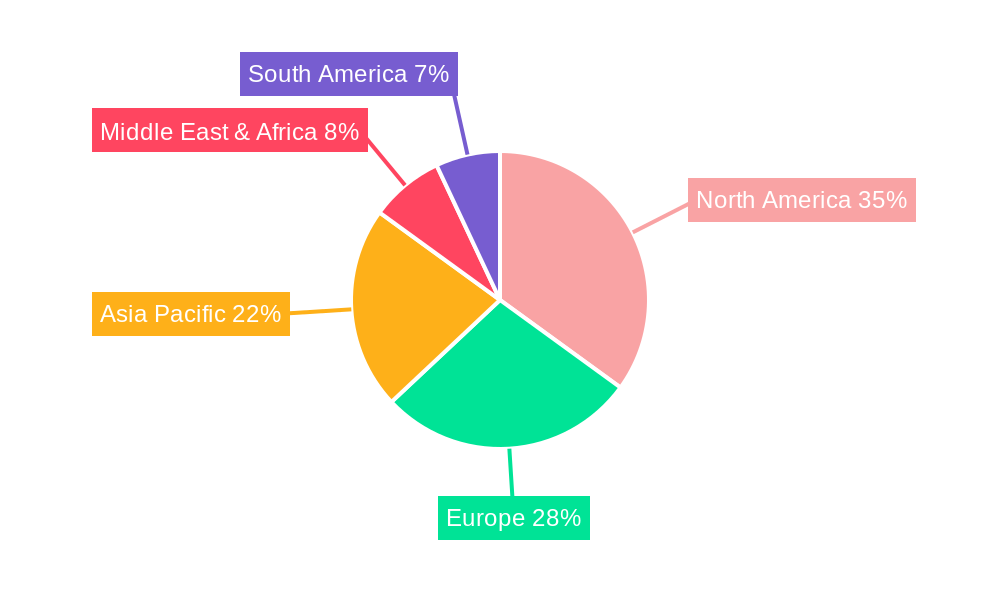
The market's growth is further bolstered by technological advancements, particularly in 3D printing and custom implant design, enabling surgeons to create patient-specific solutions for complex cranial reconstructions. Key players like Stryker, KLS Martin, and 3D Systems are actively investing in research and development to introduce innovative PEEK cranial implant solutions. Despite the positive outlook, certain restraints such as the high cost of PEEK materials and implants, coupled with the availability of alternative treatment options, could pose challenges. However, growing reimbursement policies and increased awareness among healthcare professionals about the benefits of PEEK implants are expected to mitigate these factors. Geographically, North America is expected to lead the market, driven by advanced healthcare infrastructure, high patient awareness, and a significant number of neurosurgical procedures. Asia Pacific, with its rapidly developing healthcare sector and rising disposable incomes, presents a substantial growth opportunity.
This in-depth report delivers a detailed examination of the global Peek Cranial Repair Plate market, encompassing historical trends, current dynamics, and future projections. Covering the period from 2019 to 2033, with a base year of 2025, this analysis provides critical insights for stakeholders, including manufacturers, suppliers, investors, and medical professionals. We delve into market concentration, innovation drivers, regulatory landscapes, competitive strategies, and the evolving needs of end-users across various applications. Leveraging high-traffic keywords such as "cranial reconstruction," "PEEK implants," "skull defect repair," "neurosurgery implants," and "cranioplasty solutions," this report aims to maximize search visibility and provide actionable intelligence for informed decision-making.
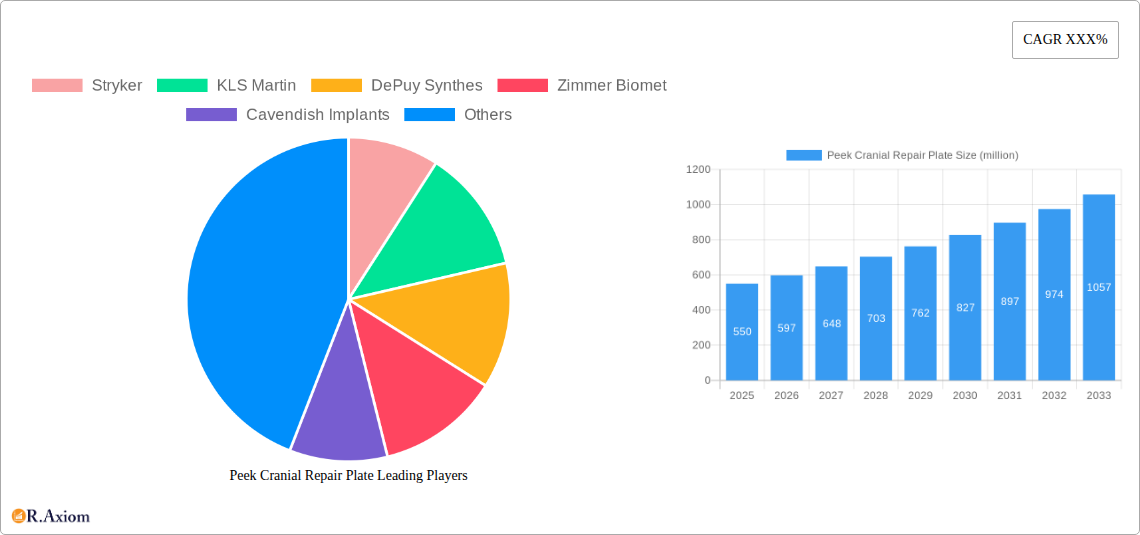
Peek Cranial Repair Plate Market Concentration & Innovation
The Peek Cranial Repair Plate market exhibits a moderate to high concentration, with key players like Stryker, KLS Martin, and DePuy Synthes, Zimmer Biomet, Cavendish Implants, 3D Systems, Xilloc Medical, Evonos, MedCAD, Bioplate, Kontour Medical, and Medprin vying for significant market share. Innovation is a primary driver, fueled by advancements in biomaterial science, additive manufacturing (3D printing), and patient-specific implant design. Regulatory frameworks, overseen by bodies such as the FDA and EMA, play a crucial role in market access and product development, necessitating rigorous clinical trials and quality control. Product substitutes, including titanium plates and autologous bone grafts, are present but PEEK's radiolucency, biocompatibility, and mechanical properties offer distinct advantages. End-user trends are shifting towards minimally invasive procedures and personalized treatment plans, demanding increasingly sophisticated and customizable cranial repair solutions. Mergers and acquisitions (M&A) activities are anticipated to shape market consolidation, with potential deal values in the tens to hundreds of million dollars as companies seek to expand their product portfolios and geographical reach.
- Innovation Drivers:
- Advancements in PEEK material science for enhanced biocompatibility and mechanical strength.
- Adoption of 3D printing technology for patient-specific implant customization.
- Development of biodegradable PEEK composites for bone regeneration.
- Regulatory Frameworks:
- Strict FDA and EMA approval processes for medical devices.
- Compliance with ISO 13485 quality management systems.
- Evolving guidelines for additive manufactured medical implants.
- Product Substitutes:
- Titanium plates (high strength but radiopaque artifacts).
- Autologous bone grafts (potential for resorption and donor site morbidity).
- Other biocompatible polymers.
- End-User Trends:
- Increasing demand for aesthetic outcomes in reconstructive surgery.
- Preference for minimally invasive surgical techniques.
- Growth in neurosurgical procedures requiring complex cranial reconstructions.
- M&A Activities:
- Strategic acquisitions to integrate advanced manufacturing capabilities.
- Consolidation to achieve economies of scale and expand product offerings.
- Targeting of innovative startups in the PEEK implant space.
Peek Cranial Repair Plate Industry Trends & Insights
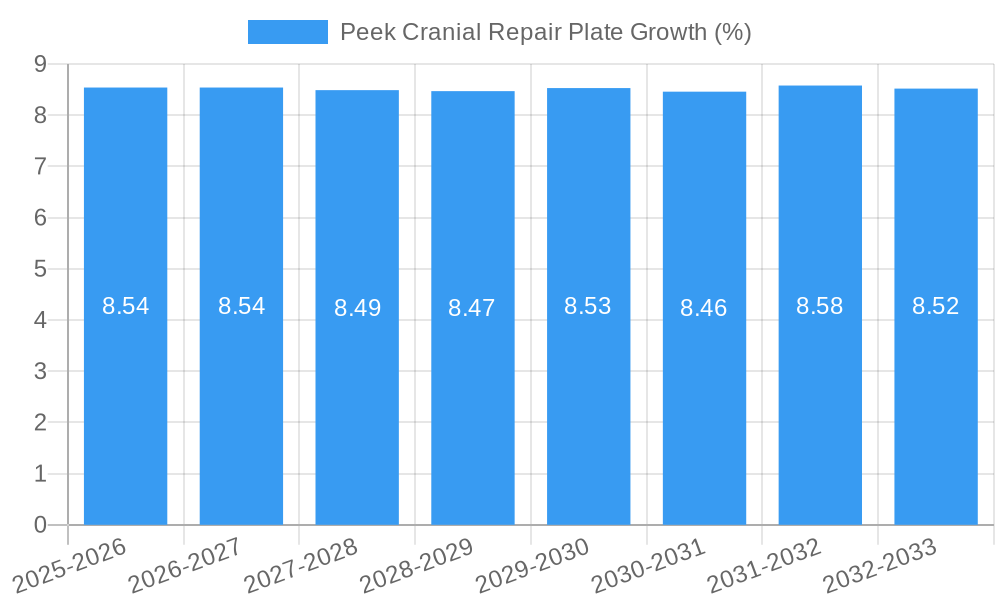
The Peek Cranial Repair Plate industry is poised for robust growth, driven by an increasing prevalence of traumatic brain injuries, neurodegenerative diseases, and the rising demand for reconstructive plastic surgery. The compound annual growth rate (CAGR) is estimated to be between 6.5% and 8.0% over the forecast period. Market penetration is steadily increasing as the advantages of PEEK materials – their biocompatibility, radiolucency, favorable mechanical properties, and radiolucency – become more widely recognized by surgeons and healthcare providers. Technological disruptions, particularly in the realm of additive manufacturing, are revolutionizing the design and production of cranial implants. 3D printing enables the creation of highly customized PEEK plates that perfectly match the unique anatomy of each patient, leading to improved surgical outcomes, reduced operative times, and enhanced patient comfort. This personalization trend is a significant shift from traditional, off-the-shelf solutions.
Consumer preferences are increasingly influenced by the desire for aesthetically pleasing and functional reconstructions, especially in cosmetic cranial surgery. Patients are actively seeking solutions that minimize visible scarring and restore natural facial contours. The competitive dynamics within the market are intensifying, with established medical device giants and emerging specialized implant manufacturers investing heavily in research and development to gain a competitive edge. Companies are focusing on developing novel PEEK formulations with enhanced osteoconductive properties and exploring biodegradable PEEK variants for potential bone regeneration applications. The growing awareness among neurosurgeons and plastic surgeons regarding the benefits of PEEK in cranioplasty procedures, coupled with a projected increase in the number of complex cranial defect cases due to accidents and medical conditions, further fuels market expansion. The ability of PEEK to avoid imaging artifacts, unlike metallic implants, is a significant advantage for post-operative monitoring and diagnosis, contributing to its growing adoption. The integration of advanced software for pre-operative planning and intra-operative guidance is also enhancing the precision and efficacy of PEEK cranial repair.
Dominant Markets & Segments in Peek Cranial Repair Plate
The North America region is anticipated to maintain its dominance in the Peek Cranial Repair Plate market throughout the forecast period. This is attributed to several key drivers, including a well-established healthcare infrastructure, a high disposable income enabling advanced medical treatments, and a significant incidence of head injuries and neurological disorders. Within North America, the United States represents the largest single market, owing to its advanced medical technology, extensive research and development activities, and the presence of leading medical device manufacturers like Stryker and DePuy Synthes.
- Key Drivers for North America's Dominance:
- Economic Policies: Favorable reimbursement policies for medical procedures and strong government funding for healthcare research.
- Infrastructure: Advanced hospital networks, specialized neurosurgical centers, and widespread availability of cutting-edge medical technology.
- Technological Adoption: Early and widespread adoption of advanced surgical techniques and custom implant solutions.
- Disease Prevalence: Higher rates of traumatic brain injuries and neurosurgical interventions compared to other regions.
The Skull Defect Repair Surgery segment is the leading application within the Peek Cranial Repair Plate market. This dominance is driven by the critical need for reconstructive surgery following trauma, tumor resection, or congenital abnormalities of the skull. The ability of PEEK to precisely conform to complex cranial defects, provide structural integrity, and offer excellent aesthetic outcomes makes it the preferred material for neurosurgeons.
- Dominance in Skull Defect Repair Surgery:
- Necessity of Reconstruction: Significant number of patients requiring skull defect repair due to accidents, violence, or medical interventions.
- Biocompatibility and Radiolucency: PEEK's inert nature and lack of imaging interference are crucial for post-operative assessment.
- Customization: 3D printing enables the creation of perfectly fitting implants for complex anatomical voids.
- Surgical Outcomes: Improved functional and aesthetic results compared to traditional methods.
In terms of Type, the Solid Repair Plate segment holds a substantial market share, due to its straightforward application in a wide range of skull defect scenarios requiring robust structural support. However, the Porous Repair Plate segment is experiencing rapid growth, driven by ongoing research into its potential for bone integration and regeneration.
- Dominance of Solid Repair Plates:
- Structural Integrity: Offers superior mechanical support for larger or more complex cranial defects.
- Ease of Use: Simpler surgical handling and fixation compared to some porous designs.
- Established Applications: Widely adopted for decades in various neurosurgical procedures.
- Growth of Porous Repair Plates:
- Osteoconductivity: Potential to promote bone ingrowth and integration, leading to better long-term stability.
- Reduced Weight: Porous structures can offer a lighter implant option.
- Advancements in Biomaterials: Ongoing development of porous PEEK with enhanced biological properties.
Peek Cranial Repair Plate Product Developments
Recent product developments in the Peek Cranial Repair Plate market focus on enhancing patient-specific customization through advanced 3D printing technologies and improved material properties. Companies are introducing novel PEEK formulations with enhanced osteoconductive potential, aiming to facilitate bone regeneration and integration. Innovations also include the development of integrated fixation systems and the design of plates for specific anatomical regions of the skull, such as the orbital rim or temporal bone. These advancements aim to provide surgeons with more precise, efficient, and aesthetically superior solutions for a wide range of cranial reconstructive needs, thereby strengthening the competitive advantage of these new offerings.
Report Scope & Segmentation Analysis
This report provides a comprehensive segmentation of the Peek Cranial Repair Plate market across key categories. The Application segmentation includes Skull Defect Repair Surgery, catering to patients requiring reconstruction due to trauma, tumors, or congenital defects, and Skull Plastic Surgery, focusing on aesthetic and reconstructive procedures. The Type segmentation differentiates between Solid Repair Plate, offering robust structural support, and Porous Repair Plate, designed to potentially promote bone integration. Growth projections for each segment indicate a steady upward trend, with Skull Defect Repair Surgery projected to hold the largest market share due to its critical medical necessity. Skull Plastic Surgery is expected to see significant growth driven by advancements in cosmetic reconstructive techniques. Solid Repair Plates will continue to be a mainstay, while Porous Repair Plates are anticipated to exhibit a higher growth rate as research into bone regeneration matures.
Key Drivers of Peek Cranial Repair Plate Growth
The Peek Cranial Repair Plate market is propelled by several synergistic factors. Technologically, the advent of advanced 3D printing and additive manufacturing allows for the creation of highly precise, patient-specific implants, drastically improving surgical outcomes and reducing procedure times. Economically, increasing global healthcare expenditure, particularly in neurosurgery and reconstructive procedures, fuels demand for advanced implantable devices. Regulatory bodies are increasingly streamlining approval processes for innovative medical technologies, encouraging market entry for novel PEEK solutions. The rising incidence of head injuries from accidents and sports, coupled with an aging population prone to neurological conditions requiring surgical intervention, presents a substantial and growing patient pool. Furthermore, the growing aesthetic consciousness among patients undergoing reconstructive surgery drives demand for PEEK's superior cosmetic results.
Challenges in the Peek Cranial Repair Plate Sector
Despite its promising growth, the Peek Cranial Repair Plate sector faces several challenges. Regulatory hurdles, though evolving, can still lead to extended product development and approval timelines, particularly for novel PEEK composites or intricate designs. Supply chain complexities, especially for highly specialized or custom-implanted components, can impact lead times and availability. Competitive pressures from established metallic implants and ongoing innovation in alternative biomaterials necessitate continuous investment in R&D and cost optimization. Additionally, the initial cost of high-precision, 3D-printed PEEK implants can be a barrier to wider adoption in resource-constrained healthcare settings. The need for specialized surgical training to effectively utilize custom implants also presents a learning curve for some practitioners.
Emerging Opportunities in Peek Cranial Repair Plate
Emerging opportunities in the Peek Cranial Repair Plate market lie in the continuous advancement of personalized medicine. The integration of AI and advanced imaging for even more precise pre-operative planning and intra-operative guidance presents a significant avenue for growth. The development of bioactive PEEK materials that actively promote bone regeneration and tissue integration could revolutionize cranial reconstruction, moving beyond purely structural support. Expanding into emerging markets with growing healthcare infrastructures and increasing demand for advanced surgical solutions offers considerable untapped potential. Furthermore, exploring applications beyond standard skull repair, such as cranial augmentation for specific medical conditions or even in niche areas like veterinary neurosurgery, could open new revenue streams. The ongoing trend towards minimally invasive neurosurgery also creates opportunities for developing innovative PEEK implant designs that facilitate less intrusive procedures.
Leading Players in the Peek Cranial Repair Plate Market
- Stryker
- KLS Martin
- DePuy Synthes
- Zimmer Biomet
- Cavendish Implants
- 3D Systems
- Xilloc Medical
- Evonos
- MedCAD
- Bioplate
- Kontour Medical
- Medprin
Key Developments in Peek Cranial Repair Plate Industry
- 2023: Introduction of new additive manufacturing platforms for highly complex, patient-specific PEEK cranial implants.
- 2023: Development of enhanced osteoconductive PEEK formulations for improved bone integration.
- 2022: Strategic partnerships between PEEK implant manufacturers and advanced imaging/AI software providers for enhanced surgical planning.
- 2022: Increased regulatory approvals for custom-made PEEK cranial implants in major markets.
- 2021: Launch of novel PEEK implant designs specifically for orbital reconstruction.
- 2021: M&A activity focused on acquiring companies with expertise in PEEK material science and 3D printing capabilities.
Strategic Outlook for Peek Cranial Repair Plate Market
- 2023: Introduction of new additive manufacturing platforms for highly complex, patient-specific PEEK cranial implants.
- 2023: Development of enhanced osteoconductive PEEK formulations for improved bone integration.
- 2022: Strategic partnerships between PEEK implant manufacturers and advanced imaging/AI software providers for enhanced surgical planning.
- 2022: Increased regulatory approvals for custom-made PEEK cranial implants in major markets.
- 2021: Launch of novel PEEK implant designs specifically for orbital reconstruction.
- 2021: M&A activity focused on acquiring companies with expertise in PEEK material science and 3D printing capabilities.
Strategic Outlook for Peek Cranial Repair Plate Market
The strategic outlook for the Peek Cranial Repair Plate market is overwhelmingly positive, driven by the inherent advantages of PEEK materials and continuous innovation. Future growth will be significantly influenced by the increasing adoption of additive manufacturing for creating patient-specific implants, leading to better surgical outcomes and reduced patient recovery times. The ongoing research into bioactive PEEK compounds that promote bone regeneration presents a transformative opportunity, potentially reducing the need for secondary grafting procedures. Furthermore, as healthcare systems globally continue to invest in advanced medical technologies, the demand for high-quality, reliable, and aesthetically superior cranial repair solutions will only escalate. Companies that focus on strategic collaborations, technological advancement, and expanding their global reach will be best positioned to capitalize on the substantial growth potential in this dynamic market.
Peek Cranial Repair Plate Segmentation
-
1. Application
- 1.1. Skull Defect Repair Surgery
- 1.2. Skull Plastic Surgery
-
2. Type
- 2.1. Solid Repair Plate
- 2.2. Porous Repair Plate
Peek Cranial Repair Plate Segmentation By Geography
-
1. North America
- 1.1. United States
- 1.2. Canada
- 1.3. Mexico
-
2. South America
- 2.1. Brazil
- 2.2. Argentina
- 2.3. Rest of South America
-
3. Europe
- 3.1. United Kingdom
- 3.2. Germany
- 3.3. France
- 3.4. Italy
- 3.5. Spain
- 3.6. Russia
- 3.7. Benelux
- 3.8. Nordics
- 3.9. Rest of Europe
-
4. Middle East & Africa
- 4.1. Turkey
- 4.2. Israel
- 4.3. GCC
- 4.4. North Africa
- 4.5. South Africa
- 4.6. Rest of Middle East & Africa
-
5. Asia Pacific
- 5.1. China
- 5.2. India
- 5.3. Japan
- 5.4. South Korea
- 5.5. ASEAN
- 5.6. Oceania
- 5.7. Rest of Asia Pacific
Peek Cranial Repair Plate REPORT HIGHLIGHTS
| Aspects | Details |
|---|---|
| Study Period | 2019-2033 |
| Base Year | 2024 |
| Estimated Year | 2025 |
| Forecast Period | 2025-2033 |
| Historical Period | 2019-2024 |
| Growth Rate | CAGR of XXX% from 2019-2033 |
| Segmentation |
|
Table of Contents
- 1. Introduction
- 1.1. Research Scope
- 1.2. Market Segmentation
- 1.3. Research Methodology
- 1.4. Definitions and Assumptions
- 2. Executive Summary
- 2.1. Introduction
- 3. Market Dynamics
- 3.1. Introduction
- 3.2. Market Drivers
- 3.3. Market Restrains
- 3.4. Market Trends
- 4. Market Factor Analysis
- 4.1. Porters Five Forces
- 4.2. Supply/Value Chain
- 4.3. PESTEL analysis
- 4.4. Market Entropy
- 4.5. Patent/Trademark Analysis
- 5. Global Peek Cranial Repair Plate Analysis, Insights and Forecast, 2019-2031
- 5.1. Market Analysis, Insights and Forecast - by Application
- 5.1.1. Skull Defect Repair Surgery
- 5.1.2. Skull Plastic Surgery
- 5.2. Market Analysis, Insights and Forecast - by Type
- 5.2.1. Solid Repair Plate
- 5.2.2. Porous Repair Plate
- 5.3. Market Analysis, Insights and Forecast - by Region
- 5.3.1. North America
- 5.3.2. South America
- 5.3.3. Europe
- 5.3.4. Middle East & Africa
- 5.3.5. Asia Pacific
- 5.1. Market Analysis, Insights and Forecast - by Application
- 6. North America Peek Cranial Repair Plate Analysis, Insights and Forecast, 2019-2031
- 6.1. Market Analysis, Insights and Forecast - by Application
- 6.1.1. Skull Defect Repair Surgery
- 6.1.2. Skull Plastic Surgery
- 6.2. Market Analysis, Insights and Forecast - by Type
- 6.2.1. Solid Repair Plate
- 6.2.2. Porous Repair Plate
- 6.1. Market Analysis, Insights and Forecast - by Application
- 7. South America Peek Cranial Repair Plate Analysis, Insights and Forecast, 2019-2031
- 7.1. Market Analysis, Insights and Forecast - by Application
- 7.1.1. Skull Defect Repair Surgery
- 7.1.2. Skull Plastic Surgery
- 7.2. Market Analysis, Insights and Forecast - by Type
- 7.2.1. Solid Repair Plate
- 7.2.2. Porous Repair Plate
- 7.1. Market Analysis, Insights and Forecast - by Application
- 8. Europe Peek Cranial Repair Plate Analysis, Insights and Forecast, 2019-2031
- 8.1. Market Analysis, Insights and Forecast - by Application
- 8.1.1. Skull Defect Repair Surgery
- 8.1.2. Skull Plastic Surgery
- 8.2. Market Analysis, Insights and Forecast - by Type
- 8.2.1. Solid Repair Plate
- 8.2.2. Porous Repair Plate
- 8.1. Market Analysis, Insights and Forecast - by Application
- 9. Middle East & Africa Peek Cranial Repair Plate Analysis, Insights and Forecast, 2019-2031
- 9.1. Market Analysis, Insights and Forecast - by Application
- 9.1.1. Skull Defect Repair Surgery
- 9.1.2. Skull Plastic Surgery
- 9.2. Market Analysis, Insights and Forecast - by Type
- 9.2.1. Solid Repair Plate
- 9.2.2. Porous Repair Plate
- 9.1. Market Analysis, Insights and Forecast - by Application
- 10. Asia Pacific Peek Cranial Repair Plate Analysis, Insights and Forecast, 2019-2031
- 10.1. Market Analysis, Insights and Forecast - by Application
- 10.1.1. Skull Defect Repair Surgery
- 10.1.2. Skull Plastic Surgery
- 10.2. Market Analysis, Insights and Forecast - by Type
- 10.2.1. Solid Repair Plate
- 10.2.2. Porous Repair Plate
- 10.1. Market Analysis, Insights and Forecast - by Application
- 11. Competitive Analysis
- 11.1. Global Market Share Analysis 2024
- 11.2. Company Profiles
- 11.2.1 Stryker
- 11.2.1.1. Overview
- 11.2.1.2. Products
- 11.2.1.3. SWOT Analysis
- 11.2.1.4. Recent Developments
- 11.2.1.5. Financials (Based on Availability)
- 11.2.2 KLS Martin
- 11.2.2.1. Overview
- 11.2.2.2. Products
- 11.2.2.3. SWOT Analysis
- 11.2.2.4. Recent Developments
- 11.2.2.5. Financials (Based on Availability)
- 11.2.3 DePuy Synthes
- 11.2.3.1. Overview
- 11.2.3.2. Products
- 11.2.3.3. SWOT Analysis
- 11.2.3.4. Recent Developments
- 11.2.3.5. Financials (Based on Availability)
- 11.2.4 Zimmer Biomet
- 11.2.4.1. Overview
- 11.2.4.2. Products
- 11.2.4.3. SWOT Analysis
- 11.2.4.4. Recent Developments
- 11.2.4.5. Financials (Based on Availability)
- 11.2.5 Cavendish Implants
- 11.2.5.1. Overview
- 11.2.5.2. Products
- 11.2.5.3. SWOT Analysis
- 11.2.5.4. Recent Developments
- 11.2.5.5. Financials (Based on Availability)
- 11.2.6 3D Systems
- 11.2.6.1. Overview
- 11.2.6.2. Products
- 11.2.6.3. SWOT Analysis
- 11.2.6.4. Recent Developments
- 11.2.6.5. Financials (Based on Availability)
- 11.2.7 Xilloc Medical
- 11.2.7.1. Overview
- 11.2.7.2. Products
- 11.2.7.3. SWOT Analysis
- 11.2.7.4. Recent Developments
- 11.2.7.5. Financials (Based on Availability)
- 11.2.8 Evonos
- 11.2.8.1. Overview
- 11.2.8.2. Products
- 11.2.8.3. SWOT Analysis
- 11.2.8.4. Recent Developments
- 11.2.8.5. Financials (Based on Availability)
- 11.2.9 MedCAD
- 11.2.9.1. Overview
- 11.2.9.2. Products
- 11.2.9.3. SWOT Analysis
- 11.2.9.4. Recent Developments
- 11.2.9.5. Financials (Based on Availability)
- 11.2.10 Bioplate
- 11.2.10.1. Overview
- 11.2.10.2. Products
- 11.2.10.3. SWOT Analysis
- 11.2.10.4. Recent Developments
- 11.2.10.5. Financials (Based on Availability)
- 11.2.11 Kontour Medical
- 11.2.11.1. Overview
- 11.2.11.2. Products
- 11.2.11.3. SWOT Analysis
- 11.2.11.4. Recent Developments
- 11.2.11.5. Financials (Based on Availability)
- 11.2.12 Medprin
- 11.2.12.1. Overview
- 11.2.12.2. Products
- 11.2.12.3. SWOT Analysis
- 11.2.12.4. Recent Developments
- 11.2.12.5. Financials (Based on Availability)
- 11.2.1 Stryker
List of Figures
- Figure 1: Global Peek Cranial Repair Plate Revenue Breakdown (million, %) by Region 2024 & 2032
- Figure 2: North America Peek Cranial Repair Plate Revenue (million), by Application 2024 & 2032
- Figure 3: North America Peek Cranial Repair Plate Revenue Share (%), by Application 2024 & 2032
- Figure 4: North America Peek Cranial Repair Plate Revenue (million), by Type 2024 & 2032
- Figure 5: North America Peek Cranial Repair Plate Revenue Share (%), by Type 2024 & 2032
- Figure 6: North America Peek Cranial Repair Plate Revenue (million), by Country 2024 & 2032
- Figure 7: North America Peek Cranial Repair Plate Revenue Share (%), by Country 2024 & 2032
- Figure 8: South America Peek Cranial Repair Plate Revenue (million), by Application 2024 & 2032
- Figure 9: South America Peek Cranial Repair Plate Revenue Share (%), by Application 2024 & 2032
- Figure 10: South America Peek Cranial Repair Plate Revenue (million), by Type 2024 & 2032
- Figure 11: South America Peek Cranial Repair Plate Revenue Share (%), by Type 2024 & 2032
- Figure 12: South America Peek Cranial Repair Plate Revenue (million), by Country 2024 & 2032
- Figure 13: South America Peek Cranial Repair Plate Revenue Share (%), by Country 2024 & 2032
- Figure 14: Europe Peek Cranial Repair Plate Revenue (million), by Application 2024 & 2032
- Figure 15: Europe Peek Cranial Repair Plate Revenue Share (%), by Application 2024 & 2032
- Figure 16: Europe Peek Cranial Repair Plate Revenue (million), by Type 2024 & 2032
- Figure 17: Europe Peek Cranial Repair Plate Revenue Share (%), by Type 2024 & 2032
- Figure 18: Europe Peek Cranial Repair Plate Revenue (million), by Country 2024 & 2032
- Figure 19: Europe Peek Cranial Repair Plate Revenue Share (%), by Country 2024 & 2032
- Figure 20: Middle East & Africa Peek Cranial Repair Plate Revenue (million), by Application 2024 & 2032
- Figure 21: Middle East & Africa Peek Cranial Repair Plate Revenue Share (%), by Application 2024 & 2032
- Figure 22: Middle East & Africa Peek Cranial Repair Plate Revenue (million), by Type 2024 & 2032
- Figure 23: Middle East & Africa Peek Cranial Repair Plate Revenue Share (%), by Type 2024 & 2032
- Figure 24: Middle East & Africa Peek Cranial Repair Plate Revenue (million), by Country 2024 & 2032
- Figure 25: Middle East & Africa Peek Cranial Repair Plate Revenue Share (%), by Country 2024 & 2032
- Figure 26: Asia Pacific Peek Cranial Repair Plate Revenue (million), by Application 2024 & 2032
- Figure 27: Asia Pacific Peek Cranial Repair Plate Revenue Share (%), by Application 2024 & 2032
- Figure 28: Asia Pacific Peek Cranial Repair Plate Revenue (million), by Type 2024 & 2032
- Figure 29: Asia Pacific Peek Cranial Repair Plate Revenue Share (%), by Type 2024 & 2032
- Figure 30: Asia Pacific Peek Cranial Repair Plate Revenue (million), by Country 2024 & 2032
- Figure 31: Asia Pacific Peek Cranial Repair Plate Revenue Share (%), by Country 2024 & 2032
List of Tables
- Table 1: Global Peek Cranial Repair Plate Revenue million Forecast, by Region 2019 & 2032
- Table 2: Global Peek Cranial Repair Plate Revenue million Forecast, by Application 2019 & 2032
- Table 3: Global Peek Cranial Repair Plate Revenue million Forecast, by Type 2019 & 2032
- Table 4: Global Peek Cranial Repair Plate Revenue million Forecast, by Region 2019 & 2032
- Table 5: Global Peek Cranial Repair Plate Revenue million Forecast, by Application 2019 & 2032
- Table 6: Global Peek Cranial Repair Plate Revenue million Forecast, by Type 2019 & 2032
- Table 7: Global Peek Cranial Repair Plate Revenue million Forecast, by Country 2019 & 2032
- Table 8: United States Peek Cranial Repair Plate Revenue (million) Forecast, by Application 2019 & 2032
- Table 9: Canada Peek Cranial Repair Plate Revenue (million) Forecast, by Application 2019 & 2032
- Table 10: Mexico Peek Cranial Repair Plate Revenue (million) Forecast, by Application 2019 & 2032
- Table 11: Global Peek Cranial Repair Plate Revenue million Forecast, by Application 2019 & 2032
- Table 12: Global Peek Cranial Repair Plate Revenue million Forecast, by Type 2019 & 2032
- Table 13: Global Peek Cranial Repair Plate Revenue million Forecast, by Country 2019 & 2032
- Table 14: Brazil Peek Cranial Repair Plate Revenue (million) Forecast, by Application 2019 & 2032
- Table 15: Argentina Peek Cranial Repair Plate Revenue (million) Forecast, by Application 2019 & 2032
- Table 16: Rest of South America Peek Cranial Repair Plate Revenue (million) Forecast, by Application 2019 & 2032
- Table 17: Global Peek Cranial Repair Plate Revenue million Forecast, by Application 2019 & 2032
- Table 18: Global Peek Cranial Repair Plate Revenue million Forecast, by Type 2019 & 2032
- Table 19: Global Peek Cranial Repair Plate Revenue million Forecast, by Country 2019 & 2032
- Table 20: United Kingdom Peek Cranial Repair Plate Revenue (million) Forecast, by Application 2019 & 2032
- Table 21: Germany Peek Cranial Repair Plate Revenue (million) Forecast, by Application 2019 & 2032
- Table 22: France Peek Cranial Repair Plate Revenue (million) Forecast, by Application 2019 & 2032
- Table 23: Italy Peek Cranial Repair Plate Revenue (million) Forecast, by Application 2019 & 2032
- Table 24: Spain Peek Cranial Repair Plate Revenue (million) Forecast, by Application 2019 & 2032
- Table 25: Russia Peek Cranial Repair Plate Revenue (million) Forecast, by Application 2019 & 2032
- Table 26: Benelux Peek Cranial Repair Plate Revenue (million) Forecast, by Application 2019 & 2032
- Table 27: Nordics Peek Cranial Repair Plate Revenue (million) Forecast, by Application 2019 & 2032
- Table 28: Rest of Europe Peek Cranial Repair Plate Revenue (million) Forecast, by Application 2019 & 2032
- Table 29: Global Peek Cranial Repair Plate Revenue million Forecast, by Application 2019 & 2032
- Table 30: Global Peek Cranial Repair Plate Revenue million Forecast, by Type 2019 & 2032
- Table 31: Global Peek Cranial Repair Plate Revenue million Forecast, by Country 2019 & 2032
- Table 32: Turkey Peek Cranial Repair Plate Revenue (million) Forecast, by Application 2019 & 2032
- Table 33: Israel Peek Cranial Repair Plate Revenue (million) Forecast, by Application 2019 & 2032
- Table 34: GCC Peek Cranial Repair Plate Revenue (million) Forecast, by Application 2019 & 2032
- Table 35: North Africa Peek Cranial Repair Plate Revenue (million) Forecast, by Application 2019 & 2032
- Table 36: South Africa Peek Cranial Repair Plate Revenue (million) Forecast, by Application 2019 & 2032
- Table 37: Rest of Middle East & Africa Peek Cranial Repair Plate Revenue (million) Forecast, by Application 2019 & 2032
- Table 38: Global Peek Cranial Repair Plate Revenue million Forecast, by Application 2019 & 2032
- Table 39: Global Peek Cranial Repair Plate Revenue million Forecast, by Type 2019 & 2032
- Table 40: Global Peek Cranial Repair Plate Revenue million Forecast, by Country 2019 & 2032
- Table 41: China Peek Cranial Repair Plate Revenue (million) Forecast, by Application 2019 & 2032
- Table 42: India Peek Cranial Repair Plate Revenue (million) Forecast, by Application 2019 & 2032
- Table 43: Japan Peek Cranial Repair Plate Revenue (million) Forecast, by Application 2019 & 2032
- Table 44: South Korea Peek Cranial Repair Plate Revenue (million) Forecast, by Application 2019 & 2032
- Table 45: ASEAN Peek Cranial Repair Plate Revenue (million) Forecast, by Application 2019 & 2032
- Table 46: Oceania Peek Cranial Repair Plate Revenue (million) Forecast, by Application 2019 & 2032
- Table 47: Rest of Asia Pacific Peek Cranial Repair Plate Revenue (million) Forecast, by Application 2019 & 2032
Frequently Asked Questions
1. What is the projected Compound Annual Growth Rate (CAGR) of the Peek Cranial Repair Plate?
The projected CAGR is approximately XXX%.
2. Which companies are prominent players in the Peek Cranial Repair Plate?
Key companies in the market include Stryker, KLS Martin, DePuy Synthes, Zimmer Biomet, Cavendish Implants, 3D Systems, Xilloc Medical, Evonos, MedCAD, Bioplate, Kontour Medical, Medprin.
3. What are the main segments of the Peek Cranial Repair Plate?
The market segments include Application, Type.
4. Can you provide details about the market size?
The market size is estimated to be USD XXX million as of 2022.
5. What are some drivers contributing to market growth?
N/A
6. What are the notable trends driving market growth?
N/A
7. Are there any restraints impacting market growth?
N/A
8. Can you provide examples of recent developments in the market?
N/A
9. What pricing options are available for accessing the report?
Pricing options include single-user, multi-user, and enterprise licenses priced at USD 2900.00, USD 4350.00, and USD 5800.00 respectively.
10. Is the market size provided in terms of value or volume?
The market size is provided in terms of value, measured in million.
11. Are there any specific market keywords associated with the report?
Yes, the market keyword associated with the report is "Peek Cranial Repair Plate," which aids in identifying and referencing the specific market segment covered.
12. How do I determine which pricing option suits my needs best?
The pricing options vary based on user requirements and access needs. Individual users may opt for single-user licenses, while businesses requiring broader access may choose multi-user or enterprise licenses for cost-effective access to the report.
13. Are there any additional resources or data provided in the Peek Cranial Repair Plate report?
While the report offers comprehensive insights, it's advisable to review the specific contents or supplementary materials provided to ascertain if additional resources or data are available.
14. How can I stay updated on further developments or reports in the Peek Cranial Repair Plate?
To stay informed about further developments, trends, and reports in the Peek Cranial Repair Plate, consider subscribing to industry newsletters, following relevant companies and organizations, or regularly checking reputable industry news sources and publications.
Methodology
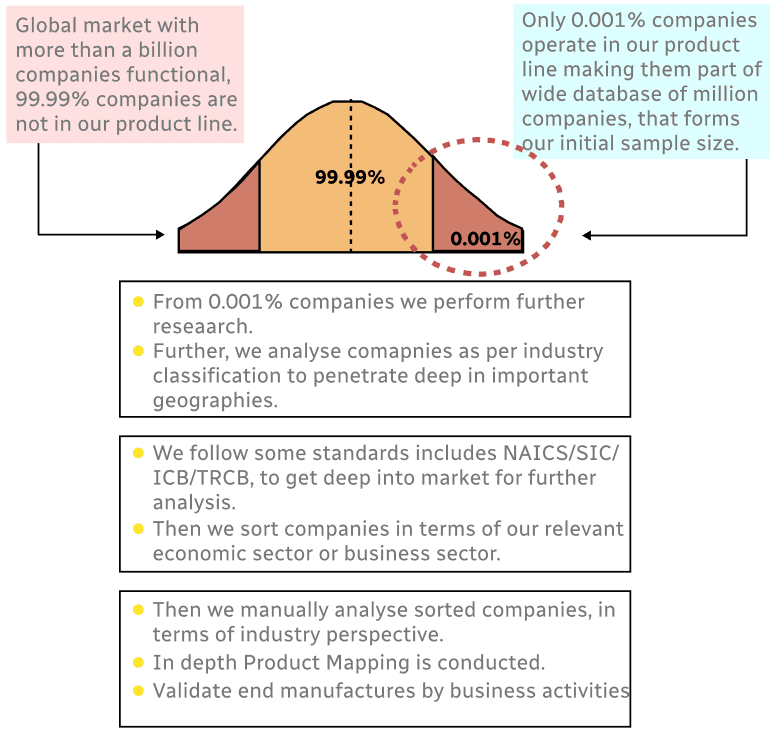
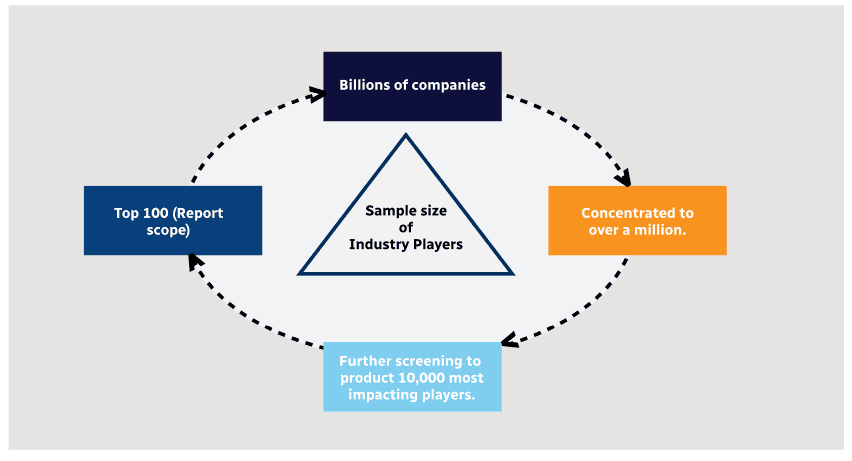
Step 1 - Identification of Relevant Samples Size from Population Database
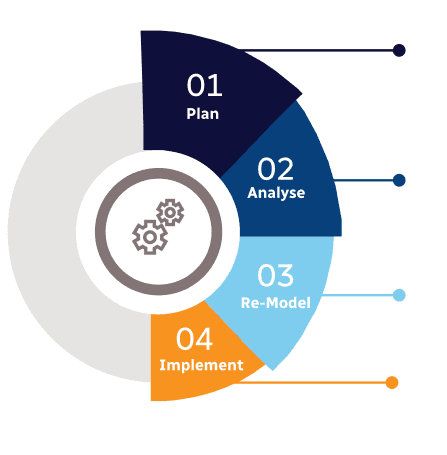
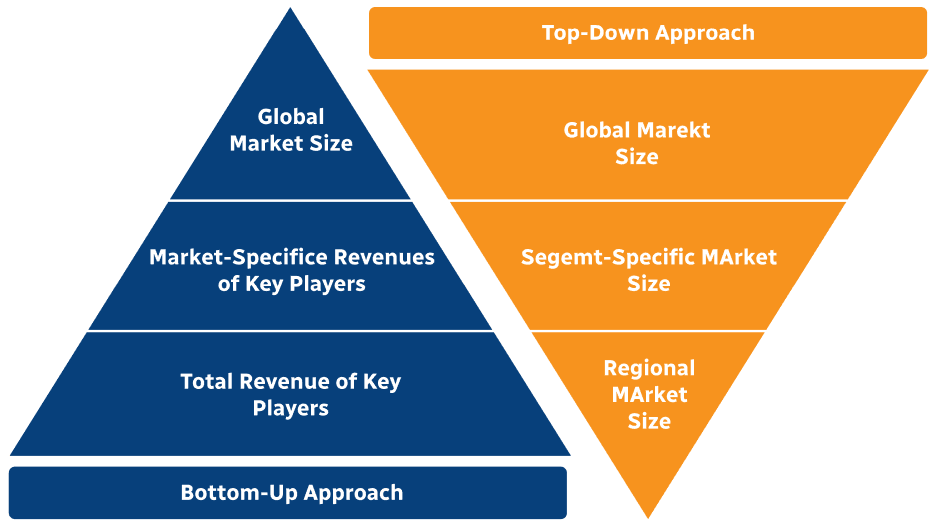
Step 2 - Approaches for Defining Global Market Size (Value, Volume* & Price*)
Note*: In applicable scenarios
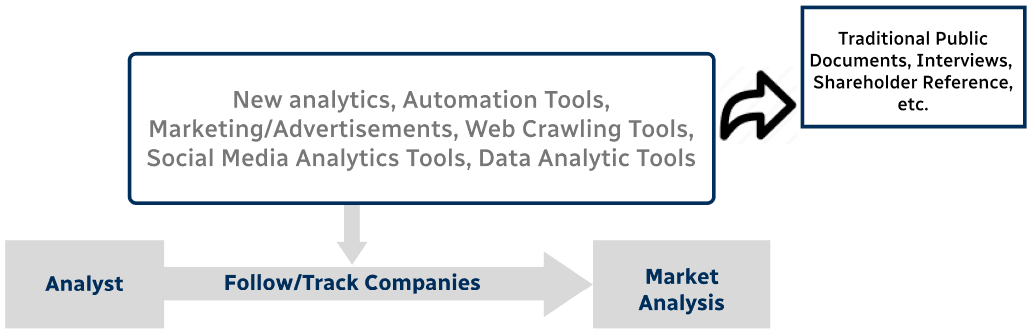
Step 3 - Data Sources
Primary Research
- Web Analytics
- Survey Reports
- Research Institute
- Latest Research Reports
- Opinion Leaders
Secondary Research
- Annual Reports
- White Paper
- Latest Press Release
- Industry Association
- Paid Database
- Investor Presentations
Step 4 - Data Triangulation
Involves using different sources of information in order to increase the validity of a study
These sources are likely to be stakeholders in a program - participants, other researchers, program staff, other community members, and so on.
Then we put all data in single framework & apply various statistical tools to find out the dynamic on the market.
During the analysis stage, feedback from the stakeholder groups would be compared to determine areas of agreement as well as areas of divergence