Key Insights
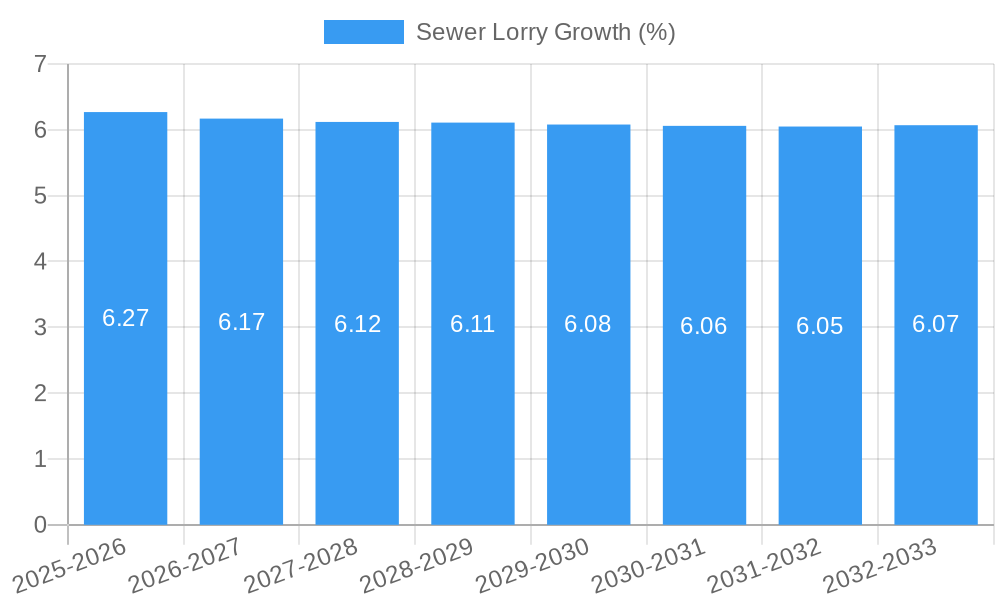
The global Sewer Lorry market is experiencing robust growth, projected to reach a substantial market size of approximately $4,500 million by 2025, with an anticipated Compound Annual Growth Rate (CAGR) of around 6.2% during the forecast period of 2025-2033. This expansion is primarily driven by the increasing necessity for efficient wastewater management and infrastructure maintenance in both rapidly urbanizing areas and established industrial regions. The growing emphasis on public health and environmental regulations worldwide is a significant catalyst, compelling municipalities and industries to invest in advanced sewer cleaning and vacuum solutions. Furthermore, the continuous development of innovative technologies, such as more fuel-efficient engines, improved suction capabilities, and enhanced safety features, is contributing to the market's upward trajectory. The demand for sewer lorries is closely linked to the health of the construction and infrastructure development sectors, as well as the ongoing need for maintenance of existing sanitation systems.
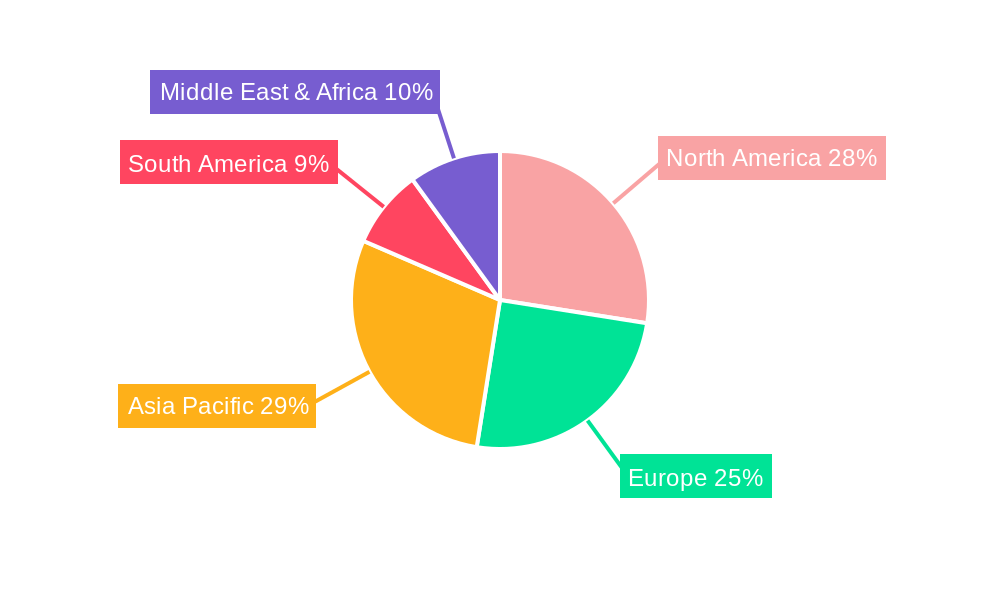
The market is segmented by application into Industrial, Municipal, and Others, with Municipal applications expected to dominate due to the widespread need for public sanitation. By type, the market is categorized into Liquid Suctioning Only, Liquid and Dry Suctioning, and Others, with the Liquid and Dry Suctioning segment holding a significant share due to its versatility. Geographically, Asia Pacific, particularly China and India, is emerging as a key growth region due to rapid urbanization and significant investments in wastewater infrastructure. North America and Europe continue to be mature markets, characterized by a strong replacement demand and the adoption of technologically advanced equipment. Key players such as Federal Signal, Vac-Con, and KOKS are actively involved in research and development, aiming to offer sustainable and efficient solutions that cater to the evolving demands of the global sewer maintenance industry. Restraints such as high initial investment costs and stringent environmental regulations in certain regions could pose challenges, but the overall outlook remains positive due to the essential nature of these services.
This in-depth report provides a granular analysis of the global Sewer Lorry market, offering critical insights for industry stakeholders. Covering the historical period from 2019 to 2024, the base and estimated year of 2025, and a comprehensive forecast period extending to 2033, this study delves into market dynamics, competitive landscapes, and emerging opportunities. Our analysis leverages high-traffic keywords such as "sewer vacuum truck," "combination vacuum truck," "hydro excavation," "wastewater management solutions," "municipal waste collection," and "industrial cleaning equipment" to ensure maximum search visibility and engagement for industry professionals.
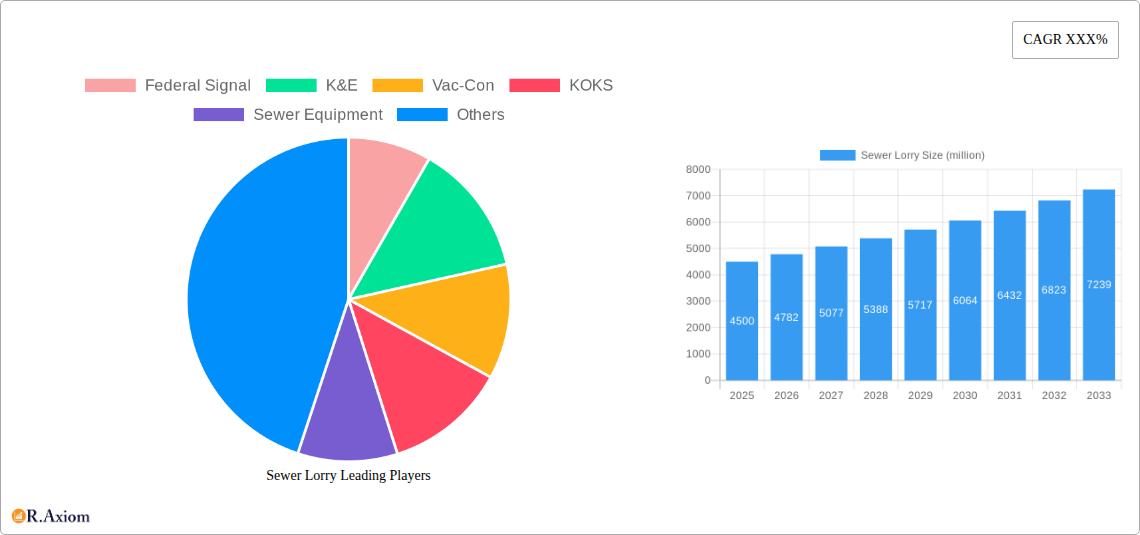
Sewer Lorry Market Concentration & Innovation
The sewer lorry market exhibits a moderate level of concentration, with key players like Federal Signal, KOKS, and Vac-Con holding significant market share. Innovation is a critical differentiator, driven by advancements in suction technology, environmental compliance, and operational efficiency. Regulatory frameworks, particularly concerning wastewater discharge and emissions, significantly influence product development and market entry. Product substitutes, such as portable vacuum systems and specialized excavation machinery, present ongoing competitive pressures. End-user trends point towards a growing demand for multi-functional vehicles capable of handling both liquid and dry waste, alongside increasing adoption of advanced safety features. Mergers and acquisitions (M&A) are expected to play a crucial role in market consolidation, with estimated M&A deal values in the range of several hundred million. For instance, the acquisition of smaller specialized manufacturers by larger entities is anticipated to bolster capabilities and expand market reach. Key innovative drivers include the development of quieter, more fuel-efficient engines and the integration of smart technologies for real-time monitoring and diagnostics.
Sewer Lorry Industry Trends & Insights
The global sewer lorry market is poised for robust growth, projected to expand at a Compound Annual Growth Rate (CAGR) of approximately 5.8% from 2025 to 2033. This growth is underpinned by escalating urbanization and industrialization worldwide, leading to increased demand for efficient wastewater management and industrial cleaning solutions. Technological disruptions, such as the adoption of advanced vacuum systems and eco-friendly engine technologies, are reshaping the industry. Consumer preferences are shifting towards more sustainable and operationally efficient sewer lorries, emphasizing reduced environmental impact and lower operating costs. Competitive dynamics are intensifying, with established players continually innovating to maintain market leadership. Market penetration is expected to deepen, particularly in emerging economies with developing infrastructure and growing environmental consciousness. The increasing need for industrial cleaning in sectors like oil and gas, chemical processing, and manufacturing further fuels demand. Government initiatives promoting environmental protection and public health are also significant growth catalysts. The market penetration for advanced sewer vacuum trucks is estimated to reach over 65% by 2033.
Dominant Markets & Segments in Sewer Lorry
The Municipal segment is projected to dominate the sewer lorry market, driven by consistent governmental investments in public infrastructure and wastewater management. This segment's dominance is further bolstered by stringent regulations regarding sanitation and public health in urban areas. Within the Application segment, Municipal applications are expected to account for over 60% of the market share in the forecast period.
Key Drivers for Municipal Dominance:
- Infrastructure Development: Continuous expansion and maintenance of municipal sewer systems worldwide.
- Public Health Initiatives: Government mandates and public demand for clean and sanitary environments.
- Aging Infrastructure: The need to replace and upgrade aging sewer networks in developed nations.
- Population Growth: Increasing urban populations lead to higher wastewater generation and collection demands.
In terms of Type, the Liquid and Dry Suctioning segment is anticipated to exhibit the strongest growth, reflecting the versatility and increasing demand for multi-purpose sewer lorries. These vehicles are essential for a wide range of cleaning tasks, from septic tank emptying to industrial sludge removal.
Key Drivers for Liquid and Dry Suctioning Dominance:
- Versatility: Ability to handle diverse waste materials, reducing the need for specialized equipment.
- Cost-Effectiveness: One vehicle performing multiple functions offers significant operational savings for users.
- Industrial Applications: Growing use in industries requiring the removal of both liquid and solid by-products.
- Efficiency: Streamlined operations and reduced downtime due to comprehensive cleaning capabilities.
The global market is led by North America and Europe due to established infrastructure and stringent environmental regulations. However, the Asia Pacific region is emerging as a high-growth area, fueled by rapid industrialization and significant infrastructure development projects. Countries like China and India are witnessing substantial investments in wastewater treatment and industrial cleaning, creating immense opportunities for sewer lorry manufacturers. The market size for sewer lorries in North America is projected to reach approximately $2.5 billion by 2033, while the Asia Pacific market is expected to grow at a CAGR of over 7%.
Sewer Lorry Product Developments
Product innovation in the sewer lorry market is characterized by the development of more powerful, fuel-efficient, and environmentally compliant vehicles. Manufacturers are focusing on enhancing suction capabilities, reducing noise pollution, and incorporating advanced safety features. Hydro-excavation technology is gaining traction, offering a non-destructive method for digging and uncovering underground utilities. Competitive advantages are being carved out through modular designs, improved debris handling systems, and integrated water jetting capabilities. The market fit for these advanced sewer lorries is exceptionally strong in both municipal sanitation and diverse industrial applications.
Report Scope & Segmentation Analysis
This report segments the sewer lorry market by Application and Type. The Application segments include Industrial, Municipal, and Others. The Industrial segment encompasses wastewater management and cleaning in manufacturing, chemical plants, and oil & gas facilities, with an estimated market size of $1.8 billion by 2033. The Municipal segment, focused on public sewer systems and urban sanitation, is projected to reach $3.2 billion by 2033. The "Others" category includes specialized applications like construction site cleanup and agricultural waste management.
The Type segments are Liquid Suctioning Only, Liquid and Dry Suctioning, and Others. The Liquid Suctioning Only segment is expected to maintain a steady market share, serving specific applications like septic tank maintenance. The Liquid and Dry Suctioning segment is poised for significant growth, driven by its versatility and cost-efficiency in diverse applications, with projected market growth of over 6% CAGR. The "Others" category includes specialized configurations for unique waste types.
Key Drivers of Sewer Lorry Growth
The sewer lorry market is propelled by several key drivers. Technological advancements in vacuum pump technology, engine efficiency, and control systems are enhancing performance and reducing operational costs. Economic growth and industrialization globally necessitate robust wastewater management and industrial cleaning solutions. Increasing environmental awareness and stringent regulations regarding waste disposal and pollution control are compelling entities to invest in advanced sewer cleaning equipment. Aging infrastructure in developed regions requires regular maintenance and upgrades, further boosting demand. Specific examples include the adoption of Tier 4 Final engine technology for reduced emissions and the integration of GPS tracking for optimized route planning and fleet management.
Challenges in the Sewer Lorry Sector
Despite robust growth prospects, the sewer lorry sector faces several challenges. High initial capital investment can be a barrier for smaller businesses and municipalities with limited budgets. Stringent and evolving environmental regulations require continuous product adaptation and compliance, adding to R&D costs. Supply chain disruptions and raw material price volatility can impact production timelines and profitability. Intense competition among established and emerging players puts pressure on pricing and profit margins. For instance, the cost of specialized components like high-pressure pumps can fluctuate significantly, impacting overall vehicle prices.
Emerging Opportunities in Sewer Lorry
Emerging opportunities in the sewer lorry market are diverse. The growing demand for vacuum excavators in urban areas for non-destructive digging presents a significant growth avenue. The development of smart sewer lorries with IoT capabilities for remote monitoring, diagnostics, and predictive maintenance offers enhanced efficiency and service offerings. Expansion into developing economies with rapidly industrializing sectors and improving infrastructure provides substantial market penetration opportunities. Furthermore, eco-friendly and electric sewer lorries are gaining traction, aligning with global sustainability initiatives and creating a niche for forward-thinking manufacturers. The increasing focus on recycling and waste-to-energy initiatives also opens new avenues for specialized sewer lorry applications.
Leading Players in the Sewer Lorry Market
- Federal Signal
- K&E
- Vac-Con
- KOKS
- Sewer Equipment
- GapVax
- Cappellotto
- Heli
- Vacall Industries
- Keith Huber
- Rivard
- Hi-Vac
- Aerosun
- Super Products
- AFI
- Amphitec
- Disab
- Chengli
- Ledwell
- Foton
- Dongzheng
- XZL
Key Developments in Sewer Lorry Industry
- 2023: Vac-Con launches its new line of hydro-excavation trucks featuring enhanced safety and efficiency.
- 2023: Federal Signal acquires a leading manufacturer of vacuum excavation technology, strengthening its portfolio.
- 2022: KOKS introduces its latest generation of combination vacuum trucks with improved environmental performance.
- 2022: GapVax unveils a new modular design for its vacuum trucks, offering greater customization.
- 2021: Cappellotto expands its distribution network in the Middle East, targeting growing infrastructure projects.
- 2021: Sewer Equipment introduces advanced debris filtration systems to improve operational efficiency.
- 2020: Vacall Industries showcases its latest innovations in remote control and monitoring systems for sewer lorries.
- 2020: K&E introduces more fuel-efficient engine options for its vacuum truck range.
Strategic Outlook for Sewer Lorry Market
- 2023: Vac-Con launches its new line of hydro-excavation trucks featuring enhanced safety and efficiency.
- 2023: Federal Signal acquires a leading manufacturer of vacuum excavation technology, strengthening its portfolio.
- 2022: KOKS introduces its latest generation of combination vacuum trucks with improved environmental performance.
- 2022: GapVax unveils a new modular design for its vacuum trucks, offering greater customization.
- 2021: Cappellotto expands its distribution network in the Middle East, targeting growing infrastructure projects.
- 2021: Sewer Equipment introduces advanced debris filtration systems to improve operational efficiency.
- 2020: Vacall Industries showcases its latest innovations in remote control and monitoring systems for sewer lorries.
- 2020: K&E introduces more fuel-efficient engine options for its vacuum truck range.
Strategic Outlook for Sewer Lorry Market
The strategic outlook for the sewer lorry market is overwhelmingly positive, driven by sustained demand for essential infrastructure maintenance and industrial cleaning services. Future growth will be shaped by continuous innovation in automation, sustainability, and smart technologies. Manufacturers who can offer cost-effective, environmentally compliant, and versatile solutions will be best positioned for success. Strategic partnerships and targeted market expansion, particularly in emerging economies, will be crucial for achieving long-term growth and market leadership. The increasing focus on circular economy principles and advanced waste management techniques will further fuel demand for specialized and high-performance sewer lorries.
Sewer Lorry Segmentation
-
1. Application
- 1.1. Industrial
- 1.2. Municipal
- 1.3. Others
-
2. Type
- 2.1. Liquid Suctioning Only
- 2.2. Liquid and Dry Suctioning
- 2.3. Others
Sewer Lorry Segmentation By Geography
-
1. North America
- 1.1. United States
- 1.2. Canada
- 1.3. Mexico
-
2. South America
- 2.1. Brazil
- 2.2. Argentina
- 2.3. Rest of South America
-
3. Europe
- 3.1. United Kingdom
- 3.2. Germany
- 3.3. France
- 3.4. Italy
- 3.5. Spain
- 3.6. Russia
- 3.7. Benelux
- 3.8. Nordics
- 3.9. Rest of Europe
-
4. Middle East & Africa
- 4.1. Turkey
- 4.2. Israel
- 4.3. GCC
- 4.4. North Africa
- 4.5. South Africa
- 4.6. Rest of Middle East & Africa
-
5. Asia Pacific
- 5.1. China
- 5.2. India
- 5.3. Japan
- 5.4. South Korea
- 5.5. ASEAN
- 5.6. Oceania
- 5.7. Rest of Asia Pacific
Sewer Lorry REPORT HIGHLIGHTS
| Aspects | Details |
|---|---|
| Study Period | 2019-2033 |
| Base Year | 2024 |
| Estimated Year | 2025 |
| Forecast Period | 2025-2033 |
| Historical Period | 2019-2024 |
| Growth Rate | CAGR of XXX% from 2019-2033 |
| Segmentation |
|
Table of Contents
- 1. Introduction
- 1.1. Research Scope
- 1.2. Market Segmentation
- 1.3. Research Methodology
- 1.4. Definitions and Assumptions
- 2. Executive Summary
- 2.1. Introduction
- 3. Market Dynamics
- 3.1. Introduction
- 3.2. Market Drivers
- 3.3. Market Restrains
- 3.4. Market Trends
- 4. Market Factor Analysis
- 4.1. Porters Five Forces
- 4.2. Supply/Value Chain
- 4.3. PESTEL analysis
- 4.4. Market Entropy
- 4.5. Patent/Trademark Analysis
- 5. Global Sewer Lorry Analysis, Insights and Forecast, 2019-2031
- 5.1. Market Analysis, Insights and Forecast - by Application
- 5.1.1. Industrial
- 5.1.2. Municipal
- 5.1.3. Others
- 5.2. Market Analysis, Insights and Forecast - by Type
- 5.2.1. Liquid Suctioning Only
- 5.2.2. Liquid and Dry Suctioning
- 5.2.3. Others
- 5.3. Market Analysis, Insights and Forecast - by Region
- 5.3.1. North America
- 5.3.2. South America
- 5.3.3. Europe
- 5.3.4. Middle East & Africa
- 5.3.5. Asia Pacific
- 5.1. Market Analysis, Insights and Forecast - by Application
- 6. North America Sewer Lorry Analysis, Insights and Forecast, 2019-2031
- 6.1. Market Analysis, Insights and Forecast - by Application
- 6.1.1. Industrial
- 6.1.2. Municipal
- 6.1.3. Others
- 6.2. Market Analysis, Insights and Forecast - by Type
- 6.2.1. Liquid Suctioning Only
- 6.2.2. Liquid and Dry Suctioning
- 6.2.3. Others
- 6.1. Market Analysis, Insights and Forecast - by Application
- 7. South America Sewer Lorry Analysis, Insights and Forecast, 2019-2031
- 7.1. Market Analysis, Insights and Forecast - by Application
- 7.1.1. Industrial
- 7.1.2. Municipal
- 7.1.3. Others
- 7.2. Market Analysis, Insights and Forecast - by Type
- 7.2.1. Liquid Suctioning Only
- 7.2.2. Liquid and Dry Suctioning
- 7.2.3. Others
- 7.1. Market Analysis, Insights and Forecast - by Application
- 8. Europe Sewer Lorry Analysis, Insights and Forecast, 2019-2031
- 8.1. Market Analysis, Insights and Forecast - by Application
- 8.1.1. Industrial
- 8.1.2. Municipal
- 8.1.3. Others
- 8.2. Market Analysis, Insights and Forecast - by Type
- 8.2.1. Liquid Suctioning Only
- 8.2.2. Liquid and Dry Suctioning
- 8.2.3. Others
- 8.1. Market Analysis, Insights and Forecast - by Application
- 9. Middle East & Africa Sewer Lorry Analysis, Insights and Forecast, 2019-2031
- 9.1. Market Analysis, Insights and Forecast - by Application
- 9.1.1. Industrial
- 9.1.2. Municipal
- 9.1.3. Others
- 9.2. Market Analysis, Insights and Forecast - by Type
- 9.2.1. Liquid Suctioning Only
- 9.2.2. Liquid and Dry Suctioning
- 9.2.3. Others
- 9.1. Market Analysis, Insights and Forecast - by Application
- 10. Asia Pacific Sewer Lorry Analysis, Insights and Forecast, 2019-2031
- 10.1. Market Analysis, Insights and Forecast - by Application
- 10.1.1. Industrial
- 10.1.2. Municipal
- 10.1.3. Others
- 10.2. Market Analysis, Insights and Forecast - by Type
- 10.2.1. Liquid Suctioning Only
- 10.2.2. Liquid and Dry Suctioning
- 10.2.3. Others
- 10.1. Market Analysis, Insights and Forecast - by Application
- 11. Competitive Analysis
- 11.1. Global Market Share Analysis 2024
- 11.2. Company Profiles
- 11.2.1 Federal Signal
- 11.2.1.1. Overview
- 11.2.1.2. Products
- 11.2.1.3. SWOT Analysis
- 11.2.1.4. Recent Developments
- 11.2.1.5. Financials (Based on Availability)
- 11.2.2 K&E
- 11.2.2.1. Overview
- 11.2.2.2. Products
- 11.2.2.3. SWOT Analysis
- 11.2.2.4. Recent Developments
- 11.2.2.5. Financials (Based on Availability)
- 11.2.3 Vac-Con
- 11.2.3.1. Overview
- 11.2.3.2. Products
- 11.2.3.3. SWOT Analysis
- 11.2.3.4. Recent Developments
- 11.2.3.5. Financials (Based on Availability)
- 11.2.4 KOKS
- 11.2.4.1. Overview
- 11.2.4.2. Products
- 11.2.4.3. SWOT Analysis
- 11.2.4.4. Recent Developments
- 11.2.4.5. Financials (Based on Availability)
- 11.2.5 Sewer Equipment
- 11.2.5.1. Overview
- 11.2.5.2. Products
- 11.2.5.3. SWOT Analysis
- 11.2.5.4. Recent Developments
- 11.2.5.5. Financials (Based on Availability)
- 11.2.6 GapVax
- 11.2.6.1. Overview
- 11.2.6.2. Products
- 11.2.6.3. SWOT Analysis
- 11.2.6.4. Recent Developments
- 11.2.6.5. Financials (Based on Availability)
- 11.2.7 Cappellotto
- 11.2.7.1. Overview
- 11.2.7.2. Products
- 11.2.7.3. SWOT Analysis
- 11.2.7.4. Recent Developments
- 11.2.7.5. Financials (Based on Availability)
- 11.2.8 Heli
- 11.2.8.1. Overview
- 11.2.8.2. Products
- 11.2.8.3. SWOT Analysis
- 11.2.8.4. Recent Developments
- 11.2.8.5. Financials (Based on Availability)
- 11.2.9 Vacall Industries
- 11.2.9.1. Overview
- 11.2.9.2. Products
- 11.2.9.3. SWOT Analysis
- 11.2.9.4. Recent Developments
- 11.2.9.5. Financials (Based on Availability)
- 11.2.10 Keith Huber
- 11.2.10.1. Overview
- 11.2.10.2. Products
- 11.2.10.3. SWOT Analysis
- 11.2.10.4. Recent Developments
- 11.2.10.5. Financials (Based on Availability)
- 11.2.11 Rivard
- 11.2.11.1. Overview
- 11.2.11.2. Products
- 11.2.11.3. SWOT Analysis
- 11.2.11.4. Recent Developments
- 11.2.11.5. Financials (Based on Availability)
- 11.2.12 Hi-Vac
- 11.2.12.1. Overview
- 11.2.12.2. Products
- 11.2.12.3. SWOT Analysis
- 11.2.12.4. Recent Developments
- 11.2.12.5. Financials (Based on Availability)
- 11.2.13 Aerosun
- 11.2.13.1. Overview
- 11.2.13.2. Products
- 11.2.13.3. SWOT Analysis
- 11.2.13.4. Recent Developments
- 11.2.13.5. Financials (Based on Availability)
- 11.2.14 Super Products
- 11.2.14.1. Overview
- 11.2.14.2. Products
- 11.2.14.3. SWOT Analysis
- 11.2.14.4. Recent Developments
- 11.2.14.5. Financials (Based on Availability)
- 11.2.15 AFI
- 11.2.15.1. Overview
- 11.2.15.2. Products
- 11.2.15.3. SWOT Analysis
- 11.2.15.4. Recent Developments
- 11.2.15.5. Financials (Based on Availability)
- 11.2.16 Amphitec
- 11.2.16.1. Overview
- 11.2.16.2. Products
- 11.2.16.3. SWOT Analysis
- 11.2.16.4. Recent Developments
- 11.2.16.5. Financials (Based on Availability)
- 11.2.17 Disab
- 11.2.17.1. Overview
- 11.2.17.2. Products
- 11.2.17.3. SWOT Analysis
- 11.2.17.4. Recent Developments
- 11.2.17.5. Financials (Based on Availability)
- 11.2.18 Chengli
- 11.2.18.1. Overview
- 11.2.18.2. Products
- 11.2.18.3. SWOT Analysis
- 11.2.18.4. Recent Developments
- 11.2.18.5. Financials (Based on Availability)
- 11.2.19 Ledwell
- 11.2.19.1. Overview
- 11.2.19.2. Products
- 11.2.19.3. SWOT Analysis
- 11.2.19.4. Recent Developments
- 11.2.19.5. Financials (Based on Availability)
- 11.2.20 Foton
- 11.2.20.1. Overview
- 11.2.20.2. Products
- 11.2.20.3. SWOT Analysis
- 11.2.20.4. Recent Developments
- 11.2.20.5. Financials (Based on Availability)
- 11.2.21 Dongzheng
- 11.2.21.1. Overview
- 11.2.21.2. Products
- 11.2.21.3. SWOT Analysis
- 11.2.21.4. Recent Developments
- 11.2.21.5. Financials (Based on Availability)
- 11.2.22 XZL
- 11.2.22.1. Overview
- 11.2.22.2. Products
- 11.2.22.3. SWOT Analysis
- 11.2.22.4. Recent Developments
- 11.2.22.5. Financials (Based on Availability)
- 11.2.1 Federal Signal
List of Figures
- Figure 1: Global Sewer Lorry Revenue Breakdown (million, %) by Region 2024 & 2032
- Figure 2: North America Sewer Lorry Revenue (million), by Application 2024 & 2032
- Figure 3: North America Sewer Lorry Revenue Share (%), by Application 2024 & 2032
- Figure 4: North America Sewer Lorry Revenue (million), by Type 2024 & 2032
- Figure 5: North America Sewer Lorry Revenue Share (%), by Type 2024 & 2032
- Figure 6: North America Sewer Lorry Revenue (million), by Country 2024 & 2032
- Figure 7: North America Sewer Lorry Revenue Share (%), by Country 2024 & 2032
- Figure 8: South America Sewer Lorry Revenue (million), by Application 2024 & 2032
- Figure 9: South America Sewer Lorry Revenue Share (%), by Application 2024 & 2032
- Figure 10: South America Sewer Lorry Revenue (million), by Type 2024 & 2032
- Figure 11: South America Sewer Lorry Revenue Share (%), by Type 2024 & 2032
- Figure 12: South America Sewer Lorry Revenue (million), by Country 2024 & 2032
- Figure 13: South America Sewer Lorry Revenue Share (%), by Country 2024 & 2032
- Figure 14: Europe Sewer Lorry Revenue (million), by Application 2024 & 2032
- Figure 15: Europe Sewer Lorry Revenue Share (%), by Application 2024 & 2032
- Figure 16: Europe Sewer Lorry Revenue (million), by Type 2024 & 2032
- Figure 17: Europe Sewer Lorry Revenue Share (%), by Type 2024 & 2032
- Figure 18: Europe Sewer Lorry Revenue (million), by Country 2024 & 2032
- Figure 19: Europe Sewer Lorry Revenue Share (%), by Country 2024 & 2032
- Figure 20: Middle East & Africa Sewer Lorry Revenue (million), by Application 2024 & 2032
- Figure 21: Middle East & Africa Sewer Lorry Revenue Share (%), by Application 2024 & 2032
- Figure 22: Middle East & Africa Sewer Lorry Revenue (million), by Type 2024 & 2032
- Figure 23: Middle East & Africa Sewer Lorry Revenue Share (%), by Type 2024 & 2032
- Figure 24: Middle East & Africa Sewer Lorry Revenue (million), by Country 2024 & 2032
- Figure 25: Middle East & Africa Sewer Lorry Revenue Share (%), by Country 2024 & 2032
- Figure 26: Asia Pacific Sewer Lorry Revenue (million), by Application 2024 & 2032
- Figure 27: Asia Pacific Sewer Lorry Revenue Share (%), by Application 2024 & 2032
- Figure 28: Asia Pacific Sewer Lorry Revenue (million), by Type 2024 & 2032
- Figure 29: Asia Pacific Sewer Lorry Revenue Share (%), by Type 2024 & 2032
- Figure 30: Asia Pacific Sewer Lorry Revenue (million), by Country 2024 & 2032
- Figure 31: Asia Pacific Sewer Lorry Revenue Share (%), by Country 2024 & 2032
List of Tables
- Table 1: Global Sewer Lorry Revenue million Forecast, by Region 2019 & 2032
- Table 2: Global Sewer Lorry Revenue million Forecast, by Application 2019 & 2032
- Table 3: Global Sewer Lorry Revenue million Forecast, by Type 2019 & 2032
- Table 4: Global Sewer Lorry Revenue million Forecast, by Region 2019 & 2032
- Table 5: Global Sewer Lorry Revenue million Forecast, by Application 2019 & 2032
- Table 6: Global Sewer Lorry Revenue million Forecast, by Type 2019 & 2032
- Table 7: Global Sewer Lorry Revenue million Forecast, by Country 2019 & 2032
- Table 8: United States Sewer Lorry Revenue (million) Forecast, by Application 2019 & 2032
- Table 9: Canada Sewer Lorry Revenue (million) Forecast, by Application 2019 & 2032
- Table 10: Mexico Sewer Lorry Revenue (million) Forecast, by Application 2019 & 2032
- Table 11: Global Sewer Lorry Revenue million Forecast, by Application 2019 & 2032
- Table 12: Global Sewer Lorry Revenue million Forecast, by Type 2019 & 2032
- Table 13: Global Sewer Lorry Revenue million Forecast, by Country 2019 & 2032
- Table 14: Brazil Sewer Lorry Revenue (million) Forecast, by Application 2019 & 2032
- Table 15: Argentina Sewer Lorry Revenue (million) Forecast, by Application 2019 & 2032
- Table 16: Rest of South America Sewer Lorry Revenue (million) Forecast, by Application 2019 & 2032
- Table 17: Global Sewer Lorry Revenue million Forecast, by Application 2019 & 2032
- Table 18: Global Sewer Lorry Revenue million Forecast, by Type 2019 & 2032
- Table 19: Global Sewer Lorry Revenue million Forecast, by Country 2019 & 2032
- Table 20: United Kingdom Sewer Lorry Revenue (million) Forecast, by Application 2019 & 2032
- Table 21: Germany Sewer Lorry Revenue (million) Forecast, by Application 2019 & 2032
- Table 22: France Sewer Lorry Revenue (million) Forecast, by Application 2019 & 2032
- Table 23: Italy Sewer Lorry Revenue (million) Forecast, by Application 2019 & 2032
- Table 24: Spain Sewer Lorry Revenue (million) Forecast, by Application 2019 & 2032
- Table 25: Russia Sewer Lorry Revenue (million) Forecast, by Application 2019 & 2032
- Table 26: Benelux Sewer Lorry Revenue (million) Forecast, by Application 2019 & 2032
- Table 27: Nordics Sewer Lorry Revenue (million) Forecast, by Application 2019 & 2032
- Table 28: Rest of Europe Sewer Lorry Revenue (million) Forecast, by Application 2019 & 2032
- Table 29: Global Sewer Lorry Revenue million Forecast, by Application 2019 & 2032
- Table 30: Global Sewer Lorry Revenue million Forecast, by Type 2019 & 2032
- Table 31: Global Sewer Lorry Revenue million Forecast, by Country 2019 & 2032
- Table 32: Turkey Sewer Lorry Revenue (million) Forecast, by Application 2019 & 2032
- Table 33: Israel Sewer Lorry Revenue (million) Forecast, by Application 2019 & 2032
- Table 34: GCC Sewer Lorry Revenue (million) Forecast, by Application 2019 & 2032
- Table 35: North Africa Sewer Lorry Revenue (million) Forecast, by Application 2019 & 2032
- Table 36: South Africa Sewer Lorry Revenue (million) Forecast, by Application 2019 & 2032
- Table 37: Rest of Middle East & Africa Sewer Lorry Revenue (million) Forecast, by Application 2019 & 2032
- Table 38: Global Sewer Lorry Revenue million Forecast, by Application 2019 & 2032
- Table 39: Global Sewer Lorry Revenue million Forecast, by Type 2019 & 2032
- Table 40: Global Sewer Lorry Revenue million Forecast, by Country 2019 & 2032
- Table 41: China Sewer Lorry Revenue (million) Forecast, by Application 2019 & 2032
- Table 42: India Sewer Lorry Revenue (million) Forecast, by Application 2019 & 2032
- Table 43: Japan Sewer Lorry Revenue (million) Forecast, by Application 2019 & 2032
- Table 44: South Korea Sewer Lorry Revenue (million) Forecast, by Application 2019 & 2032
- Table 45: ASEAN Sewer Lorry Revenue (million) Forecast, by Application 2019 & 2032
- Table 46: Oceania Sewer Lorry Revenue (million) Forecast, by Application 2019 & 2032
- Table 47: Rest of Asia Pacific Sewer Lorry Revenue (million) Forecast, by Application 2019 & 2032
Frequently Asked Questions
1. What is the projected Compound Annual Growth Rate (CAGR) of the Sewer Lorry?
The projected CAGR is approximately XXX%.
2. Which companies are prominent players in the Sewer Lorry?
Key companies in the market include Federal Signal, K&E, Vac-Con, KOKS, Sewer Equipment, GapVax, Cappellotto, Heli, Vacall Industries, Keith Huber, Rivard, Hi-Vac, Aerosun, Super Products, AFI, Amphitec, Disab, Chengli, Ledwell, Foton, Dongzheng, XZL.
3. What are the main segments of the Sewer Lorry?
The market segments include Application, Type.
4. Can you provide details about the market size?
The market size is estimated to be USD XXX million as of 2022.
5. What are some drivers contributing to market growth?
N/A
6. What are the notable trends driving market growth?
N/A
7. Are there any restraints impacting market growth?
N/A
8. Can you provide examples of recent developments in the market?
N/A
9. What pricing options are available for accessing the report?
Pricing options include single-user, multi-user, and enterprise licenses priced at USD 2900.00, USD 4350.00, and USD 5800.00 respectively.
10. Is the market size provided in terms of value or volume?
The market size is provided in terms of value, measured in million.
11. Are there any specific market keywords associated with the report?
Yes, the market keyword associated with the report is "Sewer Lorry," which aids in identifying and referencing the specific market segment covered.
12. How do I determine which pricing option suits my needs best?
The pricing options vary based on user requirements and access needs. Individual users may opt for single-user licenses, while businesses requiring broader access may choose multi-user or enterprise licenses for cost-effective access to the report.
13. Are there any additional resources or data provided in the Sewer Lorry report?
While the report offers comprehensive insights, it's advisable to review the specific contents or supplementary materials provided to ascertain if additional resources or data are available.
14. How can I stay updated on further developments or reports in the Sewer Lorry?
To stay informed about further developments, trends, and reports in the Sewer Lorry, consider subscribing to industry newsletters, following relevant companies and organizations, or regularly checking reputable industry news sources and publications.
Methodology
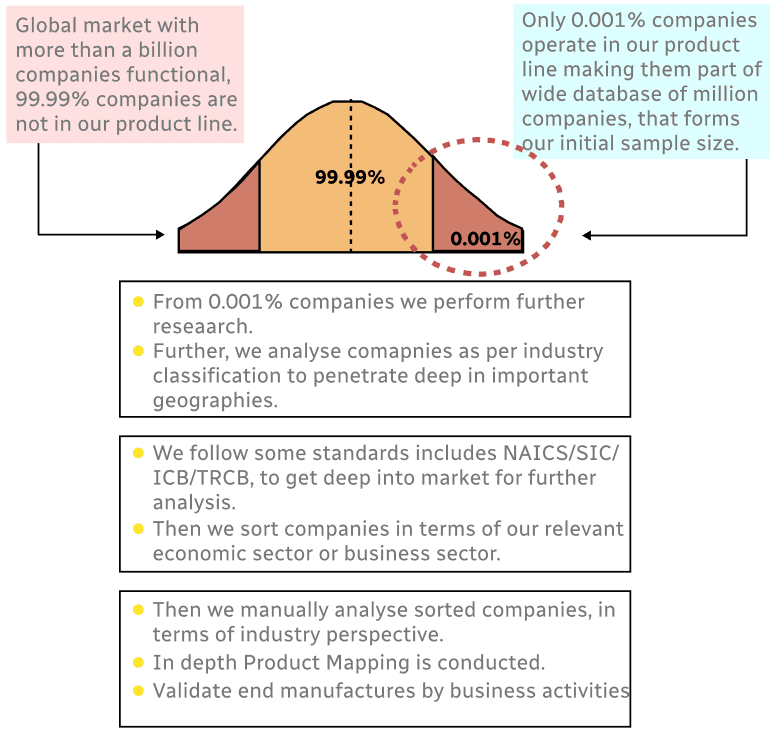
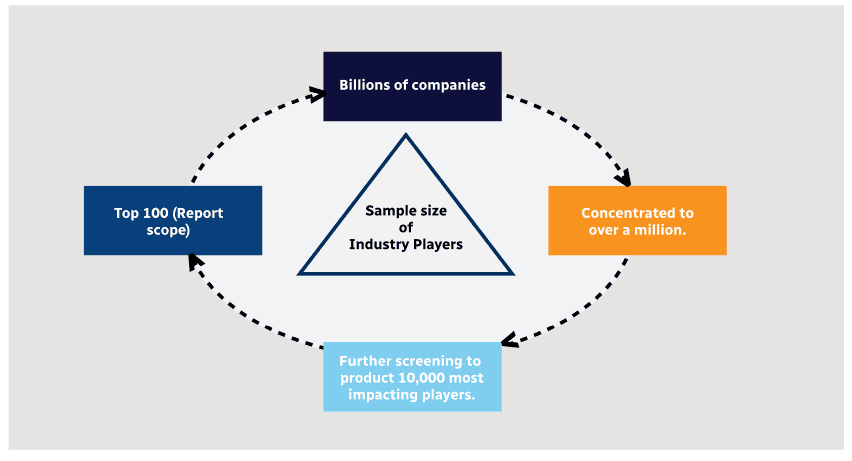
Step 1 - Identification of Relevant Samples Size from Population Database
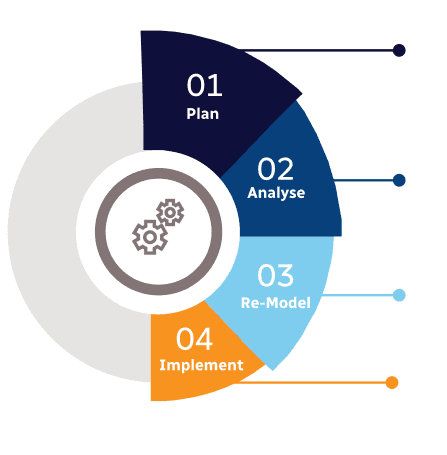
Step 2 - Approaches for Defining Global Market Size (Value, Volume* & Price*)
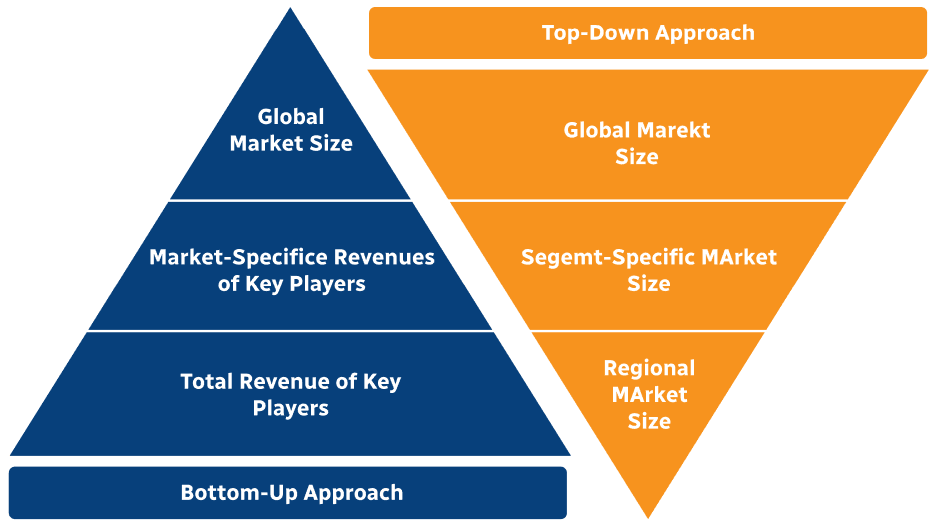
Note*: In applicable scenarios
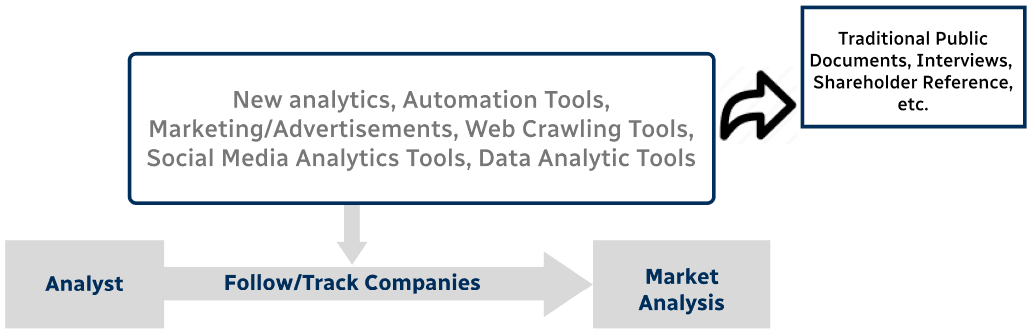
Step 3 - Data Sources
Primary Research
- Web Analytics
- Survey Reports
- Research Institute
- Latest Research Reports
- Opinion Leaders
Secondary Research
- Annual Reports
- White Paper
- Latest Press Release
- Industry Association
- Paid Database
- Investor Presentations
Step 4 - Data Triangulation
Involves using different sources of information in order to increase the validity of a study
These sources are likely to be stakeholders in a program - participants, other researchers, program staff, other community members, and so on.
Then we put all data in single framework & apply various statistical tools to find out the dynamic on the market.
During the analysis stage, feedback from the stakeholder groups would be compared to determine areas of agreement as well as areas of divergence