


Key Insights
The Automotive V2V & V2I Technologies market is poised for substantial growth, projected to reach an estimated market size of $8,500 million by 2025, with a robust Compound Annual Growth Rate (CAGR) of 22% anticipated over the forecast period of 2025-2033. This expansion is largely driven by the increasing demand for enhanced road safety and the burgeoning adoption of autonomous driving features. Vehicle-to-Vehicle (V2V) communication, enabling cars to share real-time information about speed, position, and direction with each other, directly contributes to accident prevention by alerting drivers to potential hazards like sudden braking or intersection collisions. Similarly, Vehicle-to-Infrastructure (V2I) communication, which allows vehicles to interact with traffic signals, road signs, and other roadside units, plays a crucial role in optimizing traffic flow, reducing congestion, and improving overall transportation efficiency. The integration of these technologies is becoming increasingly vital for the development of smart cities and connected ecosystems, making the market highly dynamic.
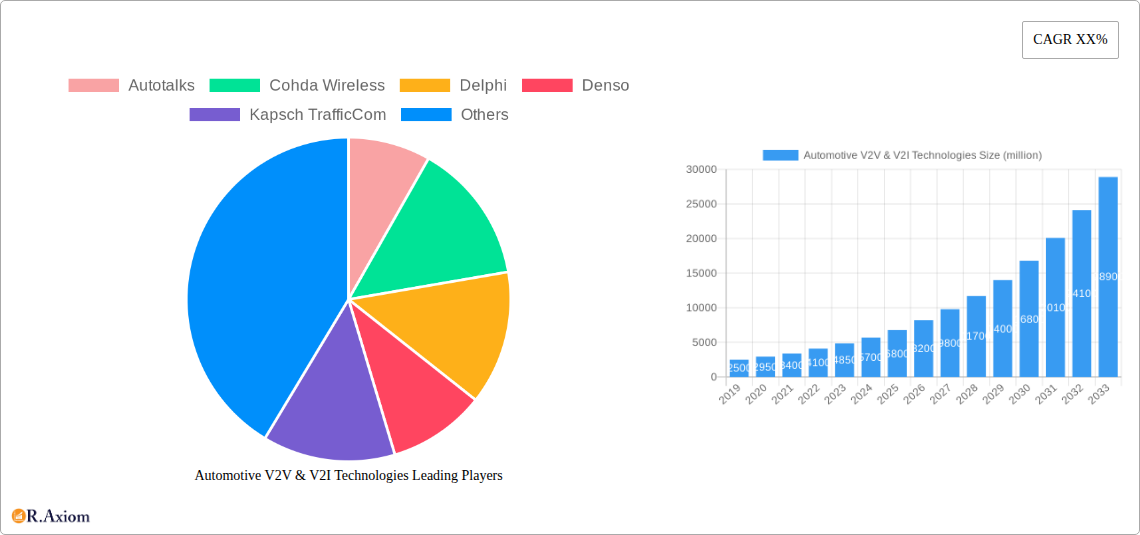
Automotive V2V & V2I Technologies Market Size (In Billion)

The market is segmented by application into Passenger Cars and Commercial Vehicles, with passenger cars currently leading adoption due to increasing consumer awareness of safety features and the growing trend of connected car services. However, commercial vehicles are expected to witness significant growth, driven by the need for efficient fleet management, improved logistics, and the potential for platooning to reduce fuel consumption. Key technological advancements in 5G connectivity, artificial intelligence for data processing, and sophisticated sensor fusion are acting as significant accelerators for market penetration. While the growth trajectory is exceptionally strong, potential restraints include the high cost of implementation, cybersecurity concerns that need robust solutions, and the need for standardization across different regions and manufacturers to ensure interoperability. Leading companies such as Qualcomm, Delphi, and Denso are at the forefront, investing heavily in research and development to overcome these challenges and capitalize on the immense opportunities presented by this transformative automotive technology landscape.
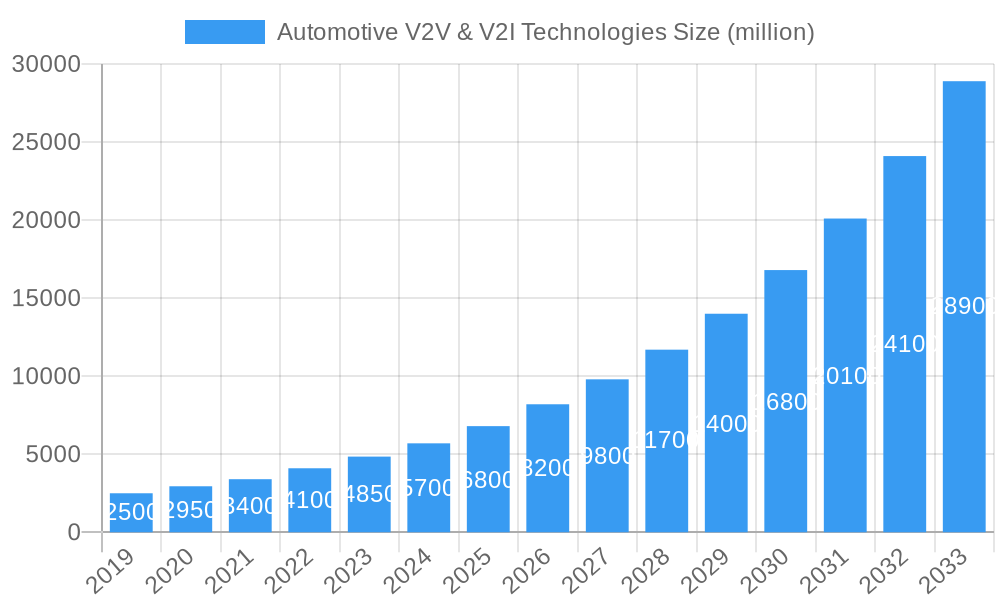
Automotive V2V & V2I Technologies Company Market Share
Automotive V2V & V2I Technologies Market Report: In-Depth Analysis & Future Projections (2019-2033)
This comprehensive report provides an in-depth analysis of the global Automotive V2V & V2I Technologies market, encompassing a study period from 2019 to 2033. With a base year of 2025, the report offers detailed insights into market dynamics, growth drivers, challenges, and emerging opportunities. It forecasts market penetration and size for the forecast period 2025–2033, building upon historical data from 2019–2024. The report targets industry stakeholders, including automotive manufacturers, technology providers, regulatory bodies, and investors, seeking actionable intelligence on the evolution of vehicle-to-everything (V2X) communication.
Automotive V2V & V2I Technologies Market Concentration & Innovation
The Automotive V2V & V2I Technologies market, while experiencing rapid innovation, exhibits a moderate to high concentration with key players like Qualcomm, Delphi, and Denso leading significant development efforts. Innovation is primarily driven by the escalating demand for enhanced road safety, optimized traffic flow, and the foundational requirements for autonomous driving. Regulatory frameworks, particularly in North America and Europe, are increasingly mandating V2X capabilities, fostering market growth. While direct product substitutes are limited due to the unique nature of V2X communication, advancements in alternative safety systems and sensor technologies present indirect competition. End-user trends are shifting towards a greater acceptance of connected vehicle features, with consumers valuing safety and convenience. Mergers and acquisitions (M&A) are a notable aspect of market consolidation, with an estimated total M&A deal value in the hundreds of millions, aimed at acquiring crucial intellectual property and expanding market reach. For instance, strategic partnerships and acquisitions by companies such as Autotalks and Cohda Wireless have played a pivotal role in shaping the competitive landscape. The market share of leading companies is estimated to be within the range of 10-20%, with ongoing R&D investments by major automotive suppliers and semiconductor manufacturers.
Automotive V2V & V2I Technologies Industry Trends & Insights
The Automotive V2V & V2I Technologies industry is on a robust growth trajectory, projected to witness a Compound Annual Growth Rate (CAGR) of approximately 25% over the forecast period. This expansion is primarily fueled by the critical need to reduce road accidents and fatalities, with V2V and V2I systems offering proactive safety measures by enabling vehicles to communicate with each other and with traffic infrastructure. Technological disruptions, including the advancement of 5G connectivity and edge computing, are accelerating the development and deployment of more sophisticated V2X applications, such as platooning for commercial vehicles and real-time traffic signal optimization for passenger cars. Consumer preferences are increasingly leaning towards vehicles equipped with advanced driver-assistance systems (ADAS) and connectivity features, with V2X integration seen as a crucial next step in vehicle safety and convenience. The competitive dynamics are characterized by intense innovation and strategic alliances between automotive OEMs, Tier-1 suppliers, and technology providers. Companies are heavily investing in research and development to refine communication protocols, enhance cybersecurity, and ensure interoperability across different vehicle brands and infrastructure systems. Market penetration for V2X technologies is still in its nascent stages, estimated at around 5% in 2025, but is expected to surge significantly as deployment accelerates. The integration of V2X with smart city initiatives and the broader Internet of Things (IoT) ecosystem further amplifies its market potential. The transition towards electric and autonomous vehicles also creates a synergistic relationship, as V2X is fundamental for their safe and efficient operation. The ongoing evolution of spectrum allocation and standardization efforts by global bodies are critical factors influencing the pace of market adoption.
Dominant Markets & Segments in Automotive V2V & V2I Technologies
North America currently dominates the Automotive V2V & V2I Technologies market, driven by stringent safety regulations and proactive government initiatives supporting the deployment of connected vehicle infrastructure. The United States, in particular, has been a frontrunner in piloting and implementing V2X technologies, supported by significant investments in smart city projects and dedicated funding for transportation infrastructure upgrades. Key drivers for this regional dominance include favorable economic policies that encourage technological adoption and a well-established automotive industry with a strong appetite for innovation. Furthermore, ongoing development of roadside units (RSUs) and the widespread adoption of safety-focused V2V applications are bolstering market growth.
Within the application segments, Passenger Cars represent the largest and fastest-growing sector. This dominance is attributed to the sheer volume of passenger vehicles on the road and the growing consumer demand for enhanced safety features. V2V-based services like collision avoidance warnings and blind-spot alerts are highly sought after by individual car owners.
The V2I-Based Service segment is also experiencing substantial growth, particularly in urban environments. These services include traffic signal priority for emergency vehicles, optimized traffic signal timing to reduce congestion, and the provision of real-time hazard information to drivers. The development of smart city infrastructure and the need for efficient urban mobility are key catalysts for this segment's expansion.
While Commercial Vehicles represent a smaller segment in terms of unit volume compared to passenger cars, they are critical adopters of V2V technology for platooning and logistics optimization, leading to significant fuel savings and improved operational efficiency. The economic benefits derived from these applications make V2V-based services particularly attractive for fleet operators.
The V2V-Based Service segment is foundational, enabling direct communication between vehicles for enhanced safety. Its widespread adoption is a prerequisite for many other advanced V2X functionalities. The increasing regulatory push for advanced safety features is a primary driver for the growth of V2V services across all vehicle types.
Automotive V2V & V2I Technologies Product Developments
Product developments in Automotive V2V & V2I Technologies are characterized by the miniaturization of communication modules, enhanced processing power for real-time data analysis, and improved security protocols. Innovations are focused on enabling seamless communication between vehicles and infrastructure, leading to features like advanced collision warning systems, intersection collision avoidance, and emergency electronic brake light alerts. The integration of DSRC (Dedicated Short-Range Communications) and C-V2X (Cellular Vehicle-to-Everything) technologies provides automakers with flexible deployment options. These advancements offer a significant competitive advantage by improving vehicle safety, optimizing traffic flow, and paving the way for autonomous driving capabilities. The market fit is evident in the growing number of vehicle models incorporating these technologies as standard or optional features.
Report Scope & Segmentation Analysis
This report meticulously segments the Automotive V2V & V2I Technologies market by application and type. In the Passenger Car segment, growth is projected to be robust, with an estimated market size of over $5,000 million by 2033, driven by increasing consumer demand for safety and convenience features. The Commercial Vehicle segment, while smaller, is expected to show significant growth driven by efficiency gains and safety improvements for fleet operations, with projected market size in the range of $2,000 million. For V2V-Based Service, the market is anticipated to reach over $6,000 million, as direct vehicle-to-vehicle communication forms the bedrock of many safety applications. The V2I-Based Service segment is also projected for substantial expansion, exceeding $3,000 million, fueled by smart city initiatives and traffic management improvements. Competitive dynamics within these segments are intensifying, with a focus on interoperability and cost-effectiveness.
Key Drivers of Automotive V2V & V2I Technologies Growth
The growth of the Automotive V2V & V2I Technologies market is propelled by several interconnected factors. A primary driver is the escalating global emphasis on road safety, with V2X technologies offering proactive solutions to prevent accidents. Regulatory mandates and government incentives for implementing connected vehicle infrastructure also play a crucial role, pushing for widespread adoption. The ongoing advancements in 5G technology and the development of robust communication protocols are enhancing the capabilities and reliability of V2X systems. Furthermore, the increasing integration of V2X with autonomous driving systems is a significant growth catalyst, as vehicle-to-everything communication is essential for the safe and efficient operation of self-driving vehicles. The development of smart city initiatives and the growing need for efficient traffic management solutions also contribute significantly to market expansion.
Challenges in the Automotive V2V & V2I Technologies Sector
Despite the promising growth, the Automotive V2V & V2I Technologies sector faces several challenges. Regulatory fragmentation across different regions and the lack of universally standardized protocols can hinder widespread interoperability. The significant cost of infrastructure deployment, including the installation of roadside units, presents a substantial barrier to entry for many municipalities and transportation authorities. Cybersecurity concerns and the potential for malicious attacks on connected vehicle networks are critical issues that require robust and continuous security solutions. Furthermore, achieving widespread consumer awareness and acceptance of V2X technologies, along with addressing potential data privacy concerns, remains a challenge. The ongoing evolution and competition between DSRC and C-V2X technologies can also create uncertainty in technology choices for early adopters.
Emerging Opportunities in Automotive V2V & V2I Technologies
Emerging opportunities in the Automotive V2V & V2I Technologies market are abundant and diverse. The expansion of smart city initiatives worldwide presents a fertile ground for V2I applications, enabling seamless integration of traffic management, public safety, and urban planning. The growing demand for edge computing solutions in vehicles opens up possibilities for real-time processing of V2X data, leading to faster response times and enhanced safety features. The integration of V2X with vehicle-to-pedestrian (V2P) communication technology offers a significant opportunity to enhance safety for vulnerable road users. Furthermore, the development of new business models, such as data-driven services for traffic analytics and predictive maintenance, can unlock significant revenue streams. The increasing focus on sustainability also presents opportunities for V2X technologies to optimize routes and reduce fuel consumption.
Leading Players in the Automotive V2V & V2I Technologies Market
- Autotalks
- Cohda Wireless
- Delphi
- Denso
- Kapsch TrafficCom
- Savari
- Qualcomm
- Commsignia
- Hyundai Mobis
- Marvell
Key Developments in Automotive V2V & V2I Technologies Industry
- 2023, Q4: Qualcomm announces advancements in its C-V2X chipset, enhancing connectivity and security for next-generation vehicles.
- 2023, Q3: Cohda Wireless secures partnerships to deploy V2X technology in several European cities, focusing on smart traffic management.
- 2023, Q2: Autotalks introduces a new generation of V2X chipsets with improved performance and cost-effectiveness.
- 2022, Q4: Denso demonstrates advanced V2X applications for autonomous driving, including cooperative perception and motion planning.
- 2022, Q3: Delphi (now Aptiv) continues to invest in V2X solutions, emphasizing their role in the automotive safety ecosystem.
- 2022, Q2: Kapsch TrafficCom expands its intelligent transportation systems portfolio with integrated V2X capabilities.
- 2021, Q4: Savari showcases its V2X platform for enhanced road safety and traffic efficiency.
- 2021, Q3: Hyundai Mobis strengthens its commitment to V2X technology, integrating it into future vehicle platforms.
- 2021, Q2: Marvell releases new semiconductor solutions optimized for V2X communication.
- 2020, Q4: Commsignia partners with automotive manufacturers to accelerate V2X deployment.
Strategic Outlook for Automotive V2V & V2I Technologies Market
The strategic outlook for the Automotive V2V & V2I Technologies market is exceptionally bright, characterized by sustained innovation and increasing adoption. The fundamental drivers of enhanced safety and efficiency will continue to fuel market growth, with V2X technologies becoming indispensable for advanced driver-assistance systems and autonomous driving. Strategic investments in 5G infrastructure and the ongoing standardization efforts will further accelerate deployment. Opportunities lie in the deeper integration of V2X with smart city ecosystems, the development of sophisticated data analytics, and the expansion of V2P applications. Collaboration between technology providers, automotive manufacturers, and government bodies will be crucial to overcome existing challenges and unlock the full potential of this transformative technology. The market is poised for significant expansion, driven by both regulatory push and consumer pull for safer, more connected, and efficient mobility.
Automotive V2V & V2I Technologies Segmentation
-
1. Application
- 1.1. Passenger Car
- 1.2. Commercial Vehicle
-
2. Types
- 2.1. V2V-Based Service
- 2.2. V2I-Based Service
Automotive V2V & V2I Technologies Segmentation By Geography
-
1. North America
- 1.1. United States
- 1.2. Canada
- 1.3. Mexico
-
2. South America
- 2.1. Brazil
- 2.2. Argentina
- 2.3. Rest of South America
-
3. Europe
- 3.1. United Kingdom
- 3.2. Germany
- 3.3. France
- 3.4. Italy
- 3.5. Spain
- 3.6. Russia
- 3.7. Benelux
- 3.8. Nordics
- 3.9. Rest of Europe
-
4. Middle East & Africa
- 4.1. Turkey
- 4.2. Israel
- 4.3. GCC
- 4.4. North Africa
- 4.5. South Africa
- 4.6. Rest of Middle East & Africa
-
5. Asia Pacific
- 5.1. China
- 5.2. India
- 5.3. Japan
- 5.4. South Korea
- 5.5. ASEAN
- 5.6. Oceania
- 5.7. Rest of Asia Pacific
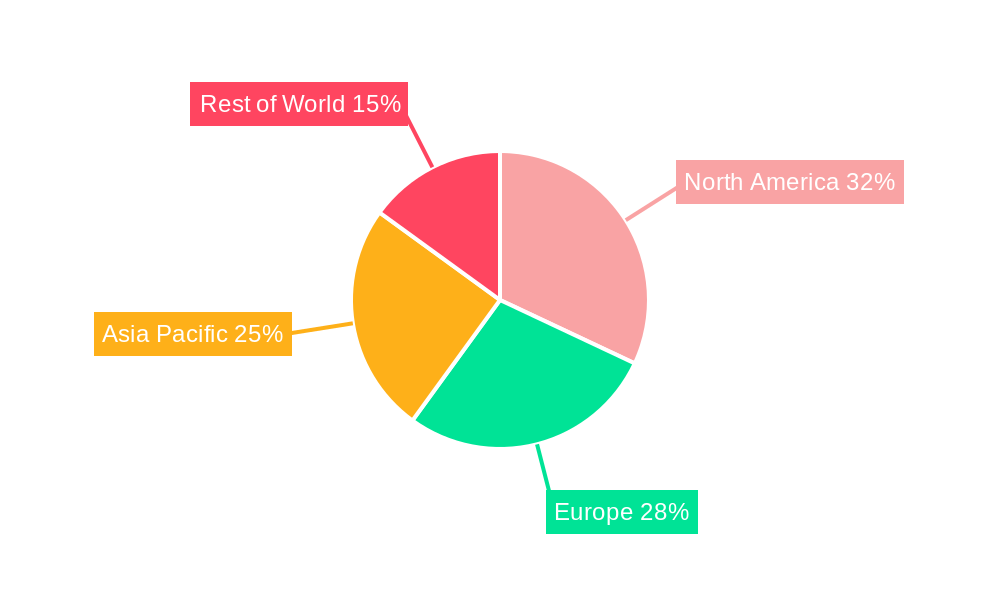
Automotive V2V & V2I Technologies Regional Market Share
Geographic Coverage of Automotive V2V & V2I Technologies
Automotive V2V & V2I Technologies REPORT HIGHLIGHTS
| Aspects | Details |
|---|---|
| Study Period | 2020-2034 |
| Base Year | 2025 |
| Estimated Year | 2026 |
| Forecast Period | 2026-2034 |
| Historical Period | 2020-2025 |
| Growth Rate | CAGR of XX% from 2020-2034 |
| Segmentation |
|
Table of Contents
- 1. Introduction
- 1.1. Research Scope
- 1.2. Market Segmentation
- 1.3. Research Methodology
- 1.4. Definitions and Assumptions
- 2. Executive Summary
- 2.1. Introduction
- 3. Market Dynamics
- 3.1. Introduction
- 3.2. Market Drivers
- 3.3. Market Restrains
- 3.4. Market Trends
- 4. Market Factor Analysis
- 4.1. Porters Five Forces
- 4.2. Supply/Value Chain
- 4.3. PESTEL analysis
- 4.4. Market Entropy
- 4.5. Patent/Trademark Analysis
- 5. Global Automotive V2V & V2I Technologies Analysis, Insights and Forecast, 2020-2032
- 5.1. Market Analysis, Insights and Forecast - by Application
- 5.1.1. Passenger Car
- 5.1.2. Commercial Vehicle
- 5.2. Market Analysis, Insights and Forecast - by Types
- 5.2.1. V2V-Based Service
- 5.2.2. V2I-Based Service
- 5.3. Market Analysis, Insights and Forecast - by Region
- 5.3.1. North America
- 5.3.2. South America
- 5.3.3. Europe
- 5.3.4. Middle East & Africa
- 5.3.5. Asia Pacific
- 5.1. Market Analysis, Insights and Forecast - by Application
- 6. North America Automotive V2V & V2I Technologies Analysis, Insights and Forecast, 2020-2032
- 6.1. Market Analysis, Insights and Forecast - by Application
- 6.1.1. Passenger Car
- 6.1.2. Commercial Vehicle
- 6.2. Market Analysis, Insights and Forecast - by Types
- 6.2.1. V2V-Based Service
- 6.2.2. V2I-Based Service
- 6.1. Market Analysis, Insights and Forecast - by Application
- 7. South America Automotive V2V & V2I Technologies Analysis, Insights and Forecast, 2020-2032
- 7.1. Market Analysis, Insights and Forecast - by Application
- 7.1.1. Passenger Car
- 7.1.2. Commercial Vehicle
- 7.2. Market Analysis, Insights and Forecast - by Types
- 7.2.1. V2V-Based Service
- 7.2.2. V2I-Based Service
- 7.1. Market Analysis, Insights and Forecast - by Application
- 8. Europe Automotive V2V & V2I Technologies Analysis, Insights and Forecast, 2020-2032
- 8.1. Market Analysis, Insights and Forecast - by Application
- 8.1.1. Passenger Car
- 8.1.2. Commercial Vehicle
- 8.2. Market Analysis, Insights and Forecast - by Types
- 8.2.1. V2V-Based Service
- 8.2.2. V2I-Based Service
- 8.1. Market Analysis, Insights and Forecast - by Application
- 9. Middle East & Africa Automotive V2V & V2I Technologies Analysis, Insights and Forecast, 2020-2032
- 9.1. Market Analysis, Insights and Forecast - by Application
- 9.1.1. Passenger Car
- 9.1.2. Commercial Vehicle
- 9.2. Market Analysis, Insights and Forecast - by Types
- 9.2.1. V2V-Based Service
- 9.2.2. V2I-Based Service
- 9.1. Market Analysis, Insights and Forecast - by Application
- 10. Asia Pacific Automotive V2V & V2I Technologies Analysis, Insights and Forecast, 2020-2032
- 10.1. Market Analysis, Insights and Forecast - by Application
- 10.1.1. Passenger Car
- 10.1.2. Commercial Vehicle
- 10.2. Market Analysis, Insights and Forecast - by Types
- 10.2.1. V2V-Based Service
- 10.2.2. V2I-Based Service
- 10.1. Market Analysis, Insights and Forecast - by Application
- 11. Competitive Analysis
- 11.1. Global Market Share Analysis 2025
- 11.2. Company Profiles
- 11.2.1 Autotalks
- 11.2.1.1. Overview
- 11.2.1.2. Products
- 11.2.1.3. SWOT Analysis
- 11.2.1.4. Recent Developments
- 11.2.1.5. Financials (Based on Availability)
- 11.2.2 Cohda Wireless
- 11.2.2.1. Overview
- 11.2.2.2. Products
- 11.2.2.3. SWOT Analysis
- 11.2.2.4. Recent Developments
- 11.2.2.5. Financials (Based on Availability)
- 11.2.3 Delphi
- 11.2.3.1. Overview
- 11.2.3.2. Products
- 11.2.3.3. SWOT Analysis
- 11.2.3.4. Recent Developments
- 11.2.3.5. Financials (Based on Availability)
- 11.2.4 Denso
- 11.2.4.1. Overview
- 11.2.4.2. Products
- 11.2.4.3. SWOT Analysis
- 11.2.4.4. Recent Developments
- 11.2.4.5. Financials (Based on Availability)
- 11.2.5 Kapsch TrafficCom
- 11.2.5.1. Overview
- 11.2.5.2. Products
- 11.2.5.3. SWOT Analysis
- 11.2.5.4. Recent Developments
- 11.2.5.5. Financials (Based on Availability)
- 11.2.6 Savari
- 11.2.6.1. Overview
- 11.2.6.2. Products
- 11.2.6.3. SWOT Analysis
- 11.2.6.4. Recent Developments
- 11.2.6.5. Financials (Based on Availability)
- 11.2.7 Qualcomm
- 11.2.7.1. Overview
- 11.2.7.2. Products
- 11.2.7.3. SWOT Analysis
- 11.2.7.4. Recent Developments
- 11.2.7.5. Financials (Based on Availability)
- 11.2.8 Commsignia
- 11.2.8.1. Overview
- 11.2.8.2. Products
- 11.2.8.3. SWOT Analysis
- 11.2.8.4. Recent Developments
- 11.2.8.5. Financials (Based on Availability)
- 11.2.9 Hyundai Mobis
- 11.2.9.1. Overview
- 11.2.9.2. Products
- 11.2.9.3. SWOT Analysis
- 11.2.9.4. Recent Developments
- 11.2.9.5. Financials (Based on Availability)
- 11.2.10 Marvell
- 11.2.10.1. Overview
- 11.2.10.2. Products
- 11.2.10.3. SWOT Analysis
- 11.2.10.4. Recent Developments
- 11.2.10.5. Financials (Based on Availability)
- 11.2.1 Autotalks
List of Figures
- Figure 1: Global Automotive V2V & V2I Technologies Revenue Breakdown (million, %) by Region 2025 & 2033
- Figure 2: North America Automotive V2V & V2I Technologies Revenue (million), by Application 2025 & 2033
- Figure 3: North America Automotive V2V & V2I Technologies Revenue Share (%), by Application 2025 & 2033
- Figure 4: North America Automotive V2V & V2I Technologies Revenue (million), by Types 2025 & 2033
- Figure 5: North America Automotive V2V & V2I Technologies Revenue Share (%), by Types 2025 & 2033
- Figure 6: North America Automotive V2V & V2I Technologies Revenue (million), by Country 2025 & 2033
- Figure 7: North America Automotive V2V & V2I Technologies Revenue Share (%), by Country 2025 & 2033
- Figure 8: South America Automotive V2V & V2I Technologies Revenue (million), by Application 2025 & 2033
- Figure 9: South America Automotive V2V & V2I Technologies Revenue Share (%), by Application 2025 & 2033
- Figure 10: South America Automotive V2V & V2I Technologies Revenue (million), by Types 2025 & 2033
- Figure 11: South America Automotive V2V & V2I Technologies Revenue Share (%), by Types 2025 & 2033
- Figure 12: South America Automotive V2V & V2I Technologies Revenue (million), by Country 2025 & 2033
- Figure 13: South America Automotive V2V & V2I Technologies Revenue Share (%), by Country 2025 & 2033
- Figure 14: Europe Automotive V2V & V2I Technologies Revenue (million), by Application 2025 & 2033
- Figure 15: Europe Automotive V2V & V2I Technologies Revenue Share (%), by Application 2025 & 2033
- Figure 16: Europe Automotive V2V & V2I Technologies Revenue (million), by Types 2025 & 2033
- Figure 17: Europe Automotive V2V & V2I Technologies Revenue Share (%), by Types 2025 & 2033
- Figure 18: Europe Automotive V2V & V2I Technologies Revenue (million), by Country 2025 & 2033
- Figure 19: Europe Automotive V2V & V2I Technologies Revenue Share (%), by Country 2025 & 2033
- Figure 20: Middle East & Africa Automotive V2V & V2I Technologies Revenue (million), by Application 2025 & 2033
- Figure 21: Middle East & Africa Automotive V2V & V2I Technologies Revenue Share (%), by Application 2025 & 2033
- Figure 22: Middle East & Africa Automotive V2V & V2I Technologies Revenue (million), by Types 2025 & 2033
- Figure 23: Middle East & Africa Automotive V2V & V2I Technologies Revenue Share (%), by Types 2025 & 2033
- Figure 24: Middle East & Africa Automotive V2V & V2I Technologies Revenue (million), by Country 2025 & 2033
- Figure 25: Middle East & Africa Automotive V2V & V2I Technologies Revenue Share (%), by Country 2025 & 2033
- Figure 26: Asia Pacific Automotive V2V & V2I Technologies Revenue (million), by Application 2025 & 2033
- Figure 27: Asia Pacific Automotive V2V & V2I Technologies Revenue Share (%), by Application 2025 & 2033
- Figure 28: Asia Pacific Automotive V2V & V2I Technologies Revenue (million), by Types 2025 & 2033
- Figure 29: Asia Pacific Automotive V2V & V2I Technologies Revenue Share (%), by Types 2025 & 2033
- Figure 30: Asia Pacific Automotive V2V & V2I Technologies Revenue (million), by Country 2025 & 2033
- Figure 31: Asia Pacific Automotive V2V & V2I Technologies Revenue Share (%), by Country 2025 & 2033
List of Tables
- Table 1: Global Automotive V2V & V2I Technologies Revenue million Forecast, by Application 2020 & 2033
- Table 2: Global Automotive V2V & V2I Technologies Revenue million Forecast, by Types 2020 & 2033
- Table 3: Global Automotive V2V & V2I Technologies Revenue million Forecast, by Region 2020 & 2033
- Table 4: Global Automotive V2V & V2I Technologies Revenue million Forecast, by Application 2020 & 2033
- Table 5: Global Automotive V2V & V2I Technologies Revenue million Forecast, by Types 2020 & 2033
- Table 6: Global Automotive V2V & V2I Technologies Revenue million Forecast, by Country 2020 & 2033
- Table 7: United States Automotive V2V & V2I Technologies Revenue (million) Forecast, by Application 2020 & 2033
- Table 8: Canada Automotive V2V & V2I Technologies Revenue (million) Forecast, by Application 2020 & 2033
- Table 9: Mexico Automotive V2V & V2I Technologies Revenue (million) Forecast, by Application 2020 & 2033
- Table 10: Global Automotive V2V & V2I Technologies Revenue million Forecast, by Application 2020 & 2033
- Table 11: Global Automotive V2V & V2I Technologies Revenue million Forecast, by Types 2020 & 2033
- Table 12: Global Automotive V2V & V2I Technologies Revenue million Forecast, by Country 2020 & 2033
- Table 13: Brazil Automotive V2V & V2I Technologies Revenue (million) Forecast, by Application 2020 & 2033
- Table 14: Argentina Automotive V2V & V2I Technologies Revenue (million) Forecast, by Application 2020 & 2033
- Table 15: Rest of South America Automotive V2V & V2I Technologies Revenue (million) Forecast, by Application 2020 & 2033
- Table 16: Global Automotive V2V & V2I Technologies Revenue million Forecast, by Application 2020 & 2033
- Table 17: Global Automotive V2V & V2I Technologies Revenue million Forecast, by Types 2020 & 2033
- Table 18: Global Automotive V2V & V2I Technologies Revenue million Forecast, by Country 2020 & 2033
- Table 19: United Kingdom Automotive V2V & V2I Technologies Revenue (million) Forecast, by Application 2020 & 2033
- Table 20: Germany Automotive V2V & V2I Technologies Revenue (million) Forecast, by Application 2020 & 2033
- Table 21: France Automotive V2V & V2I Technologies Revenue (million) Forecast, by Application 2020 & 2033
- Table 22: Italy Automotive V2V & V2I Technologies Revenue (million) Forecast, by Application 2020 & 2033
- Table 23: Spain Automotive V2V & V2I Technologies Revenue (million) Forecast, by Application 2020 & 2033
- Table 24: Russia Automotive V2V & V2I Technologies Revenue (million) Forecast, by Application 2020 & 2033
- Table 25: Benelux Automotive V2V & V2I Technologies Revenue (million) Forecast, by Application 2020 & 2033
- Table 26: Nordics Automotive V2V & V2I Technologies Revenue (million) Forecast, by Application 2020 & 2033
- Table 27: Rest of Europe Automotive V2V & V2I Technologies Revenue (million) Forecast, by Application 2020 & 2033
- Table 28: Global Automotive V2V & V2I Technologies Revenue million Forecast, by Application 2020 & 2033
- Table 29: Global Automotive V2V & V2I Technologies Revenue million Forecast, by Types 2020 & 2033
- Table 30: Global Automotive V2V & V2I Technologies Revenue million Forecast, by Country 2020 & 2033
- Table 31: Turkey Automotive V2V & V2I Technologies Revenue (million) Forecast, by Application 2020 & 2033
- Table 32: Israel Automotive V2V & V2I Technologies Revenue (million) Forecast, by Application 2020 & 2033
- Table 33: GCC Automotive V2V & V2I Technologies Revenue (million) Forecast, by Application 2020 & 2033
- Table 34: North Africa Automotive V2V & V2I Technologies Revenue (million) Forecast, by Application 2020 & 2033
- Table 35: South Africa Automotive V2V & V2I Technologies Revenue (million) Forecast, by Application 2020 & 2033
- Table 36: Rest of Middle East & Africa Automotive V2V & V2I Technologies Revenue (million) Forecast, by Application 2020 & 2033
- Table 37: Global Automotive V2V & V2I Technologies Revenue million Forecast, by Application 2020 & 2033
- Table 38: Global Automotive V2V & V2I Technologies Revenue million Forecast, by Types 2020 & 2033
- Table 39: Global Automotive V2V & V2I Technologies Revenue million Forecast, by Country 2020 & 2033
- Table 40: China Automotive V2V & V2I Technologies Revenue (million) Forecast, by Application 2020 & 2033
- Table 41: India Automotive V2V & V2I Technologies Revenue (million) Forecast, by Application 2020 & 2033
- Table 42: Japan Automotive V2V & V2I Technologies Revenue (million) Forecast, by Application 2020 & 2033
- Table 43: South Korea Automotive V2V & V2I Technologies Revenue (million) Forecast, by Application 2020 & 2033
- Table 44: ASEAN Automotive V2V & V2I Technologies Revenue (million) Forecast, by Application 2020 & 2033
- Table 45: Oceania Automotive V2V & V2I Technologies Revenue (million) Forecast, by Application 2020 & 2033
- Table 46: Rest of Asia Pacific Automotive V2V & V2I Technologies Revenue (million) Forecast, by Application 2020 & 2033
Frequently Asked Questions
1. What is the projected Compound Annual Growth Rate (CAGR) of the Automotive V2V & V2I Technologies?
The projected CAGR is approximately XX%.
2. Which companies are prominent players in the Automotive V2V & V2I Technologies?
Key companies in the market include Autotalks, Cohda Wireless, Delphi, Denso, Kapsch TrafficCom, Savari, Qualcomm, Commsignia, Hyundai Mobis, Marvell.
3. What are the main segments of the Automotive V2V & V2I Technologies?
The market segments include Application, Types.
4. Can you provide details about the market size?
The market size is estimated to be USD XXX million as of 2022.
5. What are some drivers contributing to market growth?
N/A
6. What are the notable trends driving market growth?
N/A
7. Are there any restraints impacting market growth?
N/A
8. Can you provide examples of recent developments in the market?
N/A
9. What pricing options are available for accessing the report?
Pricing options include single-user, multi-user, and enterprise licenses priced at USD 3350.00, USD 5025.00, and USD 6700.00 respectively.
10. Is the market size provided in terms of value or volume?
The market size is provided in terms of value, measured in million.
11. Are there any specific market keywords associated with the report?
Yes, the market keyword associated with the report is "Automotive V2V & V2I Technologies," which aids in identifying and referencing the specific market segment covered.
12. How do I determine which pricing option suits my needs best?
The pricing options vary based on user requirements and access needs. Individual users may opt for single-user licenses, while businesses requiring broader access may choose multi-user or enterprise licenses for cost-effective access to the report.
13. Are there any additional resources or data provided in the Automotive V2V & V2I Technologies report?
While the report offers comprehensive insights, it's advisable to review the specific contents or supplementary materials provided to ascertain if additional resources or data are available.
14. How can I stay updated on further developments or reports in the Automotive V2V & V2I Technologies?
To stay informed about further developments, trends, and reports in the Automotive V2V & V2I Technologies, consider subscribing to industry newsletters, following relevant companies and organizations, or regularly checking reputable industry news sources and publications.
Methodology
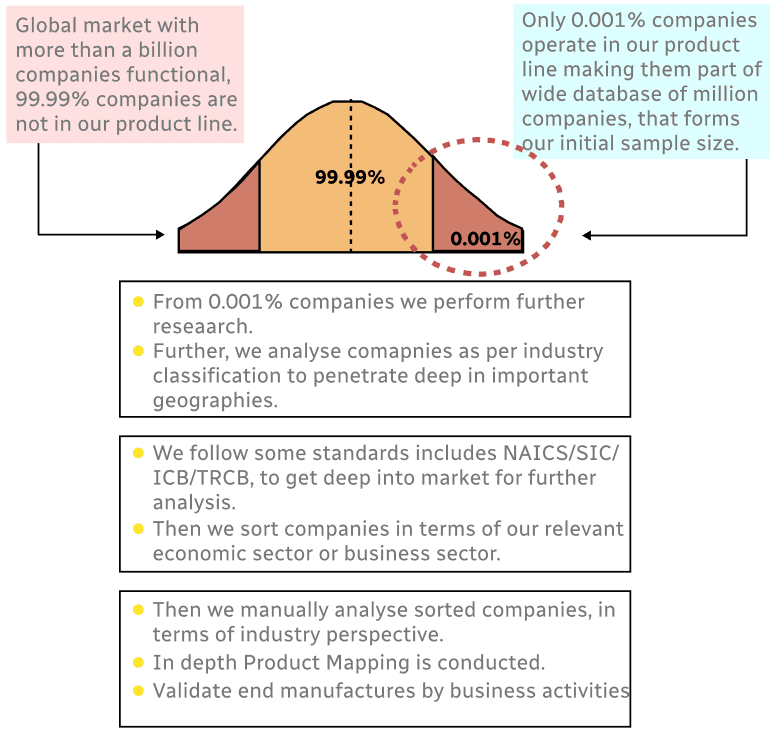
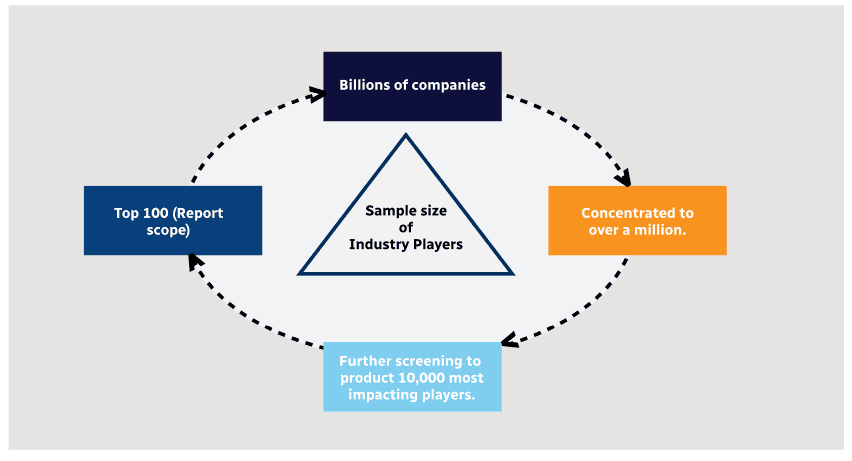
Step 1 - Identification of Relevant Samples Size from Population Database
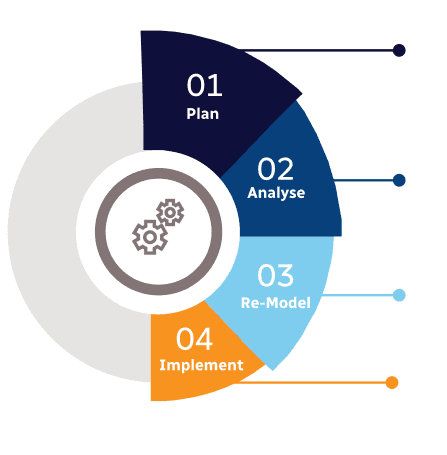
Step 2 - Approaches for Defining Global Market Size (Value, Volume* & Price*)
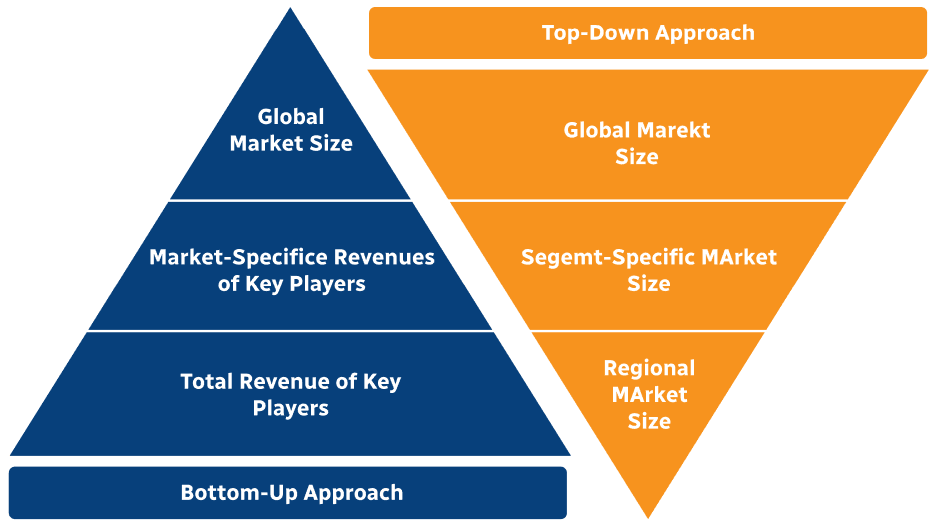
Note*: In applicable scenarios
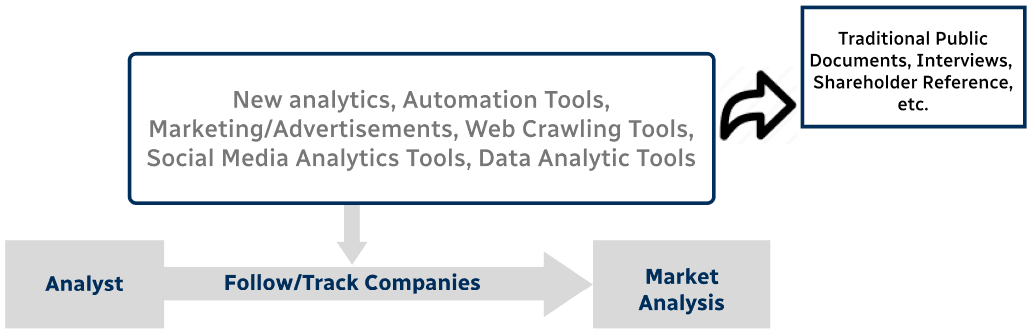
Step 3 - Data Sources
Primary Research
- Web Analytics
- Survey Reports
- Research Institute
- Latest Research Reports
- Opinion Leaders
Secondary Research
- Annual Reports
- White Paper
- Latest Press Release
- Industry Association
- Paid Database
- Investor Presentations
Step 4 - Data Triangulation
Involves using different sources of information in order to increase the validity of a study
These sources are likely to be stakeholders in a program - participants, other researchers, program staff, other community members, and so on.
Then we put all data in single framework & apply various statistical tools to find out the dynamic on the market.
During the analysis stage, feedback from the stakeholder groups would be compared to determine areas of agreement as well as areas of divergence