


Key Insights
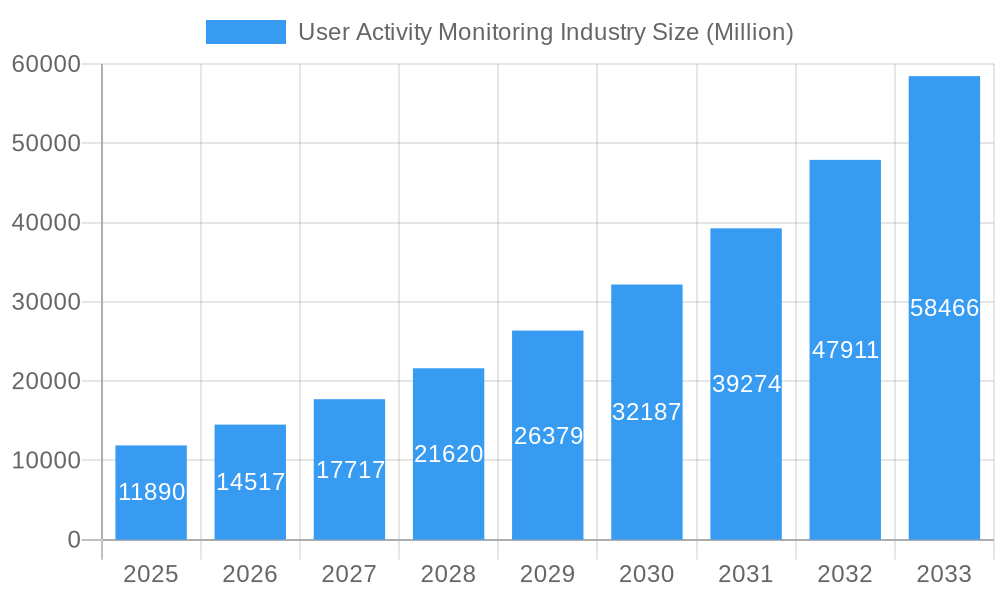
The User Activity Monitoring (UAM) market is poised for substantial growth, projected to reach an estimated $11,890 million by 2025, driven by a remarkable Compound Annual Growth Rate (CAGR) of 22.10% from 2019 to 2033. This robust expansion is fueled by an escalating need for enhanced data security, compliance with stringent regulatory frameworks, and the imperative to gain deeper insights into user behavior within organizations. The increasing sophistication of cyber threats and the distributed nature of modern workforces necessitate comprehensive solutions to detect and prevent insider threats, data breaches, and policy violations. Key applications such as System Monitoring, Application Monitoring, and File Monitoring are at the forefront of this adoption, providing granular visibility into critical IT assets.
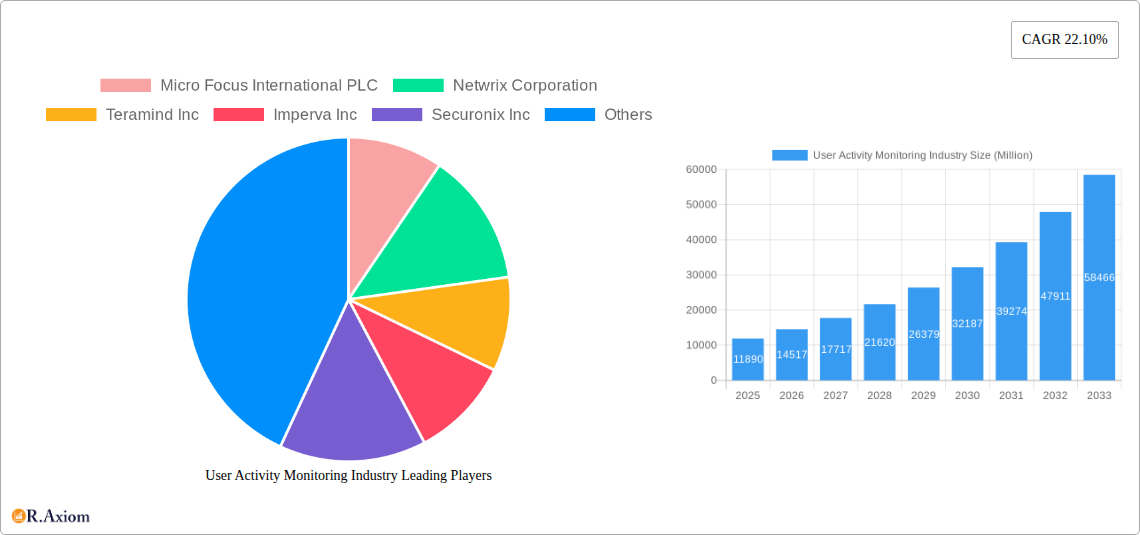
User Activity Monitoring Industry Market Size (In Billion)

The UAM market is characterized by diverse adoption across enterprises of all sizes, with Small & Medium Enterprises (SMEs) and Large Enterprises alike recognizing its strategic importance. Prominent end-user industries like BFSI, IT & Telecom, and Healthcare are leading the charge due to the highly sensitive nature of the data they handle and the severe consequences of security incidents. Emerging trends include the integration of AI and machine learning for advanced threat detection and behavioral analytics, cloud-based UAM solutions for scalability and accessibility, and a greater focus on user privacy and ethical monitoring practices. While the market is ripe with opportunity, potential restraints could include the complexity of implementation in legacy systems and the ongoing challenge of balancing robust monitoring with employee privacy concerns. Leading companies such as Splunk Inc., Micro Focus International PLC, and Securonix Inc. are actively shaping this dynamic landscape.
User Activity Monitoring Industry Company Market Share
User Activity Monitoring Industry Market Concentration & Innovation
The User Activity Monitoring (UAM) industry exhibits a moderate to high degree of market concentration, with a few dominant players accounting for a significant portion of the global market share. However, intense competition fuels continuous innovation, driven by the escalating demand for robust data security and compliance solutions across diverse end-user industries. Key innovation drivers include the evolution of cyber threats, the increasing adoption of cloud technologies, and stringent regulatory mandates. For instance, the market has witnessed substantial investment in AI and machine learning-powered analytics to detect anomalous user behavior. Regulatory frameworks such as GDPR, CCPA, and HIPAA are compelling organizations to invest in advanced UAM solutions for auditing and accountability. Product substitutes, while present in the form of basic logging tools, lack the comprehensive threat detection and forensic capabilities of dedicated UAM platforms. End-user trends are leaning towards integrated security solutions that offer real-time monitoring, automated threat response, and detailed reporting. Mergers and Acquisitions (M&A) activities are a constant feature, with strategic acquisitions aimed at expanding product portfolios and market reach. The estimated M&A deal value in this sector is in the range of $500 Million to $1.5 Billion annually, reflecting the consolidation and strategic realignment within the industry.
User Activity Monitoring Industry Industry Trends & Insights
The User Activity Monitoring (UAM) industry is experiencing robust growth, projected to expand at a Compound Annual Growth Rate (CAGR) of approximately 18% during the forecast period of 2025–2033. This significant expansion is propelled by a confluence of escalating cybersecurity concerns, the pervasive adoption of digital transformation initiatives across all sectors, and the ever-increasing volume and sensitivity of data being generated and processed. The market penetration of UAM solutions is rapidly increasing, moving from a niche security tool to a fundamental component of enterprise security infrastructure. Organizations are no longer solely focused on perimeter defense; they are increasingly recognizing the critical need for comprehensive visibility into internal activities to mitigate insider threats, prevent data exfiltration, and ensure regulatory compliance. Technological disruptions are a constant catalyst for market evolution. The integration of artificial intelligence (AI) and machine learning (ML) into UAM platforms allows for more sophisticated anomaly detection, behavioral analytics, and automated threat response, moving beyond simple rule-based systems. The shift towards remote and hybrid work models has also amplified the demand for UAM, as it provides essential oversight of employee activities regardless of their physical location. Consumer preferences are shifting towards user-friendly interfaces, seamless integration with existing security stacks, and advanced reporting capabilities that can translate raw data into actionable intelligence. The competitive dynamics are characterized by intense innovation and strategic partnerships, with companies vying to offer the most comprehensive and intelligent UAM solutions. The estimated market size for UAM is projected to reach $5 Billion by 2025, growing to over $15 Billion by 2033.
Dominant Markets & Segments in User Activity Monitoring Industry
The User Activity Monitoring (UAM) industry showcases distinct regional and segment leadership, driven by a combination of economic, regulatory, and technological factors. North America currently dominates the global UAM market, largely due to its advanced technological infrastructure, stringent regulatory landscape, and a high concentration of large enterprises with substantial cybersecurity budgets. Within North America, the United States stands out as the leading country, propelled by early adoption of advanced security technologies and a proactive approach to data protection.
Application Segment Dominance: System Monitoring and Application Monitoring segments are experiencing the most significant traction.
- System Monitoring: Driven by the need for comprehensive visibility into server and endpoint activities, essential for detecting malware, unauthorized access, and system misconfigurations.
- Application Monitoring: Crucial for understanding user interactions within critical business applications, identifying potential data leaks, and ensuring application security.
- File Monitoring: Gains importance with the rise of data breaches and the need to track sensitive data access and movement.
- Network Monitoring: Remains vital for understanding traffic patterns and identifying suspicious network activities.
- Database Monitoring: Critical for BFSI and Healthcare sectors to protect sensitive financial and patient data from unauthorized access and modification.
Enterprise Segment Dominance: Large Enterprises constitute the largest segment by revenue, owing to their extensive IT infrastructures, higher risk profiles, and greater financial capacity to invest in comprehensive UAM solutions.
- Small & Medium Enterprises (SMEs): While historically lagging, SMEs are increasingly adopting UAM solutions, often cloud-based and more affordable, driven by a growing awareness of security threats and regulatory pressures.
End-user Industry Dominance:
- BFSI (Banking, Financial Services, and Insurance): This sector is a primary driver of UAM adoption due to the highly sensitive nature of financial data and strict regulatory compliance requirements, leading to an estimated market share of 30% within the UAM industry.
- IT & Telecom: Another significant contributor, driven by the constant threat landscape and the need to protect critical infrastructure and customer data.
- Healthcare: Experiencing rapid growth in UAM adoption due to the need to comply with HIPAA and protect sensitive patient information.
- Retail: Increasingly adopting UAM for data protection, fraud prevention, and compliance with payment card industry standards.
- Manufacturing: Growing adoption driven by the need to protect intellectual property and operational technology (OT) systems.
User Activity Monitoring Industry Product Developments
The User Activity Monitoring (UAM) industry is characterized by rapid product innovation focused on enhancing threat detection, improving compliance capabilities, and providing deeper insights into user behavior. Key developments include the integration of AI and machine learning for advanced anomaly detection and predictive analytics, enabling proactive identification of potential threats before they materialize. Cloud-native UAM solutions are gaining prominence, offering scalability, flexibility, and ease of deployment for organizations embracing cloud environments. Emphasis is placed on contextualizing user activities with other security data sources, providing a unified view of threats. Competitive advantages are being forged through offerings like real-time threat intelligence feeds, automated incident response workflows, and user-friendly dashboards that translate complex data into actionable insights for security analysts.
Report Scope & Segmentation Analysis
This report provides a comprehensive analysis of the User Activity Monitoring (UAM) industry, covering the period from 2019 to 2033, with a base year of 2025. The segmentation analysis delves into critical aspects of the market to offer detailed insights into its dynamics and future trajectory.
- Application Segmentation: The report analyzes the market across key applications including System Monitoring, Application Monitoring, File Monitoring, Network Monitoring, and Database Monitoring. Each of these segments is assessed for its current market size, projected growth rates, and the key drivers influencing adoption.
- Enterprise Segmentation: The analysis further divides the market into Small & Medium Enterprises (SMEs) and Large Enterprises, examining the distinct needs, adoption patterns, and market potential of each.
- End-user Industry Segmentation: The report provides in-depth analysis for major end-user industries such as BFSI, Retail, IT & Telecom, Healthcare, Manufacturing, and a category for Other End-user Industries. Each industry segment is evaluated based on its specific UAM requirements, regulatory landscape, and market penetration, with specific growth projections for each, estimated to contribute a collective $2 Billion in market value by 2025.
Key Drivers of User Activity Monitoring Industry Growth
The User Activity Monitoring (UAM) industry's growth is primarily fueled by an escalating cybersecurity threat landscape, characterized by increasingly sophisticated insider threats and external attacks. The pervasive adoption of digital transformation and cloud computing necessitates enhanced visibility into user activities to secure sensitive data and critical infrastructure. Stringent regulatory compliance mandates, such as GDPR and HIPAA, compel organizations across various sectors to implement robust monitoring solutions for auditing and accountability, thereby driving demand for UAM. Furthermore, the growing awareness among enterprises about the financial and reputational damage resulting from data breaches and insider malfeasance acts as a significant growth catalyst. The estimated market growth driven by these factors is projected to be around 15% annually.
Challenges in the User Activity Monitoring Industry Sector
Despite its robust growth trajectory, the User Activity Monitoring (UAM) industry faces several challenges that can impede its full potential. A significant hurdle is the potential for privacy concerns and employee resistance to intrusive monitoring, requiring careful implementation and transparent policies. The complexity of integrating UAM solutions with existing IT infrastructures can also be a barrier, demanding considerable technical expertise and resources. The rapid evolution of threats means that UAM solutions must be continuously updated and adapted, leading to ongoing development costs and the risk of solutions becoming obsolete. Moreover, the high cost of implementing and maintaining comprehensive UAM systems can be prohibitive for smaller organizations, limiting market penetration in that segment, with an estimated 20% of SMEs citing cost as a major deterrent.
Emerging Opportunities in User Activity Monitoring Industry
The User Activity Monitoring (UAM) industry is poised for significant growth driven by emerging opportunities in several key areas. The increasing adoption of cloud-native UAM solutions presents a substantial opportunity, catering to the growing demand for scalable, flexible, and cost-effective security monitoring. The integration of AI and machine learning into UAM platforms for advanced behavioral analytics and anomaly detection is another significant opportunity, enabling more proactive and intelligent threat mitigation. Furthermore, the growing emphasis on insider threat detection and prevention, driven by high-profile breaches, is creating a dedicated market segment. The expansion of UAM adoption into previously underserved industries like manufacturing and critical infrastructure also represents a promising avenue for growth, estimated to contribute an additional $1 Billion in market value by 2028.
Leading Players in the User Activity Monitoring Industry Market
- Micro Focus International PLC
- Netwrix Corporation
- Teramind Inc
- Imperva Inc
- Securonix Inc
- LogRhythm Inc
- Centrify Corporation
- CyberArk Software Ltd
- Ezwim B V
- Splunk Inc
- Forcepoint
Key Developments in User Activity Monitoring Industry Industry
- July 2022: Imperva Inc announced Imperva Data Security Fabric (DSF) which provides data-centric protection and compliance for enterprise data lakes built on Amazon Web Services (AWS). Imperva reinforced its commitment to securing data and all paths to it by allowing AWS customers to secure their data with one comprehensive platform, leveraging a unified security model across Amazon Aurora, Amazon Redshift, Amazon Relational Database Service (Amazon RDS), Amazon DynamoDB, Amazon Athena, and AWS CloudFormation without requiring any changes to their existing data infrastructure.
- May 2022: CyberArk Software Ltd announced the launch of CyberArk Ventures USD 30 million global investment fund designed to empower the next generation of disruptors to solve complex security challenges with innovative technology. CyberArk Ventures provides portfolio companies with go-to-market support, access to CyberArk technology and CyberArk Labs research, engagement with CyberArk leadership, and networking opportunities with prospective partners and customers.
Strategic Outlook for User Activity Monitoring Industry Market
The strategic outlook for the User Activity Monitoring (UAM) industry is exceptionally positive, driven by an unwavering demand for enhanced cybersecurity and data protection in an increasingly digitalized world. The ongoing evolution of cyber threats, coupled with the persistent need for regulatory compliance, will continue to propel market expansion. Key growth catalysts include the widespread adoption of AI and machine learning for more intelligent threat detection, the rise of cloud-based UAM solutions catering to modern IT architectures, and the increasing focus on mitigating insider threats. Strategic partnerships and mergers & acquisitions will continue to shape the competitive landscape, fostering innovation and market consolidation. The industry is projected to see further integration of UAM with broader security information and event management (SIEM) and security orchestration, automation, and response (SOAR) platforms, creating more holistic and efficient security ecosystems. The estimated market potential suggests continued double-digit growth in the coming years.
User Activity Monitoring Industry Segmentation
-
1. Application
- 1.1. System Monitoring
- 1.2. Application Monitoring
- 1.3. File Monitoring
- 1.4. Network Monitoring
- 1.5. Database Monitoring
-
2. Enterprise
- 2.1. Small & Medium Enterprises
- 2.2. Large Enterprises
-
3. End-user Industry
- 3.1. BFSI
- 3.2. Retail
- 3.3. IT & Telecom
- 3.4. Healthcare
- 3.5. Manufacturing
- 3.6. Other End-user Industries
User Activity Monitoring Industry Segmentation By Geography
- 1. North America
- 2. Europe
- 3. Asia Pacific
- 4. Latin America
- 5. Middle East and Africa
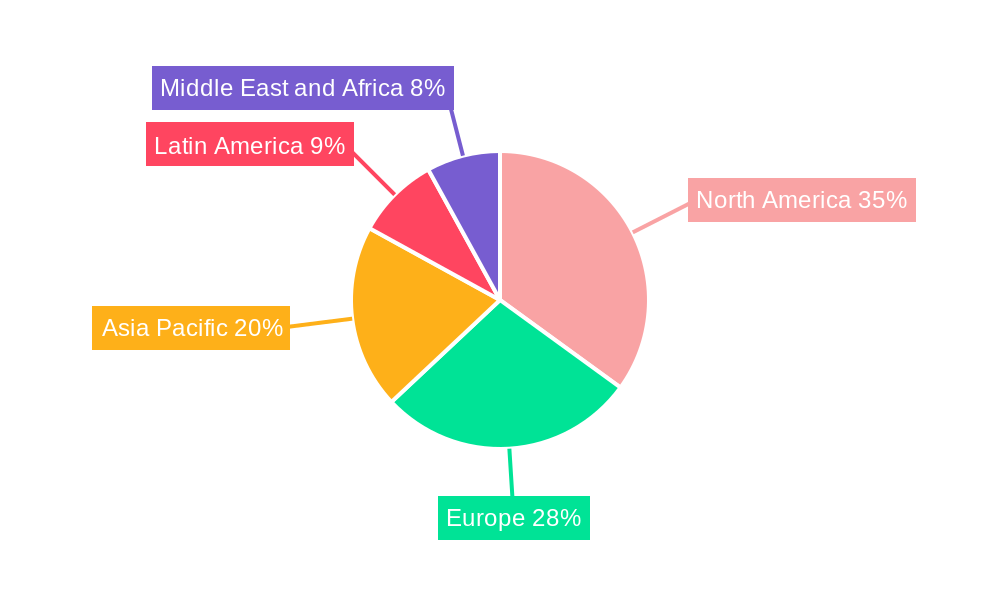
User Activity Monitoring Industry Regional Market Share
Geographic Coverage of User Activity Monitoring Industry
User Activity Monitoring Industry REPORT HIGHLIGHTS
| Aspects | Details |
|---|---|
| Study Period | 2020-2034 |
| Base Year | 2025 |
| Estimated Year | 2026 |
| Forecast Period | 2026-2034 |
| Historical Period | 2020-2025 |
| Growth Rate | CAGR of 16.5% from 2020-2034 |
| Segmentation |
|
Table of Contents
- 1. Introduction
- 1.1. Research Scope
- 1.2. Market Segmentation
- 1.3. Research Methodology
- 1.4. Definitions and Assumptions
- 2. Executive Summary
- 2.1. Introduction
- 3. Market Dynamics
- 3.1. Introduction
- 3.2. Market Drivers
- 3.2.1. Increasing Need Among Organizations to Optimize Employee Productivity; Need for Enhanced Control Over Employees and Third-Party Vendors in Enterprises
- 3.3. Market Restrains
- 3.3.1. High Cost of Innovation for Developing Robust UAM Solutions
- 3.4. Market Trends
- 3.4.1. Increasing Need Among Organizations to Optimize Employee Productivity to Drive the Market Growth
- 4. Market Factor Analysis
- 4.1. Porters Five Forces
- 4.2. Supply/Value Chain
- 4.3. PESTEL analysis
- 4.4. Market Entropy
- 4.5. Patent/Trademark Analysis
- 5. Global User Activity Monitoring Industry Analysis, Insights and Forecast, 2020-2032
- 5.1. Market Analysis, Insights and Forecast - by Application
- 5.1.1. System Monitoring
- 5.1.2. Application Monitoring
- 5.1.3. File Monitoring
- 5.1.4. Network Monitoring
- 5.1.5. Database Monitoring
- 5.2. Market Analysis, Insights and Forecast - by Enterprise
- 5.2.1. Small & Medium Enterprises
- 5.2.2. Large Enterprises
- 5.3. Market Analysis, Insights and Forecast - by End-user Industry
- 5.3.1. BFSI
- 5.3.2. Retail
- 5.3.3. IT & Telecom
- 5.3.4. Healthcare
- 5.3.5. Manufacturing
- 5.3.6. Other End-user Industries
- 5.4. Market Analysis, Insights and Forecast - by Region
- 5.4.1. North America
- 5.4.2. Europe
- 5.4.3. Asia Pacific
- 5.4.4. Latin America
- 5.4.5. Middle East and Africa
- 5.1. Market Analysis, Insights and Forecast - by Application
- 6. North America User Activity Monitoring Industry Analysis, Insights and Forecast, 2020-2032
- 6.1. Market Analysis, Insights and Forecast - by Application
- 6.1.1. System Monitoring
- 6.1.2. Application Monitoring
- 6.1.3. File Monitoring
- 6.1.4. Network Monitoring
- 6.1.5. Database Monitoring
- 6.2. Market Analysis, Insights and Forecast - by Enterprise
- 6.2.1. Small & Medium Enterprises
- 6.2.2. Large Enterprises
- 6.3. Market Analysis, Insights and Forecast - by End-user Industry
- 6.3.1. BFSI
- 6.3.2. Retail
- 6.3.3. IT & Telecom
- 6.3.4. Healthcare
- 6.3.5. Manufacturing
- 6.3.6. Other End-user Industries
- 6.1. Market Analysis, Insights and Forecast - by Application
- 7. Europe User Activity Monitoring Industry Analysis, Insights and Forecast, 2020-2032
- 7.1. Market Analysis, Insights and Forecast - by Application
- 7.1.1. System Monitoring
- 7.1.2. Application Monitoring
- 7.1.3. File Monitoring
- 7.1.4. Network Monitoring
- 7.1.5. Database Monitoring
- 7.2. Market Analysis, Insights and Forecast - by Enterprise
- 7.2.1. Small & Medium Enterprises
- 7.2.2. Large Enterprises
- 7.3. Market Analysis, Insights and Forecast - by End-user Industry
- 7.3.1. BFSI
- 7.3.2. Retail
- 7.3.3. IT & Telecom
- 7.3.4. Healthcare
- 7.3.5. Manufacturing
- 7.3.6. Other End-user Industries
- 7.1. Market Analysis, Insights and Forecast - by Application
- 8. Asia Pacific User Activity Monitoring Industry Analysis, Insights and Forecast, 2020-2032
- 8.1. Market Analysis, Insights and Forecast - by Application
- 8.1.1. System Monitoring
- 8.1.2. Application Monitoring
- 8.1.3. File Monitoring
- 8.1.4. Network Monitoring
- 8.1.5. Database Monitoring
- 8.2. Market Analysis, Insights and Forecast - by Enterprise
- 8.2.1. Small & Medium Enterprises
- 8.2.2. Large Enterprises
- 8.3. Market Analysis, Insights and Forecast - by End-user Industry
- 8.3.1. BFSI
- 8.3.2. Retail
- 8.3.3. IT & Telecom
- 8.3.4. Healthcare
- 8.3.5. Manufacturing
- 8.3.6. Other End-user Industries
- 8.1. Market Analysis, Insights and Forecast - by Application
- 9. Latin America User Activity Monitoring Industry Analysis, Insights and Forecast, 2020-2032
- 9.1. Market Analysis, Insights and Forecast - by Application
- 9.1.1. System Monitoring
- 9.1.2. Application Monitoring
- 9.1.3. File Monitoring
- 9.1.4. Network Monitoring
- 9.1.5. Database Monitoring
- 9.2. Market Analysis, Insights and Forecast - by Enterprise
- 9.2.1. Small & Medium Enterprises
- 9.2.2. Large Enterprises
- 9.3. Market Analysis, Insights and Forecast - by End-user Industry
- 9.3.1. BFSI
- 9.3.2. Retail
- 9.3.3. IT & Telecom
- 9.3.4. Healthcare
- 9.3.5. Manufacturing
- 9.3.6. Other End-user Industries
- 9.1. Market Analysis, Insights and Forecast - by Application
- 10. Middle East and Africa User Activity Monitoring Industry Analysis, Insights and Forecast, 2020-2032
- 10.1. Market Analysis, Insights and Forecast - by Application
- 10.1.1. System Monitoring
- 10.1.2. Application Monitoring
- 10.1.3. File Monitoring
- 10.1.4. Network Monitoring
- 10.1.5. Database Monitoring
- 10.2. Market Analysis, Insights and Forecast - by Enterprise
- 10.2.1. Small & Medium Enterprises
- 10.2.2. Large Enterprises
- 10.3. Market Analysis, Insights and Forecast - by End-user Industry
- 10.3.1. BFSI
- 10.3.2. Retail
- 10.3.3. IT & Telecom
- 10.3.4. Healthcare
- 10.3.5. Manufacturing
- 10.3.6. Other End-user Industries
- 10.1. Market Analysis, Insights and Forecast - by Application
- 11. Competitive Analysis
- 11.1. Global Market Share Analysis 2025
- 11.2. Company Profiles
- 11.2.1 Micro Focus International PLC
- 11.2.1.1. Overview
- 11.2.1.2. Products
- 11.2.1.3. SWOT Analysis
- 11.2.1.4. Recent Developments
- 11.2.1.5. Financials (Based on Availability)
- 11.2.2 Netwrix Corporation
- 11.2.2.1. Overview
- 11.2.2.2. Products
- 11.2.2.3. SWOT Analysis
- 11.2.2.4. Recent Developments
- 11.2.2.5. Financials (Based on Availability)
- 11.2.3 Teramind Inc
- 11.2.3.1. Overview
- 11.2.3.2. Products
- 11.2.3.3. SWOT Analysis
- 11.2.3.4. Recent Developments
- 11.2.3.5. Financials (Based on Availability)
- 11.2.4 Imperva Inc
- 11.2.4.1. Overview
- 11.2.4.2. Products
- 11.2.4.3. SWOT Analysis
- 11.2.4.4. Recent Developments
- 11.2.4.5. Financials (Based on Availability)
- 11.2.5 Securonix Inc
- 11.2.5.1. Overview
- 11.2.5.2. Products
- 11.2.5.3. SWOT Analysis
- 11.2.5.4. Recent Developments
- 11.2.5.5. Financials (Based on Availability)
- 11.2.6 LogRhythm Inc
- 11.2.6.1. Overview
- 11.2.6.2. Products
- 11.2.6.3. SWOT Analysis
- 11.2.6.4. Recent Developments
- 11.2.6.5. Financials (Based on Availability)
- 11.2.7 Centrify Corporation
- 11.2.7.1. Overview
- 11.2.7.2. Products
- 11.2.7.3. SWOT Analysis
- 11.2.7.4. Recent Developments
- 11.2.7.5. Financials (Based on Availability)
- 11.2.8 CyberArk Software Ltd
- 11.2.8.1. Overview
- 11.2.8.2. Products
- 11.2.8.3. SWOT Analysis
- 11.2.8.4. Recent Developments
- 11.2.8.5. Financials (Based on Availability)
- 11.2.9 Ezwim B V *List Not Exhaustive
- 11.2.9.1. Overview
- 11.2.9.2. Products
- 11.2.9.3. SWOT Analysis
- 11.2.9.4. Recent Developments
- 11.2.9.5. Financials (Based on Availability)
- 11.2.10 Splunk Inc
- 11.2.10.1. Overview
- 11.2.10.2. Products
- 11.2.10.3. SWOT Analysis
- 11.2.10.4. Recent Developments
- 11.2.10.5. Financials (Based on Availability)
- 11.2.11 Forcepoint
- 11.2.11.1. Overview
- 11.2.11.2. Products
- 11.2.11.3. SWOT Analysis
- 11.2.11.4. Recent Developments
- 11.2.11.5. Financials (Based on Availability)
- 11.2.1 Micro Focus International PLC
List of Figures
- Figure 1: Global User Activity Monitoring Industry Revenue Breakdown (undefined, %) by Region 2025 & 2033
- Figure 2: North America User Activity Monitoring Industry Revenue (undefined), by Application 2025 & 2033
- Figure 3: North America User Activity Monitoring Industry Revenue Share (%), by Application 2025 & 2033
- Figure 4: North America User Activity Monitoring Industry Revenue (undefined), by Enterprise 2025 & 2033
- Figure 5: North America User Activity Monitoring Industry Revenue Share (%), by Enterprise 2025 & 2033
- Figure 6: North America User Activity Monitoring Industry Revenue (undefined), by End-user Industry 2025 & 2033
- Figure 7: North America User Activity Monitoring Industry Revenue Share (%), by End-user Industry 2025 & 2033
- Figure 8: North America User Activity Monitoring Industry Revenue (undefined), by Country 2025 & 2033
- Figure 9: North America User Activity Monitoring Industry Revenue Share (%), by Country 2025 & 2033
- Figure 10: Europe User Activity Monitoring Industry Revenue (undefined), by Application 2025 & 2033
- Figure 11: Europe User Activity Monitoring Industry Revenue Share (%), by Application 2025 & 2033
- Figure 12: Europe User Activity Monitoring Industry Revenue (undefined), by Enterprise 2025 & 2033
- Figure 13: Europe User Activity Monitoring Industry Revenue Share (%), by Enterprise 2025 & 2033
- Figure 14: Europe User Activity Monitoring Industry Revenue (undefined), by End-user Industry 2025 & 2033
- Figure 15: Europe User Activity Monitoring Industry Revenue Share (%), by End-user Industry 2025 & 2033
- Figure 16: Europe User Activity Monitoring Industry Revenue (undefined), by Country 2025 & 2033
- Figure 17: Europe User Activity Monitoring Industry Revenue Share (%), by Country 2025 & 2033
- Figure 18: Asia Pacific User Activity Monitoring Industry Revenue (undefined), by Application 2025 & 2033
- Figure 19: Asia Pacific User Activity Monitoring Industry Revenue Share (%), by Application 2025 & 2033
- Figure 20: Asia Pacific User Activity Monitoring Industry Revenue (undefined), by Enterprise 2025 & 2033
- Figure 21: Asia Pacific User Activity Monitoring Industry Revenue Share (%), by Enterprise 2025 & 2033
- Figure 22: Asia Pacific User Activity Monitoring Industry Revenue (undefined), by End-user Industry 2025 & 2033
- Figure 23: Asia Pacific User Activity Monitoring Industry Revenue Share (%), by End-user Industry 2025 & 2033
- Figure 24: Asia Pacific User Activity Monitoring Industry Revenue (undefined), by Country 2025 & 2033
- Figure 25: Asia Pacific User Activity Monitoring Industry Revenue Share (%), by Country 2025 & 2033
- Figure 26: Latin America User Activity Monitoring Industry Revenue (undefined), by Application 2025 & 2033
- Figure 27: Latin America User Activity Monitoring Industry Revenue Share (%), by Application 2025 & 2033
- Figure 28: Latin America User Activity Monitoring Industry Revenue (undefined), by Enterprise 2025 & 2033
- Figure 29: Latin America User Activity Monitoring Industry Revenue Share (%), by Enterprise 2025 & 2033
- Figure 30: Latin America User Activity Monitoring Industry Revenue (undefined), by End-user Industry 2025 & 2033
- Figure 31: Latin America User Activity Monitoring Industry Revenue Share (%), by End-user Industry 2025 & 2033
- Figure 32: Latin America User Activity Monitoring Industry Revenue (undefined), by Country 2025 & 2033
- Figure 33: Latin America User Activity Monitoring Industry Revenue Share (%), by Country 2025 & 2033
- Figure 34: Middle East and Africa User Activity Monitoring Industry Revenue (undefined), by Application 2025 & 2033
- Figure 35: Middle East and Africa User Activity Monitoring Industry Revenue Share (%), by Application 2025 & 2033
- Figure 36: Middle East and Africa User Activity Monitoring Industry Revenue (undefined), by Enterprise 2025 & 2033
- Figure 37: Middle East and Africa User Activity Monitoring Industry Revenue Share (%), by Enterprise 2025 & 2033
- Figure 38: Middle East and Africa User Activity Monitoring Industry Revenue (undefined), by End-user Industry 2025 & 2033
- Figure 39: Middle East and Africa User Activity Monitoring Industry Revenue Share (%), by End-user Industry 2025 & 2033
- Figure 40: Middle East and Africa User Activity Monitoring Industry Revenue (undefined), by Country 2025 & 2033
- Figure 41: Middle East and Africa User Activity Monitoring Industry Revenue Share (%), by Country 2025 & 2033
List of Tables
- Table 1: Global User Activity Monitoring Industry Revenue undefined Forecast, by Application 2020 & 2033
- Table 2: Global User Activity Monitoring Industry Revenue undefined Forecast, by Enterprise 2020 & 2033
- Table 3: Global User Activity Monitoring Industry Revenue undefined Forecast, by End-user Industry 2020 & 2033
- Table 4: Global User Activity Monitoring Industry Revenue undefined Forecast, by Region 2020 & 2033
- Table 5: Global User Activity Monitoring Industry Revenue undefined Forecast, by Application 2020 & 2033
- Table 6: Global User Activity Monitoring Industry Revenue undefined Forecast, by Enterprise 2020 & 2033
- Table 7: Global User Activity Monitoring Industry Revenue undefined Forecast, by End-user Industry 2020 & 2033
- Table 8: Global User Activity Monitoring Industry Revenue undefined Forecast, by Country 2020 & 2033
- Table 9: Global User Activity Monitoring Industry Revenue undefined Forecast, by Application 2020 & 2033
- Table 10: Global User Activity Monitoring Industry Revenue undefined Forecast, by Enterprise 2020 & 2033
- Table 11: Global User Activity Monitoring Industry Revenue undefined Forecast, by End-user Industry 2020 & 2033
- Table 12: Global User Activity Monitoring Industry Revenue undefined Forecast, by Country 2020 & 2033
- Table 13: Global User Activity Monitoring Industry Revenue undefined Forecast, by Application 2020 & 2033
- Table 14: Global User Activity Monitoring Industry Revenue undefined Forecast, by Enterprise 2020 & 2033
- Table 15: Global User Activity Monitoring Industry Revenue undefined Forecast, by End-user Industry 2020 & 2033
- Table 16: Global User Activity Monitoring Industry Revenue undefined Forecast, by Country 2020 & 2033
- Table 17: Global User Activity Monitoring Industry Revenue undefined Forecast, by Application 2020 & 2033
- Table 18: Global User Activity Monitoring Industry Revenue undefined Forecast, by Enterprise 2020 & 2033
- Table 19: Global User Activity Monitoring Industry Revenue undefined Forecast, by End-user Industry 2020 & 2033
- Table 20: Global User Activity Monitoring Industry Revenue undefined Forecast, by Country 2020 & 2033
- Table 21: Global User Activity Monitoring Industry Revenue undefined Forecast, by Application 2020 & 2033
- Table 22: Global User Activity Monitoring Industry Revenue undefined Forecast, by Enterprise 2020 & 2033
- Table 23: Global User Activity Monitoring Industry Revenue undefined Forecast, by End-user Industry 2020 & 2033
- Table 24: Global User Activity Monitoring Industry Revenue undefined Forecast, by Country 2020 & 2033
Frequently Asked Questions
1. What is the projected Compound Annual Growth Rate (CAGR) of the User Activity Monitoring Industry?
The projected CAGR is approximately 16.5%.
2. Which companies are prominent players in the User Activity Monitoring Industry?
Key companies in the market include Micro Focus International PLC, Netwrix Corporation, Teramind Inc, Imperva Inc, Securonix Inc, LogRhythm Inc, Centrify Corporation, CyberArk Software Ltd, Ezwim B V *List Not Exhaustive, Splunk Inc, Forcepoint.
3. What are the main segments of the User Activity Monitoring Industry?
The market segments include Application, Enterprise, End-user Industry.
4. Can you provide details about the market size?
The market size is estimated to be USD XXX N/A as of 2022.
5. What are some drivers contributing to market growth?
Increasing Need Among Organizations to Optimize Employee Productivity; Need for Enhanced Control Over Employees and Third-Party Vendors in Enterprises.
6. What are the notable trends driving market growth?
Increasing Need Among Organizations to Optimize Employee Productivity to Drive the Market Growth.
7. Are there any restraints impacting market growth?
High Cost of Innovation for Developing Robust UAM Solutions.
8. Can you provide examples of recent developments in the market?
July 2022: Imperva Inc announced Imperva Data Security Fabric (DSF) which provides data-centric protection and compliance for enterprise data lakes built on Amazon Web Services (AWS). Imperva reinforced its commitment to securing data and all paths to it by allowing AWS customers to secure their data with one comprehensive platform, leveraging a unified security model across Amazon Aurora, Amazon Redshift, Amazon Relational Database Service (Amazon RDS), Amazon DynamoDB, Amazon Athena, and AWS CloudFormation without requiring any changes to their existing data infrastructure.
9. What pricing options are available for accessing the report?
Pricing options include single-user, multi-user, and enterprise licenses priced at USD 4750, USD 5250, and USD 8750 respectively.
10. Is the market size provided in terms of value or volume?
The market size is provided in terms of value, measured in N/A.
11. Are there any specific market keywords associated with the report?
Yes, the market keyword associated with the report is "User Activity Monitoring Industry," which aids in identifying and referencing the specific market segment covered.
12. How do I determine which pricing option suits my needs best?
The pricing options vary based on user requirements and access needs. Individual users may opt for single-user licenses, while businesses requiring broader access may choose multi-user or enterprise licenses for cost-effective access to the report.
13. Are there any additional resources or data provided in the User Activity Monitoring Industry report?
While the report offers comprehensive insights, it's advisable to review the specific contents or supplementary materials provided to ascertain if additional resources or data are available.
14. How can I stay updated on further developments or reports in the User Activity Monitoring Industry?
To stay informed about further developments, trends, and reports in the User Activity Monitoring Industry, consider subscribing to industry newsletters, following relevant companies and organizations, or regularly checking reputable industry news sources and publications.
Methodology
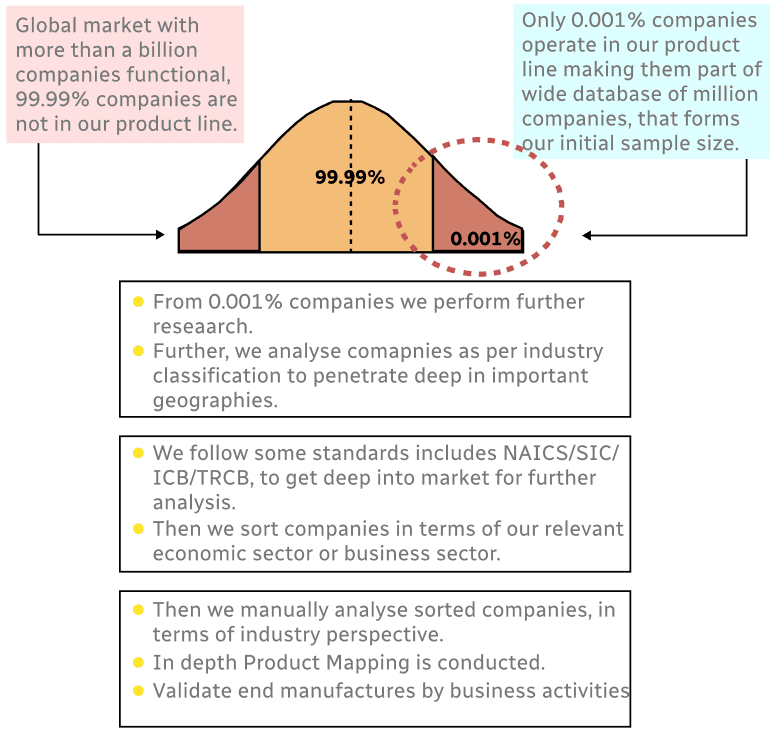
Step 1 - Identification of Relevant Samples Size from Population Database
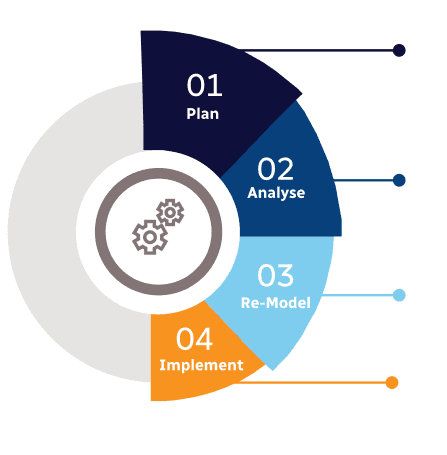
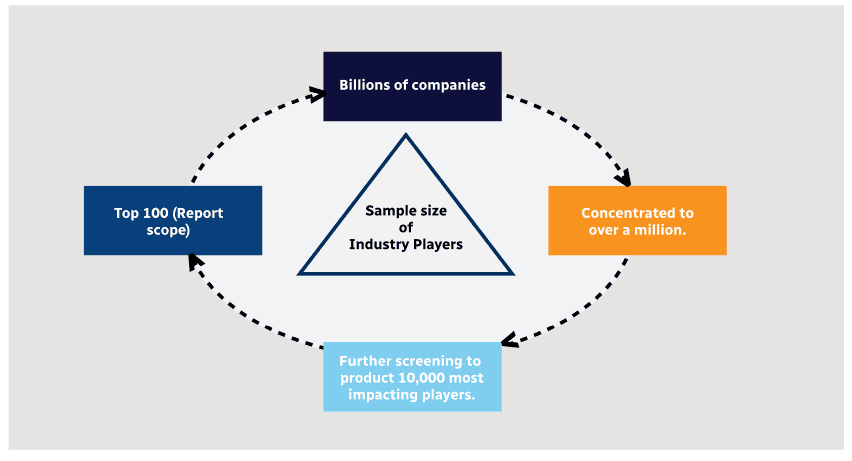
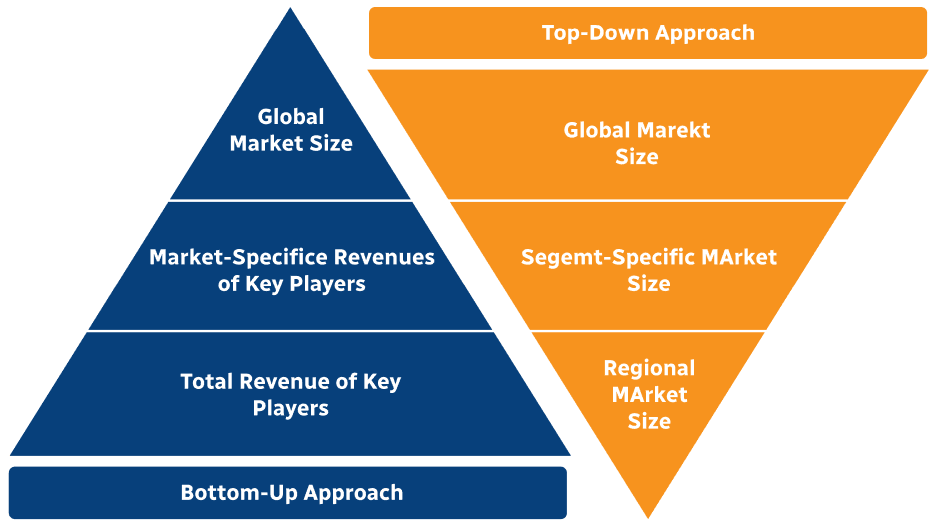
Step 2 - Approaches for Defining Global Market Size (Value, Volume* & Price*)
Note*: In applicable scenarios
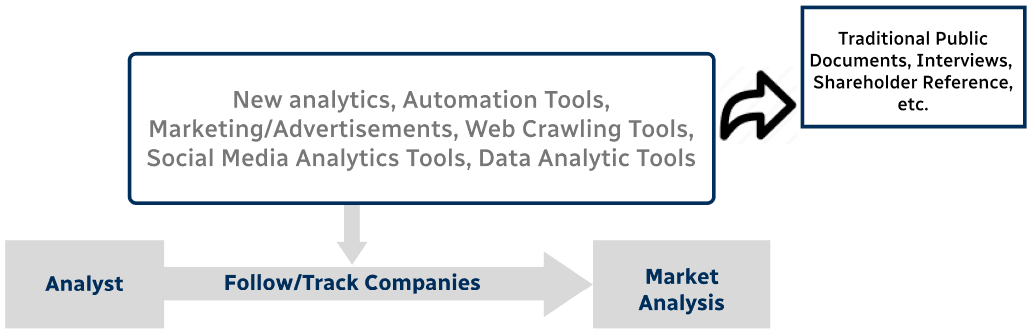
Step 3 - Data Sources
Primary Research
- Web Analytics
- Survey Reports
- Research Institute
- Latest Research Reports
- Opinion Leaders
Secondary Research
- Annual Reports
- White Paper
- Latest Press Release
- Industry Association
- Paid Database
- Investor Presentations
Step 4 - Data Triangulation
Involves using different sources of information in order to increase the validity of a study
These sources are likely to be stakeholders in a program - participants, other researchers, program staff, other community members, and so on.
Then we put all data in single framework & apply various statistical tools to find out the dynamic on the market.
During the analysis stage, feedback from the stakeholder groups would be compared to determine areas of agreement as well as areas of divergence