


Key Insights
The global Immunoprecipitation market is poised for significant growth, projected to reach an estimated $844 million by 2025, exhibiting a robust Compound Annual Growth Rate (CAGR) of 5.4% throughout the forecast period of 2025-2033. This expansion is primarily fueled by the increasing research and development activities across academic institutions and pharmaceutical/biotechnology companies, particularly in the pursuit of novel drug discovery and personalized medicine. The rising prevalence of chronic diseases and the growing demand for advanced diagnostic tools further bolster market expansion. Furthermore, advancements in antibody-based research techniques and the continuous development of more efficient and specific immunoprecipitation reagents and kits are key drivers. The market is also benefiting from increased government funding for life science research globally, encouraging innovation and adoption of these crucial laboratory techniques.
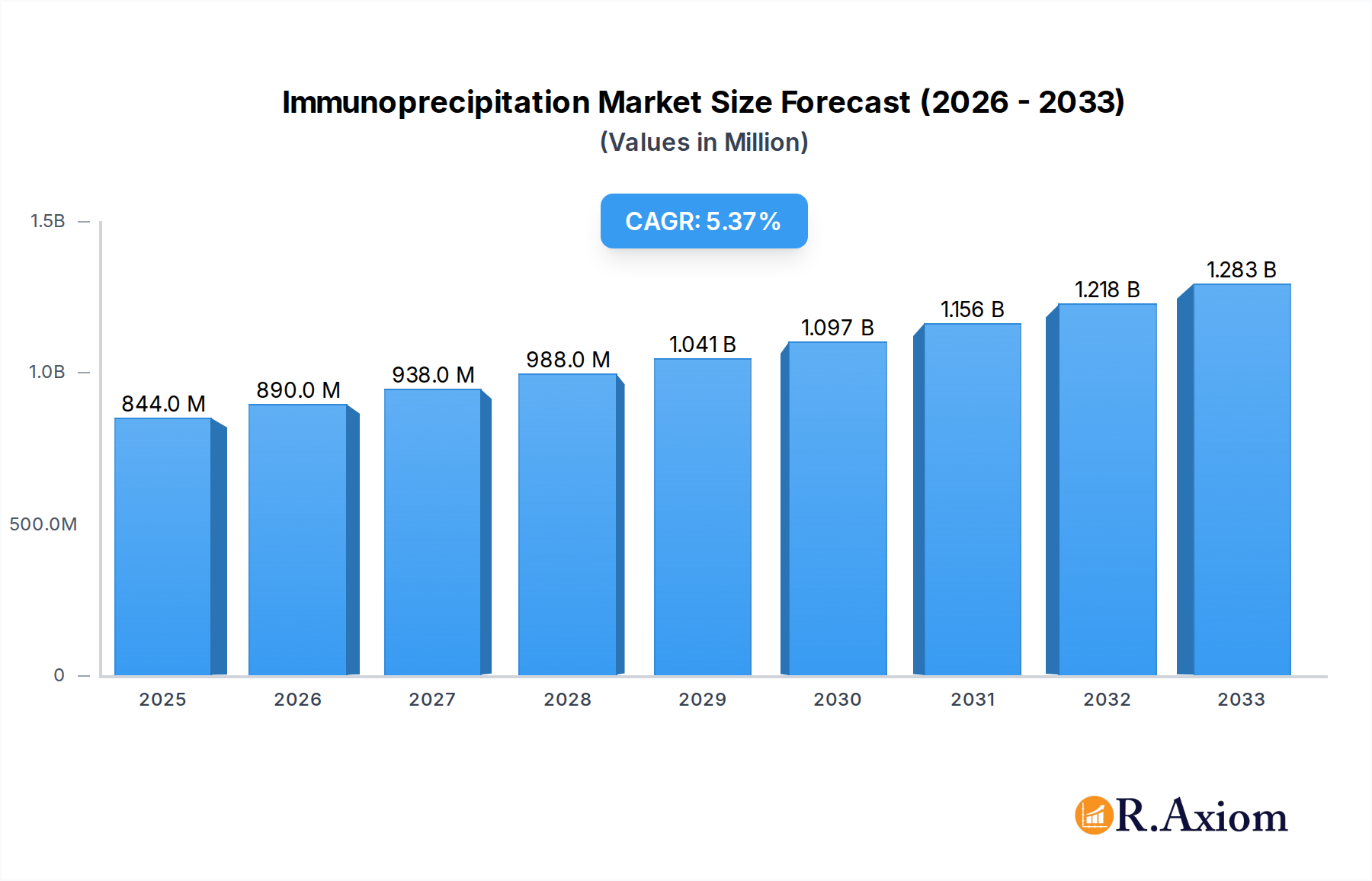
Immunoprecipitation Market Size (In Million)

The Immunoprecipitation market is segmented into various applications, with Academics and Research Institutes forming a substantial segment due to their foundational role in scientific discovery. Pharmaceutical and Biotechnology Companies represent another critical application area, leveraging immunoprecipitation for target validation, protein-antibody characterization, and quality control in biopharmaceutical development. The market also encompasses different types of immunoprecipitation, including Individual IP, Coimmunoprecipitation, and ChIP (Chromatin Immunoprecipitation), each catering to specific research needs and scientific inquiries. Geographically, North America and Europe are anticipated to dominate the market due to the presence of leading research institutions and biopharmaceutical hubs, coupled with significant investments in healthcare and life sciences. The Asia Pacific region, however, is expected to witness the fastest growth, driven by expanding research infrastructure, increasing investments, and a burgeoning biopharmaceutical sector.
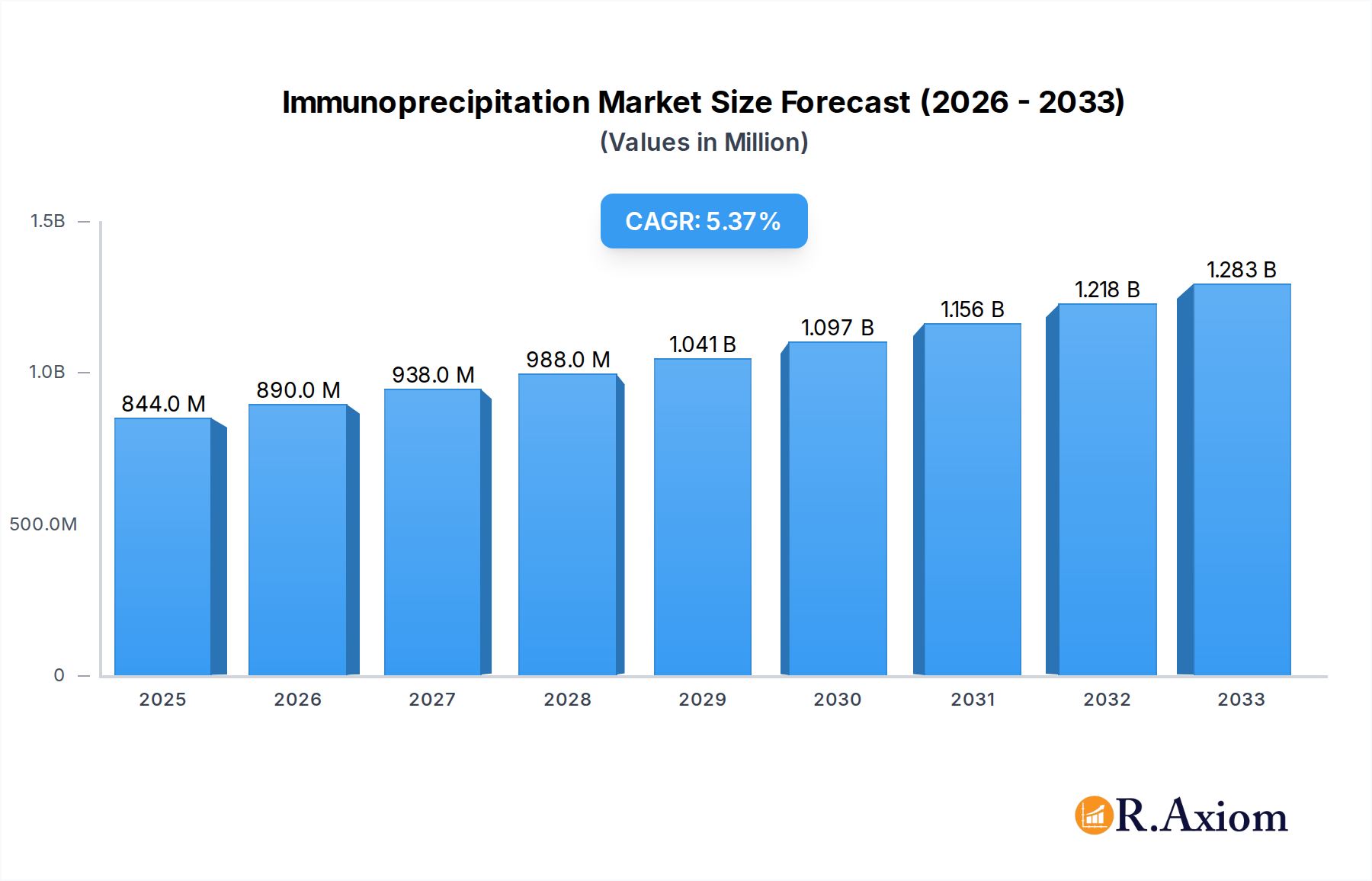
Immunoprecipitation Company Market Share
The global immunoprecipitation market exhibits a moderately concentrated landscape, with key players like Thermo Fisher Scientific, Abcam, and Merck KGaA commanding significant market share, estimated to be around 40% collectively. Innovation is a primary driver, fueled by continuous advancements in antibody specificity, assay sensitivity, and automation. The development of novel reagents, such as magnetic beads with superior binding capacities and improved buffer formulations, has significantly enhanced efficiency and reduced non-specific binding. Regulatory frameworks, particularly for diagnostic applications, play a crucial role in shaping product development and market entry. The increasing demand for personalized medicine and targeted therapies is pushing innovation towards more specialized immunoprecipitation techniques. Product substitutes, while present in some protein purification strategies, are generally less effective for precise target protein isolation and downstream analysis. End-user trends highlight a growing preference for user-friendly kits, multiplexing capabilities, and integrated workflows that streamline research processes. Mergers and acquisitions (M&A) activity is moderate, with strategic acquisitions focused on expanding product portfolios and technological expertise. Notable M&A deals in the past three years have aggregated an estimated value of over 500 million. The overall market is characterized by a balance between established giants and emerging innovators striving to capture market share through enhanced product offerings and strategic partnerships.
Immunoprecipitation Industry Trends & Insights
The global immunoprecipitation market is poised for robust expansion, driven by a confluence of scientific advancements, increasing research investments, and a growing demand for sophisticated diagnostic and therapeutic tools. The market is projected to witness a Compound Annual Growth Rate (CAGR) of approximately 8.5% during the forecast period of 2025–2033. This substantial growth is underpinned by escalating investments in life sciences research across academia and the pharmaceutical and biotechnology sectors, where immunoprecipitation serves as a cornerstone technique for protein analysis, target validation, and drug discovery. Technological disruptions, including the advent of highly specific antibodies, more sensitive detection methods like chemiluminescence and fluorescence, and the increasing adoption of automation and high-throughput screening platforms, are revolutionizing the efficiency and accuracy of immunoprecipitation assays. These innovations are leading to improved data quality and faster research cycles. Consumer preferences are shifting towards integrated solutions that offer ease of use, reproducibility, and scalability, enabling researchers to perform complex experiments with minimal hands-on time. The increasing prevalence of chronic diseases and the growing emphasis on precision medicine are further fueling the demand for immunoprecipitation-based diagnostics and therapeutics. Competitive dynamics are characterized by a blend of established market leaders, such as Thermo Fisher Scientific and Abcam, continuously innovating their product lines, and agile biotech firms focusing on niche applications and specialized reagents. The market penetration of advanced immunoprecipitation techniques is steadily increasing, driven by their expanding utility in fields like epigenetics, cancer research, and neurobiology. The market penetration for sophisticated IP techniques has reached an estimated 35% and is expected to grow significantly. The overall health of the industry is robust, with a strong pipeline of research and development activities promising further innovation and market expansion.
Dominant Markets & Segments in Immunoprecipitation
The North America region currently dominates the global immunoprecipitation market, driven by a strong presence of leading pharmaceutical and biotechnology companies, extensive academic research infrastructure, and substantial government funding for life sciences research. Within North America, the United States stands out as the leading country, benefiting from significant investments in drug discovery and development, as well as a high adoption rate of advanced research technologies. The academic segment is a primary driver of demand, fueled by a vast network of universities and research institutions actively engaged in fundamental biological research, proteomics, and genomics. This segment accounts for an estimated 45% of the total market revenue.
- Key Drivers for Academic Dominance:
- Extensive Research Funding: Government grants and institutional funding foster a high volume of research activities requiring immunoprecipitation.
- Cutting-Edge Research: Academics are at the forefront of exploring new biological mechanisms and disease pathways, necessitating advanced protein analysis tools.
- Talent Pool: A highly skilled workforce of researchers and scientists proficient in immunoprecipitation techniques.
The Pharmaceutical and Biotechnology Companies segment is another significant contributor, accounting for approximately 40% of the market share. These companies leverage immunoprecipitation extensively for target identification and validation, drug screening, biomarker discovery, and quality control of biologics. The pursuit of novel therapeutics for complex diseases like cancer, neurodegenerative disorders, and autoimmune conditions necessitates precise protein interrogation, a core strength of immunoprecipitation.
- Key Drivers for Pharmaceutical & Biotechnology Dominance:
- Drug Discovery Pipeline: The constant need to identify and validate new drug targets.
- Biologics Development: Crucial for quality control and characterization of protein-based therapeutics.
- Biomarker Discovery: Identifying molecules indicative of disease progression or therapeutic response.
In terms of application type, Individual IP remains the most widely adopted technique, accounting for an estimated 60% of the market. This is due to its versatility and widespread use in various research applications, from basic protein expression studies to target protein purification. Coimmunoprecipitation (Co-IP) holds a significant share, estimated at 30%, due to its critical role in understanding protein-protein interactions, which is fundamental to unraveling cellular pathways and disease mechanisms. Chromatin Immunoprecipitation (ChIP), while representing a smaller but rapidly growing segment at around 10%, is experiencing substantial growth driven by advancements in epigenetics research and the increasing focus on understanding gene regulation. The demand for ChIP is propelled by its indispensable role in studying DNA-protein interactions and epigenetic modifications.
Immunoprecipitation Product Developments
The immunoprecipitation market is experiencing a surge in product innovations designed to enhance sensitivity, specificity, and ease of use. Key developments include the introduction of highly validated monoclonal antibodies targeting a broader range of proteins, coupled with optimized magnetic bead-based kits that offer faster protocols and superior recovery rates compared to traditional agarose beads. Companies are also focusing on developing multiplexing solutions that allow for the simultaneous analysis of multiple targets from a single sample, significantly accelerating research timelines. The integration of automation into immunoprecipitation workflows is another significant trend, enabling high-throughput screening and reproducible results, particularly for large-scale drug discovery projects. These advancements collectively offer researchers more powerful and efficient tools for protein analysis.
Report Scope & Segmentation Analysis
This report delves into the global immunoprecipitation market, segmenting it across key application areas and technique types. The Application segmentation includes Academics, Research Institutes, and Pharmaceutical and Biotechnology Companies. Academics represent a substantial segment, driven by fundamental research and exploration, with an estimated market size of over 2,000 million and projected growth to over 3,500 million by 2033. Research Institutes, comprising government and non-profit organizations, also form a crucial segment with an estimated 1,500 million market size, expected to reach over 2,800 million. Pharmaceutical and Biotechnology Companies, the largest segment, are projected to grow from an estimated 3,000 million to over 5,500 million by 2033, reflecting their intensive use in drug discovery and development.
The Type segmentation encompasses Individual IP, Coimmunoprecipitation (Co-IP), and CHIP (Chromatin Immunoprecipitation). Individual IP is the dominant technique, with an estimated market of over 4,000 million, anticipated to reach over 7,000 million. Co-IP, crucial for studying protein-protein interactions, is valued at an estimated 2,000 million, projected to grow to over 3,800 million. CHIP, a rapidly expanding area in epigenetics, starts with an estimated 700 million and is expected to surge to over 1,500 million, showcasing its increasing significance.
Key Drivers of Immunoprecipitation Growth
The growth of the immunoprecipitation market is propelled by several interconnected factors. Technologically, the development of highly specific antibodies, advanced bead chemistries (e.g., paramagnetic beads), and sensitive detection systems has dramatically improved assay performance, enabling researchers to achieve greater accuracy and higher yields. Economically, increased global spending on life sciences research and development, particularly within the pharmaceutical and biotechnology sectors for drug discovery and personalized medicine initiatives, directly translates to higher demand for immunoprecipitation reagents and services. Regulatory bodies' increasing focus on validating protein targets for therapeutic intervention also indirectly drives the adoption of robust protein analysis techniques like immunoprecipitation. Furthermore, the expanding scope of research into complex biological processes, such as epigenetics and protein-protein interactions, further fuels the need for these indispensable tools.
Challenges in the Immunoprecipitation Sector
Despite its growth, the immunoprecipitation sector faces several challenges. One significant hurdle is the high cost of specialized reagents and antibodies, which can limit accessibility for smaller research labs or academic institutions with budget constraints. Non-specific binding remains a persistent issue, leading to higher background noise and potentially inaccurate results, requiring extensive optimization of experimental protocols. Supply chain disruptions, particularly for specialized reagents and raw materials, can also impact product availability and lead times, affecting research timelines. Furthermore, the complexity of experimental design and execution can present a barrier, requiring skilled personnel and meticulous attention to detail to ensure reliable outcomes. While not a direct substitute for many applications, alternative protein purification methods that are less labor-intensive or costly can sometimes be considered depending on the specific research goal, posing a mild competitive pressure. The estimated impact of these challenges on market growth is around 10-15% in terms of delayed adoption.
Emerging Opportunities in Immunoprecipitation
The immunoprecipitation market is ripe with emerging opportunities. The burgeoning field of epigenetics, driven by advancements in understanding gene regulation, presents a significant growth avenue for Chromatin Immunoprecipitation (ChIP) assays. The increasing focus on liquid biopsies for early disease detection and monitoring offers opportunities for developing highly sensitive immunoprecipitation techniques for detecting circulating tumor proteins or biomarkers in bodily fluids. The expansion of personalized medicine further fuels demand for targeted protein analysis, creating a need for custom antibody development and specialized immunoprecipitation kits for specific patient populations. Moreover, advancements in single-cell analysis are opening doors for developing low-input immunoprecipitation protocols, enabling researchers to study protein expression and interactions at an unprecedented resolution. The integration of immunoprecipitation with other omics technologies, such as proteomics and genomics, offers synergistic opportunities for comprehensive biological insights.
Leading Players in the Immunoprecipitation Market
- Thermo Fisher Scientific
- Abcam
- Merck KGaA
- Agarose Bead Technologies
- Cell Signaling Technology
- Genetex Inc.
- Qiagen N.V.
- Bio-Rad Laboratories, Inc.
- Santa Cruz Biotechnology, Inc.
- Becton, Dickinson and Company
Key Developments in Immunoprecipitation Industry
- 2023 August: Abcam launched a new range of highly specific antibodies for immunoprecipitation, enhancing target identification in cancer research.
- 2023 May: Thermo Fisher Scientific introduced an automated immunoprecipitation system, significantly reducing hands-on time and improving reproducibility for pharmaceutical clients.
- 2022 November: Merck KGaA expanded its portfolio with innovative magnetic bead-based immunoprecipitation kits, offering faster workflows and improved protein recovery.
- 2022 July: Agarose Bead Technologies unveiled novel functionalized agarose beads with enhanced binding capacity, catering to specialized protein purification needs.
- 2021 December: Qiagen introduced a new ChIP-Seq library preparation kit, streamlining the workflow for epigenomic studies.
- 2021 September: Cell Signaling Technology released validated antibodies for coimmunoprecipitation, aiding in the study of complex protein interaction networks.
Strategic Outlook for Immunoprecipitation Market
The strategic outlook for the immunoprecipitation market remains exceptionally positive, driven by sustained innovation and expanding applications. Key growth catalysts include the continued advancement in antibody engineering, leading to higher specificity and sensitivity, and the increasing integration of automation and artificial intelligence in assay development and data analysis, which will further streamline workflows and enhance throughput. The growing demand for targeted therapies and precision medicine will continue to necessitate advanced protein analysis techniques, positioning immunoprecipitation as an indispensable tool in drug discovery and development. Furthermore, the expansion of its use in diagnostics, particularly for early disease detection, will unlock new market segments. Strategic partnerships between reagent suppliers, instrument manufacturers, and end-users will be crucial for developing comprehensive solutions and addressing evolving research needs, ensuring continued market expansion and technological leadership.
Immunoprecipitation Segmentation
-
1. Application
- 1.1. Academics
- 1.2. Research Institutes
- 1.3. Pharmaceutical and Biotechnology Companies
-
2. Type
- 2.1. Individual IP
- 2.2. Coimmunoprecipitation
- 2.3. CHIP
Immunoprecipitation Segmentation By Geography
-
1. North America
- 1.1. United States
- 1.2. Canada
- 1.3. Mexico
-
2. South America
- 2.1. Brazil
- 2.2. Argentina
- 2.3. Rest of South America
-
3. Europe
- 3.1. United Kingdom
- 3.2. Germany
- 3.3. France
- 3.4. Italy
- 3.5. Spain
- 3.6. Russia
- 3.7. Benelux
- 3.8. Nordics
- 3.9. Rest of Europe
-
4. Middle East & Africa
- 4.1. Turkey
- 4.2. Israel
- 4.3. GCC
- 4.4. North Africa
- 4.5. South Africa
- 4.6. Rest of Middle East & Africa
-
5. Asia Pacific
- 5.1. China
- 5.2. India
- 5.3. Japan
- 5.4. South Korea
- 5.5. ASEAN
- 5.6. Oceania
- 5.7. Rest of Asia Pacific
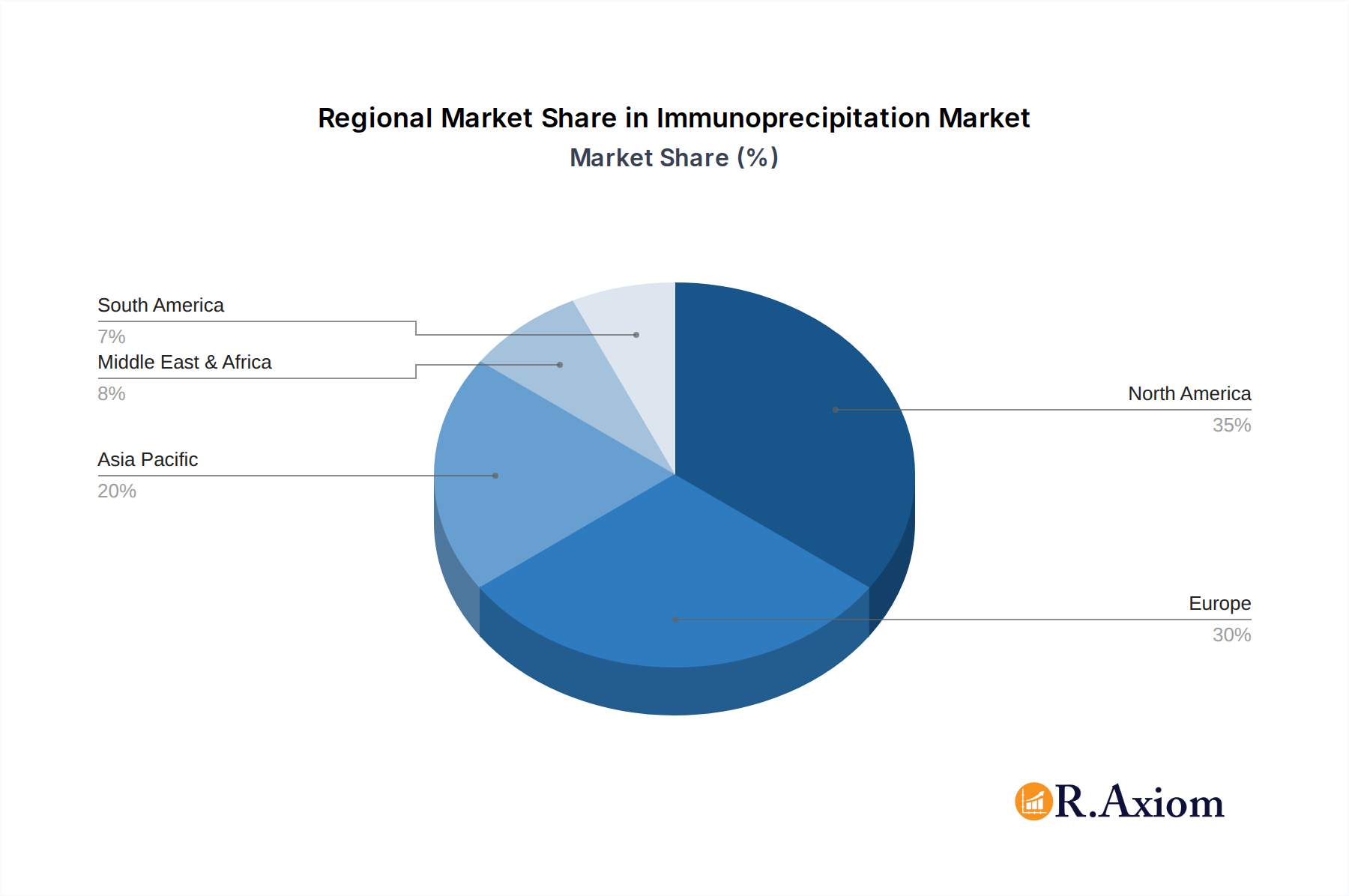
Immunoprecipitation Regional Market Share
Geographic Coverage of Immunoprecipitation
Immunoprecipitation REPORT HIGHLIGHTS
| Aspects | Details |
|---|---|
| Study Period | 2020-2034 |
| Base Year | 2025 |
| Estimated Year | 2026 |
| Forecast Period | 2026-2034 |
| Historical Period | 2020-2025 |
| Growth Rate | CAGR of 5.4% from 2020-2034 |
| Segmentation |
|
Table of Contents
- 1. Introduction
- 1.1. Research Scope
- 1.2. Market Segmentation
- 1.3. Research Methodology
- 1.4. Definitions and Assumptions
- 2. Executive Summary
- 2.1. Introduction
- 3. Market Dynamics
- 3.1. Introduction
- 3.2. Market Drivers
- 3.3. Market Restrains
- 3.4. Market Trends
- 4. Market Factor Analysis
- 4.1. Porters Five Forces
- 4.2. Supply/Value Chain
- 4.3. PESTEL analysis
- 4.4. Market Entropy
- 4.5. Patent/Trademark Analysis
- 5. Global Immunoprecipitation Analysis, Insights and Forecast, 2020-2032
- 5.1. Market Analysis, Insights and Forecast - by Application
- 5.1.1. Academics
- 5.1.2. Research Institutes
- 5.1.3. Pharmaceutical and Biotechnology Companies
- 5.2. Market Analysis, Insights and Forecast - by Type
- 5.2.1. Individual IP
- 5.2.2. Coimmunoprecipitation
- 5.2.3. CHIP
- 5.3. Market Analysis, Insights and Forecast - by Region
- 5.3.1. North America
- 5.3.2. South America
- 5.3.3. Europe
- 5.3.4. Middle East & Africa
- 5.3.5. Asia Pacific
- 5.1. Market Analysis, Insights and Forecast - by Application
- 6. North America Immunoprecipitation Analysis, Insights and Forecast, 2020-2032
- 6.1. Market Analysis, Insights and Forecast - by Application
- 6.1.1. Academics
- 6.1.2. Research Institutes
- 6.1.3. Pharmaceutical and Biotechnology Companies
- 6.2. Market Analysis, Insights and Forecast - by Type
- 6.2.1. Individual IP
- 6.2.2. Coimmunoprecipitation
- 6.2.3. CHIP
- 6.1. Market Analysis, Insights and Forecast - by Application
- 7. South America Immunoprecipitation Analysis, Insights and Forecast, 2020-2032
- 7.1. Market Analysis, Insights and Forecast - by Application
- 7.1.1. Academics
- 7.1.2. Research Institutes
- 7.1.3. Pharmaceutical and Biotechnology Companies
- 7.2. Market Analysis, Insights and Forecast - by Type
- 7.2.1. Individual IP
- 7.2.2. Coimmunoprecipitation
- 7.2.3. CHIP
- 7.1. Market Analysis, Insights and Forecast - by Application
- 8. Europe Immunoprecipitation Analysis, Insights and Forecast, 2020-2032
- 8.1. Market Analysis, Insights and Forecast - by Application
- 8.1.1. Academics
- 8.1.2. Research Institutes
- 8.1.3. Pharmaceutical and Biotechnology Companies
- 8.2. Market Analysis, Insights and Forecast - by Type
- 8.2.1. Individual IP
- 8.2.2. Coimmunoprecipitation
- 8.2.3. CHIP
- 8.1. Market Analysis, Insights and Forecast - by Application
- 9. Middle East & Africa Immunoprecipitation Analysis, Insights and Forecast, 2020-2032
- 9.1. Market Analysis, Insights and Forecast - by Application
- 9.1.1. Academics
- 9.1.2. Research Institutes
- 9.1.3. Pharmaceutical and Biotechnology Companies
- 9.2. Market Analysis, Insights and Forecast - by Type
- 9.2.1. Individual IP
- 9.2.2. Coimmunoprecipitation
- 9.2.3. CHIP
- 9.1. Market Analysis, Insights and Forecast - by Application
- 10. Asia Pacific Immunoprecipitation Analysis, Insights and Forecast, 2020-2032
- 10.1. Market Analysis, Insights and Forecast - by Application
- 10.1.1. Academics
- 10.1.2. Research Institutes
- 10.1.3. Pharmaceutical and Biotechnology Companies
- 10.2. Market Analysis, Insights and Forecast - by Type
- 10.2.1. Individual IP
- 10.2.2. Coimmunoprecipitation
- 10.2.3. CHIP
- 10.1. Market Analysis, Insights and Forecast - by Application
- 11. Competitive Analysis
- 11.1. Global Market Share Analysis 2025
- 11.2. Company Profiles
- 11.2.1 Thermo Fisher Scientific
- 11.2.1.1. Overview
- 11.2.1.2. Products
- 11.2.1.3. SWOT Analysis
- 11.2.1.4. Recent Developments
- 11.2.1.5. Financials (Based on Availability)
- 11.2.2 Abcam
- 11.2.2.1. Overview
- 11.2.2.2. Products
- 11.2.2.3. SWOT Analysis
- 11.2.2.4. Recent Developments
- 11.2.2.5. Financials (Based on Availability)
- 11.2.3 Merck KGaA
- 11.2.3.1. Overview
- 11.2.3.2. Products
- 11.2.3.3. SWOT Analysis
- 11.2.3.4. Recent Developments
- 11.2.3.5. Financials (Based on Availability)
- 11.2.4 Agarose Bead Technologies
- 11.2.4.1. Overview
- 11.2.4.2. Products
- 11.2.4.3. SWOT Analysis
- 11.2.4.4. Recent Developments
- 11.2.4.5. Financials (Based on Availability)
- 11.2.1 Thermo Fisher Scientific
List of Figures
- Figure 1: Global Immunoprecipitation Revenue Breakdown (million, %) by Region 2025 & 2033
- Figure 2: North America Immunoprecipitation Revenue (million), by Application 2025 & 2033
- Figure 3: North America Immunoprecipitation Revenue Share (%), by Application 2025 & 2033
- Figure 4: North America Immunoprecipitation Revenue (million), by Type 2025 & 2033
- Figure 5: North America Immunoprecipitation Revenue Share (%), by Type 2025 & 2033
- Figure 6: North America Immunoprecipitation Revenue (million), by Country 2025 & 2033
- Figure 7: North America Immunoprecipitation Revenue Share (%), by Country 2025 & 2033
- Figure 8: South America Immunoprecipitation Revenue (million), by Application 2025 & 2033
- Figure 9: South America Immunoprecipitation Revenue Share (%), by Application 2025 & 2033
- Figure 10: South America Immunoprecipitation Revenue (million), by Type 2025 & 2033
- Figure 11: South America Immunoprecipitation Revenue Share (%), by Type 2025 & 2033
- Figure 12: South America Immunoprecipitation Revenue (million), by Country 2025 & 2033
- Figure 13: South America Immunoprecipitation Revenue Share (%), by Country 2025 & 2033
- Figure 14: Europe Immunoprecipitation Revenue (million), by Application 2025 & 2033
- Figure 15: Europe Immunoprecipitation Revenue Share (%), by Application 2025 & 2033
- Figure 16: Europe Immunoprecipitation Revenue (million), by Type 2025 & 2033
- Figure 17: Europe Immunoprecipitation Revenue Share (%), by Type 2025 & 2033
- Figure 18: Europe Immunoprecipitation Revenue (million), by Country 2025 & 2033
- Figure 19: Europe Immunoprecipitation Revenue Share (%), by Country 2025 & 2033
- Figure 20: Middle East & Africa Immunoprecipitation Revenue (million), by Application 2025 & 2033
- Figure 21: Middle East & Africa Immunoprecipitation Revenue Share (%), by Application 2025 & 2033
- Figure 22: Middle East & Africa Immunoprecipitation Revenue (million), by Type 2025 & 2033
- Figure 23: Middle East & Africa Immunoprecipitation Revenue Share (%), by Type 2025 & 2033
- Figure 24: Middle East & Africa Immunoprecipitation Revenue (million), by Country 2025 & 2033
- Figure 25: Middle East & Africa Immunoprecipitation Revenue Share (%), by Country 2025 & 2033
- Figure 26: Asia Pacific Immunoprecipitation Revenue (million), by Application 2025 & 2033
- Figure 27: Asia Pacific Immunoprecipitation Revenue Share (%), by Application 2025 & 2033
- Figure 28: Asia Pacific Immunoprecipitation Revenue (million), by Type 2025 & 2033
- Figure 29: Asia Pacific Immunoprecipitation Revenue Share (%), by Type 2025 & 2033
- Figure 30: Asia Pacific Immunoprecipitation Revenue (million), by Country 2025 & 2033
- Figure 31: Asia Pacific Immunoprecipitation Revenue Share (%), by Country 2025 & 2033
List of Tables
- Table 1: Global Immunoprecipitation Revenue million Forecast, by Application 2020 & 2033
- Table 2: Global Immunoprecipitation Revenue million Forecast, by Type 2020 & 2033
- Table 3: Global Immunoprecipitation Revenue million Forecast, by Region 2020 & 2033
- Table 4: Global Immunoprecipitation Revenue million Forecast, by Application 2020 & 2033
- Table 5: Global Immunoprecipitation Revenue million Forecast, by Type 2020 & 2033
- Table 6: Global Immunoprecipitation Revenue million Forecast, by Country 2020 & 2033
- Table 7: United States Immunoprecipitation Revenue (million) Forecast, by Application 2020 & 2033
- Table 8: Canada Immunoprecipitation Revenue (million) Forecast, by Application 2020 & 2033
- Table 9: Mexico Immunoprecipitation Revenue (million) Forecast, by Application 2020 & 2033
- Table 10: Global Immunoprecipitation Revenue million Forecast, by Application 2020 & 2033
- Table 11: Global Immunoprecipitation Revenue million Forecast, by Type 2020 & 2033
- Table 12: Global Immunoprecipitation Revenue million Forecast, by Country 2020 & 2033
- Table 13: Brazil Immunoprecipitation Revenue (million) Forecast, by Application 2020 & 2033
- Table 14: Argentina Immunoprecipitation Revenue (million) Forecast, by Application 2020 & 2033
- Table 15: Rest of South America Immunoprecipitation Revenue (million) Forecast, by Application 2020 & 2033
- Table 16: Global Immunoprecipitation Revenue million Forecast, by Application 2020 & 2033
- Table 17: Global Immunoprecipitation Revenue million Forecast, by Type 2020 & 2033
- Table 18: Global Immunoprecipitation Revenue million Forecast, by Country 2020 & 2033
- Table 19: United Kingdom Immunoprecipitation Revenue (million) Forecast, by Application 2020 & 2033
- Table 20: Germany Immunoprecipitation Revenue (million) Forecast, by Application 2020 & 2033
- Table 21: France Immunoprecipitation Revenue (million) Forecast, by Application 2020 & 2033
- Table 22: Italy Immunoprecipitation Revenue (million) Forecast, by Application 2020 & 2033
- Table 23: Spain Immunoprecipitation Revenue (million) Forecast, by Application 2020 & 2033
- Table 24: Russia Immunoprecipitation Revenue (million) Forecast, by Application 2020 & 2033
- Table 25: Benelux Immunoprecipitation Revenue (million) Forecast, by Application 2020 & 2033
- Table 26: Nordics Immunoprecipitation Revenue (million) Forecast, by Application 2020 & 2033
- Table 27: Rest of Europe Immunoprecipitation Revenue (million) Forecast, by Application 2020 & 2033
- Table 28: Global Immunoprecipitation Revenue million Forecast, by Application 2020 & 2033
- Table 29: Global Immunoprecipitation Revenue million Forecast, by Type 2020 & 2033
- Table 30: Global Immunoprecipitation Revenue million Forecast, by Country 2020 & 2033
- Table 31: Turkey Immunoprecipitation Revenue (million) Forecast, by Application 2020 & 2033
- Table 32: Israel Immunoprecipitation Revenue (million) Forecast, by Application 2020 & 2033
- Table 33: GCC Immunoprecipitation Revenue (million) Forecast, by Application 2020 & 2033
- Table 34: North Africa Immunoprecipitation Revenue (million) Forecast, by Application 2020 & 2033
- Table 35: South Africa Immunoprecipitation Revenue (million) Forecast, by Application 2020 & 2033
- Table 36: Rest of Middle East & Africa Immunoprecipitation Revenue (million) Forecast, by Application 2020 & 2033
- Table 37: Global Immunoprecipitation Revenue million Forecast, by Application 2020 & 2033
- Table 38: Global Immunoprecipitation Revenue million Forecast, by Type 2020 & 2033
- Table 39: Global Immunoprecipitation Revenue million Forecast, by Country 2020 & 2033
- Table 40: China Immunoprecipitation Revenue (million) Forecast, by Application 2020 & 2033
- Table 41: India Immunoprecipitation Revenue (million) Forecast, by Application 2020 & 2033
- Table 42: Japan Immunoprecipitation Revenue (million) Forecast, by Application 2020 & 2033
- Table 43: South Korea Immunoprecipitation Revenue (million) Forecast, by Application 2020 & 2033
- Table 44: ASEAN Immunoprecipitation Revenue (million) Forecast, by Application 2020 & 2033
- Table 45: Oceania Immunoprecipitation Revenue (million) Forecast, by Application 2020 & 2033
- Table 46: Rest of Asia Pacific Immunoprecipitation Revenue (million) Forecast, by Application 2020 & 2033
Frequently Asked Questions
1. What is the projected Compound Annual Growth Rate (CAGR) of the Immunoprecipitation?
The projected CAGR is approximately 5.4%.
2. Which companies are prominent players in the Immunoprecipitation?
Key companies in the market include Thermo Fisher Scientific, Abcam, Merck KGaA, Agarose Bead Technologies.
3. What are the main segments of the Immunoprecipitation?
The market segments include Application, Type.
4. Can you provide details about the market size?
The market size is estimated to be USD 844 million as of 2022.
5. What are some drivers contributing to market growth?
N/A
6. What are the notable trends driving market growth?
N/A
7. Are there any restraints impacting market growth?
N/A
8. Can you provide examples of recent developments in the market?
N/A
9. What pricing options are available for accessing the report?
Pricing options include single-user, multi-user, and enterprise licenses priced at USD 3950.00, USD 5925.00, and USD 7900.00 respectively.
10. Is the market size provided in terms of value or volume?
The market size is provided in terms of value, measured in million.
11. Are there any specific market keywords associated with the report?
Yes, the market keyword associated with the report is "Immunoprecipitation," which aids in identifying and referencing the specific market segment covered.
12. How do I determine which pricing option suits my needs best?
The pricing options vary based on user requirements and access needs. Individual users may opt for single-user licenses, while businesses requiring broader access may choose multi-user or enterprise licenses for cost-effective access to the report.
13. Are there any additional resources or data provided in the Immunoprecipitation report?
While the report offers comprehensive insights, it's advisable to review the specific contents or supplementary materials provided to ascertain if additional resources or data are available.
14. How can I stay updated on further developments or reports in the Immunoprecipitation?
To stay informed about further developments, trends, and reports in the Immunoprecipitation, consider subscribing to industry newsletters, following relevant companies and organizations, or regularly checking reputable industry news sources and publications.
Methodology
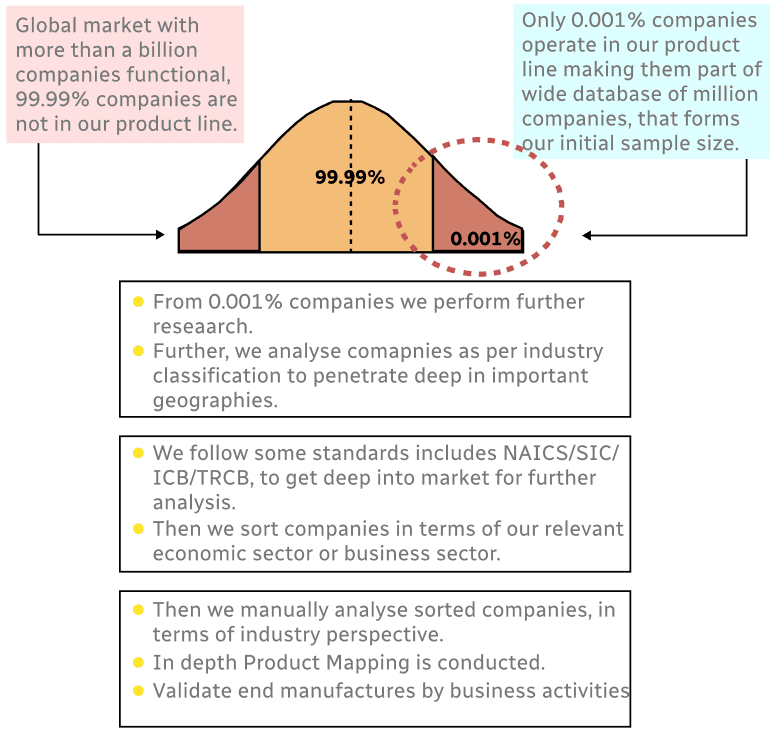
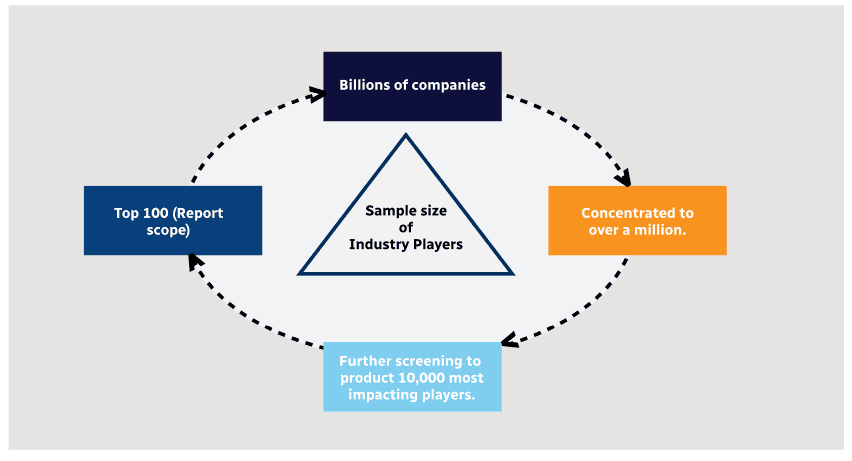
Step 1 - Identification of Relevant Samples Size from Population Database
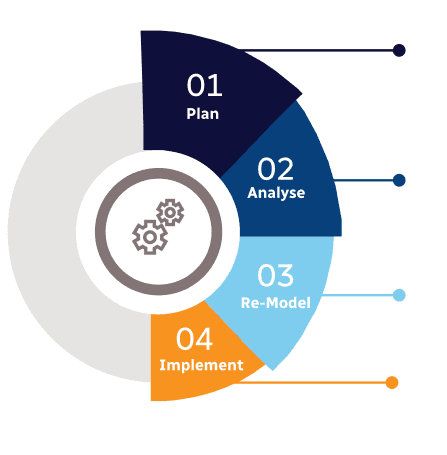
Step 2 - Approaches for Defining Global Market Size (Value, Volume* & Price*)
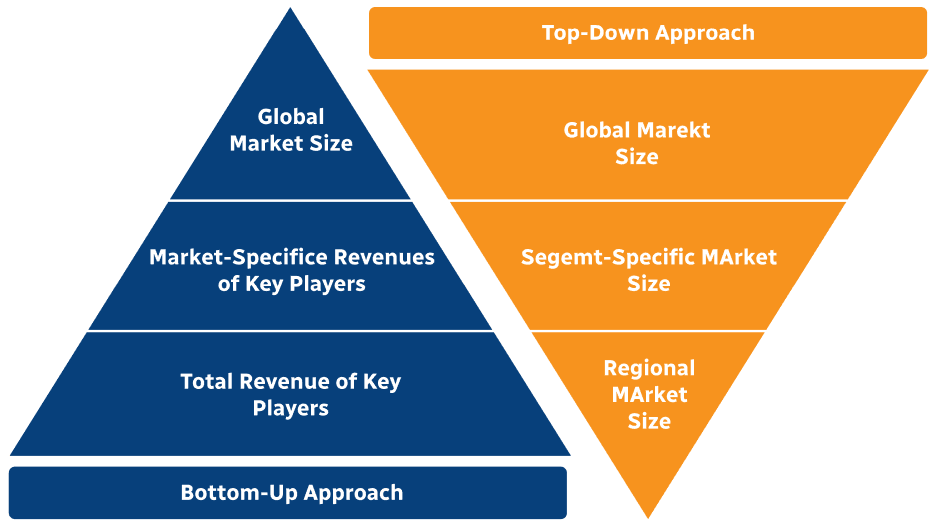
Note*: In applicable scenarios
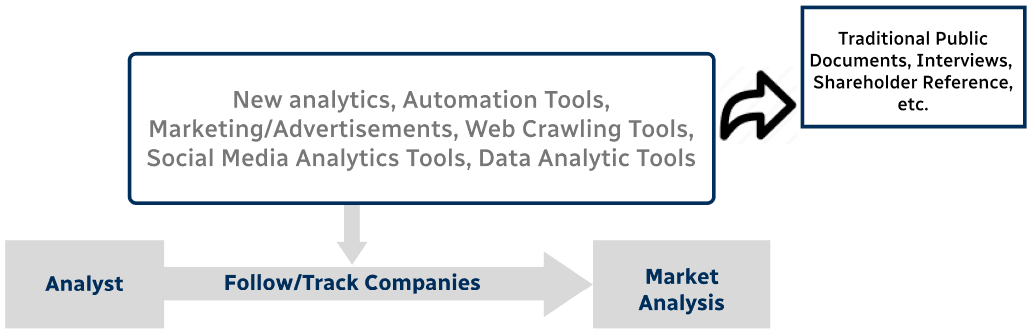
Step 3 - Data Sources
Primary Research
- Web Analytics
- Survey Reports
- Research Institute
- Latest Research Reports
- Opinion Leaders
Secondary Research
- Annual Reports
- White Paper
- Latest Press Release
- Industry Association
- Paid Database
- Investor Presentations
Step 4 - Data Triangulation
Involves using different sources of information in order to increase the validity of a study
These sources are likely to be stakeholders in a program - participants, other researchers, program staff, other community members, and so on.
Then we put all data in single framework & apply various statistical tools to find out the dynamic on the market.
During the analysis stage, feedback from the stakeholder groups would be compared to determine areas of agreement as well as areas of divergence