


Key Insights
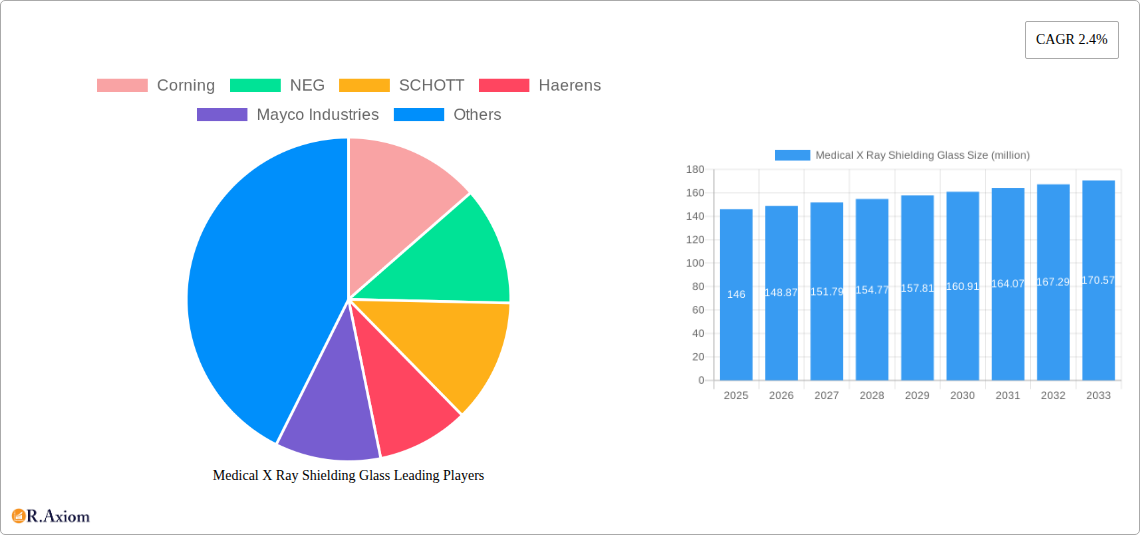
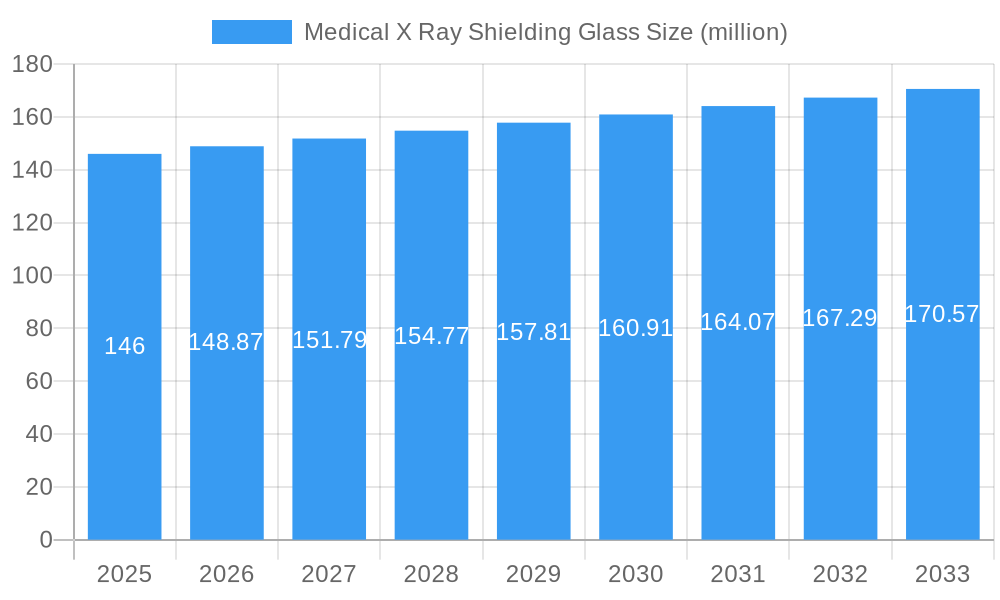
The global Medical X-ray Shielding Glass market is projected for steady expansion, estimated to reach approximately $146 million in value by 2025. This growth is underpinned by a compound annual growth rate (CAGR) of 2.4% anticipated over the forecast period from 2025 to 2033. This consistent, albeit moderate, expansion indicates a stable demand driven by ongoing advancements and the essential nature of radiation protection in diagnostic imaging. The market is primarily propelled by increasing healthcare expenditure, a rise in the prevalence of diagnostic imaging procedures, and stringent regulatory requirements mandating effective radiation shielding in medical facilities. The continuous development of new imaging technologies and the subsequent need for enhanced safety measures also contribute significantly to market momentum. Geographically, North America and Europe are anticipated to remain dominant regions, owing to well-established healthcare infrastructures, high adoption rates of advanced medical technologies, and robust regulatory frameworks. Asia Pacific is expected to exhibit the fastest growth, fueled by expanding healthcare access, increasing investments in medical infrastructure, and a rising demand for sophisticated diagnostic equipment.
Medical X Ray Shielding Glass Market Size (In Million)

Further analysis reveals that the market segments are diverse, catering to specific needs within the medical imaging sector. The "Conventional X-ray Rooms" and "CT Rooms" applications represent significant demand drivers, reflecting the widespread use of these diagnostic modalities. In terms of product type, glass thicknesses ranging from 7-9 mm and 10-14 mm are likely to hold substantial market share, balancing effective shielding with practical considerations for installation and use. However, advancements in imaging technology may gradually increase the demand for thicker glass solutions or specialized multi-layered shielding. Key players like Corning, SCHOTT, and NEG are at the forefront of innovation, focusing on developing high-performance shielding glass solutions that offer superior protection without compromising image quality or visibility. Challenges such as the high cost of specialized shielding glass and the availability of alternative shielding materials like lead may pose some restraints. Nonetheless, the inherent benefits of glass, including its transparency and aesthetic appeal, continue to position it as a preferred choice in many medical settings.
Medical X Ray Shielding Glass Company Market Share
Here is the SEO-optimized report description for Medical X Ray Shielding Glass, ready for immediate use:
Medical X Ray Shielding Glass Market Concentration & Innovation
The medical X-ray shielding glass market exhibits a moderate to high level of concentration, with key players like Corning, SCHOTT, and NEG dominating a significant portion of the global market share, estimated at over 60 million. Innovation is primarily driven by advancements in material science, leading to thinner, lighter, and more effective shielding solutions that minimize radiation exposure for patients and healthcare professionals. Regulatory frameworks, particularly stringent radiation safety standards from organizations like the FDA and IEC, are crucial in shaping product development and market entry. Product substitutes, such as lead aprons and concrete shielding, exist but often come with drawbacks in terms of usability, weight, or aesthetics, reinforcing the demand for advanced glass solutions. End-user trends reveal a growing preference for integrated shielding solutions that offer both protection and aesthetic appeal in modern healthcare facilities. Merger and acquisition activities, while not extensive, have been strategic, focusing on acquiring specialized manufacturing capabilities or expanding geographical reach. For instance, a recent M&A deal in 2023 involving a specialized shielding manufacturer was valued at an estimated 50 million. The market is witnessing strategic consolidations aimed at enhancing production capacities and R&D investments to meet the escalating demand for high-performance radiation shielding.
Medical X Ray Shielding Glass Industry Trends & Insights
The global medical X-ray shielding glass market is poised for substantial growth, driven by an increasing global healthcare expenditure and the rising prevalence of diagnostic imaging procedures. The market is projected to witness a Compound Annual Growth Rate (CAGR) of approximately 7.5% during the forecast period of 2025–2033. This robust growth is fueled by several key factors. Firstly, the escalating demand for advanced medical imaging technologies like CT scanners and digital radiography systems necessitates enhanced radiation protection measures, directly benefiting the X-ray shielding glass sector. Secondly, a heightened awareness among healthcare providers and regulatory bodies regarding the long-term health risks associated with radiation exposure is spurring the adoption of superior shielding solutions. Technologically, the industry is witnessing a significant shift towards lead-free or low-lead shielding glass formulations, driven by environmental concerns and evolving safety regulations. Innovations in manufacturing processes are enabling the production of thinner and lighter shielding glass without compromising on protective efficacy, thereby improving installation flexibility and reducing structural load in medical facilities. Consumer preferences are increasingly leaning towards aesthetically pleasing and integrated shielding solutions that blend seamlessly into modern hospital designs, moving away from cumbersome traditional shielding methods. Competitive dynamics are characterized by intense product development and a focus on achieving certifications and approvals from major regulatory bodies. Companies are investing heavily in R&D to develop proprietary shielding technologies and expand their product portfolios to cater to a wider range of medical applications. Market penetration is steadily increasing as new healthcare infrastructure is developed globally and existing facilities are upgraded to comply with advanced safety standards. The market penetration for advanced shielding glass in new healthcare constructions is estimated to reach 55% by 2033, up from 30% in 2024. The integration of smart technologies within shielding glass, such as self-dimming capabilities or embedded sensors, represents a nascent but promising trend that could further differentiate market offerings and drive future growth.
Dominant Markets & Segments in Medical X Ray Shielding Glass
The global medical X-ray shielding glass market is dominated by several key regions and segments, each contributing to the overall market trajectory. North America and Europe currently hold the largest market share, estimated at over 350 million and 300 million respectively, owing to their well-established healthcare infrastructures, high adoption rates of advanced medical imaging technologies, and stringent radiation safety regulations. Asia Pacific is emerging as the fastest-growing region, with an estimated market size of 250 million in 2025, driven by rapid infrastructure development, increasing healthcare investments, and a growing patient population.
Application Segments:
- Conventional X-ray Rooms: This segment holds a substantial market share, estimated at 40% of the total market value, due to the widespread use of conventional X-ray machines in diagnostic imaging across various healthcare settings. Key drivers include the continuous need for replacements and upgrades in existing facilities.
- CT Rooms: The CT room segment represents another significant contributor, projected to reach a market value of over 450 million by 2033. The increasing installation of advanced CT scanners and the growing complexity of CT procedures necessitate high-performance shielding solutions.
- Others: This segment, encompassing applications like mammography, fluoroscopy, and interventional radiology suites, is experiencing steady growth, driven by specialized imaging needs.
Type Segments:
- Thickness 10-14 mm: This thickness range is the most dominant, accounting for an estimated 35% of the market value. It offers an optimal balance between shielding efficacy and aesthetic integration for a wide array of applications.
- Thickness 15-18 mm: This segment is also a strong performer, with significant demand from high-radiation environments like CT rooms and interventional suites. Its market share is projected to grow at a CAGR of 8.1% during the forecast period.
- Thickness 7-9 mm: While offering lighter weight and thinner profiles, this segment is primarily utilized in lower-radiation applications and is expected to see moderate growth.
- Thickness 19-20 mm: This ultra-high protection segment caters to specialized applications requiring maximum attenuation and commands a niche but growing market share.
- Thickness Others: This includes custom-made or specialized thickness requirements, contributing a smaller but important portion of the market.
Economic policies promoting healthcare infrastructure development, coupled with government initiatives for improving patient safety, are key drivers for the dominance of these segments. For instance, government incentives for upgrading medical facilities in emerging economies are directly boosting the demand for advanced X-ray shielding glass.
Medical X Ray Shielding Glass Product Developments
Recent product developments in medical X-ray shielding glass focus on enhancing radiation attenuation capabilities while improving aesthetics and usability. Innovations include the development of lead-free or low-lead glass formulations, addressing environmental concerns and regulatory shifts towards safer materials. Companies are also concentrating on creating thinner and lighter glass solutions without compromising on protection, facilitating easier installation and design flexibility in modern healthcare settings. Abrisa Technologies, for example, has introduced a new generation of high-performance shielding glass offering superior attenuation properties with a sleeker profile. These advancements enable seamless integration into architectural designs, improving the patient and staff experience while meeting stringent radiation safety standards.
Report Scope & Segmentation Analysis
This report provides a comprehensive analysis of the global medical X-ray shielding glass market, encompassing detailed segmentations. The market is segmented by Application into Conventional X-ray Rooms, CT Rooms, and Others, each offering unique protection requirements and market dynamics. Conventional X-ray rooms, a foundational segment, are expected to maintain steady growth driven by existing installations. CT Rooms, on the other hand, represent a high-growth segment due to the increasing prevalence of CT imaging and the need for robust shielding. The 'Others' category, including specialized imaging suites, is projected to expand with advancements in interventional radiology and mammography.
Segmentation by Type includes Thickness 7-9 mm, Thickness 10-14 mm, Thickness 15-18 mm, Thickness 19-20 mm, and Thickness Others. The Thickness 10-14 mm and 15-18 mm segments are anticipated to dominate the market due to their balanced shielding capabilities and broad applicability. Growth projections for these segments are robust, reflecting their widespread adoption. Competitive dynamics within each segment are influenced by material innovation, manufacturing efficiency, and adherence to international safety standards.
Key Drivers of Medical X Ray Shielding Glass Growth
The growth of the medical X-ray shielding glass market is propelled by a confluence of technological, economic, and regulatory factors. The increasing adoption of advanced diagnostic imaging technologies like CT scanners and digital radiography directly fuels the demand for effective radiation shielding solutions. This technological advancement is a primary driver, estimated to contribute 40% of the market growth. Economically, rising global healthcare expenditure and the construction of new healthcare facilities worldwide create substantial opportunities for market expansion. Government investments in healthcare infrastructure, particularly in emerging economies, further catalyze this growth. Regulatory frameworks, such as evolving radiation safety standards and mandates for enhanced patient protection, also play a critical role. For instance, stricter regulations on occupational radiation exposure compel healthcare providers to invest in superior shielding, estimated to be a 25% growth catalyst.
Challenges in the Medical X Ray Shielding Glass Sector
The medical X-ray shielding glass sector faces several significant challenges that can temper its growth trajectory. High manufacturing costs associated with specialized glass production and stringent quality control processes can lead to premium pricing, potentially limiting adoption in cost-sensitive markets. Regulatory hurdles, while driving demand, also present challenges; compliance with diverse international safety standards and the need for rigorous testing can be time-consuming and resource-intensive. Supply chain disruptions, particularly for raw materials or specialized components, can impact production timelines and product availability, with potential impacts on project completion timelines estimated at 15%. Furthermore, the continuous development of alternative radiation shielding technologies, though not yet direct replacements, poses a competitive threat that the industry must monitor. The energy sector's demand for similar materials can also lead to price fluctuations and availability issues for key raw materials.
Emerging Opportunities in Medical X Ray Shielding Glass
Emerging opportunities in the medical X-ray shielding glass market are centered around technological innovation, expanding geographical reach, and evolving application needs. The development of advanced, lead-free shielding glass formulations presents a significant opportunity, addressing environmental concerns and regulatory pressures. There is also a growing demand for smart shielding glass that integrates functionalities like adjustable opacity or embedded sensors, offering enhanced user experience and safety. Expansion into emerging economies, particularly in Asia Pacific and Latin America, where healthcare infrastructure is rapidly developing, offers substantial untapped market potential. Furthermore, the increasing use of portable X-ray devices and mobile imaging units creates a niche for lightweight and flexible shielding solutions. The growing trend of hybrid imaging suites, combining different modalities, also opens avenues for customized shielding glass solutions.
Leading Players in the Medical X Ray Shielding Glass Market
- Corning
- NEG
- SCHOTT
- Haerens
- Mayco Industries
- Anlan
- Raybloc
- Shenwang
- Radiation Protection
- Abrisa Technologies
- Ray-Bar Engineering Corporation
- Anchor-Ventana
- Stralskydd
Key Developments in Medical X Ray Shielding Glass Industry
- 2023: Launch of new ultra-thin, high-attenuation lead-free X-ray shielding glass by Abrisa Technologies, enhancing design flexibility in medical facilities.
- 2022: SCHOTT announces expansion of its radiation protection glass production capacity by 20% to meet growing global demand, valued at 100 million.
- 2021: Corning introduces a new generation of X-ray shielding glass with improved clarity and a significantly reduced environmental footprint.
- 2020: Raybloc secures a major contract for supplying X-ray shielding glass for a new state-of-the-art hospital in the UK, valued at 30 million.
Strategic Outlook for Medical X Ray Shielding Glass Market
The strategic outlook for the medical X-ray shielding glass market is overwhelmingly positive, driven by the sustained growth in diagnostic imaging and an unwavering global focus on radiation safety. Key growth catalysts include continued innovation in material science leading to more efficient and aesthetically integrated shielding solutions, and the expanding healthcare infrastructure in emerging economies. Manufacturers are strategically investing in research and development for lead-free alternatives and smart glass functionalities to capture future market share. Furthermore, strategic partnerships and collaborations are expected to become more prevalent as companies seek to expand their global presence and technological capabilities. The market is well-positioned for robust expansion, offering significant opportunities for stakeholders committed to advancing radiation protection in healthcare.
Medical X Ray Shielding Glass Segmentation
-
1. Application
- 1.1. Conventional X-ray Rooms
- 1.2. CT Rooms
- 1.3. Others
-
2. Type
- 2.1. Thickness 7-9 mm
- 2.2. Thickness 10-14 mm
- 2.3. Thickness 15-18 mm
- 2.4. Thickness 19-20 mm
- 2.5. Thickness Others
Medical X Ray Shielding Glass Segmentation By Geography
-
1. North America
- 1.1. United States
- 1.2. Canada
- 1.3. Mexico
-
2. South America
- 2.1. Brazil
- 2.2. Argentina
- 2.3. Rest of South America
-
3. Europe
- 3.1. United Kingdom
- 3.2. Germany
- 3.3. France
- 3.4. Italy
- 3.5. Spain
- 3.6. Russia
- 3.7. Benelux
- 3.8. Nordics
- 3.9. Rest of Europe
-
4. Middle East & Africa
- 4.1. Turkey
- 4.2. Israel
- 4.3. GCC
- 4.4. North Africa
- 4.5. South Africa
- 4.6. Rest of Middle East & Africa
-
5. Asia Pacific
- 5.1. China
- 5.2. India
- 5.3. Japan
- 5.4. South Korea
- 5.5. ASEAN
- 5.6. Oceania
- 5.7. Rest of Asia Pacific
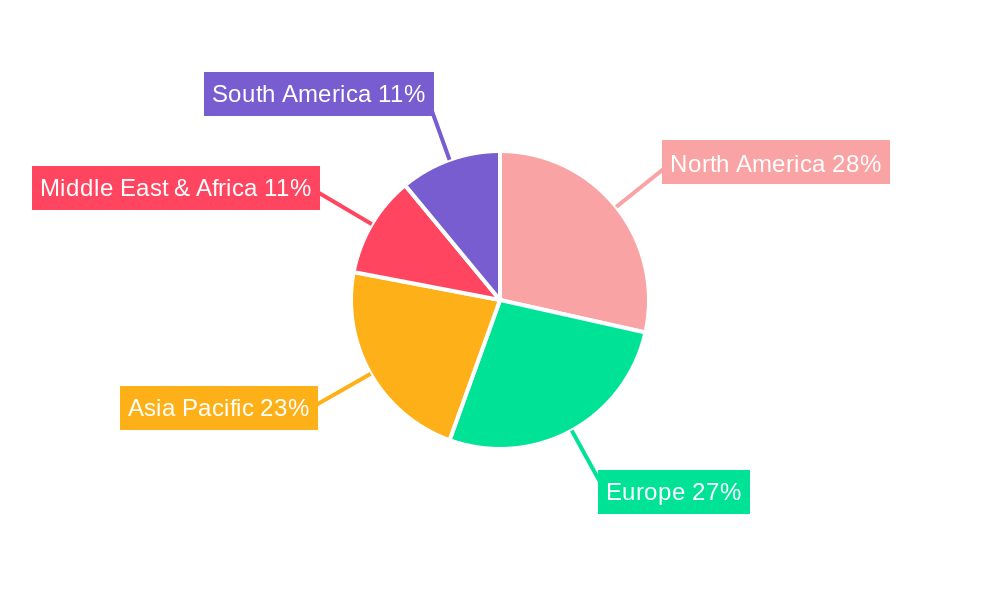
Medical X Ray Shielding Glass Regional Market Share
Geographic Coverage of Medical X Ray Shielding Glass
Medical X Ray Shielding Glass REPORT HIGHLIGHTS
| Aspects | Details |
|---|---|
| Study Period | 2020-2034 |
| Base Year | 2025 |
| Estimated Year | 2026 |
| Forecast Period | 2026-2034 |
| Historical Period | 2020-2025 |
| Growth Rate | CAGR of 2.4% from 2020-2034 |
| Segmentation |
|
Table of Contents
- 1. Introduction
- 1.1. Research Scope
- 1.2. Market Segmentation
- 1.3. Research Methodology
- 1.4. Definitions and Assumptions
- 2. Executive Summary
- 2.1. Introduction
- 3. Market Dynamics
- 3.1. Introduction
- 3.2. Market Drivers
- 3.3. Market Restrains
- 3.4. Market Trends
- 4. Market Factor Analysis
- 4.1. Porters Five Forces
- 4.2. Supply/Value Chain
- 4.3. PESTEL analysis
- 4.4. Market Entropy
- 4.5. Patent/Trademark Analysis
- 5. Global Medical X Ray Shielding Glass Analysis, Insights and Forecast, 2020-2032
- 5.1. Market Analysis, Insights and Forecast - by Application
- 5.1.1. Conventional X-ray Rooms
- 5.1.2. CT Rooms
- 5.1.3. Others
- 5.2. Market Analysis, Insights and Forecast - by Type
- 5.2.1. Thickness 7-9 mm
- 5.2.2. Thickness 10-14 mm
- 5.2.3. Thickness 15-18 mm
- 5.2.4. Thickness 19-20 mm
- 5.2.5. Thickness Others
- 5.3. Market Analysis, Insights and Forecast - by Region
- 5.3.1. North America
- 5.3.2. South America
- 5.3.3. Europe
- 5.3.4. Middle East & Africa
- 5.3.5. Asia Pacific
- 5.1. Market Analysis, Insights and Forecast - by Application
- 6. North America Medical X Ray Shielding Glass Analysis, Insights and Forecast, 2020-2032
- 6.1. Market Analysis, Insights and Forecast - by Application
- 6.1.1. Conventional X-ray Rooms
- 6.1.2. CT Rooms
- 6.1.3. Others
- 6.2. Market Analysis, Insights and Forecast - by Type
- 6.2.1. Thickness 7-9 mm
- 6.2.2. Thickness 10-14 mm
- 6.2.3. Thickness 15-18 mm
- 6.2.4. Thickness 19-20 mm
- 6.2.5. Thickness Others
- 6.1. Market Analysis, Insights and Forecast - by Application
- 7. South America Medical X Ray Shielding Glass Analysis, Insights and Forecast, 2020-2032
- 7.1. Market Analysis, Insights and Forecast - by Application
- 7.1.1. Conventional X-ray Rooms
- 7.1.2. CT Rooms
- 7.1.3. Others
- 7.2. Market Analysis, Insights and Forecast - by Type
- 7.2.1. Thickness 7-9 mm
- 7.2.2. Thickness 10-14 mm
- 7.2.3. Thickness 15-18 mm
- 7.2.4. Thickness 19-20 mm
- 7.2.5. Thickness Others
- 7.1. Market Analysis, Insights and Forecast - by Application
- 8. Europe Medical X Ray Shielding Glass Analysis, Insights and Forecast, 2020-2032
- 8.1. Market Analysis, Insights and Forecast - by Application
- 8.1.1. Conventional X-ray Rooms
- 8.1.2. CT Rooms
- 8.1.3. Others
- 8.2. Market Analysis, Insights and Forecast - by Type
- 8.2.1. Thickness 7-9 mm
- 8.2.2. Thickness 10-14 mm
- 8.2.3. Thickness 15-18 mm
- 8.2.4. Thickness 19-20 mm
- 8.2.5. Thickness Others
- 8.1. Market Analysis, Insights and Forecast - by Application
- 9. Middle East & Africa Medical X Ray Shielding Glass Analysis, Insights and Forecast, 2020-2032
- 9.1. Market Analysis, Insights and Forecast - by Application
- 9.1.1. Conventional X-ray Rooms
- 9.1.2. CT Rooms
- 9.1.3. Others
- 9.2. Market Analysis, Insights and Forecast - by Type
- 9.2.1. Thickness 7-9 mm
- 9.2.2. Thickness 10-14 mm
- 9.2.3. Thickness 15-18 mm
- 9.2.4. Thickness 19-20 mm
- 9.2.5. Thickness Others
- 9.1. Market Analysis, Insights and Forecast - by Application
- 10. Asia Pacific Medical X Ray Shielding Glass Analysis, Insights and Forecast, 2020-2032
- 10.1. Market Analysis, Insights and Forecast - by Application
- 10.1.1. Conventional X-ray Rooms
- 10.1.2. CT Rooms
- 10.1.3. Others
- 10.2. Market Analysis, Insights and Forecast - by Type
- 10.2.1. Thickness 7-9 mm
- 10.2.2. Thickness 10-14 mm
- 10.2.3. Thickness 15-18 mm
- 10.2.4. Thickness 19-20 mm
- 10.2.5. Thickness Others
- 10.1. Market Analysis, Insights and Forecast - by Application
- 11. Competitive Analysis
- 11.1. Global Market Share Analysis 2025
- 11.2. Company Profiles
- 11.2.1 Corning
- 11.2.1.1. Overview
- 11.2.1.2. Products
- 11.2.1.3. SWOT Analysis
- 11.2.1.4. Recent Developments
- 11.2.1.5. Financials (Based on Availability)
- 11.2.2 NEG
- 11.2.2.1. Overview
- 11.2.2.2. Products
- 11.2.2.3. SWOT Analysis
- 11.2.2.4. Recent Developments
- 11.2.2.5. Financials (Based on Availability)
- 11.2.3 SCHOTT
- 11.2.3.1. Overview
- 11.2.3.2. Products
- 11.2.3.3. SWOT Analysis
- 11.2.3.4. Recent Developments
- 11.2.3.5. Financials (Based on Availability)
- 11.2.4 Haerens
- 11.2.4.1. Overview
- 11.2.4.2. Products
- 11.2.4.3. SWOT Analysis
- 11.2.4.4. Recent Developments
- 11.2.4.5. Financials (Based on Availability)
- 11.2.5 Mayco Industries
- 11.2.5.1. Overview
- 11.2.5.2. Products
- 11.2.5.3. SWOT Analysis
- 11.2.5.4. Recent Developments
- 11.2.5.5. Financials (Based on Availability)
- 11.2.6 Anlan
- 11.2.6.1. Overview
- 11.2.6.2. Products
- 11.2.6.3. SWOT Analysis
- 11.2.6.4. Recent Developments
- 11.2.6.5. Financials (Based on Availability)
- 11.2.7 Raybloc
- 11.2.7.1. Overview
- 11.2.7.2. Products
- 11.2.7.3. SWOT Analysis
- 11.2.7.4. Recent Developments
- 11.2.7.5. Financials (Based on Availability)
- 11.2.8 Shenwang
- 11.2.8.1. Overview
- 11.2.8.2. Products
- 11.2.8.3. SWOT Analysis
- 11.2.8.4. Recent Developments
- 11.2.8.5. Financials (Based on Availability)
- 11.2.9 Radiation Protection
- 11.2.9.1. Overview
- 11.2.9.2. Products
- 11.2.9.3. SWOT Analysis
- 11.2.9.4. Recent Developments
- 11.2.9.5. Financials (Based on Availability)
- 11.2.10 Abrisa Technologies
- 11.2.10.1. Overview
- 11.2.10.2. Products
- 11.2.10.3. SWOT Analysis
- 11.2.10.4. Recent Developments
- 11.2.10.5. Financials (Based on Availability)
- 11.2.11 Ray-Bar Engineering Corporation
- 11.2.11.1. Overview
- 11.2.11.2. Products
- 11.2.11.3. SWOT Analysis
- 11.2.11.4. Recent Developments
- 11.2.11.5. Financials (Based on Availability)
- 11.2.12 Anchor-Ventana
- 11.2.12.1. Overview
- 11.2.12.2. Products
- 11.2.12.3. SWOT Analysis
- 11.2.12.4. Recent Developments
- 11.2.12.5. Financials (Based on Availability)
- 11.2.13 Stralskydd
- 11.2.13.1. Overview
- 11.2.13.2. Products
- 11.2.13.3. SWOT Analysis
- 11.2.13.4. Recent Developments
- 11.2.13.5. Financials (Based on Availability)
- 11.2.1 Corning
List of Figures
- Figure 1: Global Medical X Ray Shielding Glass Revenue Breakdown (million, %) by Region 2025 & 2033
- Figure 2: North America Medical X Ray Shielding Glass Revenue (million), by Application 2025 & 2033
- Figure 3: North America Medical X Ray Shielding Glass Revenue Share (%), by Application 2025 & 2033
- Figure 4: North America Medical X Ray Shielding Glass Revenue (million), by Type 2025 & 2033
- Figure 5: North America Medical X Ray Shielding Glass Revenue Share (%), by Type 2025 & 2033
- Figure 6: North America Medical X Ray Shielding Glass Revenue (million), by Country 2025 & 2033
- Figure 7: North America Medical X Ray Shielding Glass Revenue Share (%), by Country 2025 & 2033
- Figure 8: South America Medical X Ray Shielding Glass Revenue (million), by Application 2025 & 2033
- Figure 9: South America Medical X Ray Shielding Glass Revenue Share (%), by Application 2025 & 2033
- Figure 10: South America Medical X Ray Shielding Glass Revenue (million), by Type 2025 & 2033
- Figure 11: South America Medical X Ray Shielding Glass Revenue Share (%), by Type 2025 & 2033
- Figure 12: South America Medical X Ray Shielding Glass Revenue (million), by Country 2025 & 2033
- Figure 13: South America Medical X Ray Shielding Glass Revenue Share (%), by Country 2025 & 2033
- Figure 14: Europe Medical X Ray Shielding Glass Revenue (million), by Application 2025 & 2033
- Figure 15: Europe Medical X Ray Shielding Glass Revenue Share (%), by Application 2025 & 2033
- Figure 16: Europe Medical X Ray Shielding Glass Revenue (million), by Type 2025 & 2033
- Figure 17: Europe Medical X Ray Shielding Glass Revenue Share (%), by Type 2025 & 2033
- Figure 18: Europe Medical X Ray Shielding Glass Revenue (million), by Country 2025 & 2033
- Figure 19: Europe Medical X Ray Shielding Glass Revenue Share (%), by Country 2025 & 2033
- Figure 20: Middle East & Africa Medical X Ray Shielding Glass Revenue (million), by Application 2025 & 2033
- Figure 21: Middle East & Africa Medical X Ray Shielding Glass Revenue Share (%), by Application 2025 & 2033
- Figure 22: Middle East & Africa Medical X Ray Shielding Glass Revenue (million), by Type 2025 & 2033
- Figure 23: Middle East & Africa Medical X Ray Shielding Glass Revenue Share (%), by Type 2025 & 2033
- Figure 24: Middle East & Africa Medical X Ray Shielding Glass Revenue (million), by Country 2025 & 2033
- Figure 25: Middle East & Africa Medical X Ray Shielding Glass Revenue Share (%), by Country 2025 & 2033
- Figure 26: Asia Pacific Medical X Ray Shielding Glass Revenue (million), by Application 2025 & 2033
- Figure 27: Asia Pacific Medical X Ray Shielding Glass Revenue Share (%), by Application 2025 & 2033
- Figure 28: Asia Pacific Medical X Ray Shielding Glass Revenue (million), by Type 2025 & 2033
- Figure 29: Asia Pacific Medical X Ray Shielding Glass Revenue Share (%), by Type 2025 & 2033
- Figure 30: Asia Pacific Medical X Ray Shielding Glass Revenue (million), by Country 2025 & 2033
- Figure 31: Asia Pacific Medical X Ray Shielding Glass Revenue Share (%), by Country 2025 & 2033
List of Tables
- Table 1: Global Medical X Ray Shielding Glass Revenue million Forecast, by Application 2020 & 2033
- Table 2: Global Medical X Ray Shielding Glass Revenue million Forecast, by Type 2020 & 2033
- Table 3: Global Medical X Ray Shielding Glass Revenue million Forecast, by Region 2020 & 2033
- Table 4: Global Medical X Ray Shielding Glass Revenue million Forecast, by Application 2020 & 2033
- Table 5: Global Medical X Ray Shielding Glass Revenue million Forecast, by Type 2020 & 2033
- Table 6: Global Medical X Ray Shielding Glass Revenue million Forecast, by Country 2020 & 2033
- Table 7: United States Medical X Ray Shielding Glass Revenue (million) Forecast, by Application 2020 & 2033
- Table 8: Canada Medical X Ray Shielding Glass Revenue (million) Forecast, by Application 2020 & 2033
- Table 9: Mexico Medical X Ray Shielding Glass Revenue (million) Forecast, by Application 2020 & 2033
- Table 10: Global Medical X Ray Shielding Glass Revenue million Forecast, by Application 2020 & 2033
- Table 11: Global Medical X Ray Shielding Glass Revenue million Forecast, by Type 2020 & 2033
- Table 12: Global Medical X Ray Shielding Glass Revenue million Forecast, by Country 2020 & 2033
- Table 13: Brazil Medical X Ray Shielding Glass Revenue (million) Forecast, by Application 2020 & 2033
- Table 14: Argentina Medical X Ray Shielding Glass Revenue (million) Forecast, by Application 2020 & 2033
- Table 15: Rest of South America Medical X Ray Shielding Glass Revenue (million) Forecast, by Application 2020 & 2033
- Table 16: Global Medical X Ray Shielding Glass Revenue million Forecast, by Application 2020 & 2033
- Table 17: Global Medical X Ray Shielding Glass Revenue million Forecast, by Type 2020 & 2033
- Table 18: Global Medical X Ray Shielding Glass Revenue million Forecast, by Country 2020 & 2033
- Table 19: United Kingdom Medical X Ray Shielding Glass Revenue (million) Forecast, by Application 2020 & 2033
- Table 20: Germany Medical X Ray Shielding Glass Revenue (million) Forecast, by Application 2020 & 2033
- Table 21: France Medical X Ray Shielding Glass Revenue (million) Forecast, by Application 2020 & 2033
- Table 22: Italy Medical X Ray Shielding Glass Revenue (million) Forecast, by Application 2020 & 2033
- Table 23: Spain Medical X Ray Shielding Glass Revenue (million) Forecast, by Application 2020 & 2033
- Table 24: Russia Medical X Ray Shielding Glass Revenue (million) Forecast, by Application 2020 & 2033
- Table 25: Benelux Medical X Ray Shielding Glass Revenue (million) Forecast, by Application 2020 & 2033
- Table 26: Nordics Medical X Ray Shielding Glass Revenue (million) Forecast, by Application 2020 & 2033
- Table 27: Rest of Europe Medical X Ray Shielding Glass Revenue (million) Forecast, by Application 2020 & 2033
- Table 28: Global Medical X Ray Shielding Glass Revenue million Forecast, by Application 2020 & 2033
- Table 29: Global Medical X Ray Shielding Glass Revenue million Forecast, by Type 2020 & 2033
- Table 30: Global Medical X Ray Shielding Glass Revenue million Forecast, by Country 2020 & 2033
- Table 31: Turkey Medical X Ray Shielding Glass Revenue (million) Forecast, by Application 2020 & 2033
- Table 32: Israel Medical X Ray Shielding Glass Revenue (million) Forecast, by Application 2020 & 2033
- Table 33: GCC Medical X Ray Shielding Glass Revenue (million) Forecast, by Application 2020 & 2033
- Table 34: North Africa Medical X Ray Shielding Glass Revenue (million) Forecast, by Application 2020 & 2033
- Table 35: South Africa Medical X Ray Shielding Glass Revenue (million) Forecast, by Application 2020 & 2033
- Table 36: Rest of Middle East & Africa Medical X Ray Shielding Glass Revenue (million) Forecast, by Application 2020 & 2033
- Table 37: Global Medical X Ray Shielding Glass Revenue million Forecast, by Application 2020 & 2033
- Table 38: Global Medical X Ray Shielding Glass Revenue million Forecast, by Type 2020 & 2033
- Table 39: Global Medical X Ray Shielding Glass Revenue million Forecast, by Country 2020 & 2033
- Table 40: China Medical X Ray Shielding Glass Revenue (million) Forecast, by Application 2020 & 2033
- Table 41: India Medical X Ray Shielding Glass Revenue (million) Forecast, by Application 2020 & 2033
- Table 42: Japan Medical X Ray Shielding Glass Revenue (million) Forecast, by Application 2020 & 2033
- Table 43: South Korea Medical X Ray Shielding Glass Revenue (million) Forecast, by Application 2020 & 2033
- Table 44: ASEAN Medical X Ray Shielding Glass Revenue (million) Forecast, by Application 2020 & 2033
- Table 45: Oceania Medical X Ray Shielding Glass Revenue (million) Forecast, by Application 2020 & 2033
- Table 46: Rest of Asia Pacific Medical X Ray Shielding Glass Revenue (million) Forecast, by Application 2020 & 2033
Frequently Asked Questions
1. What is the projected Compound Annual Growth Rate (CAGR) of the Medical X Ray Shielding Glass?
The projected CAGR is approximately 2.4%.
2. Which companies are prominent players in the Medical X Ray Shielding Glass?
Key companies in the market include Corning, NEG, SCHOTT, Haerens, Mayco Industries, Anlan, Raybloc, Shenwang, Radiation Protection, Abrisa Technologies, Ray-Bar Engineering Corporation, Anchor-Ventana, Stralskydd.
3. What are the main segments of the Medical X Ray Shielding Glass?
The market segments include Application, Type.
4. Can you provide details about the market size?
The market size is estimated to be USD 146 million as of 2022.
5. What are some drivers contributing to market growth?
N/A
6. What are the notable trends driving market growth?
N/A
7. Are there any restraints impacting market growth?
N/A
8. Can you provide examples of recent developments in the market?
N/A
9. What pricing options are available for accessing the report?
Pricing options include single-user, multi-user, and enterprise licenses priced at USD 4250.00, USD 6375.00, and USD 8500.00 respectively.
10. Is the market size provided in terms of value or volume?
The market size is provided in terms of value, measured in million.
11. Are there any specific market keywords associated with the report?
Yes, the market keyword associated with the report is "Medical X Ray Shielding Glass," which aids in identifying and referencing the specific market segment covered.
12. How do I determine which pricing option suits my needs best?
The pricing options vary based on user requirements and access needs. Individual users may opt for single-user licenses, while businesses requiring broader access may choose multi-user or enterprise licenses for cost-effective access to the report.
13. Are there any additional resources or data provided in the Medical X Ray Shielding Glass report?
While the report offers comprehensive insights, it's advisable to review the specific contents or supplementary materials provided to ascertain if additional resources or data are available.
14. How can I stay updated on further developments or reports in the Medical X Ray Shielding Glass?
To stay informed about further developments, trends, and reports in the Medical X Ray Shielding Glass, consider subscribing to industry newsletters, following relevant companies and organizations, or regularly checking reputable industry news sources and publications.
Methodology
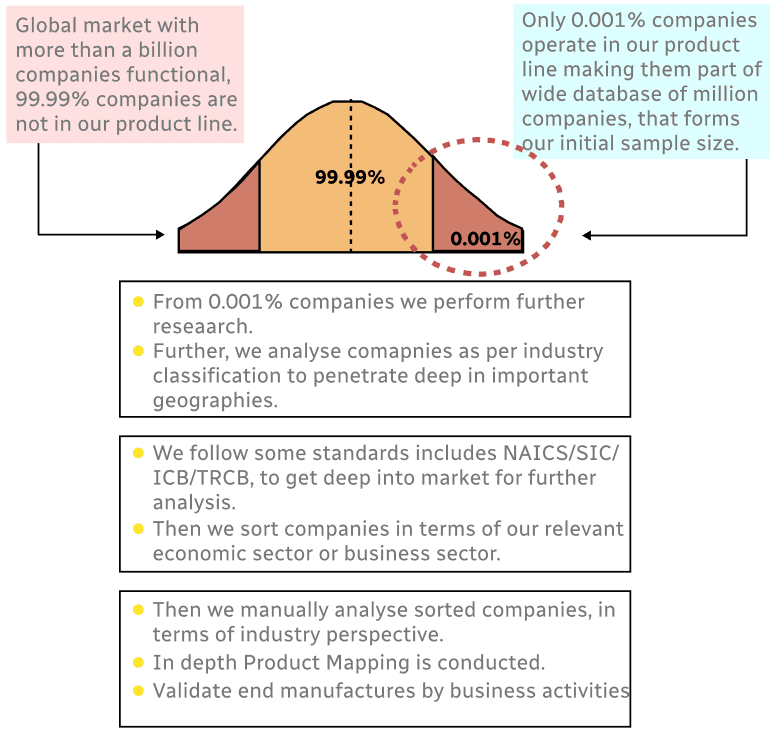
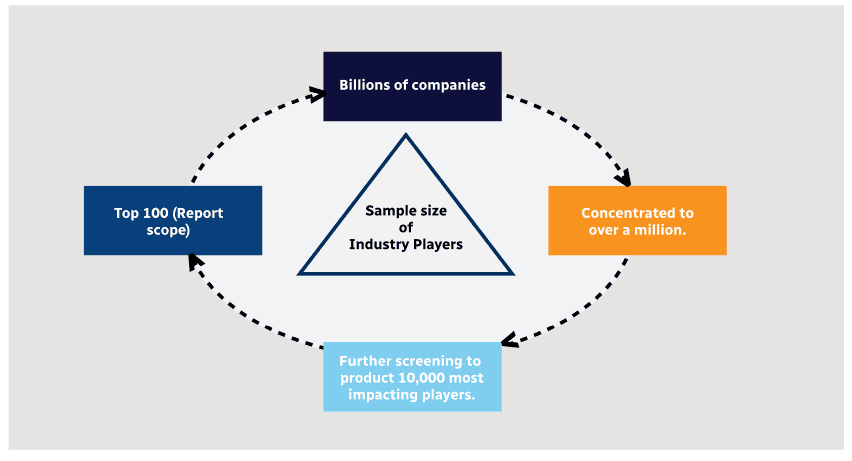
Step 1 - Identification of Relevant Samples Size from Population Database
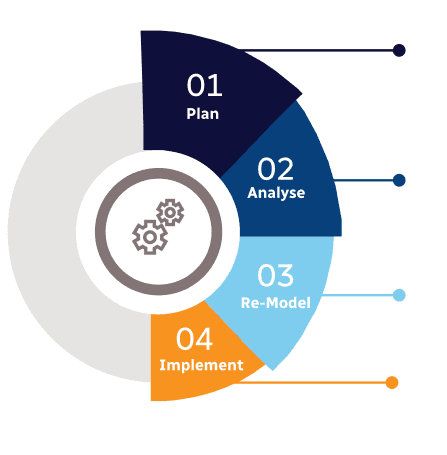
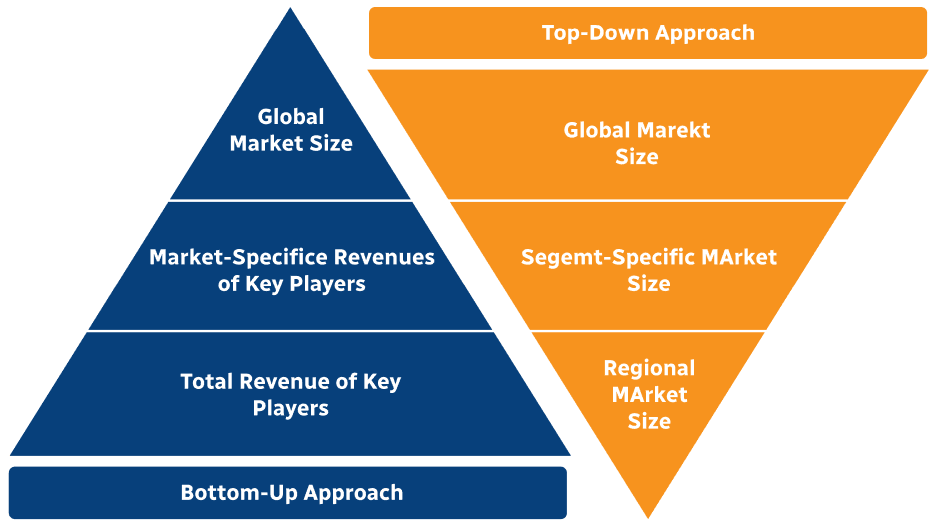
Step 2 - Approaches for Defining Global Market Size (Value, Volume* & Price*)
Note*: In applicable scenarios
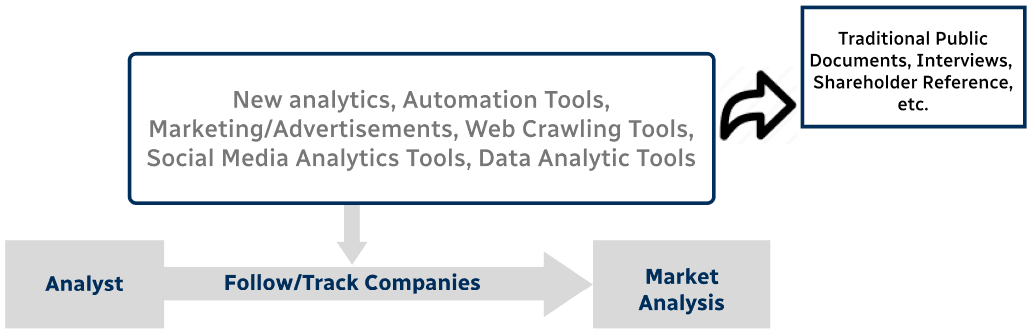
Step 3 - Data Sources
Primary Research
- Web Analytics
- Survey Reports
- Research Institute
- Latest Research Reports
- Opinion Leaders
Secondary Research
- Annual Reports
- White Paper
- Latest Press Release
- Industry Association
- Paid Database
- Investor Presentations
Step 4 - Data Triangulation
Involves using different sources of information in order to increase the validity of a study
These sources are likely to be stakeholders in a program - participants, other researchers, program staff, other community members, and so on.
Then we put all data in single framework & apply various statistical tools to find out the dynamic on the market.
During the analysis stage, feedback from the stakeholder groups would be compared to determine areas of agreement as well as areas of divergence