


Key Insights
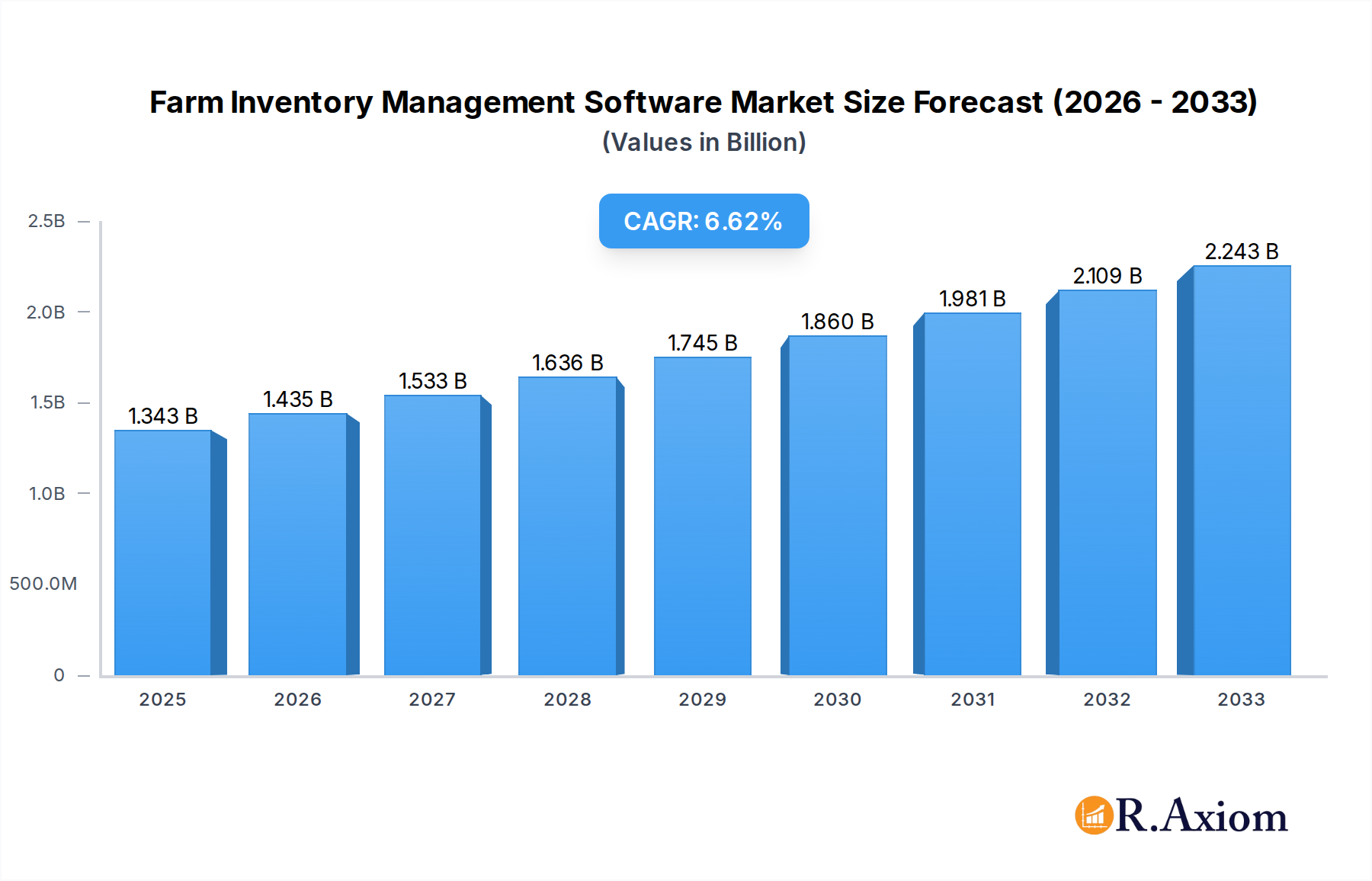
The global Farm Inventory Management Software market is poised for significant expansion, projected to reach an estimated $1343 million by the end of 2025, and is expected to grow at a robust Compound Annual Growth Rate (CAGR) of 6.8% through 2033. This substantial market value underscores the increasing adoption of digital solutions in agriculture to optimize operational efficiency and profitability. Key drivers propelling this growth include the escalating need for precise crop monitoring, streamlined resource allocation, and enhanced traceability throughout the agricultural supply chain. The software facilitates better decision-making by providing real-time insights into inventory levels, preventing wastage, and ensuring timely procurement of inputs. Furthermore, the growing trend of precision agriculture and the demand for sustainable farming practices are creating a fertile ground for the widespread implementation of these advanced inventory management tools.
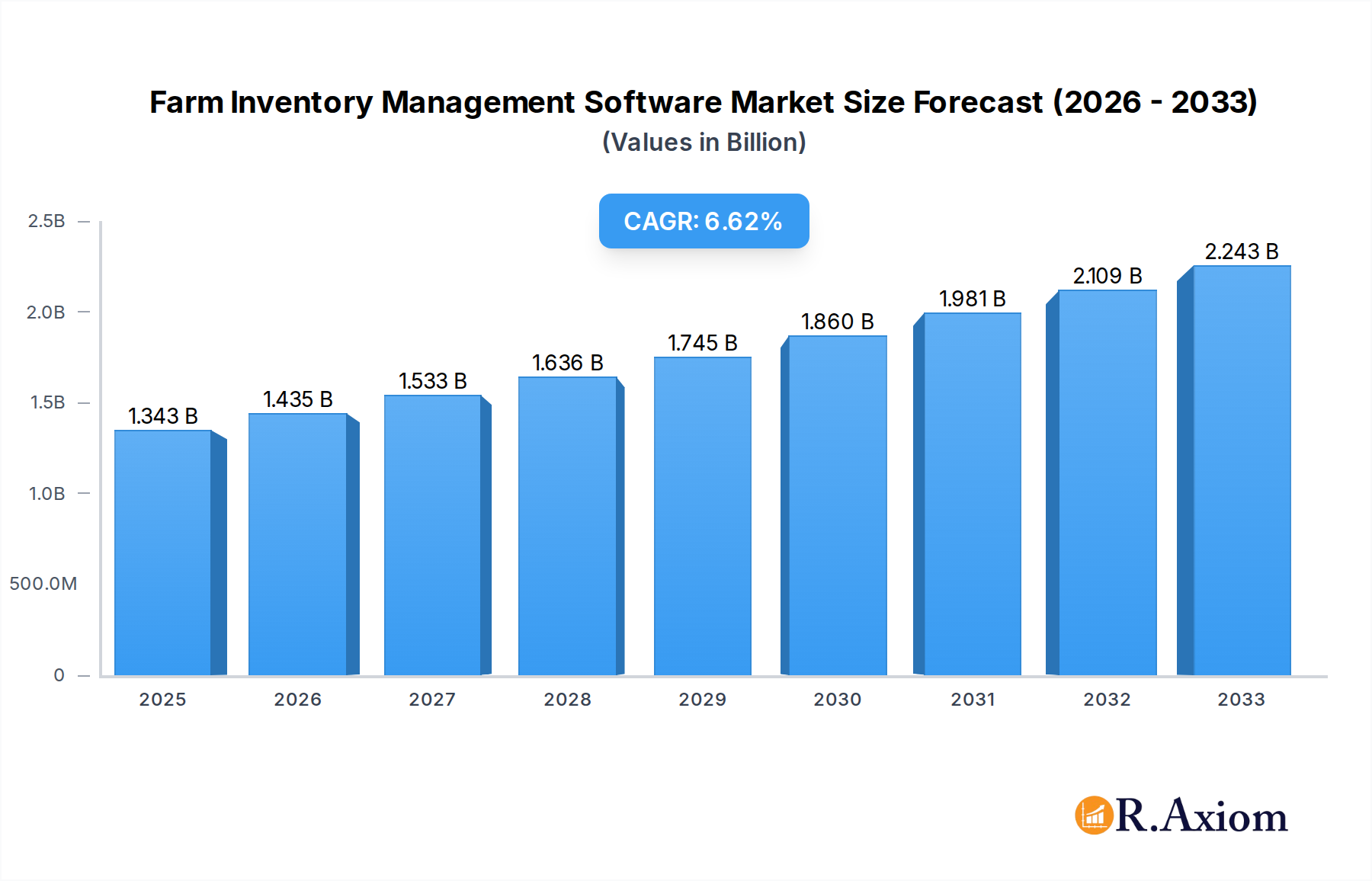
Farm Inventory Management Software Market Size (In Billion)

The market segmentation reveals a diverse landscape of adoption across different stakeholders. The "Farm Producers" segment is anticipated to be a major contributor, driven by the direct benefits of improved farm management. Distributors and online retailers are also increasingly leveraging this software to manage their agricultural product flow, enhancing supply chain visibility and customer satisfaction. In terms of deployment, cloud-based solutions are expected to dominate due to their scalability, accessibility, and cost-effectiveness, particularly for smaller agricultural operations. Conversely, on-premises solutions will cater to larger enterprises with specific data security and customization needs. Emerging trends such as the integration of IoT devices for real-time data collection and the use of AI for predictive analytics are further shaping the market, promising even greater efficiency and innovation in the coming years.
Farm Inventory Management Software Company Market Share
Farm Inventory Management Software Market Concentration & Innovation
The global farm inventory management software market exhibits a moderate to high concentration, with key players like Farmbrite, AgriERP, CropTracker, Tend, Conservis, FarmRaise, Local Line, Agworld, Mobble, FarmReady, AgriChain, Acctivate, Glide Solutions, Vyapar, AGRIVI, Scaleit, Farmable, Navfarm, SBI Software, and DigitalManager vying for market share. Innovation is a significant driver, with companies continuously enhancing features to improve efficiency, traceability, and profitability for agricultural operations. Key innovation areas include the integration of IoT devices for real-time data capture, AI-powered analytics for predictive insights, and blockchain for enhanced supply chain transparency. Regulatory frameworks, particularly concerning food safety and traceability, are increasingly influencing software development and adoption. Product substitutes, such as manual record-keeping and generic ERP systems, are becoming less competitive as specialized farm management solutions mature. End-user trends lean towards cloud-based solutions offering scalability, accessibility, and lower upfront costs. Mergers and acquisitions (M&A) activity is moderate, with some strategic partnerships and acquisitions focused on consolidating market presence and expanding product portfolios. Estimated M&A deal values are projected to reach approximately $100 million over the forecast period.
Farm Inventory Management Software Industry Trends & Insights
The farm inventory management software market is poised for substantial growth, driven by an increasing need for efficiency and profitability in the agricultural sector. The Compound Annual Growth Rate (CAGR) for this market is projected to be approximately 15% during the forecast period of 2025–2033. This growth is fueled by several interconnected trends. Firstly, the escalating global population demands higher agricultural output, necessitating optimized resource management and reduced waste, which farm inventory software directly addresses. Secondly, the push towards sustainable agriculture and stringent traceability requirements from consumers and regulators alike are compelling farmers to adopt advanced digital tools. Technological disruptions are playing a pivotal role, with the integration of Artificial Intelligence (AI) and Internet of Things (IoT) devices transforming how inventory is tracked and managed. AI algorithms can predict crop yields, identify potential disease outbreaks, and optimize resource allocation, while IoT sensors provide real-time data on field conditions, livestock health, and equipment status.
Consumer preferences are also shifting, with a growing demand for locally sourced, sustainably produced, and traceable food products. Farm inventory management software empowers producers to meet these demands by providing clear visibility into their operations, from seed to table. This transparency builds consumer trust and can command premium pricing. Competitive dynamics within the market are intensifying. While established players are investing in R&D to maintain their edge, new entrants are emerging with niche solutions targeting specific agricultural segments or offering innovative pricing models. The market penetration of farm inventory management software is steadily increasing, currently standing at an estimated 30% of the total addressable market, with significant room for expansion, particularly in developing economies. The ongoing digitalization of agriculture, often termed "AgriTech" or "Smart Farming," is a broader trend that directly benefits the adoption of farm inventory management solutions. This encompasses a range of technologies aimed at improving every aspect of farming, from precision planting to automated harvesting, all of which generate data that needs to be effectively managed. The drive to reduce operational costs, minimize losses due to spoilage or pest infestation, and improve overall farm productivity are overarching themes that underscore the sustained demand for sophisticated inventory management tools. Furthermore, government initiatives promoting agricultural modernization and digital transformation are providing further impetus to market growth.
Dominant Markets & Segments in Farm Inventory Management Software
The farm inventory management software market's dominance is characterized by a strong regional presence and specific segment preferences. North America currently holds the largest market share, with an estimated 40% of the global market value, primarily driven by its advanced agricultural infrastructure, high adoption rates of technology, and supportive government policies aimed at modernizing the sector. Within North America, the United States leads due to its vast agricultural output and significant investment in AgriTech solutions.
Key drivers for this dominance include:
- Economic Policies: Subsidies and grants supporting technology adoption in agriculture significantly bolster market growth.
- Infrastructure: Well-established internet connectivity and access to advanced hardware facilitate the implementation of cloud-based and IoT-integrated solutions.
- Technological Sophistication: A culture of innovation and early adoption of new technologies by large-scale farm producers and agricultural corporations.
- Regulatory Landscape: Stringent regulations related to food safety, traceability, and environmental sustainability necessitate robust inventory management systems.
In terms of Application, Farm Producers represent the largest and most dominant segment, accounting for an estimated 65% of the market revenue. This segment's dominance stems from the direct need of farmers to manage their crops, livestock, equipment, and consumables efficiently. Their adoption is critical for optimizing yields, reducing waste, and ensuring compliance.
- Farm Producers: This segment is characterized by a wide range of farm sizes, from small family farms to large commercial enterprises. The demand here is for comprehensive solutions that can manage diverse operations, including crop planning, planting, harvesting, livestock tracking, and sales forecasting. The increasing complexity of modern farming practices and the pressure to improve profitability make robust inventory management indispensable.
The Type segment clearly favors Cloud-Based solutions, which are estimated to capture 75% of the market. This preference is driven by the inherent advantages of cloud computing: scalability, flexibility, remote accessibility, and often lower upfront investment compared to on-premises solutions.
- Cloud Based: Farmers can access their inventory data from any device, anywhere, facilitating real-time decision-making and collaboration. Automatic updates and reduced IT maintenance overhead are also significant advantages. The ease of integration with other AgriTech solutions further solidifies the dominance of cloud-based platforms.
While Distributors and Online Retailers are important segments, their market share is smaller, estimated at 15% and 10% respectively. Distributors benefit from improved supply chain visibility and reduced stockouts, while online retailers leverage inventory data for accurate product listings and efficient order fulfillment. The Others segment, encompassing research institutions and agricultural consultants, accounts for the remaining 10%, focusing on data analytics and trend analysis. The forecast period is expected to see continued growth in all segments, but the dominance of Farm Producers and Cloud-Based solutions will likely persist due to their fundamental importance in the agricultural value chain. The market penetration in developing regions is expected to increase, potentially shifting the geographical landscape in the long term.
Farm Inventory Management Software Product Developments
Product developments in farm inventory management software are intensely focused on enhancing automation, data intelligence, and user experience. Innovations include AI-driven predictive analytics for yield forecasting and disease detection, IoT integration for real-time field and equipment monitoring, and blockchain technology for immutable supply chain traceability. These advancements offer competitive advantages by improving operational efficiency, reducing waste, ensuring compliance, and providing deeper insights for strategic decision-making. The market fit is strong, addressing critical needs for precision agriculture and sustainable farming practices.
Report Scope & Segmentation Analysis
This report analyzes the farm inventory management software market across key segments to provide a comprehensive understanding of its dynamics. The segmentation includes:
Application:
- Farm Producers: This segment represents the core user base, focusing on managing crops, livestock, equipment, and resources. Its market size is projected to reach approximately $2 billion by 2033, with a CAGR of 16%.
- Distributors: This segment focuses on supply chain management and logistics. Expected market size is around $300 million with a CAGR of 12%.
- Online Retailers: This segment leverages inventory data for e-commerce operations. Projected market size is $250 million with a CAGR of 11%.
- Others: This encompasses research, consulting, and governmental bodies. Estimated market size is $200 million with a CAGR of 10%.
Type:
- Cloud Based: Dominant segment offering scalability and accessibility. Projected market size of $2.5 billion with a CAGR of 15.5%.
- On-Premises: Traditional solutions, with a smaller market share and slower growth. Estimated market size of $750 million with a CAGR of 8%.
Key Drivers of Farm Inventory Management Software Growth
The growth of the farm inventory management software market is propelled by several critical factors. Firstly, the increasing global population and the associated demand for food security necessitate optimized agricultural production. Farm inventory management software plays a crucial role in maximizing yields and minimizing waste, thereby contributing to food security. Secondly, the growing emphasis on traceability and food safety regulations, driven by consumer demand for transparent supply chains, is compelling farmers to adopt digital solutions for accurate record-keeping and product tracking. The shift towards sustainable agricultural practices also fuels demand, as software helps monitor resource utilization and environmental impact. Furthermore, technological advancements, including the proliferation of IoT devices, AI, and cloud computing, are making these solutions more accessible, affordable, and feature-rich, driving adoption across various farm sizes. Government initiatives promoting agricultural modernization and digitalization also provide significant impetus.
Challenges in the Farm Inventory Management Software Sector
Despite robust growth, the farm inventory management software sector faces several challenges. A significant barrier is the initial cost of implementation, particularly for smallholder farmers with limited capital. The lack of digital literacy and technical expertise among some farming communities can also hinder adoption. Interoperability issues between different software platforms and hardware devices can create integration challenges. Data security and privacy concerns are paramount, especially with sensitive farm data. Furthermore, unreliable internet connectivity in remote agricultural areas can impede the functionality of cloud-based solutions. Resistance to change and established traditional farming methods also present a hurdle.
Emerging Opportunities in Farm Inventory Management Software
Emerging opportunities in the farm inventory management software market are diverse and promising. The increasing adoption of precision agriculture techniques opens doors for software that integrates with advanced sensors and drones for hyper-localized inventory management. The growing interest in organic and specialty crop farming creates demand for niche inventory solutions tailored to specific crop requirements and certifications. The expansion of e-commerce platforms for agricultural products presents an opportunity for software that streamlines online sales and fulfillment. Furthermore, the development of AI-powered predictive maintenance for farm equipment integrated with inventory management offers significant value. The increasing focus on circular economy principles in agriculture could drive demand for software that tracks waste streams and by-products for reuse.
Leading Players in the Farm Inventory Management Software Market
- Farmbrite
- AgriERP
- CropTracker
- Tend
- Conservis
- FarmRaise
- Local Line
- Agworld
- Mobble
- FarmReady
- AgriChain
- Acctivate
- Glide Solutions
- Vyapar
- AGRIVI
- Scaleit
- Farmable
- Navfarm
- SBI Software
- DigitalManager
Key Developments in Farm Inventory Management Software Industry
- 2023/11: Farmbrite launches enhanced AI-powered yield prediction features, significantly improving forecasting accuracy for large-scale crop producers.
- 2024/02: AgriERP announces a strategic partnership with an IoT sensor manufacturer to offer seamless real-time data integration for livestock management.
- 2024/05: CropTracker introduces a new module for blockchain-enabled supply chain traceability, addressing increasing consumer demand for transparency.
- 2024/08: Tend secures a significant funding round of $50 million, signaling investor confidence in its cloud-based farm management platform.
- 2025/01: AGRIVI expands its market reach with a new regional office in Southeast Asia, targeting the growing agricultural tech adoption in the region.
- 2025/03: Mobble releases an updated version with improved mobile functionality, allowing for greater ease of use in the field.
Strategic Outlook for Farm Inventory Management Software Market
The strategic outlook for the farm inventory management software market is highly positive, driven by the indispensable role these solutions play in modernizing agriculture. The relentless pursuit of efficiency, sustainability, and traceability by stakeholders across the agricultural value chain will continue to fuel demand. Key growth catalysts include the ongoing digital transformation of farming, the increasing affordability and capability of associated technologies like AI and IoT, and supportive government policies. The market is expected to witness further consolidation through strategic acquisitions and partnerships as companies aim to offer comprehensive, end-to-end solutions. Emerging markets, particularly in developing economies with a growing agricultural sector, represent significant untapped potential. The continued innovation in software features, focusing on data-driven insights and predictive capabilities, will be crucial for maintaining competitive advantage and driving future market expansion.
Farm Inventory Management Software Segmentation
-
1. Application
- 1.1. Farm Producers
- 1.2. Distributors
- 1.3. Online Retailers
- 1.4. Others
-
2. Type
- 2.1. Cloud Based
- 2.2. On-Premises
Farm Inventory Management Software Segmentation By Geography
-
1. North America
- 1.1. United States
- 1.2. Canada
- 1.3. Mexico
-
2. South America
- 2.1. Brazil
- 2.2. Argentina
- 2.3. Rest of South America
-
3. Europe
- 3.1. United Kingdom
- 3.2. Germany
- 3.3. France
- 3.4. Italy
- 3.5. Spain
- 3.6. Russia
- 3.7. Benelux
- 3.8. Nordics
- 3.9. Rest of Europe
-
4. Middle East & Africa
- 4.1. Turkey
- 4.2. Israel
- 4.3. GCC
- 4.4. North Africa
- 4.5. South Africa
- 4.6. Rest of Middle East & Africa
-
5. Asia Pacific
- 5.1. China
- 5.2. India
- 5.3. Japan
- 5.4. South Korea
- 5.5. ASEAN
- 5.6. Oceania
- 5.7. Rest of Asia Pacific
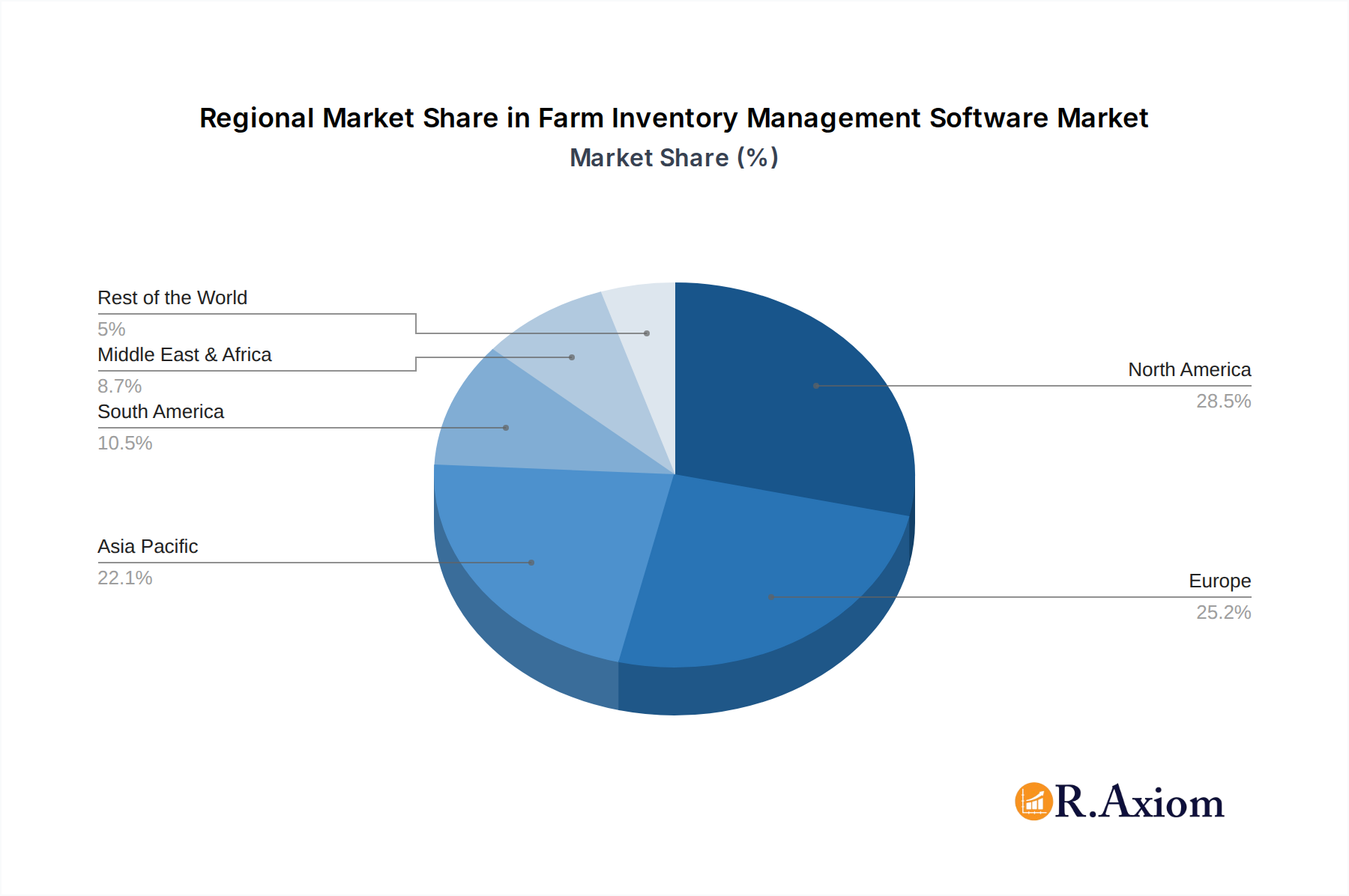
Farm Inventory Management Software Regional Market Share
Geographic Coverage of Farm Inventory Management Software
Farm Inventory Management Software REPORT HIGHLIGHTS
| Aspects | Details |
|---|---|
| Study Period | 2020-2034 |
| Base Year | 2025 |
| Estimated Year | 2026 |
| Forecast Period | 2026-2034 |
| Historical Period | 2020-2025 |
| Growth Rate | CAGR of 6.8% from 2020-2034 |
| Segmentation |
|
Table of Contents
- 1. Introduction
- 1.1. Research Scope
- 1.2. Market Segmentation
- 1.3. Research Methodology
- 1.4. Definitions and Assumptions
- 2. Executive Summary
- 2.1. Introduction
- 3. Market Dynamics
- 3.1. Introduction
- 3.2. Market Drivers
- 3.3. Market Restrains
- 3.4. Market Trends
- 4. Market Factor Analysis
- 4.1. Porters Five Forces
- 4.2. Supply/Value Chain
- 4.3. PESTEL analysis
- 4.4. Market Entropy
- 4.5. Patent/Trademark Analysis
- 5. Global Farm Inventory Management Software Analysis, Insights and Forecast, 2020-2032
- 5.1. Market Analysis, Insights and Forecast - by Application
- 5.1.1. Farm Producers
- 5.1.2. Distributors
- 5.1.3. Online Retailers
- 5.1.4. Others
- 5.2. Market Analysis, Insights and Forecast - by Type
- 5.2.1. Cloud Based
- 5.2.2. On-Premises
- 5.3. Market Analysis, Insights and Forecast - by Region
- 5.3.1. North America
- 5.3.2. South America
- 5.3.3. Europe
- 5.3.4. Middle East & Africa
- 5.3.5. Asia Pacific
- 5.1. Market Analysis, Insights and Forecast - by Application
- 6. North America Farm Inventory Management Software Analysis, Insights and Forecast, 2020-2032
- 6.1. Market Analysis, Insights and Forecast - by Application
- 6.1.1. Farm Producers
- 6.1.2. Distributors
- 6.1.3. Online Retailers
- 6.1.4. Others
- 6.2. Market Analysis, Insights and Forecast - by Type
- 6.2.1. Cloud Based
- 6.2.2. On-Premises
- 6.1. Market Analysis, Insights and Forecast - by Application
- 7. South America Farm Inventory Management Software Analysis, Insights and Forecast, 2020-2032
- 7.1. Market Analysis, Insights and Forecast - by Application
- 7.1.1. Farm Producers
- 7.1.2. Distributors
- 7.1.3. Online Retailers
- 7.1.4. Others
- 7.2. Market Analysis, Insights and Forecast - by Type
- 7.2.1. Cloud Based
- 7.2.2. On-Premises
- 7.1. Market Analysis, Insights and Forecast - by Application
- 8. Europe Farm Inventory Management Software Analysis, Insights and Forecast, 2020-2032
- 8.1. Market Analysis, Insights and Forecast - by Application
- 8.1.1. Farm Producers
- 8.1.2. Distributors
- 8.1.3. Online Retailers
- 8.1.4. Others
- 8.2. Market Analysis, Insights and Forecast - by Type
- 8.2.1. Cloud Based
- 8.2.2. On-Premises
- 8.1. Market Analysis, Insights and Forecast - by Application
- 9. Middle East & Africa Farm Inventory Management Software Analysis, Insights and Forecast, 2020-2032
- 9.1. Market Analysis, Insights and Forecast - by Application
- 9.1.1. Farm Producers
- 9.1.2. Distributors
- 9.1.3. Online Retailers
- 9.1.4. Others
- 9.2. Market Analysis, Insights and Forecast - by Type
- 9.2.1. Cloud Based
- 9.2.2. On-Premises
- 9.1. Market Analysis, Insights and Forecast - by Application
- 10. Asia Pacific Farm Inventory Management Software Analysis, Insights and Forecast, 2020-2032
- 10.1. Market Analysis, Insights and Forecast - by Application
- 10.1.1. Farm Producers
- 10.1.2. Distributors
- 10.1.3. Online Retailers
- 10.1.4. Others
- 10.2. Market Analysis, Insights and Forecast - by Type
- 10.2.1. Cloud Based
- 10.2.2. On-Premises
- 10.1. Market Analysis, Insights and Forecast - by Application
- 11. Competitive Analysis
- 11.1. Global Market Share Analysis 2025
- 11.2. Company Profiles
- 11.2.1 Farmbrite
- 11.2.1.1. Overview
- 11.2.1.2. Products
- 11.2.1.3. SWOT Analysis
- 11.2.1.4. Recent Developments
- 11.2.1.5. Financials (Based on Availability)
- 11.2.2 AgriERP
- 11.2.2.1. Overview
- 11.2.2.2. Products
- 11.2.2.3. SWOT Analysis
- 11.2.2.4. Recent Developments
- 11.2.2.5. Financials (Based on Availability)
- 11.2.3 Croptracker
- 11.2.3.1. Overview
- 11.2.3.2. Products
- 11.2.3.3. SWOT Analysis
- 11.2.3.4. Recent Developments
- 11.2.3.5. Financials (Based on Availability)
- 11.2.4 Tend
- 11.2.4.1. Overview
- 11.2.4.2. Products
- 11.2.4.3. SWOT Analysis
- 11.2.4.4. Recent Developments
- 11.2.4.5. Financials (Based on Availability)
- 11.2.5 Conservis
- 11.2.5.1. Overview
- 11.2.5.2. Products
- 11.2.5.3. SWOT Analysis
- 11.2.5.4. Recent Developments
- 11.2.5.5. Financials (Based on Availability)
- 11.2.6 FarmRaise
- 11.2.6.1. Overview
- 11.2.6.2. Products
- 11.2.6.3. SWOT Analysis
- 11.2.6.4. Recent Developments
- 11.2.6.5. Financials (Based on Availability)
- 11.2.7 Local Line
- 11.2.7.1. Overview
- 11.2.7.2. Products
- 11.2.7.3. SWOT Analysis
- 11.2.7.4. Recent Developments
- 11.2.7.5. Financials (Based on Availability)
- 11.2.8 Agworld
- 11.2.8.1. Overview
- 11.2.8.2. Products
- 11.2.8.3. SWOT Analysis
- 11.2.8.4. Recent Developments
- 11.2.8.5. Financials (Based on Availability)
- 11.2.9 Mobble
- 11.2.9.1. Overview
- 11.2.9.2. Products
- 11.2.9.3. SWOT Analysis
- 11.2.9.4. Recent Developments
- 11.2.9.5. Financials (Based on Availability)
- 11.2.10 FarmReady
- 11.2.10.1. Overview
- 11.2.10.2. Products
- 11.2.10.3. SWOT Analysis
- 11.2.10.4. Recent Developments
- 11.2.10.5. Financials (Based on Availability)
- 11.2.11 AgriChain
- 11.2.11.1. Overview
- 11.2.11.2. Products
- 11.2.11.3. SWOT Analysis
- 11.2.11.4. Recent Developments
- 11.2.11.5. Financials (Based on Availability)
- 11.2.12 Acctivate
- 11.2.12.1. Overview
- 11.2.12.2. Products
- 11.2.12.3. SWOT Analysis
- 11.2.12.4. Recent Developments
- 11.2.12.5. Financials (Based on Availability)
- 11.2.13 Glide Solutions
- 11.2.13.1. Overview
- 11.2.13.2. Products
- 11.2.13.3. SWOT Analysis
- 11.2.13.4. Recent Developments
- 11.2.13.5. Financials (Based on Availability)
- 11.2.14 Vyapar
- 11.2.14.1. Overview
- 11.2.14.2. Products
- 11.2.14.3. SWOT Analysis
- 11.2.14.4. Recent Developments
- 11.2.14.5. Financials (Based on Availability)
- 11.2.15 AGRIVI
- 11.2.15.1. Overview
- 11.2.15.2. Products
- 11.2.15.3. SWOT Analysis
- 11.2.15.4. Recent Developments
- 11.2.15.5. Financials (Based on Availability)
- 11.2.16 Scaleit
- 11.2.16.1. Overview
- 11.2.16.2. Products
- 11.2.16.3. SWOT Analysis
- 11.2.16.4. Recent Developments
- 11.2.16.5. Financials (Based on Availability)
- 11.2.17 Farmable
- 11.2.17.1. Overview
- 11.2.17.2. Products
- 11.2.17.3. SWOT Analysis
- 11.2.17.4. Recent Developments
- 11.2.17.5. Financials (Based on Availability)
- 11.2.18 Navfarm
- 11.2.18.1. Overview
- 11.2.18.2. Products
- 11.2.18.3. SWOT Analysis
- 11.2.18.4. Recent Developments
- 11.2.18.5. Financials (Based on Availability)
- 11.2.19 SBI Software
- 11.2.19.1. Overview
- 11.2.19.2. Products
- 11.2.19.3. SWOT Analysis
- 11.2.19.4. Recent Developments
- 11.2.19.5. Financials (Based on Availability)
- 11.2.20 DigitalManager
- 11.2.20.1. Overview
- 11.2.20.2. Products
- 11.2.20.3. SWOT Analysis
- 11.2.20.4. Recent Developments
- 11.2.20.5. Financials (Based on Availability)
- 11.2.1 Farmbrite
List of Figures
- Figure 1: Global Farm Inventory Management Software Revenue Breakdown (million, %) by Region 2025 & 2033
- Figure 2: North America Farm Inventory Management Software Revenue (million), by Application 2025 & 2033
- Figure 3: North America Farm Inventory Management Software Revenue Share (%), by Application 2025 & 2033
- Figure 4: North America Farm Inventory Management Software Revenue (million), by Type 2025 & 2033
- Figure 5: North America Farm Inventory Management Software Revenue Share (%), by Type 2025 & 2033
- Figure 6: North America Farm Inventory Management Software Revenue (million), by Country 2025 & 2033
- Figure 7: North America Farm Inventory Management Software Revenue Share (%), by Country 2025 & 2033
- Figure 8: South America Farm Inventory Management Software Revenue (million), by Application 2025 & 2033
- Figure 9: South America Farm Inventory Management Software Revenue Share (%), by Application 2025 & 2033
- Figure 10: South America Farm Inventory Management Software Revenue (million), by Type 2025 & 2033
- Figure 11: South America Farm Inventory Management Software Revenue Share (%), by Type 2025 & 2033
- Figure 12: South America Farm Inventory Management Software Revenue (million), by Country 2025 & 2033
- Figure 13: South America Farm Inventory Management Software Revenue Share (%), by Country 2025 & 2033
- Figure 14: Europe Farm Inventory Management Software Revenue (million), by Application 2025 & 2033
- Figure 15: Europe Farm Inventory Management Software Revenue Share (%), by Application 2025 & 2033
- Figure 16: Europe Farm Inventory Management Software Revenue (million), by Type 2025 & 2033
- Figure 17: Europe Farm Inventory Management Software Revenue Share (%), by Type 2025 & 2033
- Figure 18: Europe Farm Inventory Management Software Revenue (million), by Country 2025 & 2033
- Figure 19: Europe Farm Inventory Management Software Revenue Share (%), by Country 2025 & 2033
- Figure 20: Middle East & Africa Farm Inventory Management Software Revenue (million), by Application 2025 & 2033
- Figure 21: Middle East & Africa Farm Inventory Management Software Revenue Share (%), by Application 2025 & 2033
- Figure 22: Middle East & Africa Farm Inventory Management Software Revenue (million), by Type 2025 & 2033
- Figure 23: Middle East & Africa Farm Inventory Management Software Revenue Share (%), by Type 2025 & 2033
- Figure 24: Middle East & Africa Farm Inventory Management Software Revenue (million), by Country 2025 & 2033
- Figure 25: Middle East & Africa Farm Inventory Management Software Revenue Share (%), by Country 2025 & 2033
- Figure 26: Asia Pacific Farm Inventory Management Software Revenue (million), by Application 2025 & 2033
- Figure 27: Asia Pacific Farm Inventory Management Software Revenue Share (%), by Application 2025 & 2033
- Figure 28: Asia Pacific Farm Inventory Management Software Revenue (million), by Type 2025 & 2033
- Figure 29: Asia Pacific Farm Inventory Management Software Revenue Share (%), by Type 2025 & 2033
- Figure 30: Asia Pacific Farm Inventory Management Software Revenue (million), by Country 2025 & 2033
- Figure 31: Asia Pacific Farm Inventory Management Software Revenue Share (%), by Country 2025 & 2033
List of Tables
- Table 1: Global Farm Inventory Management Software Revenue million Forecast, by Application 2020 & 2033
- Table 2: Global Farm Inventory Management Software Revenue million Forecast, by Type 2020 & 2033
- Table 3: Global Farm Inventory Management Software Revenue million Forecast, by Region 2020 & 2033
- Table 4: Global Farm Inventory Management Software Revenue million Forecast, by Application 2020 & 2033
- Table 5: Global Farm Inventory Management Software Revenue million Forecast, by Type 2020 & 2033
- Table 6: Global Farm Inventory Management Software Revenue million Forecast, by Country 2020 & 2033
- Table 7: United States Farm Inventory Management Software Revenue (million) Forecast, by Application 2020 & 2033
- Table 8: Canada Farm Inventory Management Software Revenue (million) Forecast, by Application 2020 & 2033
- Table 9: Mexico Farm Inventory Management Software Revenue (million) Forecast, by Application 2020 & 2033
- Table 10: Global Farm Inventory Management Software Revenue million Forecast, by Application 2020 & 2033
- Table 11: Global Farm Inventory Management Software Revenue million Forecast, by Type 2020 & 2033
- Table 12: Global Farm Inventory Management Software Revenue million Forecast, by Country 2020 & 2033
- Table 13: Brazil Farm Inventory Management Software Revenue (million) Forecast, by Application 2020 & 2033
- Table 14: Argentina Farm Inventory Management Software Revenue (million) Forecast, by Application 2020 & 2033
- Table 15: Rest of South America Farm Inventory Management Software Revenue (million) Forecast, by Application 2020 & 2033
- Table 16: Global Farm Inventory Management Software Revenue million Forecast, by Application 2020 & 2033
- Table 17: Global Farm Inventory Management Software Revenue million Forecast, by Type 2020 & 2033
- Table 18: Global Farm Inventory Management Software Revenue million Forecast, by Country 2020 & 2033
- Table 19: United Kingdom Farm Inventory Management Software Revenue (million) Forecast, by Application 2020 & 2033
- Table 20: Germany Farm Inventory Management Software Revenue (million) Forecast, by Application 2020 & 2033
- Table 21: France Farm Inventory Management Software Revenue (million) Forecast, by Application 2020 & 2033
- Table 22: Italy Farm Inventory Management Software Revenue (million) Forecast, by Application 2020 & 2033
- Table 23: Spain Farm Inventory Management Software Revenue (million) Forecast, by Application 2020 & 2033
- Table 24: Russia Farm Inventory Management Software Revenue (million) Forecast, by Application 2020 & 2033
- Table 25: Benelux Farm Inventory Management Software Revenue (million) Forecast, by Application 2020 & 2033
- Table 26: Nordics Farm Inventory Management Software Revenue (million) Forecast, by Application 2020 & 2033
- Table 27: Rest of Europe Farm Inventory Management Software Revenue (million) Forecast, by Application 2020 & 2033
- Table 28: Global Farm Inventory Management Software Revenue million Forecast, by Application 2020 & 2033
- Table 29: Global Farm Inventory Management Software Revenue million Forecast, by Type 2020 & 2033
- Table 30: Global Farm Inventory Management Software Revenue million Forecast, by Country 2020 & 2033
- Table 31: Turkey Farm Inventory Management Software Revenue (million) Forecast, by Application 2020 & 2033
- Table 32: Israel Farm Inventory Management Software Revenue (million) Forecast, by Application 2020 & 2033
- Table 33: GCC Farm Inventory Management Software Revenue (million) Forecast, by Application 2020 & 2033
- Table 34: North Africa Farm Inventory Management Software Revenue (million) Forecast, by Application 2020 & 2033
- Table 35: South Africa Farm Inventory Management Software Revenue (million) Forecast, by Application 2020 & 2033
- Table 36: Rest of Middle East & Africa Farm Inventory Management Software Revenue (million) Forecast, by Application 2020 & 2033
- Table 37: Global Farm Inventory Management Software Revenue million Forecast, by Application 2020 & 2033
- Table 38: Global Farm Inventory Management Software Revenue million Forecast, by Type 2020 & 2033
- Table 39: Global Farm Inventory Management Software Revenue million Forecast, by Country 2020 & 2033
- Table 40: China Farm Inventory Management Software Revenue (million) Forecast, by Application 2020 & 2033
- Table 41: India Farm Inventory Management Software Revenue (million) Forecast, by Application 2020 & 2033
- Table 42: Japan Farm Inventory Management Software Revenue (million) Forecast, by Application 2020 & 2033
- Table 43: South Korea Farm Inventory Management Software Revenue (million) Forecast, by Application 2020 & 2033
- Table 44: ASEAN Farm Inventory Management Software Revenue (million) Forecast, by Application 2020 & 2033
- Table 45: Oceania Farm Inventory Management Software Revenue (million) Forecast, by Application 2020 & 2033
- Table 46: Rest of Asia Pacific Farm Inventory Management Software Revenue (million) Forecast, by Application 2020 & 2033
Frequently Asked Questions
1. What is the projected Compound Annual Growth Rate (CAGR) of the Farm Inventory Management Software?
The projected CAGR is approximately 6.8%.
2. Which companies are prominent players in the Farm Inventory Management Software?
Key companies in the market include Farmbrite, AgriERP, Croptracker, Tend, Conservis, FarmRaise, Local Line, Agworld, Mobble, FarmReady, AgriChain, Acctivate, Glide Solutions, Vyapar, AGRIVI, Scaleit, Farmable, Navfarm, SBI Software, DigitalManager.
3. What are the main segments of the Farm Inventory Management Software?
The market segments include Application, Type.
4. Can you provide details about the market size?
The market size is estimated to be USD 1343 million as of 2022.
5. What are some drivers contributing to market growth?
N/A
6. What are the notable trends driving market growth?
N/A
7. Are there any restraints impacting market growth?
N/A
8. Can you provide examples of recent developments in the market?
N/A
9. What pricing options are available for accessing the report?
Pricing options include single-user, multi-user, and enterprise licenses priced at USD 4900.00, USD 7350.00, and USD 9800.00 respectively.
10. Is the market size provided in terms of value or volume?
The market size is provided in terms of value, measured in million.
11. Are there any specific market keywords associated with the report?
Yes, the market keyword associated with the report is "Farm Inventory Management Software," which aids in identifying and referencing the specific market segment covered.
12. How do I determine which pricing option suits my needs best?
The pricing options vary based on user requirements and access needs. Individual users may opt for single-user licenses, while businesses requiring broader access may choose multi-user or enterprise licenses for cost-effective access to the report.
13. Are there any additional resources or data provided in the Farm Inventory Management Software report?
While the report offers comprehensive insights, it's advisable to review the specific contents or supplementary materials provided to ascertain if additional resources or data are available.
14. How can I stay updated on further developments or reports in the Farm Inventory Management Software?
To stay informed about further developments, trends, and reports in the Farm Inventory Management Software, consider subscribing to industry newsletters, following relevant companies and organizations, or regularly checking reputable industry news sources and publications.
Methodology
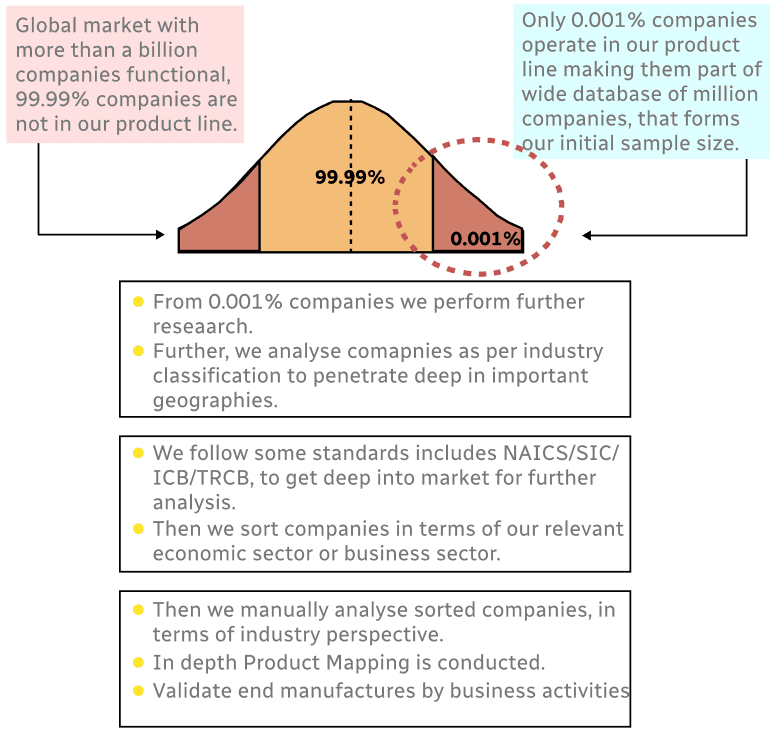
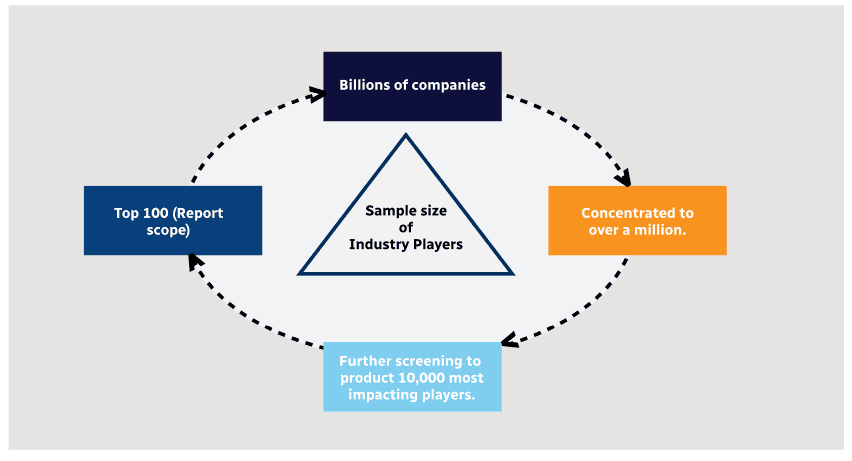
Step 1 - Identification of Relevant Samples Size from Population Database
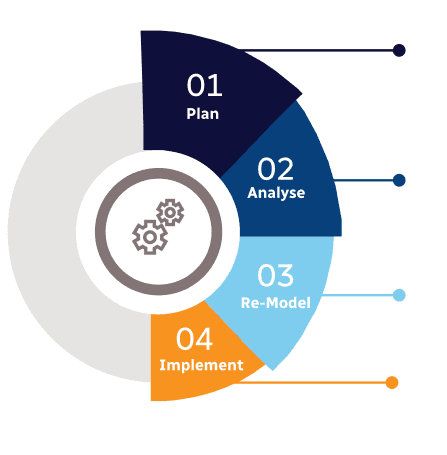
Step 2 - Approaches for Defining Global Market Size (Value, Volume* & Price*)
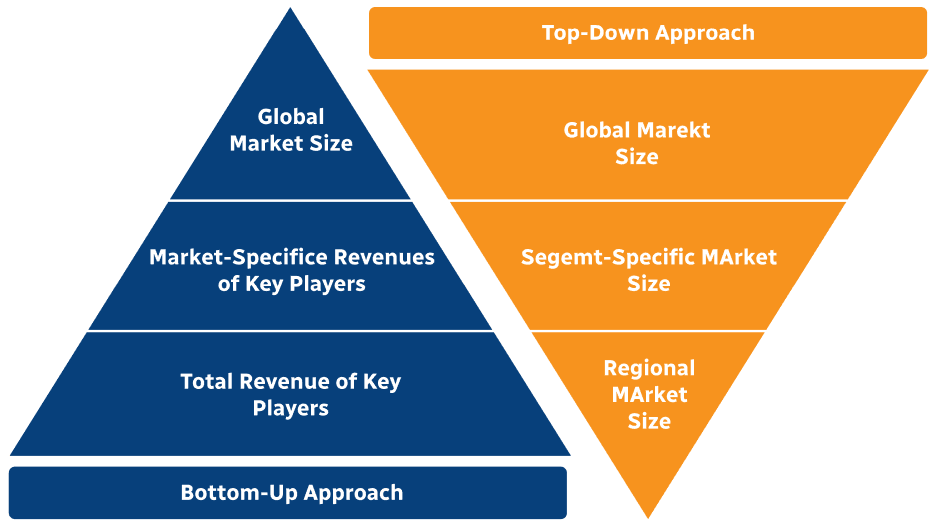
Note*: In applicable scenarios
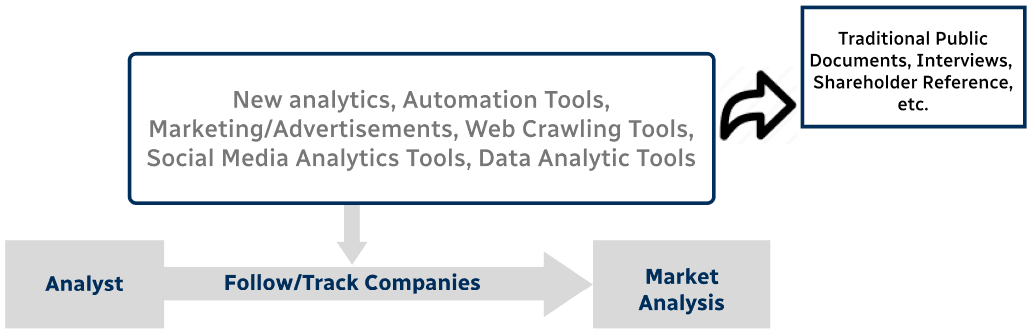
Step 3 - Data Sources
Primary Research
- Web Analytics
- Survey Reports
- Research Institute
- Latest Research Reports
- Opinion Leaders
Secondary Research
- Annual Reports
- White Paper
- Latest Press Release
- Industry Association
- Paid Database
- Investor Presentations
Step 4 - Data Triangulation
Involves using different sources of information in order to increase the validity of a study
These sources are likely to be stakeholders in a program - participants, other researchers, program staff, other community members, and so on.
Then we put all data in single framework & apply various statistical tools to find out the dynamic on the market.
During the analysis stage, feedback from the stakeholder groups would be compared to determine areas of agreement as well as areas of divergence