


Key Insights
The global Linux Operating System market is poised for robust expansion, projected to reach an estimated $7631.41 million by 2025, demonstrating a significant Compound Annual Growth Rate (CAGR) of 8.87% from 2019 to 2033. This growth is primarily fueled by the escalating adoption of open-source solutions across diverse sectors, particularly in enterprise environments and cloud computing. The inherent flexibility, cost-effectiveness, and robust security features of Linux distributions continue to attract businesses seeking adaptable and powerful operating system solutions. Key drivers include the burgeoning demand for customized server environments, the increasing prevalence of big data analytics, and the rise of the Internet of Things (IoT), all of which benefit from Linux's open architecture and extensive support. Furthermore, the growing integration of Linux into embedded systems and its dominance in supercomputing further solidify its market position. The continuous innovation and development within the Linux ecosystem, supported by a vibrant community and major tech players, ensures its relevance and drives its ongoing adoption.
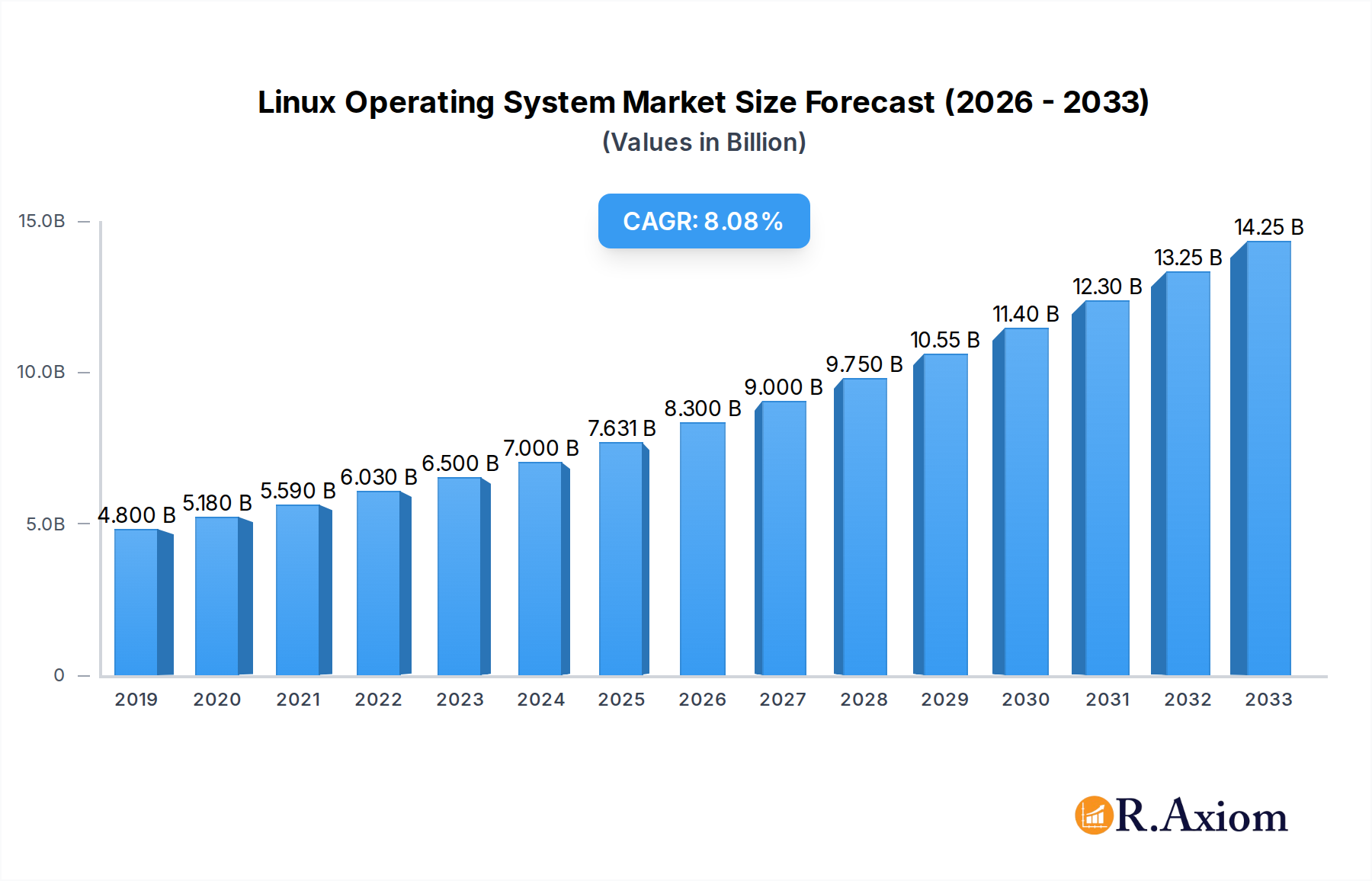
Linux Operating System Market Size (In Billion)

The market is segmented into various applications, with commercial and individual use cases both contributing significantly to its growth. Within the 'Type' segment, a wide array of distributions like Debian, Ubuntu, CentOS, and Fedora cater to specific user needs, from enterprise-grade stability to developer-focused flexibility. Geographically, North America and Europe are expected to remain dominant markets due to their advanced technological infrastructure and high enterprise spending on IT solutions. However, the Asia Pacific region is anticipated to exhibit the fastest growth, driven by increasing digital transformation initiatives in emerging economies like China and India, and a rapidly expanding technology sector. Leading companies such as Amazon Web Services, Canonical Ltd., and Red Hat Inc. are at the forefront, driving innovation and expanding market reach through strategic partnerships and product development, underscoring a dynamic and competitive landscape.
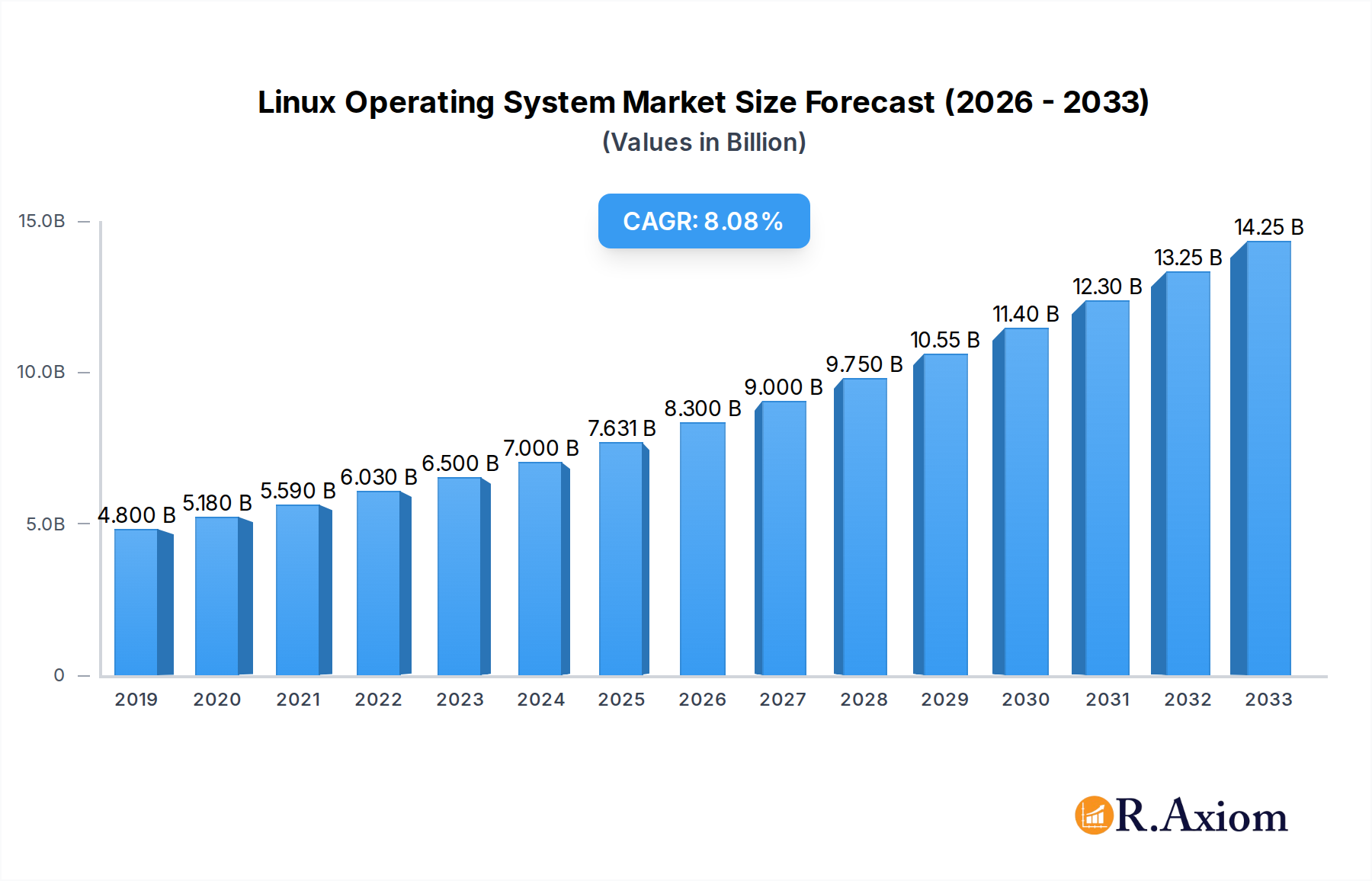
Linux Operating System Company Market Share
This in-depth report provides a definitive analysis of the global Linux Operating System market, projecting its trajectory from 2019 to 2033. Leveraging data from the base year 2025 and a comprehensive forecast period (2025–2033), this study meticulously examines market dynamics, competitive landscapes, and emerging trends. With an estimated market size of over xx million in 2025, the Linux OS market is poised for significant expansion driven by its inherent flexibility, cost-effectiveness, and open-source nature. This report is essential for industry stakeholders, including technology providers, enterprise IT decision-makers, investors, and policymakers, seeking to understand the nuances of this critical technology sector.
Linux Operating System Market Concentration & Innovation
The Linux Operating System market exhibits a moderate level of concentration, with dominant players like Red Hat Inc. (an IBM Corporation subsidiary), Canonical Ltd. (developers of Ubuntu), and SUSE Group holding significant market share. Amazon Web Services (AWS) also plays a crucial role through its cloud-based Linux offerings. Innovation in the Linux OS space is primarily driven by community-led development, enterprise-backed distributions, and specialized solutions for areas like cloud computing, embedded systems, and artificial intelligence. Key innovation drivers include the ongoing development of kernel features, enhanced security protocols, improved performance optimizations, and the integration of cutting-edge technologies such as containerization and microservices. Regulatory frameworks, while generally permissive for open-source software, can influence adoption through data privacy mandates and government procurement preferences. Product substitutes, such as proprietary operating systems like Windows and macOS, continue to compete, but Linux's advantages in customizability and cost often prevail in specific segments. End-user trends highlight a growing preference for containerized environments, cloud-native architectures, and the increasing demand for secure and stable operating systems in enterprise and IoT applications. Mergers and acquisitions (M&A) activities, while not as frequent as in some other tech sectors, have shaped market consolidation. Notable M&A deals, such as IBM’s acquisition of Red Hat for $34,000 million, underscore the strategic importance of Linux in enterprise IT. Market share distribution in 2025 is estimated as follows: Red Hat Inc. – xx%, Canonical Ltd. – xx%, SUSE Group – xx%, Oracle Corporation – xx%, and others – xx%.
Linux Operating System Industry Trends & Insights
The global Linux Operating System market is on a robust growth trajectory, characterized by a projected Compound Annual Growth Rate (CAGR) of approximately xx% during the forecast period 2025–2033. This expansion is fueled by an escalating demand for open-source solutions across diverse industries, particularly in cloud computing, big data analytics, and artificial intelligence. Technological disruptions, such as the widespread adoption of containerization technologies like Docker and Kubernetes, have further propelled Linux’s dominance in modern IT infrastructure. These technologies, which run natively on Linux, enable greater agility, scalability, and efficiency in application deployment and management. Consumer preferences are increasingly leaning towards Linux for its stability, security, and flexibility, especially within enterprise environments. Businesses are recognizing the cost savings and the absence of vendor lock-in associated with Linux. The competitive dynamics within the Linux OS market are characterized by a healthy mix of community-driven projects and commercially supported distributions. Companies like Red Hat Inc., Canonical Ltd., and SUSE Group offer enterprise-grade support and services, catering to the needs of large organizations. Fedora Linux and Debian Project remain popular choices for developers and users seeking cutting-edge features and a stable foundation, respectively. The market penetration of Linux in server environments continues to grow, with estimates suggesting it powers over xx% of all web servers globally. This trend is expected to accelerate as more organizations migrate their workloads to hybrid and multi-cloud environments where Linux excels. Furthermore, the increasing prevalence of Internet of Things (IoT) devices, which often leverage lightweight and customizable Linux distributions, contributes significantly to market growth. The open-source model fosters rapid innovation and allows for tailored solutions, making Linux a preferred choice for embedded systems, smart devices, and industrial automation. The ongoing evolution of cloud-native technologies and the continuous drive for digital transformation across all sectors will further cement Linux's position as a cornerstone of modern computing infrastructure.
Dominant Markets & Segments in Linux Operating System
North America currently dominates the Linux Operating System market, driven by its robust technological infrastructure, significant investment in cloud computing, and a strong presence of major technology companies such as Amazon Web Services, IBM Corporation, and Red Hat Inc. The United States, in particular, is a key market, accounting for an estimated xx% of global Linux OS revenue in 2025. The dominance is further amplified by proactive government initiatives supporting open-source adoption and research. Economic policies that encourage innovation and the development of a skilled workforce proficient in Linux technologies also contribute to this leadership. The extensive deployment of cloud data centers, which heavily rely on Linux for their operational efficiency and scalability, solidifies North America’s leading position.
Within the application segmentation, the Commercial segment is the most dominant, representing an estimated xx% of the total Linux OS market value in 2025. This dominance stems from the widespread adoption of Linux in enterprise servers, cloud infrastructure, and critical business applications. Key drivers for the commercial segment include:
- Cost-Effectiveness: Reduced licensing fees compared to proprietary operating systems.
- Scalability and Performance: Superior ability to handle large workloads and high traffic volumes.
- Security and Stability: Robust security features and a proven track record of reliability.
- Customization: Ability to tailor the operating system to specific business needs.
In terms of Linux OS types, Ubuntu and CentOS (historically significant, though transitioning to Rocky Linux/AlmaLinux) are leading the pack in server and cloud environments. Debian remains a foundational choice for many distributions and developers due to its stability and commitment to free software principles. Fedora Linux continues to be a popular choice for developers and enthusiasts seeking cutting-edge features and rapid innovation, often serving as a testing ground for technologies later integrated into Red Hat Enterprise Linux. Arch Linux and Manjaro cater to users who prefer a highly customizable and bleeding-edge experience.
Linux Operating System Product Developments
Product developments in the Linux Operating System market are characterized by a relentless pursuit of enhanced performance, robust security, and seamless integration with emerging technologies. Innovations often focus on kernel improvements for better hardware support and efficiency, alongside advancements in containerization and orchestration tools. Distributions like Ubuntu continue to push boundaries with LTS releases offering long-term stability for enterprise deployments, while Fedora Linux consistently introduces the latest open-source innovations. The competitive advantage lies in the agility of the open-source model, enabling rapid iteration and adaptation to market demands, such as the growing need for secure and scalable cloud-native solutions.
Linux Operating System Report Scope & Segmentation Analysis
This report segments the Linux Operating System market across key dimensions to provide a granular understanding of its dynamics. The Application segmentation includes Commercial and Individual users. The Commercial segment is projected to experience a CAGR of xx% from 2025–2033, driven by enterprise adoption in cloud, data centers, and IoT. The Individual segment, though smaller, will see steady growth driven by enthusiasts and users seeking alternatives to proprietary OS. The Type segmentation encompasses a wide array of distributions, including Debian, Gentoo, Ubuntu, CentOS, Fedora, Arch Linux, and OpenSuse. Each type possesses unique growth trajectories influenced by their respective user bases and development roadmaps. For instance, Ubuntu is expected to maintain strong growth in the server and cloud space, while Fedora will continue to attract developers and early adopters.
Key Drivers of Linux Operating System Growth
Several key factors are propelling the growth of the Linux Operating System market.
- Cloud Computing Expansion: The ubiquitous adoption of cloud infrastructure by businesses worldwide creates a massive demand for Linux, which is the de facto standard for most cloud environments.
- Open-Source Dominance: The inherent flexibility, cost-effectiveness, and community-driven innovation of open-source software make Linux an attractive alternative to proprietary operating systems, particularly in enterprise settings.
- Growth of Big Data and AI: The computational demands of big data analytics and artificial intelligence workloads are met by Linux's performance, scalability, and rich ecosystem of open-source tools.
- Internet of Things (IoT) Proliferation: The increasing number of connected devices in various sectors, from consumer electronics to industrial automation, is driving the demand for lightweight, customizable, and secure Linux-based operating systems.
- Government and Public Sector Adoption: Many governments and public institutions are increasingly adopting Linux for its security, transparency, and cost-saving benefits.
Challenges in the Linux Operating System Sector
Despite its strong growth, the Linux Operating System sector faces certain challenges.
- Fragmentation: The vast number of Linux distributions can sometimes lead to fragmentation, making it challenging for users to choose the right one and for developers to ensure broad compatibility.
- Perceived Complexity: While user-friendly distributions exist, Linux can still be perceived as complex by users accustomed to the simpler interfaces of proprietary operating systems, particularly for advanced configurations.
- Commercial Support Costs: While the OS itself is often free, dedicated enterprise-level support, crucial for mission-critical applications, can incur significant costs.
- Skilled Workforce Availability: While Linux skills are in high demand, a shortage of highly skilled Linux administrators and developers can sometimes hinder adoption and implementation.
- Proprietary Software Compatibility: While improving, compatibility issues with certain industry-specific proprietary software applications can still be a barrier for some organizations.
Emerging Opportunities in Linux Operating System
The Linux Operating System market is rife with emerging opportunities. The burgeoning field of edge computing presents a significant avenue for growth, requiring lightweight and customizable Linux distributions for devices operating at the network's edge. The continuous evolution of cloud-native technologies, including serverless computing and microservices, will further solidify Linux's position as the preferred platform. The increasing focus on cybersecurity and data privacy will also drive demand for Linux's robust security features and transparent nature. Furthermore, the growing adoption of Linux in embedded systems for automotive, industrial automation, and smart home devices offers substantial untapped potential. The ongoing development of specialized Linux distributions for AI and machine learning workloads also represents a key growth area.
Leading Players in the Linux Operating System Market
- Amazon Web Services
- Canonical Ltd.
- IBM Corporation
- Oracle Corporation
- ClearCenter
- Debian Project
- Elementary, Inc.
- Slackware Linux Project
- Zorin Group
- MontaVista Software
- SUSE Group
- Plesk International GmbH
- Ubuntu
- Linux Mint
- Arch Linux
- Manjaro
- Fedora Linux
- Novell
- Red Hat Inc
Key Developments in Linux Operating System Industry
- 2023: Release of Ubuntu 23.10 "Mantic Minotaur" with significant advancements in Wayland support and improved hardware enablement.
- 2023: Red Hat Enterprise Linux 9.3 launched, focusing on enhanced security, developer productivity, and edge computing capabilities.
- 2024: Canonical announces its commitment to further develop Ubuntu for the edge and IoT markets, highlighting new management tools and security features.
- 2024: Fedora Linux 40 development begins, showcasing early integration of emerging technologies and kernel updates.
- 2024: IBM continues to invest in Red Hat, emphasizing the strategic importance of Linux in its hybrid cloud strategy.
- 2025: Oracle Linux 21c released, with a focus on performance enhancements and cloud-native integration.
- 2025: SUSE Rancher 3.0 introduced, offering unified management for Kubernetes across hybrid cloud environments.
- 2025: Debian Project continues its stable release cycle, maintaining its reputation for robustness and community governance.
- 2025: Growing adoption of Rocky Linux and AlmaLinux as CentOS alternatives, ensuring continued community support for RHEL-compatible systems.
- 2026: Increased focus on AI/ML optimization across major Linux distributions.
Strategic Outlook for Linux Operating System Market
The strategic outlook for the Linux Operating System market remains exceptionally positive, driven by its indispensable role in modern technological advancements. The continued growth of cloud computing, the explosion of data, and the pervasive adoption of AI and IoT will act as significant growth catalysts. Companies that focus on enhancing user experience, providing seamless integration with emerging technologies, and offering robust security solutions will be best positioned for success. The open-source model's inherent ability to foster rapid innovation and cater to diverse needs ensures Linux's sustained relevance and dominance across a multitude of computing landscapes, from supercomputers to the smallest embedded devices.
Linux Operating System Segmentation
-
1. Application
- 1.1. Commercial
- 1.2. Individual
-
2. Type
- 2.1. Debian
- 2.2. Gentoo
- 2.3. Ubuntu
- 2.4. CentOS
- 2.5. Fedora
- 2.6. Arch Linux
- 2.7. OpenSuse
Linux Operating System Segmentation By Geography
-
1. North America
- 1.1. United States
- 1.2. Canada
- 1.3. Mexico
-
2. South America
- 2.1. Brazil
- 2.2. Argentina
- 2.3. Rest of South America
-
3. Europe
- 3.1. United Kingdom
- 3.2. Germany
- 3.3. France
- 3.4. Italy
- 3.5. Spain
- 3.6. Russia
- 3.7. Benelux
- 3.8. Nordics
- 3.9. Rest of Europe
-
4. Middle East & Africa
- 4.1. Turkey
- 4.2. Israel
- 4.3. GCC
- 4.4. North Africa
- 4.5. South Africa
- 4.6. Rest of Middle East & Africa
-
5. Asia Pacific
- 5.1. China
- 5.2. India
- 5.3. Japan
- 5.4. South Korea
- 5.5. ASEAN
- 5.6. Oceania
- 5.7. Rest of Asia Pacific
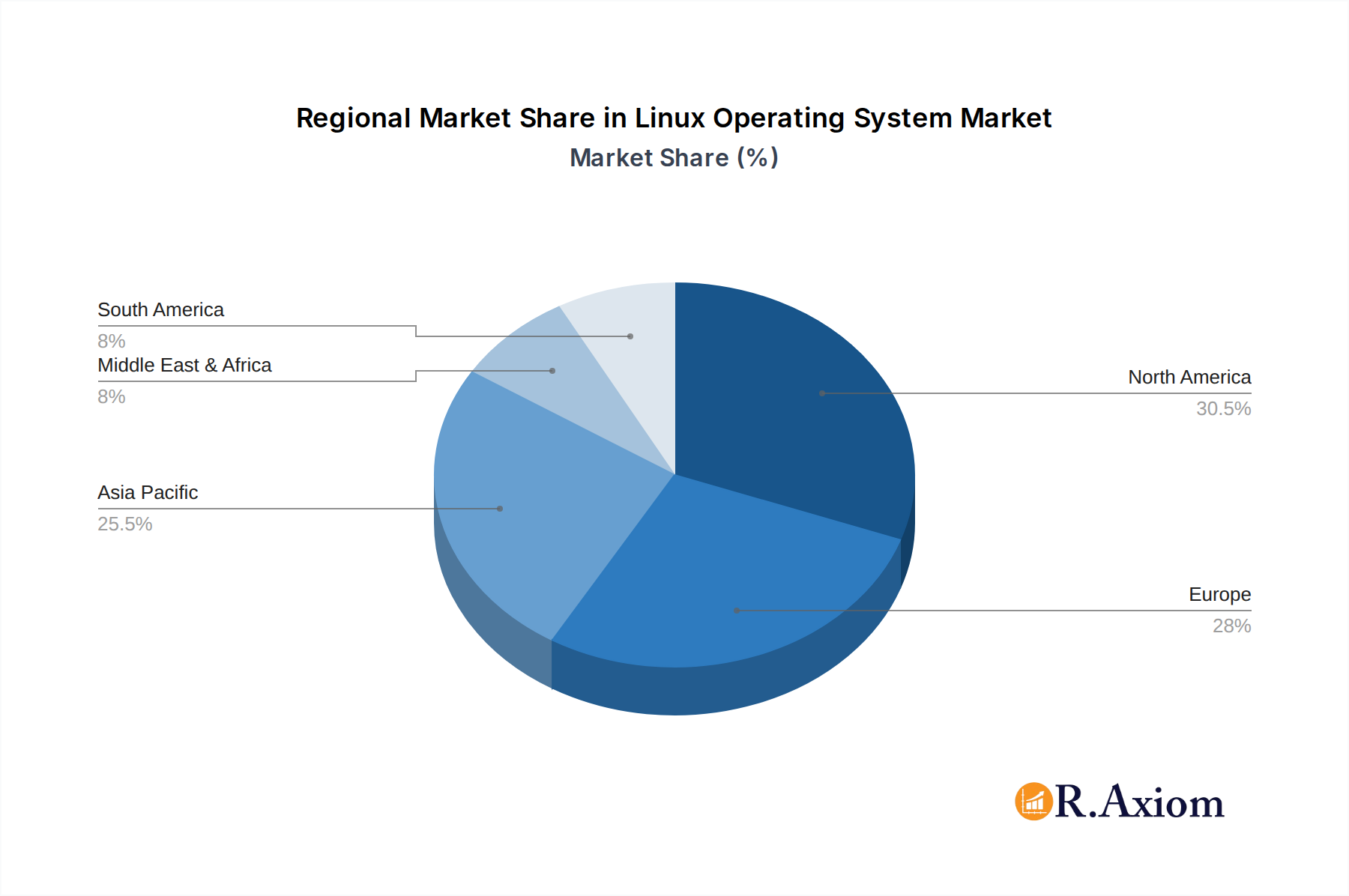
Linux Operating System Regional Market Share
Geographic Coverage of Linux Operating System
Linux Operating System REPORT HIGHLIGHTS
| Aspects | Details |
|---|---|
| Study Period | 2020-2034 |
| Base Year | 2025 |
| Estimated Year | 2026 |
| Forecast Period | 2026-2034 |
| Historical Period | 2020-2025 |
| Growth Rate | CAGR of 8.87% from 2020-2034 |
| Segmentation |
|
Table of Contents
- 1. Introduction
- 1.1. Research Scope
- 1.2. Market Segmentation
- 1.3. Research Methodology
- 1.4. Definitions and Assumptions
- 2. Executive Summary
- 2.1. Introduction
- 3. Market Dynamics
- 3.1. Introduction
- 3.2. Market Drivers
- 3.3. Market Restrains
- 3.4. Market Trends
- 4. Market Factor Analysis
- 4.1. Porters Five Forces
- 4.2. Supply/Value Chain
- 4.3. PESTEL analysis
- 4.4. Market Entropy
- 4.5. Patent/Trademark Analysis
- 5. Global Linux Operating System Analysis, Insights and Forecast, 2020-2032
- 5.1. Market Analysis, Insights and Forecast - by Application
- 5.1.1. Commercial
- 5.1.2. Individual
- 5.2. Market Analysis, Insights and Forecast - by Type
- 5.2.1. Debian
- 5.2.2. Gentoo
- 5.2.3. Ubuntu
- 5.2.4. CentOS
- 5.2.5. Fedora
- 5.2.6. Arch Linux
- 5.2.7. OpenSuse
- 5.3. Market Analysis, Insights and Forecast - by Region
- 5.3.1. North America
- 5.3.2. South America
- 5.3.3. Europe
- 5.3.4. Middle East & Africa
- 5.3.5. Asia Pacific
- 5.1. Market Analysis, Insights and Forecast - by Application
- 6. North America Linux Operating System Analysis, Insights and Forecast, 2020-2032
- 6.1. Market Analysis, Insights and Forecast - by Application
- 6.1.1. Commercial
- 6.1.2. Individual
- 6.2. Market Analysis, Insights and Forecast - by Type
- 6.2.1. Debian
- 6.2.2. Gentoo
- 6.2.3. Ubuntu
- 6.2.4. CentOS
- 6.2.5. Fedora
- 6.2.6. Arch Linux
- 6.2.7. OpenSuse
- 6.1. Market Analysis, Insights and Forecast - by Application
- 7. South America Linux Operating System Analysis, Insights and Forecast, 2020-2032
- 7.1. Market Analysis, Insights and Forecast - by Application
- 7.1.1. Commercial
- 7.1.2. Individual
- 7.2. Market Analysis, Insights and Forecast - by Type
- 7.2.1. Debian
- 7.2.2. Gentoo
- 7.2.3. Ubuntu
- 7.2.4. CentOS
- 7.2.5. Fedora
- 7.2.6. Arch Linux
- 7.2.7. OpenSuse
- 7.1. Market Analysis, Insights and Forecast - by Application
- 8. Europe Linux Operating System Analysis, Insights and Forecast, 2020-2032
- 8.1. Market Analysis, Insights and Forecast - by Application
- 8.1.1. Commercial
- 8.1.2. Individual
- 8.2. Market Analysis, Insights and Forecast - by Type
- 8.2.1. Debian
- 8.2.2. Gentoo
- 8.2.3. Ubuntu
- 8.2.4. CentOS
- 8.2.5. Fedora
- 8.2.6. Arch Linux
- 8.2.7. OpenSuse
- 8.1. Market Analysis, Insights and Forecast - by Application
- 9. Middle East & Africa Linux Operating System Analysis, Insights and Forecast, 2020-2032
- 9.1. Market Analysis, Insights and Forecast - by Application
- 9.1.1. Commercial
- 9.1.2. Individual
- 9.2. Market Analysis, Insights and Forecast - by Type
- 9.2.1. Debian
- 9.2.2. Gentoo
- 9.2.3. Ubuntu
- 9.2.4. CentOS
- 9.2.5. Fedora
- 9.2.6. Arch Linux
- 9.2.7. OpenSuse
- 9.1. Market Analysis, Insights and Forecast - by Application
- 10. Asia Pacific Linux Operating System Analysis, Insights and Forecast, 2020-2032
- 10.1. Market Analysis, Insights and Forecast - by Application
- 10.1.1. Commercial
- 10.1.2. Individual
- 10.2. Market Analysis, Insights and Forecast - by Type
- 10.2.1. Debian
- 10.2.2. Gentoo
- 10.2.3. Ubuntu
- 10.2.4. CentOS
- 10.2.5. Fedora
- 10.2.6. Arch Linux
- 10.2.7. OpenSuse
- 10.1. Market Analysis, Insights and Forecast - by Application
- 11. Competitive Analysis
- 11.1. Global Market Share Analysis 2025
- 11.2. Company Profiles
- 11.2.1 Amazon Web Services
- 11.2.1.1. Overview
- 11.2.1.2. Products
- 11.2.1.3. SWOT Analysis
- 11.2.1.4. Recent Developments
- 11.2.1.5. Financials (Based on Availability)
- 11.2.2 Canonical Ltd.
- 11.2.2.1. Overview
- 11.2.2.2. Products
- 11.2.2.3. SWOT Analysis
- 11.2.2.4. Recent Developments
- 11.2.2.5. Financials (Based on Availability)
- 11.2.3 IBM Corporation
- 11.2.3.1. Overview
- 11.2.3.2. Products
- 11.2.3.3. SWOT Analysis
- 11.2.3.4. Recent Developments
- 11.2.3.5. Financials (Based on Availability)
- 11.2.4 Oracle Corporation
- 11.2.4.1. Overview
- 11.2.4.2. Products
- 11.2.4.3. SWOT Analysis
- 11.2.4.4. Recent Developments
- 11.2.4.5. Financials (Based on Availability)
- 11.2.5 ClearCenter
- 11.2.5.1. Overview
- 11.2.5.2. Products
- 11.2.5.3. SWOT Analysis
- 11.2.5.4. Recent Developments
- 11.2.5.5. Financials (Based on Availability)
- 11.2.6 Debian Project
- 11.2.6.1. Overview
- 11.2.6.2. Products
- 11.2.6.3. SWOT Analysis
- 11.2.6.4. Recent Developments
- 11.2.6.5. Financials (Based on Availability)
- 11.2.7 Elementary Inc.
- 11.2.7.1. Overview
- 11.2.7.2. Products
- 11.2.7.3. SWOT Analysis
- 11.2.7.4. Recent Developments
- 11.2.7.5. Financials (Based on Availability)
- 11.2.8 Slackware Linux Project
- 11.2.8.1. Overview
- 11.2.8.2. Products
- 11.2.8.3. SWOT Analysis
- 11.2.8.4. Recent Developments
- 11.2.8.5. Financials (Based on Availability)
- 11.2.9 Zorin Group
- 11.2.9.1. Overview
- 11.2.9.2. Products
- 11.2.9.3. SWOT Analysis
- 11.2.9.4. Recent Developments
- 11.2.9.5. Financials (Based on Availability)
- 11.2.10 MontaVista Software
- 11.2.10.1. Overview
- 11.2.10.2. Products
- 11.2.10.3. SWOT Analysis
- 11.2.10.4. Recent Developments
- 11.2.10.5. Financials (Based on Availability)
- 11.2.11 SUSE Group
- 11.2.11.1. Overview
- 11.2.11.2. Products
- 11.2.11.3. SWOT Analysis
- 11.2.11.4. Recent Developments
- 11.2.11.5. Financials (Based on Availability)
- 11.2.12 Plesk International GmbH
- 11.2.12.1. Overview
- 11.2.12.2. Products
- 11.2.12.3. SWOT Analysis
- 11.2.12.4. Recent Developments
- 11.2.12.5. Financials (Based on Availability)
- 11.2.13 Ubuntu
- 11.2.13.1. Overview
- 11.2.13.2. Products
- 11.2.13.3. SWOT Analysis
- 11.2.13.4. Recent Developments
- 11.2.13.5. Financials (Based on Availability)
- 11.2.14 Linux Mint
- 11.2.14.1. Overview
- 11.2.14.2. Products
- 11.2.14.3. SWOT Analysis
- 11.2.14.4. Recent Developments
- 11.2.14.5. Financials (Based on Availability)
- 11.2.15 Arch Linux
- 11.2.15.1. Overview
- 11.2.15.2. Products
- 11.2.15.3. SWOT Analysis
- 11.2.15.4. Recent Developments
- 11.2.15.5. Financials (Based on Availability)
- 11.2.16 Manjaro
- 11.2.16.1. Overview
- 11.2.16.2. Products
- 11.2.16.3. SWOT Analysis
- 11.2.16.4. Recent Developments
- 11.2.16.5. Financials (Based on Availability)
- 11.2.17 Fedora Linux
- 11.2.17.1. Overview
- 11.2.17.2. Products
- 11.2.17.3. SWOT Analysis
- 11.2.17.4. Recent Developments
- 11.2.17.5. Financials (Based on Availability)
- 11.2.18 Novell
- 11.2.18.1. Overview
- 11.2.18.2. Products
- 11.2.18.3. SWOT Analysis
- 11.2.18.4. Recent Developments
- 11.2.18.5. Financials (Based on Availability)
- 11.2.19 Red Hat Inc
- 11.2.19.1. Overview
- 11.2.19.2. Products
- 11.2.19.3. SWOT Analysis
- 11.2.19.4. Recent Developments
- 11.2.19.5. Financials (Based on Availability)
- 11.2.1 Amazon Web Services
List of Figures
- Figure 1: Global Linux Operating System Revenue Breakdown (million, %) by Region 2025 & 2033
- Figure 2: North America Linux Operating System Revenue (million), by Application 2025 & 2033
- Figure 3: North America Linux Operating System Revenue Share (%), by Application 2025 & 2033
- Figure 4: North America Linux Operating System Revenue (million), by Type 2025 & 2033
- Figure 5: North America Linux Operating System Revenue Share (%), by Type 2025 & 2033
- Figure 6: North America Linux Operating System Revenue (million), by Country 2025 & 2033
- Figure 7: North America Linux Operating System Revenue Share (%), by Country 2025 & 2033
- Figure 8: South America Linux Operating System Revenue (million), by Application 2025 & 2033
- Figure 9: South America Linux Operating System Revenue Share (%), by Application 2025 & 2033
- Figure 10: South America Linux Operating System Revenue (million), by Type 2025 & 2033
- Figure 11: South America Linux Operating System Revenue Share (%), by Type 2025 & 2033
- Figure 12: South America Linux Operating System Revenue (million), by Country 2025 & 2033
- Figure 13: South America Linux Operating System Revenue Share (%), by Country 2025 & 2033
- Figure 14: Europe Linux Operating System Revenue (million), by Application 2025 & 2033
- Figure 15: Europe Linux Operating System Revenue Share (%), by Application 2025 & 2033
- Figure 16: Europe Linux Operating System Revenue (million), by Type 2025 & 2033
- Figure 17: Europe Linux Operating System Revenue Share (%), by Type 2025 & 2033
- Figure 18: Europe Linux Operating System Revenue (million), by Country 2025 & 2033
- Figure 19: Europe Linux Operating System Revenue Share (%), by Country 2025 & 2033
- Figure 20: Middle East & Africa Linux Operating System Revenue (million), by Application 2025 & 2033
- Figure 21: Middle East & Africa Linux Operating System Revenue Share (%), by Application 2025 & 2033
- Figure 22: Middle East & Africa Linux Operating System Revenue (million), by Type 2025 & 2033
- Figure 23: Middle East & Africa Linux Operating System Revenue Share (%), by Type 2025 & 2033
- Figure 24: Middle East & Africa Linux Operating System Revenue (million), by Country 2025 & 2033
- Figure 25: Middle East & Africa Linux Operating System Revenue Share (%), by Country 2025 & 2033
- Figure 26: Asia Pacific Linux Operating System Revenue (million), by Application 2025 & 2033
- Figure 27: Asia Pacific Linux Operating System Revenue Share (%), by Application 2025 & 2033
- Figure 28: Asia Pacific Linux Operating System Revenue (million), by Type 2025 & 2033
- Figure 29: Asia Pacific Linux Operating System Revenue Share (%), by Type 2025 & 2033
- Figure 30: Asia Pacific Linux Operating System Revenue (million), by Country 2025 & 2033
- Figure 31: Asia Pacific Linux Operating System Revenue Share (%), by Country 2025 & 2033
List of Tables
- Table 1: Global Linux Operating System Revenue million Forecast, by Application 2020 & 2033
- Table 2: Global Linux Operating System Revenue million Forecast, by Type 2020 & 2033
- Table 3: Global Linux Operating System Revenue million Forecast, by Region 2020 & 2033
- Table 4: Global Linux Operating System Revenue million Forecast, by Application 2020 & 2033
- Table 5: Global Linux Operating System Revenue million Forecast, by Type 2020 & 2033
- Table 6: Global Linux Operating System Revenue million Forecast, by Country 2020 & 2033
- Table 7: United States Linux Operating System Revenue (million) Forecast, by Application 2020 & 2033
- Table 8: Canada Linux Operating System Revenue (million) Forecast, by Application 2020 & 2033
- Table 9: Mexico Linux Operating System Revenue (million) Forecast, by Application 2020 & 2033
- Table 10: Global Linux Operating System Revenue million Forecast, by Application 2020 & 2033
- Table 11: Global Linux Operating System Revenue million Forecast, by Type 2020 & 2033
- Table 12: Global Linux Operating System Revenue million Forecast, by Country 2020 & 2033
- Table 13: Brazil Linux Operating System Revenue (million) Forecast, by Application 2020 & 2033
- Table 14: Argentina Linux Operating System Revenue (million) Forecast, by Application 2020 & 2033
- Table 15: Rest of South America Linux Operating System Revenue (million) Forecast, by Application 2020 & 2033
- Table 16: Global Linux Operating System Revenue million Forecast, by Application 2020 & 2033
- Table 17: Global Linux Operating System Revenue million Forecast, by Type 2020 & 2033
- Table 18: Global Linux Operating System Revenue million Forecast, by Country 2020 & 2033
- Table 19: United Kingdom Linux Operating System Revenue (million) Forecast, by Application 2020 & 2033
- Table 20: Germany Linux Operating System Revenue (million) Forecast, by Application 2020 & 2033
- Table 21: France Linux Operating System Revenue (million) Forecast, by Application 2020 & 2033
- Table 22: Italy Linux Operating System Revenue (million) Forecast, by Application 2020 & 2033
- Table 23: Spain Linux Operating System Revenue (million) Forecast, by Application 2020 & 2033
- Table 24: Russia Linux Operating System Revenue (million) Forecast, by Application 2020 & 2033
- Table 25: Benelux Linux Operating System Revenue (million) Forecast, by Application 2020 & 2033
- Table 26: Nordics Linux Operating System Revenue (million) Forecast, by Application 2020 & 2033
- Table 27: Rest of Europe Linux Operating System Revenue (million) Forecast, by Application 2020 & 2033
- Table 28: Global Linux Operating System Revenue million Forecast, by Application 2020 & 2033
- Table 29: Global Linux Operating System Revenue million Forecast, by Type 2020 & 2033
- Table 30: Global Linux Operating System Revenue million Forecast, by Country 2020 & 2033
- Table 31: Turkey Linux Operating System Revenue (million) Forecast, by Application 2020 & 2033
- Table 32: Israel Linux Operating System Revenue (million) Forecast, by Application 2020 & 2033
- Table 33: GCC Linux Operating System Revenue (million) Forecast, by Application 2020 & 2033
- Table 34: North Africa Linux Operating System Revenue (million) Forecast, by Application 2020 & 2033
- Table 35: South Africa Linux Operating System Revenue (million) Forecast, by Application 2020 & 2033
- Table 36: Rest of Middle East & Africa Linux Operating System Revenue (million) Forecast, by Application 2020 & 2033
- Table 37: Global Linux Operating System Revenue million Forecast, by Application 2020 & 2033
- Table 38: Global Linux Operating System Revenue million Forecast, by Type 2020 & 2033
- Table 39: Global Linux Operating System Revenue million Forecast, by Country 2020 & 2033
- Table 40: China Linux Operating System Revenue (million) Forecast, by Application 2020 & 2033
- Table 41: India Linux Operating System Revenue (million) Forecast, by Application 2020 & 2033
- Table 42: Japan Linux Operating System Revenue (million) Forecast, by Application 2020 & 2033
- Table 43: South Korea Linux Operating System Revenue (million) Forecast, by Application 2020 & 2033
- Table 44: ASEAN Linux Operating System Revenue (million) Forecast, by Application 2020 & 2033
- Table 45: Oceania Linux Operating System Revenue (million) Forecast, by Application 2020 & 2033
- Table 46: Rest of Asia Pacific Linux Operating System Revenue (million) Forecast, by Application 2020 & 2033
Frequently Asked Questions
1. What is the projected Compound Annual Growth Rate (CAGR) of the Linux Operating System?
The projected CAGR is approximately 8.87%.
2. Which companies are prominent players in the Linux Operating System?
Key companies in the market include Amazon Web Services, Canonical Ltd., IBM Corporation, Oracle Corporation, ClearCenter, Debian Project, Elementary, Inc., Slackware Linux Project, Zorin Group, MontaVista Software, SUSE Group, Plesk International GmbH, Ubuntu, Linux Mint, Arch Linux, Manjaro, Fedora Linux, Novell, Red Hat Inc.
3. What are the main segments of the Linux Operating System?
The market segments include Application, Type.
4. Can you provide details about the market size?
The market size is estimated to be USD 7631.41 million as of 2022.
5. What are some drivers contributing to market growth?
N/A
6. What are the notable trends driving market growth?
N/A
7. Are there any restraints impacting market growth?
N/A
8. Can you provide examples of recent developments in the market?
N/A
9. What pricing options are available for accessing the report?
Pricing options include single-user, multi-user, and enterprise licenses priced at USD 2900.00, USD 4350.00, and USD 5800.00 respectively.
10. Is the market size provided in terms of value or volume?
The market size is provided in terms of value, measured in million.
11. Are there any specific market keywords associated with the report?
Yes, the market keyword associated with the report is "Linux Operating System," which aids in identifying and referencing the specific market segment covered.
12. How do I determine which pricing option suits my needs best?
The pricing options vary based on user requirements and access needs. Individual users may opt for single-user licenses, while businesses requiring broader access may choose multi-user or enterprise licenses for cost-effective access to the report.
13. Are there any additional resources or data provided in the Linux Operating System report?
While the report offers comprehensive insights, it's advisable to review the specific contents or supplementary materials provided to ascertain if additional resources or data are available.
14. How can I stay updated on further developments or reports in the Linux Operating System?
To stay informed about further developments, trends, and reports in the Linux Operating System, consider subscribing to industry newsletters, following relevant companies and organizations, or regularly checking reputable industry news sources and publications.
Methodology
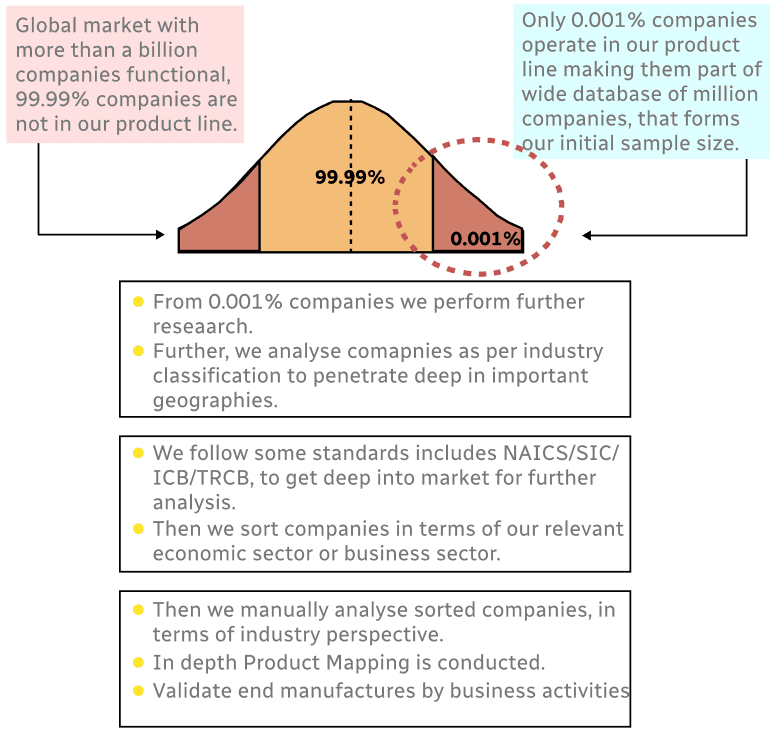
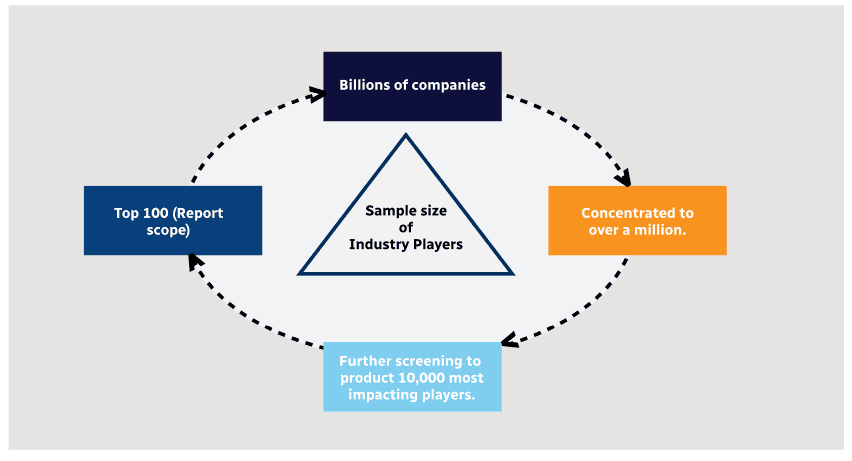
Step 1 - Identification of Relevant Samples Size from Population Database
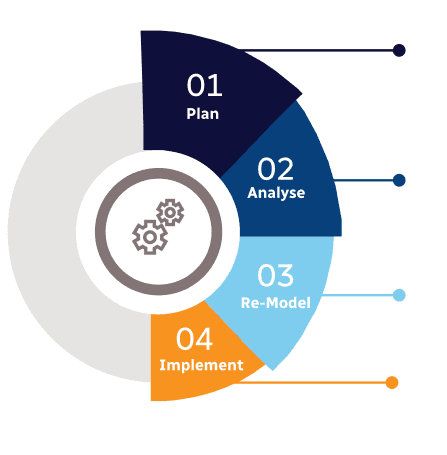
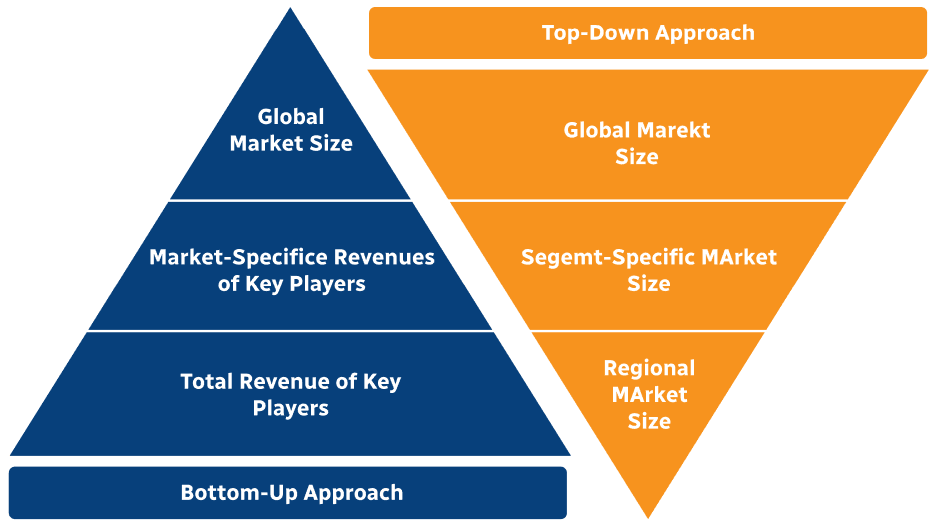
Step 2 - Approaches for Defining Global Market Size (Value, Volume* & Price*)
Note*: In applicable scenarios
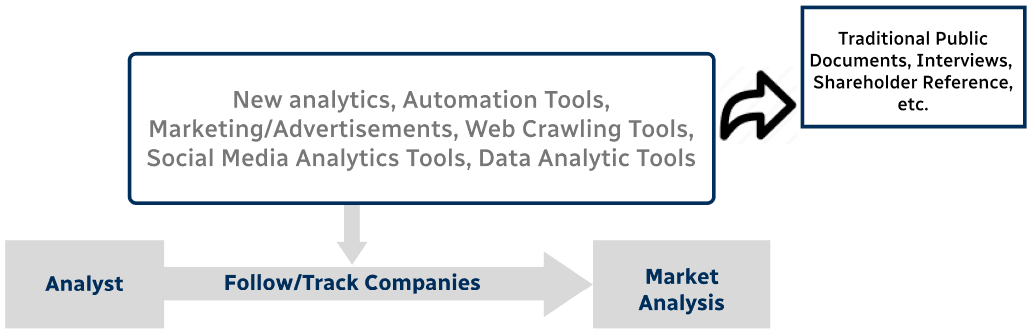
Step 3 - Data Sources
Primary Research
- Web Analytics
- Survey Reports
- Research Institute
- Latest Research Reports
- Opinion Leaders
Secondary Research
- Annual Reports
- White Paper
- Latest Press Release
- Industry Association
- Paid Database
- Investor Presentations
Step 4 - Data Triangulation
Involves using different sources of information in order to increase the validity of a study
These sources are likely to be stakeholders in a program - participants, other researchers, program staff, other community members, and so on.
Then we put all data in single framework & apply various statistical tools to find out the dynamic on the market.
During the analysis stage, feedback from the stakeholder groups would be compared to determine areas of agreement as well as areas of divergence