


Key Insights
The microgravity flight service market is experiencing explosive growth, projected to reach a substantial size driven by increasing demand from various sectors. The market's Compound Annual Growth Rate (CAGR) of 36.2% from 2019 to 2024 indicates a significant upward trajectory. This rapid expansion is fueled by several key factors. Firstly, the burgeoning space tourism industry is a major catalyst, with companies like Virgin Galactic and Blue Origin leading the charge, attracting a growing number of high-net-worth individuals seeking unique experiences. Secondly, the increasing need for microgravity research in scientific fields, particularly pharmaceuticals and materials science, is driving demand for specialized flight services. These experiments benefit from the unique conditions provided by microgravity environments which allow for advancements that cannot be achieved on Earth. Furthermore, the development of more accessible and cost-effective technologies is making microgravity flight services more attainable, widening the market's reach.
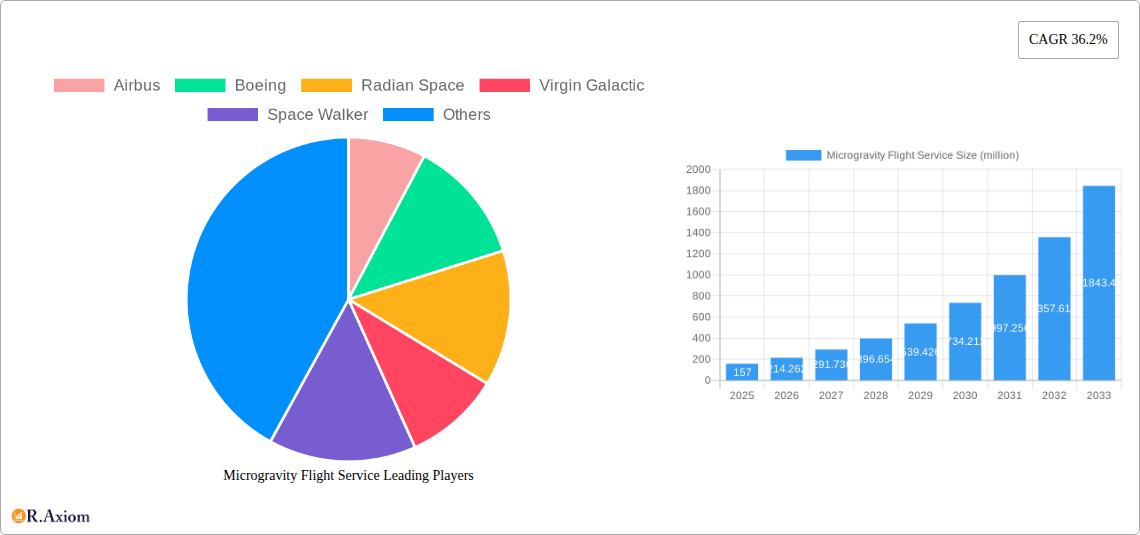
Microgravity Flight Service Market Size (In Million)

However, despite the significant growth potential, the market faces challenges. High operational costs associated with space travel remain a barrier to entry for many potential players. Furthermore, stringent regulatory requirements and safety concerns could potentially impede market expansion. Nevertheless, continued technological advancements, increasing government investment in space exploration, and the broader commercialization of space are expected to outweigh these limitations, leading to sustained growth over the forecast period (2025-2033). The involvement of a diverse range of companies, from established aerospace giants like Airbus and Boeing to innovative startups like Space Walker and Nanoracks, further showcases the market's dynamism and potential. This diversification also suggests a resilient and adaptable market structure, ready to respond to evolving demand and technological breakthroughs.
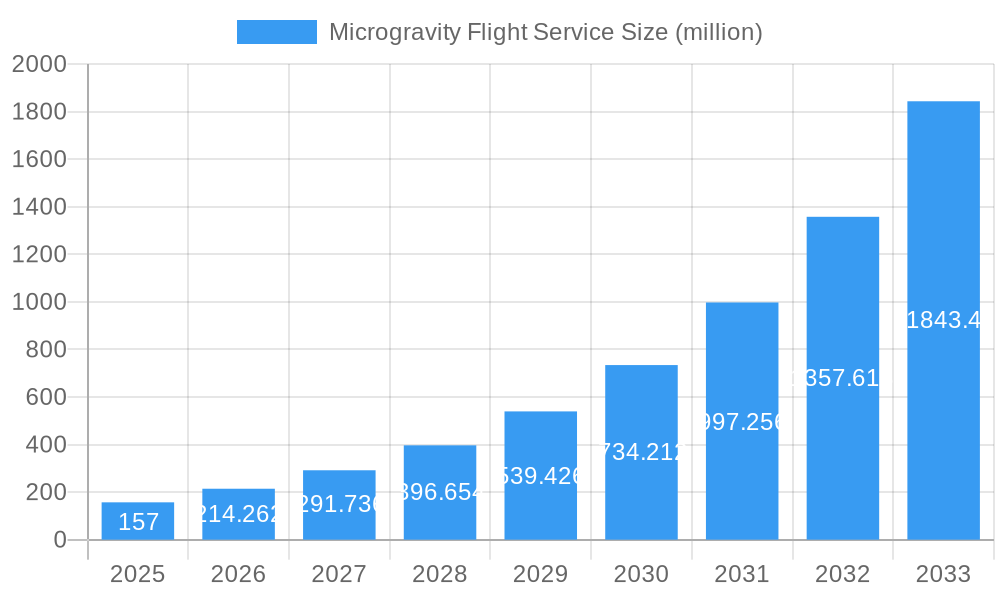
Microgravity Flight Service Company Market Share
Microgravity Flight Service Market: A Comprehensive Report (2019-2033)
This detailed report provides a comprehensive analysis of the global microgravity flight service market, offering invaluable insights for industry stakeholders, investors, and researchers. Covering the period from 2019 to 2033, with a focus on the estimated year 2025, this report unveils the market's dynamics, growth drivers, challenges, and future prospects. The report leverages extensive data analysis, expert interviews, and industry best practices to provide actionable intelligence for informed decision-making. The total market size in 2025 is estimated at $xx million, projected to reach $xx million by 2033, exhibiting a CAGR of xx%.
Microgravity Flight Service Market Concentration & Innovation
This section analyzes the market concentration, innovation landscape, regulatory frameworks, and competitive dynamics within the microgravity flight service industry. The market is characterized by a mix of established aerospace giants and emerging startups, resulting in a moderately concentrated landscape.
- Market Share: Airbus and Boeing hold a significant combined market share of approximately xx%, followed by Virgin Galactic at xx% and other key players such as Zero Gravity Corporation and Nanoracks holding smaller, but impactful shares. The remaining xx% is distributed amongst a larger number of smaller companies.
- M&A Activity: The historical period (2019-2024) witnessed $xx million in M&A activity, primarily driven by larger players acquiring smaller companies with specialized technologies or access to niche markets. The forecast period (2025-2033) anticipates an increase in M&A activity to approximately $xx million, driven by both consolidation and strategic expansion moves.
- Innovation Drivers: Advancements in propulsion systems, materials science, and reusable spacecraft technologies are key innovation drivers. Furthermore, increasing demand from research institutions and private companies for microgravity environments is fueling innovation in flight services.
- Regulatory Landscape: The regulatory environment varies across countries, impacting market entry and operational costs. Stringent safety regulations and licensing requirements are crucial considerations for companies operating in this sector.
- Product Substitutes: While there are no direct substitutes for the unique conditions offered by microgravity flight services, alternative research methods and simulated microgravity environments are gaining traction as cost-effective alternatives in specific applications.
- End-User Trends: Increased utilization from pharmaceuticals, materials science, and fundamental scientific research institutions drives market growth. The burgeoning space tourism segment is also becoming a key driver of market expansion.
Microgravity Flight Service Industry Trends & Insights
The microgravity flight service market is experiencing robust growth, fueled by several key trends. The market is characterized by a high barrier to entry, requiring substantial capital investment and specialized expertise. However, technological advancements and increasing private sector involvement are breaking down these barriers.
The expanding commercialization of space, along with advancements in reusable launch vehicles, is significantly reducing costs. This is leading to greater access and increased demand for microgravity flight services. Consumer preference for sustainable and ethically sourced services is also influencing market development. Competitive dynamics are shifting as established players face challenges from innovative entrants who leverage advanced technologies and streamlined operations. The market demonstrates significant potential for future expansion, with projections indicating strong growth.
Dominant Markets & Segments in Microgravity Flight Service
The North American market currently dominates the microgravity flight service sector, driven primarily by robust funding for space research, a supportive regulatory environment, and the presence of major players like Virgin Galactic and Zero Gravity Corporation. Europe is also a significant market, with several established players and strong research initiatives.
Key Drivers in North America:
- Strong government funding for space research and development.
- A relatively less restrictive regulatory environment compared to other regions.
- Presence of multiple established and emerging companies offering various microgravity flight services.
- High demand from private sectors.
Dominance Analysis: The North American market's dominance is underpinned by its advanced aerospace infrastructure, robust private sector participation and government support driving increased research and development activities. The region is expected to maintain its leadership position, though competitive pressures from the burgeoning European market are anticipated to continue.
Microgravity Flight Service Product Developments
Recent advancements in spacecraft design and technology, including the development of suborbital reusable vehicles, are transforming the microgravity flight service industry. These advancements enable higher payload capacities, increased flight durations, and reduced costs, opening up new opportunities for research and commercial applications. The market is seeing a shift toward more efficient and sustainable platforms, minimizing the environmental impact of space activities.
Report Scope & Segmentation Analysis
This report segments the microgravity flight service market based on various factors including type of service (parabolic flights, suborbital flights, orbital flights), application (scientific research, commercial applications, space tourism), and geographic region. Growth projections, market sizes, and competitive dynamics are provided for each segment. The market is expected to witness high growth across all segments in the coming years, with significant expansion anticipated in space tourism due to growing interest and technological advancements.
Key Drivers of Microgravity Flight Service Growth
Several key factors are propelling the growth of the microgravity flight service market. Firstly, increasing investment in space exploration and research is a major driver. Secondly, technological advancements in spacecraft design and propulsion systems are making microgravity flight more accessible and cost-effective. Thirdly, the rise of space tourism is creating a new, lucrative market segment. The regulatory environment, although challenging, is steadily evolving to foster innovation and growth in this sector.
Challenges in the Microgravity Flight Service Sector
Several significant challenges hinder the growth of the microgravity flight service market. High operational costs remain a major hurdle, limiting accessibility, especially for smaller research institutions. The stringent safety and regulatory requirements associated with spaceflight add to the complexity and expense of operations. Furthermore, intense competition amongst providers necessitates constant innovation and adaptation to maintain market share. These factors pose significant challenges to market expansion.
Emerging Opportunities in Microgravity Flight Service
The microgravity flight service market presents numerous emerging opportunities. Expansion into new applications, such as materials science and pharmaceutical research, is anticipated to drive substantial growth. The development of new technologies and innovative business models could further improve the accessibility and cost-effectiveness of microgravity services. The burgeoning space tourism sector represents an especially significant growth area.
Leading Players in the Microgravity Flight Service Market
- Airbus
- Boeing
- Radian Space
- Virgin Galactic
- Space Walker
- Orbital Engenharia
- Zero Gravity Corporation
- Blue Abyss
- Diamond Air Service Incorporation
- PD Aerospace
- LIDE Space
- ASTRAX Zero Gravity
- Beings Systems
- Kayser Italia
- BlackStar Orbital Technologies
- Space Rickshaw
- Craig Technologies
- Dawn Aerospace
- Deimos One
- ElevationSpace
- Gravitilab
- Japan Manned Space Systems Corporation
- Nanoracks
- Space BD
- Tec-Masters
- Teledyne Brown Engineering
- Telespazio UK
- Toucan Space
- Yuri
Key Developments in Microgravity Flight Service Industry
- 2021 Q4: Virgin Galactic completed its first fully crewed commercial spaceflight, marking a significant milestone for space tourism.
- 2022 Q2: Blue Origin announced a significant investment in developing reusable suborbital spacecraft for microgravity research.
- 2023 Q1: Nanoracks launched a new commercial space station module, offering expanded microgravity research capabilities.
- 2024 Q3: Airbus and Boeing entered a joint venture to develop advanced reusable launch vehicles for microgravity research. (Predicted)
Strategic Outlook for Microgravity Flight Service Market
The future of the microgravity flight service market appears bright. Continuous technological advancements, increased private sector investment, and the growing demand for microgravity environments in various industries, especially space tourism, are expected to drive substantial growth. The market is poised for significant expansion, creating new opportunities for businesses and research institutions alike. Addressing the challenges related to cost, accessibility, and sustainability will remain crucial in shaping the future trajectory of this dynamic sector.
Microgravity Flight Service Segmentation
-
1. Application
- 1.1. Astronaut Training
- 1.2. Scientific Research
- 1.3. Public Enjoyment
-
2. Type
- 2.1. Parabolic Flight
- 2.2. Suborbital Flight
- 2.3. Orbital Flight
Microgravity Flight Service Segmentation By Geography
-
1. North America
- 1.1. United States
- 1.2. Canada
- 1.3. Mexico
-
2. South America
- 2.1. Brazil
- 2.2. Argentina
- 2.3. Rest of South America
-
3. Europe
- 3.1. United Kingdom
- 3.2. Germany
- 3.3. France
- 3.4. Italy
- 3.5. Spain
- 3.6. Russia
- 3.7. Benelux
- 3.8. Nordics
- 3.9. Rest of Europe
-
4. Middle East & Africa
- 4.1. Turkey
- 4.2. Israel
- 4.3. GCC
- 4.4. North Africa
- 4.5. South Africa
- 4.6. Rest of Middle East & Africa
-
5. Asia Pacific
- 5.1. China
- 5.2. India
- 5.3. Japan
- 5.4. South Korea
- 5.5. ASEAN
- 5.6. Oceania
- 5.7. Rest of Asia Pacific
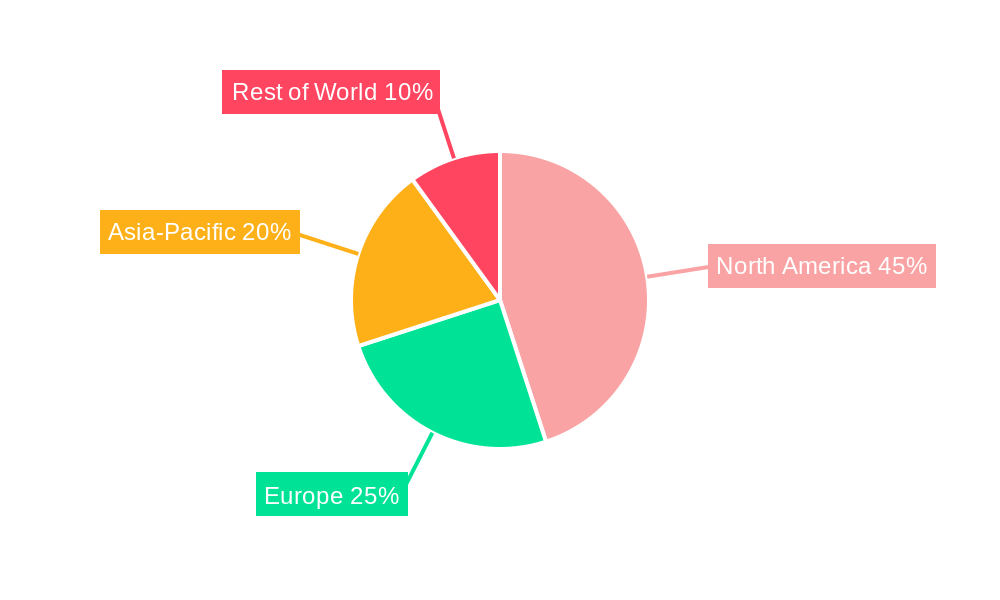
Microgravity Flight Service Regional Market Share
Geographic Coverage of Microgravity Flight Service
Microgravity Flight Service REPORT HIGHLIGHTS
| Aspects | Details |
|---|---|
| Study Period | 2020-2034 |
| Base Year | 2025 |
| Estimated Year | 2026 |
| Forecast Period | 2026-2034 |
| Historical Period | 2020-2025 |
| Growth Rate | CAGR of 36.2% from 2020-2034 |
| Segmentation |
|
Table of Contents
- 1. Introduction
- 1.1. Research Scope
- 1.2. Market Segmentation
- 1.3. Research Methodology
- 1.4. Definitions and Assumptions
- 2. Executive Summary
- 2.1. Introduction
- 3. Market Dynamics
- 3.1. Introduction
- 3.2. Market Drivers
- 3.3. Market Restrains
- 3.4. Market Trends
- 4. Market Factor Analysis
- 4.1. Porters Five Forces
- 4.2. Supply/Value Chain
- 4.3. PESTEL analysis
- 4.4. Market Entropy
- 4.5. Patent/Trademark Analysis
- 5. Global Microgravity Flight Service Analysis, Insights and Forecast, 2020-2032
- 5.1. Market Analysis, Insights and Forecast - by Application
- 5.1.1. Astronaut Training
- 5.1.2. Scientific Research
- 5.1.3. Public Enjoyment
- 5.2. Market Analysis, Insights and Forecast - by Type
- 5.2.1. Parabolic Flight
- 5.2.2. Suborbital Flight
- 5.2.3. Orbital Flight
- 5.3. Market Analysis, Insights and Forecast - by Region
- 5.3.1. North America
- 5.3.2. South America
- 5.3.3. Europe
- 5.3.4. Middle East & Africa
- 5.3.5. Asia Pacific
- 5.1. Market Analysis, Insights and Forecast - by Application
- 6. North America Microgravity Flight Service Analysis, Insights and Forecast, 2020-2032
- 6.1. Market Analysis, Insights and Forecast - by Application
- 6.1.1. Astronaut Training
- 6.1.2. Scientific Research
- 6.1.3. Public Enjoyment
- 6.2. Market Analysis, Insights and Forecast - by Type
- 6.2.1. Parabolic Flight
- 6.2.2. Suborbital Flight
- 6.2.3. Orbital Flight
- 6.1. Market Analysis, Insights and Forecast - by Application
- 7. South America Microgravity Flight Service Analysis, Insights and Forecast, 2020-2032
- 7.1. Market Analysis, Insights and Forecast - by Application
- 7.1.1. Astronaut Training
- 7.1.2. Scientific Research
- 7.1.3. Public Enjoyment
- 7.2. Market Analysis, Insights and Forecast - by Type
- 7.2.1. Parabolic Flight
- 7.2.2. Suborbital Flight
- 7.2.3. Orbital Flight
- 7.1. Market Analysis, Insights and Forecast - by Application
- 8. Europe Microgravity Flight Service Analysis, Insights and Forecast, 2020-2032
- 8.1. Market Analysis, Insights and Forecast - by Application
- 8.1.1. Astronaut Training
- 8.1.2. Scientific Research
- 8.1.3. Public Enjoyment
- 8.2. Market Analysis, Insights and Forecast - by Type
- 8.2.1. Parabolic Flight
- 8.2.2. Suborbital Flight
- 8.2.3. Orbital Flight
- 8.1. Market Analysis, Insights and Forecast - by Application
- 9. Middle East & Africa Microgravity Flight Service Analysis, Insights and Forecast, 2020-2032
- 9.1. Market Analysis, Insights and Forecast - by Application
- 9.1.1. Astronaut Training
- 9.1.2. Scientific Research
- 9.1.3. Public Enjoyment
- 9.2. Market Analysis, Insights and Forecast - by Type
- 9.2.1. Parabolic Flight
- 9.2.2. Suborbital Flight
- 9.2.3. Orbital Flight
- 9.1. Market Analysis, Insights and Forecast - by Application
- 10. Asia Pacific Microgravity Flight Service Analysis, Insights and Forecast, 2020-2032
- 10.1. Market Analysis, Insights and Forecast - by Application
- 10.1.1. Astronaut Training
- 10.1.2. Scientific Research
- 10.1.3. Public Enjoyment
- 10.2. Market Analysis, Insights and Forecast - by Type
- 10.2.1. Parabolic Flight
- 10.2.2. Suborbital Flight
- 10.2.3. Orbital Flight
- 10.1. Market Analysis, Insights and Forecast - by Application
- 11. Competitive Analysis
- 11.1. Global Market Share Analysis 2025
- 11.2. Company Profiles
- 11.2.1 Airbus
- 11.2.1.1. Overview
- 11.2.1.2. Products
- 11.2.1.3. SWOT Analysis
- 11.2.1.4. Recent Developments
- 11.2.1.5. Financials (Based on Availability)
- 11.2.2 Boeing
- 11.2.2.1. Overview
- 11.2.2.2. Products
- 11.2.2.3. SWOT Analysis
- 11.2.2.4. Recent Developments
- 11.2.2.5. Financials (Based on Availability)
- 11.2.3 Radian Space
- 11.2.3.1. Overview
- 11.2.3.2. Products
- 11.2.3.3. SWOT Analysis
- 11.2.3.4. Recent Developments
- 11.2.3.5. Financials (Based on Availability)
- 11.2.4 Virgin Galactic
- 11.2.4.1. Overview
- 11.2.4.2. Products
- 11.2.4.3. SWOT Analysis
- 11.2.4.4. Recent Developments
- 11.2.4.5. Financials (Based on Availability)
- 11.2.5 Space Walker
- 11.2.5.1. Overview
- 11.2.5.2. Products
- 11.2.5.3. SWOT Analysis
- 11.2.5.4. Recent Developments
- 11.2.5.5. Financials (Based on Availability)
- 11.2.6 Orbital Engenharia
- 11.2.6.1. Overview
- 11.2.6.2. Products
- 11.2.6.3. SWOT Analysis
- 11.2.6.4. Recent Developments
- 11.2.6.5. Financials (Based on Availability)
- 11.2.7 Zero Gravity Corporation
- 11.2.7.1. Overview
- 11.2.7.2. Products
- 11.2.7.3. SWOT Analysis
- 11.2.7.4. Recent Developments
- 11.2.7.5. Financials (Based on Availability)
- 11.2.8 Blue Abyss
- 11.2.8.1. Overview
- 11.2.8.2. Products
- 11.2.8.3. SWOT Analysis
- 11.2.8.4. Recent Developments
- 11.2.8.5. Financials (Based on Availability)
- 11.2.9 Diamond Air Service Incorporation
- 11.2.9.1. Overview
- 11.2.9.2. Products
- 11.2.9.3. SWOT Analysis
- 11.2.9.4. Recent Developments
- 11.2.9.5. Financials (Based on Availability)
- 11.2.10 PD Aerospace
- 11.2.10.1. Overview
- 11.2.10.2. Products
- 11.2.10.3. SWOT Analysis
- 11.2.10.4. Recent Developments
- 11.2.10.5. Financials (Based on Availability)
- 11.2.11 LIDE Space
- 11.2.11.1. Overview
- 11.2.11.2. Products
- 11.2.11.3. SWOT Analysis
- 11.2.11.4. Recent Developments
- 11.2.11.5. Financials (Based on Availability)
- 11.2.12 ASTRAX Zero Gravity
- 11.2.12.1. Overview
- 11.2.12.2. Products
- 11.2.12.3. SWOT Analysis
- 11.2.12.4. Recent Developments
- 11.2.12.5. Financials (Based on Availability)
- 11.2.13 Beings Systems
- 11.2.13.1. Overview
- 11.2.13.2. Products
- 11.2.13.3. SWOT Analysis
- 11.2.13.4. Recent Developments
- 11.2.13.5. Financials (Based on Availability)
- 11.2.14 Kayser Italia
- 11.2.14.1. Overview
- 11.2.14.2. Products
- 11.2.14.3. SWOT Analysis
- 11.2.14.4. Recent Developments
- 11.2.14.5. Financials (Based on Availability)
- 11.2.15 BlackStar Orbital Technologies
- 11.2.15.1. Overview
- 11.2.15.2. Products
- 11.2.15.3. SWOT Analysis
- 11.2.15.4. Recent Developments
- 11.2.15.5. Financials (Based on Availability)
- 11.2.16 Space Rickshaw
- 11.2.16.1. Overview
- 11.2.16.2. Products
- 11.2.16.3. SWOT Analysis
- 11.2.16.4. Recent Developments
- 11.2.16.5. Financials (Based on Availability)
- 11.2.17 Craig Technologies
- 11.2.17.1. Overview
- 11.2.17.2. Products
- 11.2.17.3. SWOT Analysis
- 11.2.17.4. Recent Developments
- 11.2.17.5. Financials (Based on Availability)
- 11.2.18 Dawn Aerospace
- 11.2.18.1. Overview
- 11.2.18.2. Products
- 11.2.18.3. SWOT Analysis
- 11.2.18.4. Recent Developments
- 11.2.18.5. Financials (Based on Availability)
- 11.2.19 Deimos One
- 11.2.19.1. Overview
- 11.2.19.2. Products
- 11.2.19.3. SWOT Analysis
- 11.2.19.4. Recent Developments
- 11.2.19.5. Financials (Based on Availability)
- 11.2.20 ElevationSpace
- 11.2.20.1. Overview
- 11.2.20.2. Products
- 11.2.20.3. SWOT Analysis
- 11.2.20.4. Recent Developments
- 11.2.20.5. Financials (Based on Availability)
- 11.2.21 Gravitilab
- 11.2.21.1. Overview
- 11.2.21.2. Products
- 11.2.21.3. SWOT Analysis
- 11.2.21.4. Recent Developments
- 11.2.21.5. Financials (Based on Availability)
- 11.2.22 Japan Manned Space Systems Corporation
- 11.2.22.1. Overview
- 11.2.22.2. Products
- 11.2.22.3. SWOT Analysis
- 11.2.22.4. Recent Developments
- 11.2.22.5. Financials (Based on Availability)
- 11.2.23 Nanoracks
- 11.2.23.1. Overview
- 11.2.23.2. Products
- 11.2.23.3. SWOT Analysis
- 11.2.23.4. Recent Developments
- 11.2.23.5. Financials (Based on Availability)
- 11.2.24 Space BD
- 11.2.24.1. Overview
- 11.2.24.2. Products
- 11.2.24.3. SWOT Analysis
- 11.2.24.4. Recent Developments
- 11.2.24.5. Financials (Based on Availability)
- 11.2.25 Tec-Masters
- 11.2.25.1. Overview
- 11.2.25.2. Products
- 11.2.25.3. SWOT Analysis
- 11.2.25.4. Recent Developments
- 11.2.25.5. Financials (Based on Availability)
- 11.2.26 Teledyne Brown Engineering
- 11.2.26.1. Overview
- 11.2.26.2. Products
- 11.2.26.3. SWOT Analysis
- 11.2.26.4. Recent Developments
- 11.2.26.5. Financials (Based on Availability)
- 11.2.27 Telespazio UK
- 11.2.27.1. Overview
- 11.2.27.2. Products
- 11.2.27.3. SWOT Analysis
- 11.2.27.4. Recent Developments
- 11.2.27.5. Financials (Based on Availability)
- 11.2.28 Toucan Space
- 11.2.28.1. Overview
- 11.2.28.2. Products
- 11.2.28.3. SWOT Analysis
- 11.2.28.4. Recent Developments
- 11.2.28.5. Financials (Based on Availability)
- 11.2.29 Yuri
- 11.2.29.1. Overview
- 11.2.29.2. Products
- 11.2.29.3. SWOT Analysis
- 11.2.29.4. Recent Developments
- 11.2.29.5. Financials (Based on Availability)
- 11.2.1 Airbus
List of Figures
- Figure 1: Global Microgravity Flight Service Revenue Breakdown (million, %) by Region 2025 & 2033
- Figure 2: North America Microgravity Flight Service Revenue (million), by Application 2025 & 2033
- Figure 3: North America Microgravity Flight Service Revenue Share (%), by Application 2025 & 2033
- Figure 4: North America Microgravity Flight Service Revenue (million), by Type 2025 & 2033
- Figure 5: North America Microgravity Flight Service Revenue Share (%), by Type 2025 & 2033
- Figure 6: North America Microgravity Flight Service Revenue (million), by Country 2025 & 2033
- Figure 7: North America Microgravity Flight Service Revenue Share (%), by Country 2025 & 2033
- Figure 8: South America Microgravity Flight Service Revenue (million), by Application 2025 & 2033
- Figure 9: South America Microgravity Flight Service Revenue Share (%), by Application 2025 & 2033
- Figure 10: South America Microgravity Flight Service Revenue (million), by Type 2025 & 2033
- Figure 11: South America Microgravity Flight Service Revenue Share (%), by Type 2025 & 2033
- Figure 12: South America Microgravity Flight Service Revenue (million), by Country 2025 & 2033
- Figure 13: South America Microgravity Flight Service Revenue Share (%), by Country 2025 & 2033
- Figure 14: Europe Microgravity Flight Service Revenue (million), by Application 2025 & 2033
- Figure 15: Europe Microgravity Flight Service Revenue Share (%), by Application 2025 & 2033
- Figure 16: Europe Microgravity Flight Service Revenue (million), by Type 2025 & 2033
- Figure 17: Europe Microgravity Flight Service Revenue Share (%), by Type 2025 & 2033
- Figure 18: Europe Microgravity Flight Service Revenue (million), by Country 2025 & 2033
- Figure 19: Europe Microgravity Flight Service Revenue Share (%), by Country 2025 & 2033
- Figure 20: Middle East & Africa Microgravity Flight Service Revenue (million), by Application 2025 & 2033
- Figure 21: Middle East & Africa Microgravity Flight Service Revenue Share (%), by Application 2025 & 2033
- Figure 22: Middle East & Africa Microgravity Flight Service Revenue (million), by Type 2025 & 2033
- Figure 23: Middle East & Africa Microgravity Flight Service Revenue Share (%), by Type 2025 & 2033
- Figure 24: Middle East & Africa Microgravity Flight Service Revenue (million), by Country 2025 & 2033
- Figure 25: Middle East & Africa Microgravity Flight Service Revenue Share (%), by Country 2025 & 2033
- Figure 26: Asia Pacific Microgravity Flight Service Revenue (million), by Application 2025 & 2033
- Figure 27: Asia Pacific Microgravity Flight Service Revenue Share (%), by Application 2025 & 2033
- Figure 28: Asia Pacific Microgravity Flight Service Revenue (million), by Type 2025 & 2033
- Figure 29: Asia Pacific Microgravity Flight Service Revenue Share (%), by Type 2025 & 2033
- Figure 30: Asia Pacific Microgravity Flight Service Revenue (million), by Country 2025 & 2033
- Figure 31: Asia Pacific Microgravity Flight Service Revenue Share (%), by Country 2025 & 2033
List of Tables
- Table 1: Global Microgravity Flight Service Revenue million Forecast, by Application 2020 & 2033
- Table 2: Global Microgravity Flight Service Revenue million Forecast, by Type 2020 & 2033
- Table 3: Global Microgravity Flight Service Revenue million Forecast, by Region 2020 & 2033
- Table 4: Global Microgravity Flight Service Revenue million Forecast, by Application 2020 & 2033
- Table 5: Global Microgravity Flight Service Revenue million Forecast, by Type 2020 & 2033
- Table 6: Global Microgravity Flight Service Revenue million Forecast, by Country 2020 & 2033
- Table 7: United States Microgravity Flight Service Revenue (million) Forecast, by Application 2020 & 2033
- Table 8: Canada Microgravity Flight Service Revenue (million) Forecast, by Application 2020 & 2033
- Table 9: Mexico Microgravity Flight Service Revenue (million) Forecast, by Application 2020 & 2033
- Table 10: Global Microgravity Flight Service Revenue million Forecast, by Application 2020 & 2033
- Table 11: Global Microgravity Flight Service Revenue million Forecast, by Type 2020 & 2033
- Table 12: Global Microgravity Flight Service Revenue million Forecast, by Country 2020 & 2033
- Table 13: Brazil Microgravity Flight Service Revenue (million) Forecast, by Application 2020 & 2033
- Table 14: Argentina Microgravity Flight Service Revenue (million) Forecast, by Application 2020 & 2033
- Table 15: Rest of South America Microgravity Flight Service Revenue (million) Forecast, by Application 2020 & 2033
- Table 16: Global Microgravity Flight Service Revenue million Forecast, by Application 2020 & 2033
- Table 17: Global Microgravity Flight Service Revenue million Forecast, by Type 2020 & 2033
- Table 18: Global Microgravity Flight Service Revenue million Forecast, by Country 2020 & 2033
- Table 19: United Kingdom Microgravity Flight Service Revenue (million) Forecast, by Application 2020 & 2033
- Table 20: Germany Microgravity Flight Service Revenue (million) Forecast, by Application 2020 & 2033
- Table 21: France Microgravity Flight Service Revenue (million) Forecast, by Application 2020 & 2033
- Table 22: Italy Microgravity Flight Service Revenue (million) Forecast, by Application 2020 & 2033
- Table 23: Spain Microgravity Flight Service Revenue (million) Forecast, by Application 2020 & 2033
- Table 24: Russia Microgravity Flight Service Revenue (million) Forecast, by Application 2020 & 2033
- Table 25: Benelux Microgravity Flight Service Revenue (million) Forecast, by Application 2020 & 2033
- Table 26: Nordics Microgravity Flight Service Revenue (million) Forecast, by Application 2020 & 2033
- Table 27: Rest of Europe Microgravity Flight Service Revenue (million) Forecast, by Application 2020 & 2033
- Table 28: Global Microgravity Flight Service Revenue million Forecast, by Application 2020 & 2033
- Table 29: Global Microgravity Flight Service Revenue million Forecast, by Type 2020 & 2033
- Table 30: Global Microgravity Flight Service Revenue million Forecast, by Country 2020 & 2033
- Table 31: Turkey Microgravity Flight Service Revenue (million) Forecast, by Application 2020 & 2033
- Table 32: Israel Microgravity Flight Service Revenue (million) Forecast, by Application 2020 & 2033
- Table 33: GCC Microgravity Flight Service Revenue (million) Forecast, by Application 2020 & 2033
- Table 34: North Africa Microgravity Flight Service Revenue (million) Forecast, by Application 2020 & 2033
- Table 35: South Africa Microgravity Flight Service Revenue (million) Forecast, by Application 2020 & 2033
- Table 36: Rest of Middle East & Africa Microgravity Flight Service Revenue (million) Forecast, by Application 2020 & 2033
- Table 37: Global Microgravity Flight Service Revenue million Forecast, by Application 2020 & 2033
- Table 38: Global Microgravity Flight Service Revenue million Forecast, by Type 2020 & 2033
- Table 39: Global Microgravity Flight Service Revenue million Forecast, by Country 2020 & 2033
- Table 40: China Microgravity Flight Service Revenue (million) Forecast, by Application 2020 & 2033
- Table 41: India Microgravity Flight Service Revenue (million) Forecast, by Application 2020 & 2033
- Table 42: Japan Microgravity Flight Service Revenue (million) Forecast, by Application 2020 & 2033
- Table 43: South Korea Microgravity Flight Service Revenue (million) Forecast, by Application 2020 & 2033
- Table 44: ASEAN Microgravity Flight Service Revenue (million) Forecast, by Application 2020 & 2033
- Table 45: Oceania Microgravity Flight Service Revenue (million) Forecast, by Application 2020 & 2033
- Table 46: Rest of Asia Pacific Microgravity Flight Service Revenue (million) Forecast, by Application 2020 & 2033
Frequently Asked Questions
1. What is the projected Compound Annual Growth Rate (CAGR) of the Microgravity Flight Service?
The projected CAGR is approximately 36.2%.
2. Which companies are prominent players in the Microgravity Flight Service?
Key companies in the market include Airbus, Boeing, Radian Space, Virgin Galactic, Space Walker, Orbital Engenharia, Zero Gravity Corporation, Blue Abyss, Diamond Air Service Incorporation, PD Aerospace, LIDE Space, ASTRAX Zero Gravity, Beings Systems, Kayser Italia, BlackStar Orbital Technologies, Space Rickshaw, Craig Technologies, Dawn Aerospace, Deimos One, ElevationSpace, Gravitilab, Japan Manned Space Systems Corporation, Nanoracks, Space BD, Tec-Masters, Teledyne Brown Engineering, Telespazio UK, Toucan Space, Yuri.
3. What are the main segments of the Microgravity Flight Service?
The market segments include Application, Type.
4. Can you provide details about the market size?
The market size is estimated to be USD 157 million as of 2022.
5. What are some drivers contributing to market growth?
N/A
6. What are the notable trends driving market growth?
N/A
7. Are there any restraints impacting market growth?
N/A
8. Can you provide examples of recent developments in the market?
N/A
9. What pricing options are available for accessing the report?
Pricing options include single-user, multi-user, and enterprise licenses priced at USD 3950.00, USD 5925.00, and USD 7900.00 respectively.
10. Is the market size provided in terms of value or volume?
The market size is provided in terms of value, measured in million.
11. Are there any specific market keywords associated with the report?
Yes, the market keyword associated with the report is "Microgravity Flight Service," which aids in identifying and referencing the specific market segment covered.
12. How do I determine which pricing option suits my needs best?
The pricing options vary based on user requirements and access needs. Individual users may opt for single-user licenses, while businesses requiring broader access may choose multi-user or enterprise licenses for cost-effective access to the report.
13. Are there any additional resources or data provided in the Microgravity Flight Service report?
While the report offers comprehensive insights, it's advisable to review the specific contents or supplementary materials provided to ascertain if additional resources or data are available.
14. How can I stay updated on further developments or reports in the Microgravity Flight Service?
To stay informed about further developments, trends, and reports in the Microgravity Flight Service, consider subscribing to industry newsletters, following relevant companies and organizations, or regularly checking reputable industry news sources and publications.
Methodology
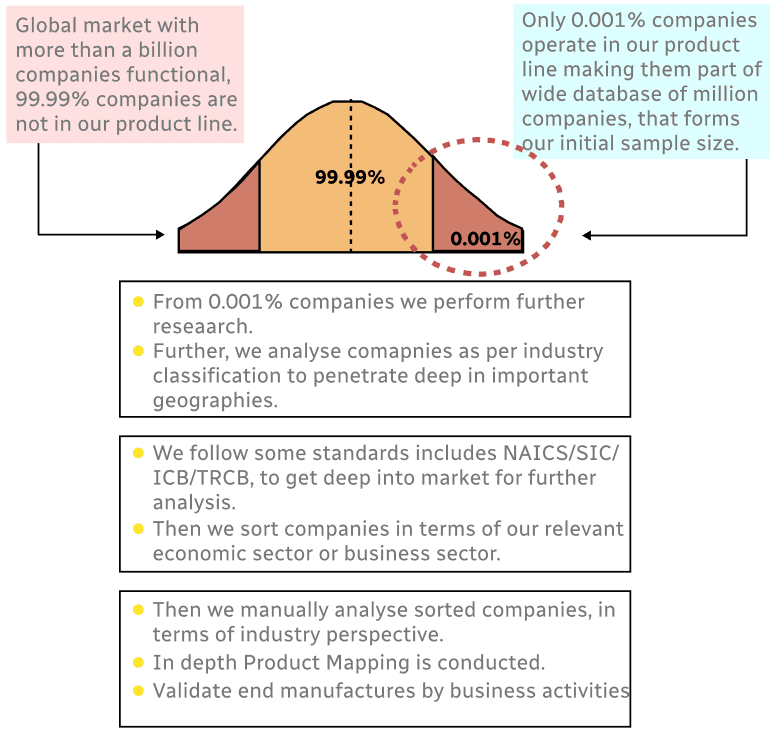
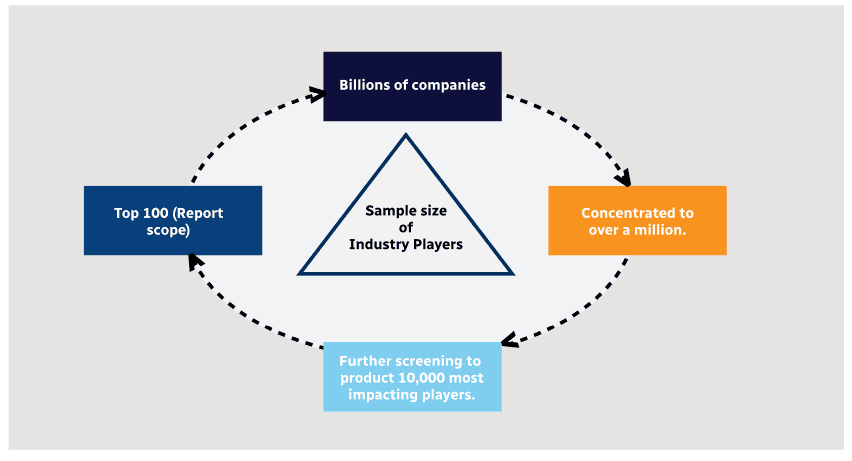
Step 1 - Identification of Relevant Samples Size from Population Database
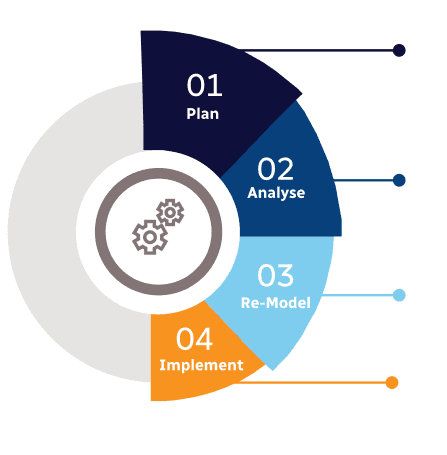
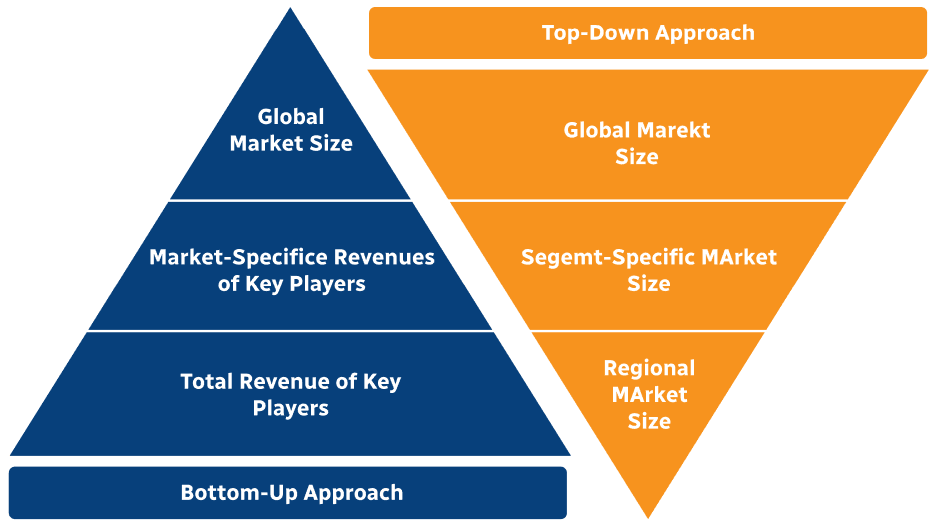
Step 2 - Approaches for Defining Global Market Size (Value, Volume* & Price*)
Note*: In applicable scenarios
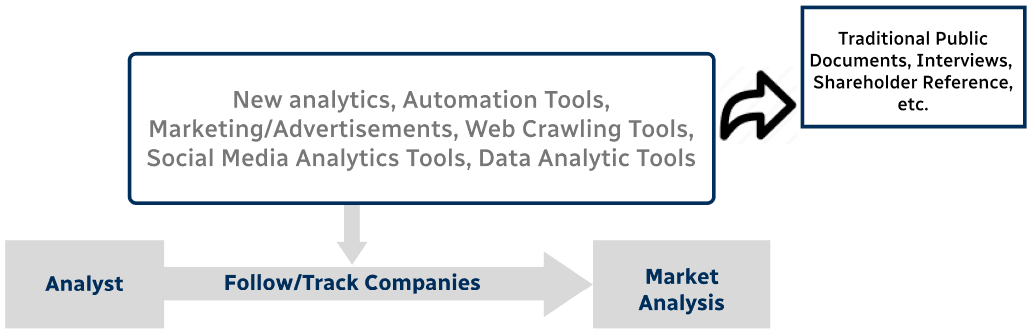
Step 3 - Data Sources
Primary Research
- Web Analytics
- Survey Reports
- Research Institute
- Latest Research Reports
- Opinion Leaders
Secondary Research
- Annual Reports
- White Paper
- Latest Press Release
- Industry Association
- Paid Database
- Investor Presentations
Step 4 - Data Triangulation
Involves using different sources of information in order to increase the validity of a study
These sources are likely to be stakeholders in a program - participants, other researchers, program staff, other community members, and so on.
Then we put all data in single framework & apply various statistical tools to find out the dynamic on the market.
During the analysis stage, feedback from the stakeholder groups would be compared to determine areas of agreement as well as areas of divergence