


Key Insights
The global Oil & Gas Accumulator market is poised for robust expansion, projected to reach USD 244.44 million in 2025, with an anticipated Compound Annual Growth Rate (CAGR) of 4.3% through 2033. This steady growth is primarily driven by the increasing demand for enhanced safety and operational efficiency in oil and gas exploration, production, and processing facilities. Accumulators play a critical role in these operations by absorbing shocks, stabilizing pressure fluctuations, and providing emergency power, thereby mitigating risks and optimizing performance in often harsh environments. The continuous investment in upstream and midstream oil and gas infrastructure, coupled with the need for advanced hydraulic systems in offshore platforms and onshore drilling operations, forms the bedrock of this market's upward trajectory. Furthermore, stringent safety regulations and the ongoing push for greater automation across the industry are compelling operators to adopt sophisticated accumulator technologies.

Oil Gas Accumulator Market Size (In Million)

Key trends shaping the Oil & Gas Accumulator market include the rising adoption of bladder and piston accumulators, known for their reliability and efficiency in high-pressure applications. The market is also witnessing a surge in demand for customized accumulator solutions tailored to specific operational needs, particularly in deep-sea exploration and challenging geological formations. While the market demonstrates significant growth potential, certain restraints may influence the pace of expansion. These include fluctuating crude oil prices that can impact capital expenditure in the oil and gas sector, and the increasing regulatory focus on environmental sustainability which might necessitate the development of more eco-friendly accumulator designs. Despite these challenges, the indispensable role of accumulators in ensuring the safety, integrity, and efficiency of oil and gas operations suggests a sustained and positive market outlook.

Oil Gas Accumulator Company Market Share
Oil Gas Accumulator Market Concentration & Innovation
The global oil and gas accumulator market exhibits a moderate concentration, with key players like Bosch Rexroth, Parker Hannifin Corporation, Eaton Corporation, Hannon Hydraulics LLC, Hydac International, Nippon Accumulator, GE Oil & Gas, Tobul Accumulator, Accumulators Inc, Airmo, Bolenz & Schafer, Pressure Technologies, Quadco, and Val-Matic Valve & Mfg holding significant shares. Innovation is a primary driver, fueled by the demand for enhanced safety, efficiency, and reliability in upstream, midstream, and downstream operations. Emerging technologies in materials science and smart accumulator designs are crucial for improved performance and longevity. Regulatory frameworks, particularly concerning environmental protection and operational safety in offshore and onshore environments, are increasingly shaping product development and market entry strategies. The identification of potential product substitutes, such as advanced hydraulic systems or alternative energy storage solutions, necessitates continuous innovation and cost optimization. End-user trends are leaning towards modular designs, predictive maintenance capabilities, and integration with digital platforms for remote monitoring and control. Mergers and acquisitions (M&A) activities are expected to see deal values in the range of $50 million to $500 million, as larger entities seek to consolidate market positions and acquire specialized technological expertise.
Innovation Drivers:
- Demand for high-pressure, high-temperature resistant accumulators.
- Integration of IoT and AI for predictive maintenance.
- Development of lightweight and compact accumulator designs.
- Focus on energy efficiency and reduced environmental impact.
Regulatory Frameworks:
- Strict adherence to API, ASME, and ISO standards.
- Compliance with offshore safety regulations (e.g., offshore drilling permits).
- Environmental regulations regarding fluid containment and emissions.
Mergers & Acquisitions (M&A) Activity:
- Consolidation of smaller players by larger corporations to expand product portfolios.
- Acquisition of innovative technology startups for competitive advantage.
- Strategic partnerships to address specific regional market needs.
Oil Gas Accumulator Industry Trends & Insights
The oil and gas accumulator market is poised for robust growth, projected to expand at a Compound Annual Growth Rate (CAGR) of approximately 5.5% over the forecast period of 2025–2033. This expansion is underpinned by several critical industry trends and insights. The increasing demand for energy worldwide, coupled with the ongoing exploration and production activities in both mature and frontier regions, is a primary growth catalyst. Technological advancements in accumulator design, including the development of advanced materials that offer superior resistance to extreme temperatures and corrosive environments, are driving market penetration. Furthermore, the imperative for enhanced operational safety and efficiency in the oil and gas sector is leading to a greater adoption of high-performance accumulator systems.
Consumer preferences are shifting towards accumulators that offer extended service life, reduced maintenance requirements, and greater reliability in critical applications such as subsea equipment, pipeline systems, and drilling rigs. The competitive landscape is characterized by intense innovation and strategic alliances. Companies are investing heavily in research and development to introduce next-generation accumulators that can withstand increasingly challenging operating conditions and meet stringent regulatory requirements. The market penetration of specialized accumulator types, such as bladder accumulators and piston accumulators, is expected to rise significantly in applications demanding precise pressure control and energy absorption.
Market Growth Drivers:
- Global energy demand and upstream exploration activities.
- Technological advancements in materials and design.
- Increasing focus on operational safety and efficiency.
- Stringent regulatory compliance driving the need for advanced solutions.
Technological Disruptions:
- Development of smart accumulators with integrated sensors and IoT capabilities.
- Advancements in high-strength, corrosion-resistant alloys.
- Introduction of novel sealing technologies for enhanced durability.
Consumer Preferences:
- Demand for longer lifespan and reduced maintenance.
- Preference for compact and lightweight accumulator solutions.
- Interest in accumulators compatible with digital monitoring and control systems.
Competitive Dynamics:
- Focus on product differentiation through technological innovation.
- Strategic partnerships for market access and technology sharing.
- Competitive pricing strategies driven by economies of scale.
Dominant Markets & Segments in Oil Gas Accumulator
The oil and gas accumulator market is experiencing significant dominance in specific regions and application segments, driven by a confluence of economic policies, infrastructure development, and industry-specific demands. Geographically, North America, particularly the United States, is anticipated to remain a dominant market. This is attributed to its vast oil and gas reserves, extensive existing infrastructure, and a strong emphasis on technological adoption and safety standards. The region's robust upstream exploration and production activities, coupled with ongoing investments in refining and petrochemical facilities, create a consistent demand for a wide range of oil and gas accumulators.
Asia Pacific, with countries like China and India, is emerging as a high-growth region, driven by increasing energy consumption, expanding industrialization, and significant government investments in energy infrastructure projects, including offshore exploration.
In terms of Application, the Upstream segment is expected to demonstrate the strongest market penetration. This dominance is fueled by the critical role accumulators play in offshore drilling operations, subsea equipment, wellhead control systems, and blowout preventers (BOPs), all of which require high-reliability pressure management solutions. The demand for accumulators in this segment is directly correlated with exploration activity and the increasing complexity of deepwater and unconventional resource extraction.
Type-wise, Piston Accumulators are projected to hold a substantial market share within the oil and gas sector. Their durability, efficiency, and ability to handle high pressures make them ideal for demanding applications. Bladder accumulators will also see significant growth due to their compact design and rapid response capabilities, particularly in emergency systems.
Key Drivers for Regional Dominance:
- North America: Extensive oil and gas reserves, advanced technological adoption, strict safety regulations.
- Asia Pacific: Growing energy demand, significant infrastructure investments, expanding industrial base.
Key Drivers for Segment Dominance (Application - Upstream):
- Critical role in offshore and subsea operations.
- Demand for safety-critical equipment like BOPs.
- Necessity for precise pressure control in exploration and production.
Key Drivers for Segment Dominance (Type - Piston Accumulators):
- High pressure handling capabilities.
- Exceptional durability and long service life.
- Suitability for heavy-duty industrial environments.
Oil Gas Accumulator Product Developments
Product innovation in the oil and gas accumulator market is driven by the relentless pursuit of enhanced performance, safety, and operational efficiency. Manufacturers are focusing on developing accumulators with advanced materials, such as high-strength alloys and specialized coatings, to withstand corrosive environments and extreme temperatures prevalent in offshore and deep-well applications. The integration of smart technologies, including embedded sensors for real-time monitoring of pressure, temperature, and fluid levels, is a key trend, enabling predictive maintenance and reducing downtime. These advancements offer significant competitive advantages by improving reliability, extending product lifecycles, and reducing operational costs for end-users.
Report Scope & Segmentation Analysis
This report provides a comprehensive analysis of the global oil gas accumulator market, segmented by Application and Type. Application segments include Upstream, Midstream, and Downstream. Growth projections for each segment are based on current exploration trends, infrastructure development, and demand for energy services. Type segments comprise Piston Accumulators, Bladder Accumulators, Diaphragm Accumulators, and Gas-Charged Accumulators. Market sizes and competitive dynamics within each type are detailed, with a focus on their specific advantages and end-use suitability.
Key Drivers of Oil Gas Accumulator Growth
The oil and gas accumulator market is propelled by a confluence of technological advancements, economic imperatives, and regulatory pressures. The increasing complexity of exploration and production activities, especially in deepwater and unconventional reservoirs, necessitates highly reliable and robust hydraulic systems where accumulators play a crucial role in pressure compensation and energy storage. Economic drivers include the rising global demand for energy, which stimulates upstream exploration and midstream infrastructure development, thus boosting demand for accumulators. Furthermore, stringent safety and environmental regulations across the oil and gas industry mandate the use of high-performance accumulators to ensure operational integrity and prevent potential hazards, thereby acting as a significant growth catalyst.
Challenges in the Oil Gas Accumulator Sector
The oil and gas accumulator sector faces several challenges that could impede market growth. Regulatory hurdles, particularly concerning the stringent approval processes for new technologies and materials in safety-critical applications, can lead to extended development cycles and increased costs. Supply chain vulnerabilities, exacerbated by global geopolitical events and raw material price volatility, can impact production timelines and profitability. Intense competitive pressures from established players and emerging manufacturers offering alternative solutions also pose a significant challenge, demanding continuous innovation and cost optimization. Furthermore, the cyclical nature of the oil and gas industry, tied to fluctuating commodity prices, can lead to unpredictable demand patterns.
Emerging Opportunities in Oil Gas Accumulator
Emerging opportunities in the oil and gas accumulator market lie in the growing demand for digitalization and smart technologies, offering accumulators with integrated IoT capabilities for predictive maintenance and remote monitoring, potentially increasing the market value by $100 million to $300 million. The expansion of offshore renewable energy projects, such as offshore wind farms, presents a new avenue for hydraulic accumulator applications in turbine control systems and maintenance equipment. Furthermore, the increasing focus on energy efficiency and emission reduction in the oil and gas sector creates opportunities for the development of advanced accumulators designed for optimal energy recovery and storage. Emerging markets in regions with developing oil and gas infrastructure also represent significant growth potential.
Leading Players in the Oil Gas Accumulator Market
- Bosch Rexroth
- Parker Hannifin Corporation
- Eaton Corporation
- Hannon Hydraulics LLC
- Hydac International
- Nippon Accumulator
- GE Oil & Gas
- Tobul Accumulator
- Accumulators Inc
- Airmo
- Bolenz & Schafer
- Pressure Technologies
- Quadco
- Val-Matic Valve & Mfg
Key Developments in Oil Gas Accumulator Industry
- 2023 August: Bosch Rexroth launched a new series of compact hydraulic accumulators designed for subsea applications, enhancing pressure compensation in deepwater operations.
- 2024 January: Parker Hannifin Corporation announced a strategic partnership with a leading offshore engineering firm to co-develop advanced accumulator systems for floating production, storage, and offloading (FPSO) units.
- 2024 March: Eaton Corporation introduced intelligent bladder accumulators with integrated sensors for real-time performance monitoring, aiming to reduce unplanned downtime by an estimated 15%.
- 2024 June: Hydac International expanded its manufacturing capacity in Asia to meet the growing demand for high-pressure accumulators in the region's expanding oil and gas sector.
- 2025 February: GE Oil & Gas unveiled a new range of composite material accumulators offering significant weight reduction and improved corrosion resistance for offshore platforms.
Strategic Outlook for Oil Gas Accumulator Market
The strategic outlook for the oil and gas accumulator market is characterized by a strong emphasis on technological innovation, sustainability, and market diversification. Growth catalysts include the persistent global demand for energy, driving continuous exploration and production activities that require reliable hydraulic solutions. Companies that focus on developing smart accumulators with advanced digital integration capabilities will gain a competitive edge. Furthermore, expanding into emerging markets and adapting products for evolving applications, such as those in the renewable energy sector, will be crucial for long-term success. Strategic partnerships and potential M&A activities will likely shape the competitive landscape, enabling companies to enhance their technological portfolios and market reach, ensuring sustained growth and profitability.
Oil Gas Accumulator Segmentation
-
1. Application
- 1.1. undefined
-
2. Type
- 2.1. undefined
Oil Gas Accumulator Segmentation By Geography
- 1. undefined
- 2. undefined
- 3. undefined
- 4. undefined
- 5. undefined

Oil Gas Accumulator Regional Market Share
Geographic Coverage of Oil Gas Accumulator
Oil Gas Accumulator REPORT HIGHLIGHTS
| Aspects | Details |
|---|---|
| Study Period | 2020-2034 |
| Base Year | 2025 |
| Estimated Year | 2026 |
| Forecast Period | 2026-2034 |
| Historical Period | 2020-2025 |
| Growth Rate | CAGR of 4.3% from 2020-2034 |
| Segmentation |
|
Table of Contents
- 1. Introduction
- 1.1. Research Scope
- 1.2. Market Segmentation
- 1.3. Research Methodology
- 1.4. Definitions and Assumptions
- 2. Executive Summary
- 2.1. Introduction
- 3. Market Dynamics
- 3.1. Introduction
- 3.2. Market Drivers
- 3.3. Market Restrains
- 3.4. Market Trends
- 4. Market Factor Analysis
- 4.1. Porters Five Forces
- 4.2. Supply/Value Chain
- 4.3. PESTEL analysis
- 4.4. Market Entropy
- 4.5. Patent/Trademark Analysis
- 5. Global Oil Gas Accumulator Analysis, Insights and Forecast, 2020-2032
- 5.1. Market Analysis, Insights and Forecast - by Application
- 5.1.1.
- 5.2. Market Analysis, Insights and Forecast - by Type
- 5.2.1.
- 5.3. Market Analysis, Insights and Forecast - by Region
- 5.3.1.
- 5.3.2.
- 5.3.3.
- 5.3.4.
- 5.3.5.
- 5.1. Market Analysis, Insights and Forecast - by Application
- 6. undefined Oil Gas Accumulator Analysis, Insights and Forecast, 2020-2032
- 6.1. Market Analysis, Insights and Forecast - by Application
- 6.1.1.
- 6.2. Market Analysis, Insights and Forecast - by Type
- 6.2.1.
- 6.1. Market Analysis, Insights and Forecast - by Application
- 7. undefined Oil Gas Accumulator Analysis, Insights and Forecast, 2020-2032
- 7.1. Market Analysis, Insights and Forecast - by Application
- 7.1.1.
- 7.2. Market Analysis, Insights and Forecast - by Type
- 7.2.1.
- 7.1. Market Analysis, Insights and Forecast - by Application
- 8. undefined Oil Gas Accumulator Analysis, Insights and Forecast, 2020-2032
- 8.1. Market Analysis, Insights and Forecast - by Application
- 8.1.1.
- 8.2. Market Analysis, Insights and Forecast - by Type
- 8.2.1.
- 8.1. Market Analysis, Insights and Forecast - by Application
- 9. undefined Oil Gas Accumulator Analysis, Insights and Forecast, 2020-2032
- 9.1. Market Analysis, Insights and Forecast - by Application
- 9.1.1.
- 9.2. Market Analysis, Insights and Forecast - by Type
- 9.2.1.
- 9.1. Market Analysis, Insights and Forecast - by Application
- 10. undefined Oil Gas Accumulator Analysis, Insights and Forecast, 2020-2032
- 10.1. Market Analysis, Insights and Forecast - by Application
- 10.1.1.
- 10.2. Market Analysis, Insights and Forecast - by Type
- 10.2.1.
- 10.1. Market Analysis, Insights and Forecast - by Application
- 11. Competitive Analysis
- 11.1. Global Market Share Analysis 2025
- 11.2. Company Profiles
- 11.2.1 Bosch Rexroth
- 11.2.1.1. Overview
- 11.2.1.2. Products
- 11.2.1.3. SWOT Analysis
- 11.2.1.4. Recent Developments
- 11.2.1.5. Financials (Based on Availability)
- 11.2.2 Parker Hannifin Corporation
- 11.2.2.1. Overview
- 11.2.2.2. Products
- 11.2.2.3. SWOT Analysis
- 11.2.2.4. Recent Developments
- 11.2.2.5. Financials (Based on Availability)
- 11.2.3 Eaton Corporation
- 11.2.3.1. Overview
- 11.2.3.2. Products
- 11.2.3.3. SWOT Analysis
- 11.2.3.4. Recent Developments
- 11.2.3.5. Financials (Based on Availability)
- 11.2.4 Hannon Hydraulics LLC
- 11.2.4.1. Overview
- 11.2.4.2. Products
- 11.2.4.3. SWOT Analysis
- 11.2.4.4. Recent Developments
- 11.2.4.5. Financials (Based on Availability)
- 11.2.5 Hydac International
- 11.2.5.1. Overview
- 11.2.5.2. Products
- 11.2.5.3. SWOT Analysis
- 11.2.5.4. Recent Developments
- 11.2.5.5. Financials (Based on Availability)
- 11.2.6 Nippon Accumulator
- 11.2.6.1. Overview
- 11.2.6.2. Products
- 11.2.6.3. SWOT Analysis
- 11.2.6.4. Recent Developments
- 11.2.6.5. Financials (Based on Availability)
- 11.2.7 GE Oil & Gas
- 11.2.7.1. Overview
- 11.2.7.2. Products
- 11.2.7.3. SWOT Analysis
- 11.2.7.4. Recent Developments
- 11.2.7.5. Financials (Based on Availability)
- 11.2.8 Tobul Accumulator
- 11.2.8.1. Overview
- 11.2.8.2. Products
- 11.2.8.3. SWOT Analysis
- 11.2.8.4. Recent Developments
- 11.2.8.5. Financials (Based on Availability)
- 11.2.9 Accumulators Inc
- 11.2.9.1. Overview
- 11.2.9.2. Products
- 11.2.9.3. SWOT Analysis
- 11.2.9.4. Recent Developments
- 11.2.9.5. Financials (Based on Availability)
- 11.2.10 Airmo
- 11.2.10.1. Overview
- 11.2.10.2. Products
- 11.2.10.3. SWOT Analysis
- 11.2.10.4. Recent Developments
- 11.2.10.5. Financials (Based on Availability)
- 11.2.11 Bolenz & Schafer
- 11.2.11.1. Overview
- 11.2.11.2. Products
- 11.2.11.3. SWOT Analysis
- 11.2.11.4. Recent Developments
- 11.2.11.5. Financials (Based on Availability)
- 11.2.12 Pressure Technologies
- 11.2.12.1. Overview
- 11.2.12.2. Products
- 11.2.12.3. SWOT Analysis
- 11.2.12.4. Recent Developments
- 11.2.12.5. Financials (Based on Availability)
- 11.2.13 Quadco
- 11.2.13.1. Overview
- 11.2.13.2. Products
- 11.2.13.3. SWOT Analysis
- 11.2.13.4. Recent Developments
- 11.2.13.5. Financials (Based on Availability)
- 11.2.14 Val-Matic Valve & Mfg
- 11.2.14.1. Overview
- 11.2.14.2. Products
- 11.2.14.3. SWOT Analysis
- 11.2.14.4. Recent Developments
- 11.2.14.5. Financials (Based on Availability)
- 11.2.1 Bosch Rexroth
List of Figures
- Figure 1: Global Oil Gas Accumulator Revenue Breakdown (million, %) by Region 2025 & 2033
- Figure 2: undefined Oil Gas Accumulator Revenue (million), by Application 2025 & 2033
- Figure 3: undefined Oil Gas Accumulator Revenue Share (%), by Application 2025 & 2033
- Figure 4: undefined Oil Gas Accumulator Revenue (million), by Type 2025 & 2033
- Figure 5: undefined Oil Gas Accumulator Revenue Share (%), by Type 2025 & 2033
- Figure 6: undefined Oil Gas Accumulator Revenue (million), by Country 2025 & 2033
- Figure 7: undefined Oil Gas Accumulator Revenue Share (%), by Country 2025 & 2033
- Figure 8: undefined Oil Gas Accumulator Revenue (million), by Application 2025 & 2033
- Figure 9: undefined Oil Gas Accumulator Revenue Share (%), by Application 2025 & 2033
- Figure 10: undefined Oil Gas Accumulator Revenue (million), by Type 2025 & 2033
- Figure 11: undefined Oil Gas Accumulator Revenue Share (%), by Type 2025 & 2033
- Figure 12: undefined Oil Gas Accumulator Revenue (million), by Country 2025 & 2033
- Figure 13: undefined Oil Gas Accumulator Revenue Share (%), by Country 2025 & 2033
- Figure 14: undefined Oil Gas Accumulator Revenue (million), by Application 2025 & 2033
- Figure 15: undefined Oil Gas Accumulator Revenue Share (%), by Application 2025 & 2033
- Figure 16: undefined Oil Gas Accumulator Revenue (million), by Type 2025 & 2033
- Figure 17: undefined Oil Gas Accumulator Revenue Share (%), by Type 2025 & 2033
- Figure 18: undefined Oil Gas Accumulator Revenue (million), by Country 2025 & 2033
- Figure 19: undefined Oil Gas Accumulator Revenue Share (%), by Country 2025 & 2033
- Figure 20: undefined Oil Gas Accumulator Revenue (million), by Application 2025 & 2033
- Figure 21: undefined Oil Gas Accumulator Revenue Share (%), by Application 2025 & 2033
- Figure 22: undefined Oil Gas Accumulator Revenue (million), by Type 2025 & 2033
- Figure 23: undefined Oil Gas Accumulator Revenue Share (%), by Type 2025 & 2033
- Figure 24: undefined Oil Gas Accumulator Revenue (million), by Country 2025 & 2033
- Figure 25: undefined Oil Gas Accumulator Revenue Share (%), by Country 2025 & 2033
- Figure 26: undefined Oil Gas Accumulator Revenue (million), by Application 2025 & 2033
- Figure 27: undefined Oil Gas Accumulator Revenue Share (%), by Application 2025 & 2033
- Figure 28: undefined Oil Gas Accumulator Revenue (million), by Type 2025 & 2033
- Figure 29: undefined Oil Gas Accumulator Revenue Share (%), by Type 2025 & 2033
- Figure 30: undefined Oil Gas Accumulator Revenue (million), by Country 2025 & 2033
- Figure 31: undefined Oil Gas Accumulator Revenue Share (%), by Country 2025 & 2033
List of Tables
- Table 1: Global Oil Gas Accumulator Revenue million Forecast, by Application 2020 & 2033
- Table 2: Global Oil Gas Accumulator Revenue million Forecast, by Type 2020 & 2033
- Table 3: Global Oil Gas Accumulator Revenue million Forecast, by Region 2020 & 2033
- Table 4: Global Oil Gas Accumulator Revenue million Forecast, by Application 2020 & 2033
- Table 5: Global Oil Gas Accumulator Revenue million Forecast, by Type 2020 & 2033
- Table 6: Global Oil Gas Accumulator Revenue million Forecast, by Country 2020 & 2033
- Table 7: Global Oil Gas Accumulator Revenue million Forecast, by Application 2020 & 2033
- Table 8: Global Oil Gas Accumulator Revenue million Forecast, by Type 2020 & 2033
- Table 9: Global Oil Gas Accumulator Revenue million Forecast, by Country 2020 & 2033
- Table 10: Global Oil Gas Accumulator Revenue million Forecast, by Application 2020 & 2033
- Table 11: Global Oil Gas Accumulator Revenue million Forecast, by Type 2020 & 2033
- Table 12: Global Oil Gas Accumulator Revenue million Forecast, by Country 2020 & 2033
- Table 13: Global Oil Gas Accumulator Revenue million Forecast, by Application 2020 & 2033
- Table 14: Global Oil Gas Accumulator Revenue million Forecast, by Type 2020 & 2033
- Table 15: Global Oil Gas Accumulator Revenue million Forecast, by Country 2020 & 2033
- Table 16: Global Oil Gas Accumulator Revenue million Forecast, by Application 2020 & 2033
- Table 17: Global Oil Gas Accumulator Revenue million Forecast, by Type 2020 & 2033
- Table 18: Global Oil Gas Accumulator Revenue million Forecast, by Country 2020 & 2033
Frequently Asked Questions
1. What is the projected Compound Annual Growth Rate (CAGR) of the Oil Gas Accumulator?
The projected CAGR is approximately 4.3%.
2. Which companies are prominent players in the Oil Gas Accumulator?
Key companies in the market include Bosch Rexroth, Parker Hannifin Corporation, Eaton Corporation, Hannon Hydraulics LLC, Hydac International, Nippon Accumulator, GE Oil & Gas, Tobul Accumulator, Accumulators Inc, Airmo, Bolenz & Schafer, Pressure Technologies, Quadco, Val-Matic Valve & Mfg.
3. What are the main segments of the Oil Gas Accumulator?
The market segments include Application, Type.
4. Can you provide details about the market size?
The market size is estimated to be USD 244.44 million as of 2022.
5. What are some drivers contributing to market growth?
N/A
6. What are the notable trends driving market growth?
N/A
7. Are there any restraints impacting market growth?
N/A
8. Can you provide examples of recent developments in the market?
N/A
9. What pricing options are available for accessing the report?
Pricing options include single-user, multi-user, and enterprise licenses priced at USD 2900.00, USD 4350.00, and USD 5800.00 respectively.
10. Is the market size provided in terms of value or volume?
The market size is provided in terms of value, measured in million.
11. Are there any specific market keywords associated with the report?
Yes, the market keyword associated with the report is "Oil Gas Accumulator," which aids in identifying and referencing the specific market segment covered.
12. How do I determine which pricing option suits my needs best?
The pricing options vary based on user requirements and access needs. Individual users may opt for single-user licenses, while businesses requiring broader access may choose multi-user or enterprise licenses for cost-effective access to the report.
13. Are there any additional resources or data provided in the Oil Gas Accumulator report?
While the report offers comprehensive insights, it's advisable to review the specific contents or supplementary materials provided to ascertain if additional resources or data are available.
14. How can I stay updated on further developments or reports in the Oil Gas Accumulator?
To stay informed about further developments, trends, and reports in the Oil Gas Accumulator, consider subscribing to industry newsletters, following relevant companies and organizations, or regularly checking reputable industry news sources and publications.
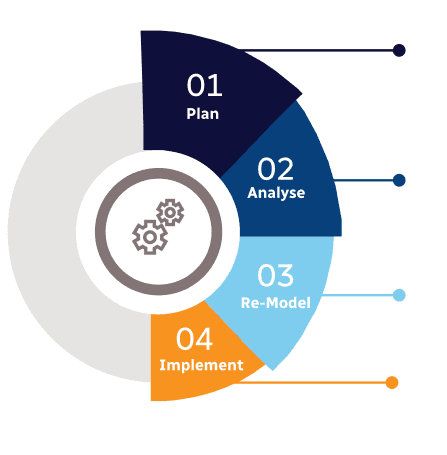
Methodology
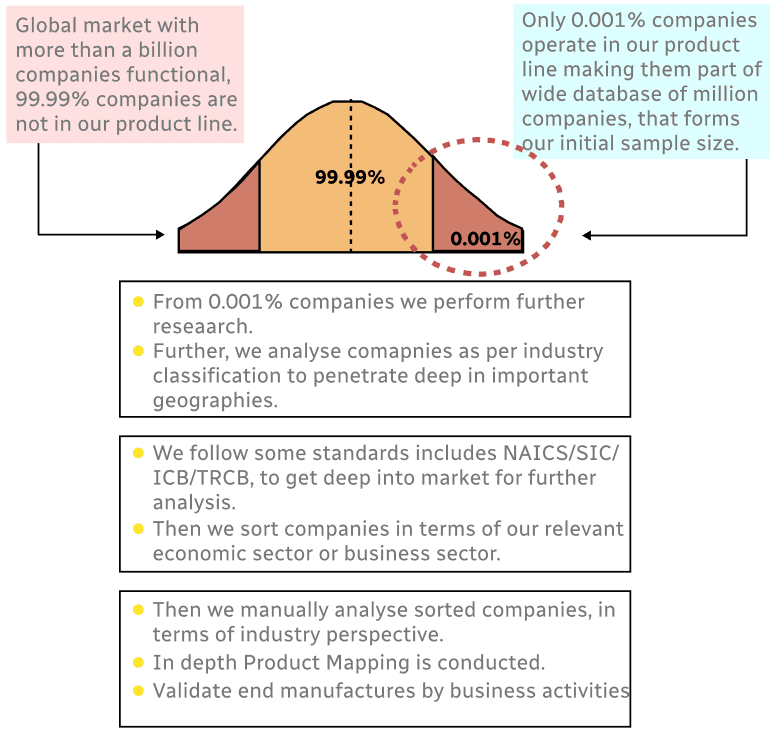
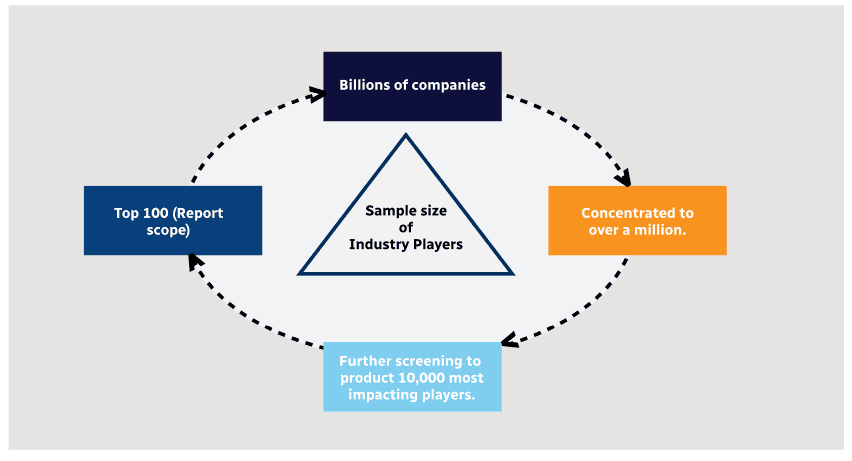
Step 1 - Identification of Relevant Samples Size from Population Database
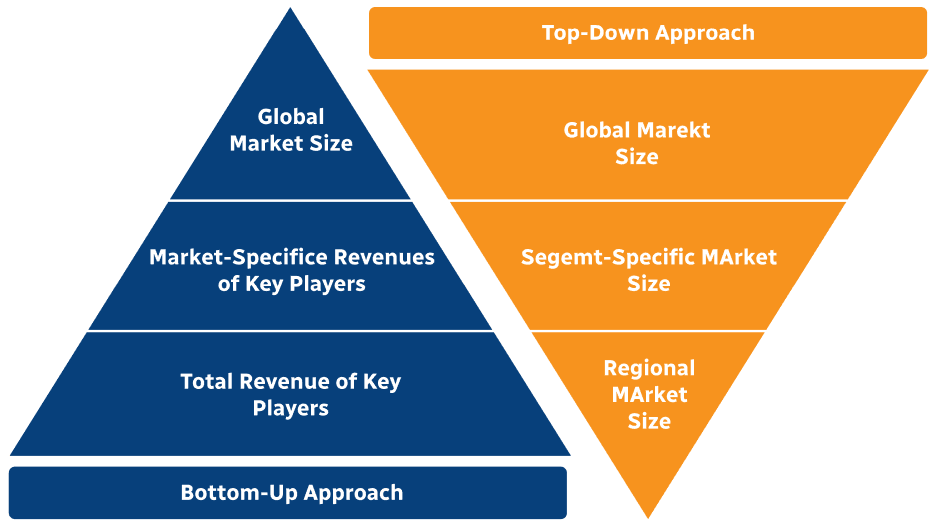
Step 2 - Approaches for Defining Global Market Size (Value, Volume* & Price*)
Note*: In applicable scenarios
Step 3 - Data Sources
Primary Research
- Web Analytics
- Survey Reports
- Research Institute
- Latest Research Reports
- Opinion Leaders
Secondary Research
- Annual Reports
- White Paper
- Latest Press Release
- Industry Association
- Paid Database
- Investor Presentations
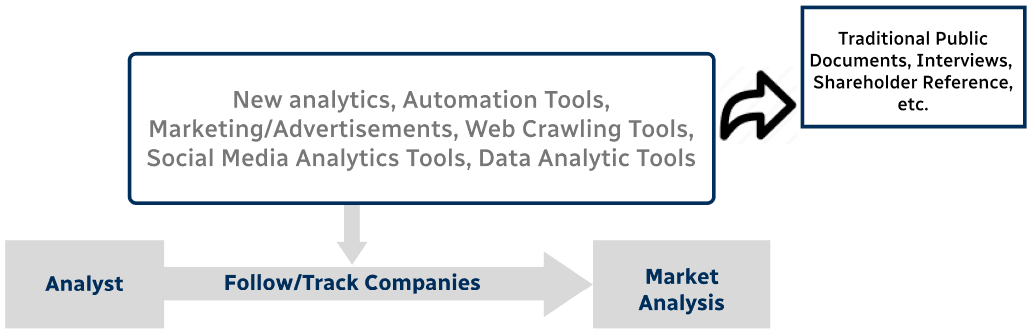
Step 4 - Data Triangulation
Involves using different sources of information in order to increase the validity of a study
These sources are likely to be stakeholders in a program - participants, other researchers, program staff, other community members, and so on.
Then we put all data in single framework & apply various statistical tools to find out the dynamic on the market.
During the analysis stage, feedback from the stakeholder groups would be compared to determine areas of agreement as well as areas of divergence