Key Insights
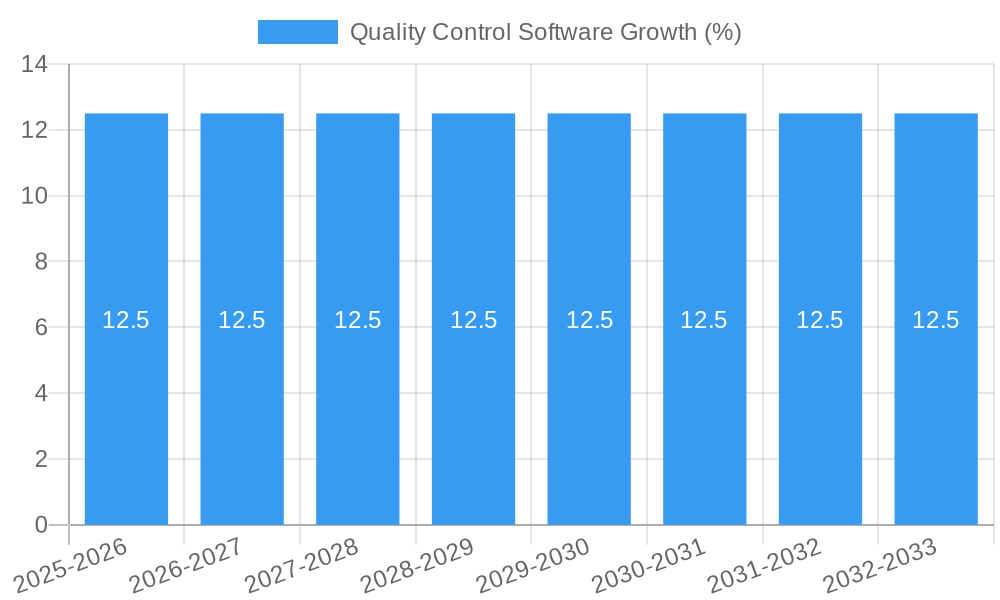
The global Quality Control Software market is poised for significant expansion, projected to reach a valuation of approximately \$1.8 billion by 2025, with a robust Compound Annual Growth Rate (CAGR) of around 12.5% anticipated through 2033. This growth trajectory is primarily propelled by the increasing emphasis on regulatory compliance, the escalating demand for enhanced product quality across industries, and the burgeoning adoption of digital transformation initiatives. Small and Medium Enterprises (SMEs) represent a burgeoning segment, increasingly recognizing the value of quality control solutions to streamline operations and improve competitive positioning. Concurrently, large enterprises continue to drive demand due to their extensive operational complexities and stringent quality assurance requirements. The shift towards cloud-based solutions is a defining trend, offering scalability, accessibility, and cost-effectiveness, which appeals to a broad spectrum of businesses.
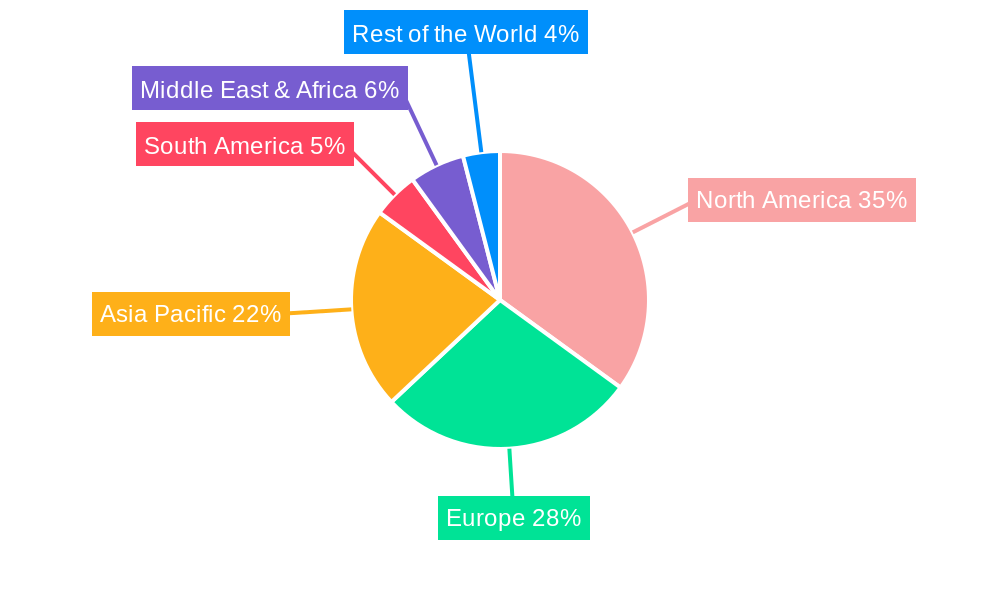
The market's dynamism is further influenced by the growing need for real-time data analysis and predictive quality management to proactively identify and mitigate potential issues. Advancements in artificial intelligence (AI) and machine learning (ML) are also playing a crucial role in developing more sophisticated and automated quality control processes. However, the market faces certain restraints, including the initial implementation costs and the potential resistance to adopting new technologies within some organizations. Despite these challenges, the pervasive benefits of improved efficiency, reduced waste, enhanced customer satisfaction, and strengthened brand reputation are compelling businesses to invest in quality control software. North America currently leads the market, driven by a mature industrial base and early adoption of advanced technologies, with Asia Pacific demonstrating the fastest growth potential due to its rapidly expanding manufacturing sector and increasing digitalization.
Unlock Operational Excellence: Comprehensive Quality Control Software Market Report (2019-2033)
This in-depth market intelligence report provides a granular analysis of the global Quality Control (QC) Software market, offering strategic insights for stakeholders across manufacturing, pharmaceuticals, automotive, aerospace, and other quality-intensive industries. Covering a comprehensive study period from 2019 to 2033, with a base year of 2025, this report delves into market dynamics, growth trajectories, technological advancements, and competitive landscapes. Equip your business with the data-driven strategies needed to navigate the evolving QC software ecosystem and achieve superior product quality and operational efficiency.
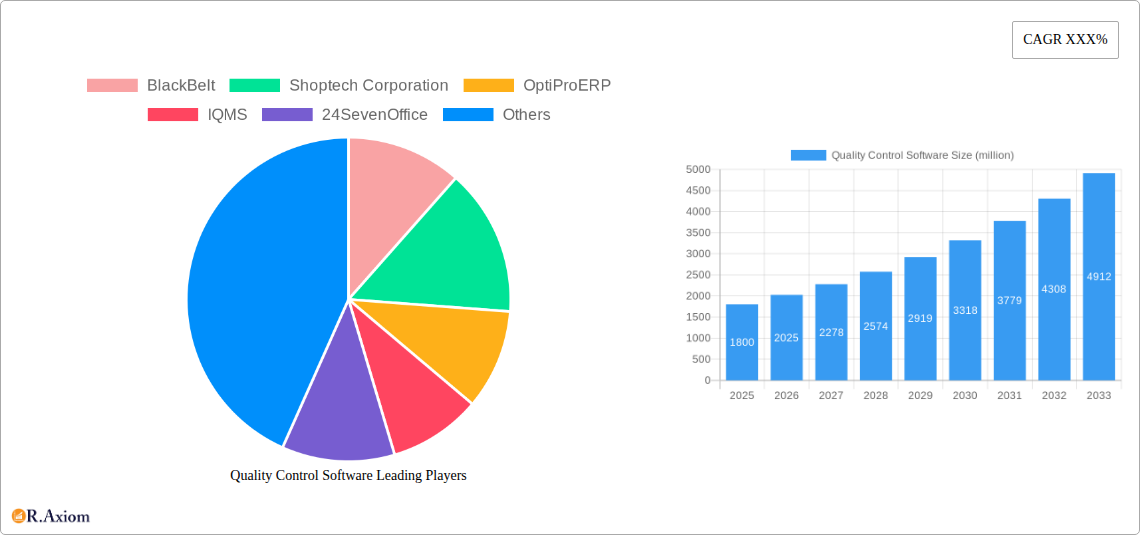
Quality Control Software Market Concentration & Innovation
The global Quality Control Software market exhibits a moderate level of concentration, with a mix of established enterprise players and agile niche providers. Innovation is a critical differentiator, driven by the increasing demand for real-time data analytics, AI-powered anomaly detection, and seamless integration with existing enterprise systems. Regulatory frameworks, particularly in sectors like pharmaceuticals and medical devices, play a significant role in shaping QC software requirements, emphasizing compliance and audit trails. Product substitutes, such as manual inspection processes and less sophisticated spreadsheet-based systems, are gradually being displaced by advanced QC software solutions. End-user trends point towards a growing preference for cloud-based platforms due to their scalability, accessibility, and reduced IT overhead. Mergers and acquisition (M&A) activities are expected to continue as larger players seek to expand their product portfolios and market reach. Recent M&A deals have collectively reached values in the range of several hundred million. Key innovation drivers include the integration of IoT sensors for automated data capture, machine learning algorithms for predictive quality analysis, and enhanced user interfaces for improved usability.
- Market Share Dynamics: Leading vendors hold substantial market shares, but a significant portion remains fragmented among specialized providers.
- M&A Activity: Strategic acquisitions are anticipated to consolidate market leadership and fuel technological integration.
- Regulatory Impact: Adherence to standards like ISO 9001 and industry-specific regulations is a primary driver for software adoption.
- Substitution Threats: While basic alternatives exist, the ROI of advanced QC software is increasingly evident.
Quality Control Software Industry Trends & Insights
The Quality Control Software industry is poised for robust growth, fueled by an escalating emphasis on product quality, operational efficiency, and regulatory compliance across diverse sectors. The Compound Annual Growth Rate (CAGR) is projected to be approximately 12.5% over the forecast period, reflecting strong market penetration. Digital transformation initiatives are a primary catalyst, compelling businesses to adopt sophisticated QC solutions for real-time monitoring, data analysis, and process optimization. Technological disruptions, including the proliferation of Artificial Intelligence (AI) and Machine Learning (ML), are revolutionizing QC software capabilities, enabling predictive maintenance, automated defect detection, and proactive risk management. Consumer preferences are shifting towards products with higher perceived quality and reliability, directly influencing the demand for effective QC processes and the software that underpins them. Competitive dynamics are characterized by intense innovation, with companies striving to offer feature-rich, integrated, and user-friendly solutions. The market penetration for advanced QC software is steadily increasing, particularly within large enterprises.
The adoption of Quality Control Software is driven by several interconnected factors. Firstly, the increasing complexity of products and manufacturing processes necessitates robust systems to ensure consistency and minimize defects. For instance, the automotive industry, with its intricate supply chains and stringent safety standards, relies heavily on QC software for component tracking, in-process inspection, and final product validation, contributing an estimated 20% to the overall market revenue. Similarly, the pharmaceutical sector, subject to rigorous regulatory scrutiny from bodies like the FDA, requires comprehensive QC software for batch traceability, deviation management, and CAPA (Corrective and Preventive Action) processes, representing another significant market segment valued at over one hundred million.
Secondly, the advent of Industry 4.0 and the Internet of Things (IoT) is transforming QC practices. Real-time data acquisition from sensors on production lines allows for immediate identification of anomalies, enabling faster corrective actions and reducing scrap. This integration of IoT devices with QC software is a key trend, projected to drive adoption by an estimated 30% over the next five years. Companies are leveraging this data to move from reactive quality control to proactive quality assurance.
Thirdly, the growing awareness of the financial implications of poor quality – including product recalls, warranty claims, and reputational damage – is pushing organizations to invest in effective QC solutions. Studies indicate that the cost of poor quality can range from 5% to 15% of sales revenue for manufacturing companies, highlighting the compelling ROI of robust QC software. The market penetration for cloud-based QC software, offering scalability and accessibility, is particularly high, estimated at over 60% of new deployments. On-premises solutions, while still relevant for highly regulated industries with specific data security concerns, are seeing a gradual decline in market share relative to cloud alternatives.
The competitive landscape is dynamic, with established players like Infor and Sage competing with specialized providers such as QT9 and uniPoint. Innovation in areas like AI-driven defect prediction and advanced analytics is becoming a critical differentiator, leading to an estimated annual market growth of 15% in these advanced features. Companies are also focusing on enhancing user experience and integration capabilities with existing ERP and MES systems, recognizing that seamless data flow is crucial for holistic quality management. The market penetration of QC software in SMEs is growing, as more affordable and user-friendly cloud solutions become available, offering them access to enterprise-grade quality management capabilities.
Dominant Markets & Segments in Quality Control Software
The Quality Control Software market showcases significant dominance in North America and Europe, driven by advanced manufacturing sectors, stringent regulatory environments, and substantial investments in technological innovation. Within these regions, countries like the United States and Germany are at the forefront, representing over 60% of the global market value. Key drivers for this dominance include robust economic policies that support technological adoption, well-established industrial infrastructure, and a highly skilled workforce. The presence of major players and a mature ecosystem of software providers further solidifies their leadership.
Application Segment Dominance:
Large Enterprises: This segment currently commands the largest market share, estimated at around 70% of the total QC software market. Large enterprises, with their complex operations, extensive product lines, and higher stakes in product quality, are early adopters of advanced QC solutions. They benefit significantly from the scalability and comprehensive functionalities offered by enterprise-grade QC software, enabling them to manage intricate supply chains, ensure compliance with global standards, and maintain brand reputation. The investment in QC software within large enterprises often exceeds one million dollars annually.
- Key Drivers: Stringent regulatory compliance (e.g., FDA, ISO), global supply chain management, brand reputation protection, complex product portfolios, and substantial IT budgets.
- Growth Catalysts: Increasing adoption of Industry 4.0 technologies, demand for real-time analytics, and the need for robust data management to mitigate risks.
Small and Medium Enterprises (SMEs): While historically lagging behind large enterprises, the SME segment is experiencing rapid growth, projected to grow at a CAGR of approximately 15%. The increasing availability of affordable, cloud-based QC software solutions is making these powerful tools accessible to smaller businesses. SMEs are recognizing the competitive advantage and cost savings associated with improved quality control, such as reduced waste and fewer customer complaints. The market size for QC software in SMEs is estimated to reach several hundred million in the coming years.
- Key Drivers: Growing awareness of quality's impact on competitiveness, affordability of cloud-based solutions, and the need to meet customer and regulatory demands.
- Growth Catalysts: User-friendly interfaces, subscription-based pricing models, and the ability to scale QC processes alongside business growth.
Type Segment Dominance:
Cloud-based: This deployment type is rapidly gaining prominence, accounting for an estimated 75% of new QC software implementations. Cloud-based solutions offer flexibility, scalability, remote accessibility, and often lower upfront costs, making them attractive to businesses of all sizes. The ease of integration and automatic updates further contribute to their widespread adoption. The market value for cloud-based QC software is expected to surpass several billion in the forecast period.
- Key Drivers: Cost-effectiveness, scalability, accessibility, faster deployment, and reduced IT maintenance burden.
- Growth Catalysts: Enhanced cybersecurity measures, wider availability of specialized cloud-based QC modules, and the ongoing digital transformation across industries.
On-premises: This deployment type remains relevant, particularly for organizations with highly sensitive data or strict regulatory requirements that necessitate on-site data storage and control. While its market share is declining relative to cloud solutions, it offers robust security and customization options. For specific industries, on-premises solutions can represent a market segment worth hundreds of millions.
- Key Drivers: Data security and privacy concerns, compliance with specific industry regulations, and the need for deep customization.
- Growth Catalysts: Continued demand from highly regulated sectors, and hybrid deployment models that combine on-premises security with cloud flexibility.
The dominance of North America and Europe is characterized by a high market penetration rate, with QC software adoption estimated at over 50% in key industries. The growth in emerging economies, particularly in Asia-Pacific, is also significant, driven by rapid industrialization and increasing quality standards.
Quality Control Software Product Developments
Recent product developments in Quality Control Software are centered on enhancing automation, intelligence, and integration. Innovations include the incorporation of AI and ML algorithms for predictive quality analytics and anomaly detection, significantly reducing manual intervention and improving accuracy. Advanced modules now offer real-time data visualization dashboards, providing stakeholders with immediate insights into production processes and quality metrics. Seamless integration with ERP, MES, and IoT platforms is a key focus, enabling a holistic view of operations. Competitive advantages are being forged through enhanced user experience, mobile accessibility for on-the-go quality checks, and specialized functionalities tailored to specific industry needs, such as pharmaceutical compliance or automotive traceability. These developments aim to streamline workflows, reduce errors, and ultimately elevate product quality.
Report Scope & Segmentation Analysis
This report encompasses a comprehensive analysis of the global Quality Control Software market, segmented by Application and Type. The study period spans from 2019 to 2033, with the base year set at 2025 and projections extending through 2033.
Application: Small and Medium Enterprises (SMEs): This segment focuses on QC software solutions tailored for businesses with limited resources and personnel. Growth projections indicate a substantial increase in adoption due to the availability of scalable and cost-effective cloud solutions. The market size for QC software within SMEs is expected to reach several hundred million by 2033. Competitive dynamics are characterized by a focus on ease of use and rapid deployment.
Application: Large Enterprises: This segment analyzes the adoption of comprehensive QC software by large organizations. These enterprises benefit from advanced features, extensive customization, and robust integration capabilities. Growth is driven by the need for sophisticated quality management in complex operations. The market size for QC software in large enterprises is substantial, estimated in the billions, with continued investment in advanced analytics and automation. Competitive dynamics involve a focus on enterprise-wide scalability and deep integration.
Type: Cloud-based: This segment examines QC software deployed and accessed via the internet. Growth is projected to be exceptionally strong, driven by its inherent flexibility, scalability, and cost-effectiveness. The market size for cloud-based QC software is expected to dominate the overall market, reaching several billion. Competitive dynamics emphasize subscription models, accessibility, and continuous innovation in features.
Type: On-premises: This segment analyzes QC software installed and operated on a company's own servers. While facing competition from cloud solutions, it remains crucial for organizations with specific security and regulatory needs. The market size for on-premises solutions, though smaller than cloud, represents a significant portion, estimated in the hundreds of millions, for specialized applications. Competitive dynamics involve deep customization and stringent data control.
Key Drivers of Quality Control Software Growth
The Quality Control Software market is propelled by several key drivers, fundamentally rooted in the pursuit of operational excellence and risk mitigation. The escalating complexity of global supply chains necessitates robust systems for tracking materials, ensuring component quality, and maintaining consistency across diverse manufacturing locations. This demand is estimated to contribute 25% to market growth. Furthermore, stringent regulatory compliance across various industries, such as pharmaceuticals (FDA, EMA) and automotive (IATF 16949), mandates meticulous record-keeping, audit trails, and process adherence, driving the adoption of QC software. This regulatory push accounts for approximately 20% of market expansion. The increasing consumer demand for high-quality, reliable products compels businesses to invest in effective QC measures to minimize defects, reduce recalls, and enhance customer satisfaction, representing another 15% growth factor.
- Technological Advancements: The integration of AI, ML, and IoT is revolutionizing QC by enabling predictive analytics, automated defect detection, and real-time monitoring.
- Globalization of Supply Chains: Increased complexity in sourcing and manufacturing worldwide requires sophisticated QC solutions for end-to-end quality assurance.
- Regulatory Pressures: Strict compliance requirements across industries like healthcare, automotive, and aerospace are critical adoption drivers.
- Focus on Cost Reduction: Minimizing scrap, rework, and warranty claims through effective QC directly impacts profitability.
Challenges in the Quality Control Software Sector
Despite the significant growth prospects, the Quality Control Software sector faces several challenges that can impede widespread adoption and market expansion. High initial implementation costs can be a barrier, particularly for SMEs, as comprehensive QC systems require substantial investment in software, hardware, and training. Integrating new QC software with existing legacy systems can be complex and time-consuming, leading to operational disruptions and increased IT expenditure. The availability of skilled personnel to effectively manage and utilize advanced QC software is also a concern, requiring ongoing training and development initiatives. Furthermore, data security and privacy concerns, especially with cloud-based solutions, can deter some organizations from fully embracing digital QC processes.
- High Implementation Costs: The initial investment in software, hardware, and training can be prohibitive for some businesses.
- Integration Complexity: Seamlessly integrating QC software with existing ERP, MES, and other enterprise systems can be challenging.
- Talent Shortage: A lack of skilled professionals to manage and interpret data from advanced QC software.
- Data Security and Privacy: Concerns regarding the security of sensitive quality data, particularly in cloud environments.
Emerging Opportunities in Quality Control Software
The Quality Control Software market is ripe with emerging opportunities, driven by evolving technological landscapes and shifting industry demands. The increasing adoption of AI and ML presents a significant opportunity for predictive quality analytics, allowing businesses to forecast potential defects before they occur and proactively implement preventive measures. The expansion of Industry 4.0 initiatives further fuels demand for integrated QC solutions that can seamlessly connect with IoT devices, enabling real-time data capture and analysis across the entire production lifecycle. The growing focus on sustainability and circular economy principles also opens avenues for QC software that can monitor product lifecycle quality and facilitate efficient material management. Furthermore, the demand for specialized QC software tailored to niche industries or specific compliance requirements offers lucrative market segments.
- AI and Machine Learning Integration: Leveraging AI for predictive analytics and anomaly detection offers immense value.
- IoT and Industry 4.0 Connectivity: Real-time data capture and analysis across interconnected devices.
- Sustainability and Circular Economy: QC solutions supporting product lifecycle management and resource efficiency.
- Niche Industry Solutions: Development of specialized QC software for specific sector needs.
Leading Players in the Quality Control Software Market
- BlackBelt
- Shoptech Corporation
- OptiProERP
- IQMS
- 24SevenOffice
- Infor
- Sage
- Vicinity Software
- uniPoint
- QT9
Key Developments in Quality Control Software Industry
- 2024 (Q1): Introduction of AI-powered real-time defect detection capabilities by multiple vendors, enhancing automation and accuracy.
- 2023 (Q4): Significant investments in cloud-based QC solutions, with a focus on scalability and accessibility for SMEs.
- 2023 (Q3): Increased M&A activity as larger software providers acquire specialized QC technology companies to broaden their portfolios.
- 2023 (Q2): Enhanced integration of QC software with IoT platforms and smart manufacturing systems reported, enabling end-to-end data visibility.
- 2023 (Q1): Launch of advanced analytics modules for predictive quality management, allowing for proactive risk mitigation.
- 2022: Growing emphasis on mobile QC applications for on-the-go data entry and inspection management.
Strategic Outlook for Quality Control Software Market
The strategic outlook for the Quality Control Software market is overwhelmingly positive, driven by an unyielding global imperative for enhanced product quality, operational efficiency, and regulatory adherence. The accelerating pace of digital transformation, coupled with the widespread adoption of Industry 4.0 technologies, will continue to fuel the demand for sophisticated QC solutions. Opportunities abound in the integration of advanced analytics, AI, and IoT for predictive quality management and real-time process optimization. As businesses increasingly recognize the significant financial and reputational benefits of robust quality control, investment in these solutions will likely remain a strategic priority. The market is poised for sustained growth, with a strong emphasis on cloud-based, scalable, and user-friendly platforms that empower organizations to achieve unparalleled levels of quality and competitiveness.
Quality Control Software Segmentation
-
1. Application
- 1.1. Small and Medium Enterprises (SMEs)
- 1.2. Large Enterprises
-
2. Type
- 2.1. Cloud-based
- 2.2. On-premises
Quality Control Software Segmentation By Geography
-
1. North America
- 1.1. United States
- 1.2. Canada
- 1.3. Mexico
-
2. South America
- 2.1. Brazil
- 2.2. Argentina
- 2.3. Rest of South America
-
3. Europe
- 3.1. United Kingdom
- 3.2. Germany
- 3.3. France
- 3.4. Italy
- 3.5. Spain
- 3.6. Russia
- 3.7. Benelux
- 3.8. Nordics
- 3.9. Rest of Europe
-
4. Middle East & Africa
- 4.1. Turkey
- 4.2. Israel
- 4.3. GCC
- 4.4. North Africa
- 4.5. South Africa
- 4.6. Rest of Middle East & Africa
-
5. Asia Pacific
- 5.1. China
- 5.2. India
- 5.3. Japan
- 5.4. South Korea
- 5.5. ASEAN
- 5.6. Oceania
- 5.7. Rest of Asia Pacific
Quality Control Software REPORT HIGHLIGHTS
| Aspects | Details |
|---|---|
| Study Period | 2019-2033 |
| Base Year | 2024 |
| Estimated Year | 2025 |
| Forecast Period | 2025-2033 |
| Historical Period | 2019-2024 |
| Growth Rate | CAGR of XXX% from 2019-2033 |
| Segmentation |
|
Table of Contents
- 1. Introduction
- 1.1. Research Scope
- 1.2. Market Segmentation
- 1.3. Research Methodology
- 1.4. Definitions and Assumptions
- 2. Executive Summary
- 2.1. Introduction
- 3. Market Dynamics
- 3.1. Introduction
- 3.2. Market Drivers
- 3.3. Market Restrains
- 3.4. Market Trends
- 4. Market Factor Analysis
- 4.1. Porters Five Forces
- 4.2. Supply/Value Chain
- 4.3. PESTEL analysis
- 4.4. Market Entropy
- 4.5. Patent/Trademark Analysis
- 5. Global Quality Control Software Analysis, Insights and Forecast, 2019-2031
- 5.1. Market Analysis, Insights and Forecast - by Application
- 5.1.1. Small and Medium Enterprises (SMEs)
- 5.1.2. Large Enterprises
- 5.2. Market Analysis, Insights and Forecast - by Type
- 5.2.1. Cloud-based
- 5.2.2. On-premises
- 5.3. Market Analysis, Insights and Forecast - by Region
- 5.3.1. North America
- 5.3.2. South America
- 5.3.3. Europe
- 5.3.4. Middle East & Africa
- 5.3.5. Asia Pacific
- 5.1. Market Analysis, Insights and Forecast - by Application
- 6. North America Quality Control Software Analysis, Insights and Forecast, 2019-2031
- 6.1. Market Analysis, Insights and Forecast - by Application
- 6.1.1. Small and Medium Enterprises (SMEs)
- 6.1.2. Large Enterprises
- 6.2. Market Analysis, Insights and Forecast - by Type
- 6.2.1. Cloud-based
- 6.2.2. On-premises
- 6.1. Market Analysis, Insights and Forecast - by Application
- 7. South America Quality Control Software Analysis, Insights and Forecast, 2019-2031
- 7.1. Market Analysis, Insights and Forecast - by Application
- 7.1.1. Small and Medium Enterprises (SMEs)
- 7.1.2. Large Enterprises
- 7.2. Market Analysis, Insights and Forecast - by Type
- 7.2.1. Cloud-based
- 7.2.2. On-premises
- 7.1. Market Analysis, Insights and Forecast - by Application
- 8. Europe Quality Control Software Analysis, Insights and Forecast, 2019-2031
- 8.1. Market Analysis, Insights and Forecast - by Application
- 8.1.1. Small and Medium Enterprises (SMEs)
- 8.1.2. Large Enterprises
- 8.2. Market Analysis, Insights and Forecast - by Type
- 8.2.1. Cloud-based
- 8.2.2. On-premises
- 8.1. Market Analysis, Insights and Forecast - by Application
- 9. Middle East & Africa Quality Control Software Analysis, Insights and Forecast, 2019-2031
- 9.1. Market Analysis, Insights and Forecast - by Application
- 9.1.1. Small and Medium Enterprises (SMEs)
- 9.1.2. Large Enterprises
- 9.2. Market Analysis, Insights and Forecast - by Type
- 9.2.1. Cloud-based
- 9.2.2. On-premises
- 9.1. Market Analysis, Insights and Forecast - by Application
- 10. Asia Pacific Quality Control Software Analysis, Insights and Forecast, 2019-2031
- 10.1. Market Analysis, Insights and Forecast - by Application
- 10.1.1. Small and Medium Enterprises (SMEs)
- 10.1.2. Large Enterprises
- 10.2. Market Analysis, Insights and Forecast - by Type
- 10.2.1. Cloud-based
- 10.2.2. On-premises
- 10.1. Market Analysis, Insights and Forecast - by Application
- 11. Competitive Analysis
- 11.1. Global Market Share Analysis 2024
- 11.2. Company Profiles
- 11.2.1 BlackBelt
- 11.2.1.1. Overview
- 11.2.1.2. Products
- 11.2.1.3. SWOT Analysis
- 11.2.1.4. Recent Developments
- 11.2.1.5. Financials (Based on Availability)
- 11.2.2 Shoptech Corporation
- 11.2.2.1. Overview
- 11.2.2.2. Products
- 11.2.2.3. SWOT Analysis
- 11.2.2.4. Recent Developments
- 11.2.2.5. Financials (Based on Availability)
- 11.2.3 OptiProERP
- 11.2.3.1. Overview
- 11.2.3.2. Products
- 11.2.3.3. SWOT Analysis
- 11.2.3.4. Recent Developments
- 11.2.3.5. Financials (Based on Availability)
- 11.2.4 IQMS
- 11.2.4.1. Overview
- 11.2.4.2. Products
- 11.2.4.3. SWOT Analysis
- 11.2.4.4. Recent Developments
- 11.2.4.5. Financials (Based on Availability)
- 11.2.5 24SevenOffice
- 11.2.5.1. Overview
- 11.2.5.2. Products
- 11.2.5.3. SWOT Analysis
- 11.2.5.4. Recent Developments
- 11.2.5.5. Financials (Based on Availability)
- 11.2.6 Infor
- 11.2.6.1. Overview
- 11.2.6.2. Products
- 11.2.6.3. SWOT Analysis
- 11.2.6.4. Recent Developments
- 11.2.6.5. Financials (Based on Availability)
- 11.2.7 Sage
- 11.2.7.1. Overview
- 11.2.7.2. Products
- 11.2.7.3. SWOT Analysis
- 11.2.7.4. Recent Developments
- 11.2.7.5. Financials (Based on Availability)
- 11.2.8 Vicinity Software
- 11.2.8.1. Overview
- 11.2.8.2. Products
- 11.2.8.3. SWOT Analysis
- 11.2.8.4. Recent Developments
- 11.2.8.5. Financials (Based on Availability)
- 11.2.9 uniPoint
- 11.2.9.1. Overview
- 11.2.9.2. Products
- 11.2.9.3. SWOT Analysis
- 11.2.9.4. Recent Developments
- 11.2.9.5. Financials (Based on Availability)
- 11.2.10 QT9
- 11.2.10.1. Overview
- 11.2.10.2. Products
- 11.2.10.3. SWOT Analysis
- 11.2.10.4. Recent Developments
- 11.2.10.5. Financials (Based on Availability)
- 11.2.1 BlackBelt
List of Figures
- Figure 1: Global Quality Control Software Revenue Breakdown (million, %) by Region 2024 & 2032
- Figure 2: North America Quality Control Software Revenue (million), by Application 2024 & 2032
- Figure 3: North America Quality Control Software Revenue Share (%), by Application 2024 & 2032
- Figure 4: North America Quality Control Software Revenue (million), by Type 2024 & 2032
- Figure 5: North America Quality Control Software Revenue Share (%), by Type 2024 & 2032
- Figure 6: North America Quality Control Software Revenue (million), by Country 2024 & 2032
- Figure 7: North America Quality Control Software Revenue Share (%), by Country 2024 & 2032
- Figure 8: South America Quality Control Software Revenue (million), by Application 2024 & 2032
- Figure 9: South America Quality Control Software Revenue Share (%), by Application 2024 & 2032
- Figure 10: South America Quality Control Software Revenue (million), by Type 2024 & 2032
- Figure 11: South America Quality Control Software Revenue Share (%), by Type 2024 & 2032
- Figure 12: South America Quality Control Software Revenue (million), by Country 2024 & 2032
- Figure 13: South America Quality Control Software Revenue Share (%), by Country 2024 & 2032
- Figure 14: Europe Quality Control Software Revenue (million), by Application 2024 & 2032
- Figure 15: Europe Quality Control Software Revenue Share (%), by Application 2024 & 2032
- Figure 16: Europe Quality Control Software Revenue (million), by Type 2024 & 2032
- Figure 17: Europe Quality Control Software Revenue Share (%), by Type 2024 & 2032
- Figure 18: Europe Quality Control Software Revenue (million), by Country 2024 & 2032
- Figure 19: Europe Quality Control Software Revenue Share (%), by Country 2024 & 2032
- Figure 20: Middle East & Africa Quality Control Software Revenue (million), by Application 2024 & 2032
- Figure 21: Middle East & Africa Quality Control Software Revenue Share (%), by Application 2024 & 2032
- Figure 22: Middle East & Africa Quality Control Software Revenue (million), by Type 2024 & 2032
- Figure 23: Middle East & Africa Quality Control Software Revenue Share (%), by Type 2024 & 2032
- Figure 24: Middle East & Africa Quality Control Software Revenue (million), by Country 2024 & 2032
- Figure 25: Middle East & Africa Quality Control Software Revenue Share (%), by Country 2024 & 2032
- Figure 26: Asia Pacific Quality Control Software Revenue (million), by Application 2024 & 2032
- Figure 27: Asia Pacific Quality Control Software Revenue Share (%), by Application 2024 & 2032
- Figure 28: Asia Pacific Quality Control Software Revenue (million), by Type 2024 & 2032
- Figure 29: Asia Pacific Quality Control Software Revenue Share (%), by Type 2024 & 2032
- Figure 30: Asia Pacific Quality Control Software Revenue (million), by Country 2024 & 2032
- Figure 31: Asia Pacific Quality Control Software Revenue Share (%), by Country 2024 & 2032
List of Tables
- Table 1: Global Quality Control Software Revenue million Forecast, by Region 2019 & 2032
- Table 2: Global Quality Control Software Revenue million Forecast, by Application 2019 & 2032
- Table 3: Global Quality Control Software Revenue million Forecast, by Type 2019 & 2032
- Table 4: Global Quality Control Software Revenue million Forecast, by Region 2019 & 2032
- Table 5: Global Quality Control Software Revenue million Forecast, by Application 2019 & 2032
- Table 6: Global Quality Control Software Revenue million Forecast, by Type 2019 & 2032
- Table 7: Global Quality Control Software Revenue million Forecast, by Country 2019 & 2032
- Table 8: United States Quality Control Software Revenue (million) Forecast, by Application 2019 & 2032
- Table 9: Canada Quality Control Software Revenue (million) Forecast, by Application 2019 & 2032
- Table 10: Mexico Quality Control Software Revenue (million) Forecast, by Application 2019 & 2032
- Table 11: Global Quality Control Software Revenue million Forecast, by Application 2019 & 2032
- Table 12: Global Quality Control Software Revenue million Forecast, by Type 2019 & 2032
- Table 13: Global Quality Control Software Revenue million Forecast, by Country 2019 & 2032
- Table 14: Brazil Quality Control Software Revenue (million) Forecast, by Application 2019 & 2032
- Table 15: Argentina Quality Control Software Revenue (million) Forecast, by Application 2019 & 2032
- Table 16: Rest of South America Quality Control Software Revenue (million) Forecast, by Application 2019 & 2032
- Table 17: Global Quality Control Software Revenue million Forecast, by Application 2019 & 2032
- Table 18: Global Quality Control Software Revenue million Forecast, by Type 2019 & 2032
- Table 19: Global Quality Control Software Revenue million Forecast, by Country 2019 & 2032
- Table 20: United Kingdom Quality Control Software Revenue (million) Forecast, by Application 2019 & 2032
- Table 21: Germany Quality Control Software Revenue (million) Forecast, by Application 2019 & 2032
- Table 22: France Quality Control Software Revenue (million) Forecast, by Application 2019 & 2032
- Table 23: Italy Quality Control Software Revenue (million) Forecast, by Application 2019 & 2032
- Table 24: Spain Quality Control Software Revenue (million) Forecast, by Application 2019 & 2032
- Table 25: Russia Quality Control Software Revenue (million) Forecast, by Application 2019 & 2032
- Table 26: Benelux Quality Control Software Revenue (million) Forecast, by Application 2019 & 2032
- Table 27: Nordics Quality Control Software Revenue (million) Forecast, by Application 2019 & 2032
- Table 28: Rest of Europe Quality Control Software Revenue (million) Forecast, by Application 2019 & 2032
- Table 29: Global Quality Control Software Revenue million Forecast, by Application 2019 & 2032
- Table 30: Global Quality Control Software Revenue million Forecast, by Type 2019 & 2032
- Table 31: Global Quality Control Software Revenue million Forecast, by Country 2019 & 2032
- Table 32: Turkey Quality Control Software Revenue (million) Forecast, by Application 2019 & 2032
- Table 33: Israel Quality Control Software Revenue (million) Forecast, by Application 2019 & 2032
- Table 34: GCC Quality Control Software Revenue (million) Forecast, by Application 2019 & 2032
- Table 35: North Africa Quality Control Software Revenue (million) Forecast, by Application 2019 & 2032
- Table 36: South Africa Quality Control Software Revenue (million) Forecast, by Application 2019 & 2032
- Table 37: Rest of Middle East & Africa Quality Control Software Revenue (million) Forecast, by Application 2019 & 2032
- Table 38: Global Quality Control Software Revenue million Forecast, by Application 2019 & 2032
- Table 39: Global Quality Control Software Revenue million Forecast, by Type 2019 & 2032
- Table 40: Global Quality Control Software Revenue million Forecast, by Country 2019 & 2032
- Table 41: China Quality Control Software Revenue (million) Forecast, by Application 2019 & 2032
- Table 42: India Quality Control Software Revenue (million) Forecast, by Application 2019 & 2032
- Table 43: Japan Quality Control Software Revenue (million) Forecast, by Application 2019 & 2032
- Table 44: South Korea Quality Control Software Revenue (million) Forecast, by Application 2019 & 2032
- Table 45: ASEAN Quality Control Software Revenue (million) Forecast, by Application 2019 & 2032
- Table 46: Oceania Quality Control Software Revenue (million) Forecast, by Application 2019 & 2032
- Table 47: Rest of Asia Pacific Quality Control Software Revenue (million) Forecast, by Application 2019 & 2032
Frequently Asked Questions
1. What is the projected Compound Annual Growth Rate (CAGR) of the Quality Control Software?
The projected CAGR is approximately XXX%.
2. Which companies are prominent players in the Quality Control Software?
Key companies in the market include BlackBelt, Shoptech Corporation, OptiProERP, IQMS, 24SevenOffice, Infor, Sage, Vicinity Software, uniPoint, QT9.
3. What are the main segments of the Quality Control Software?
The market segments include Application, Type.
4. Can you provide details about the market size?
The market size is estimated to be USD XXX million as of 2022.
5. What are some drivers contributing to market growth?
N/A
6. What are the notable trends driving market growth?
N/A
7. Are there any restraints impacting market growth?
N/A
8. Can you provide examples of recent developments in the market?
N/A
9. What pricing options are available for accessing the report?
Pricing options include single-user, multi-user, and enterprise licenses priced at USD 3950.00, USD 5925.00, and USD 7900.00 respectively.
10. Is the market size provided in terms of value or volume?
The market size is provided in terms of value, measured in million.
11. Are there any specific market keywords associated with the report?
Yes, the market keyword associated with the report is "Quality Control Software," which aids in identifying and referencing the specific market segment covered.
12. How do I determine which pricing option suits my needs best?
The pricing options vary based on user requirements and access needs. Individual users may opt for single-user licenses, while businesses requiring broader access may choose multi-user or enterprise licenses for cost-effective access to the report.
13. Are there any additional resources or data provided in the Quality Control Software report?
While the report offers comprehensive insights, it's advisable to review the specific contents or supplementary materials provided to ascertain if additional resources or data are available.
14. How can I stay updated on further developments or reports in the Quality Control Software?
To stay informed about further developments, trends, and reports in the Quality Control Software, consider subscribing to industry newsletters, following relevant companies and organizations, or regularly checking reputable industry news sources and publications.
Methodology
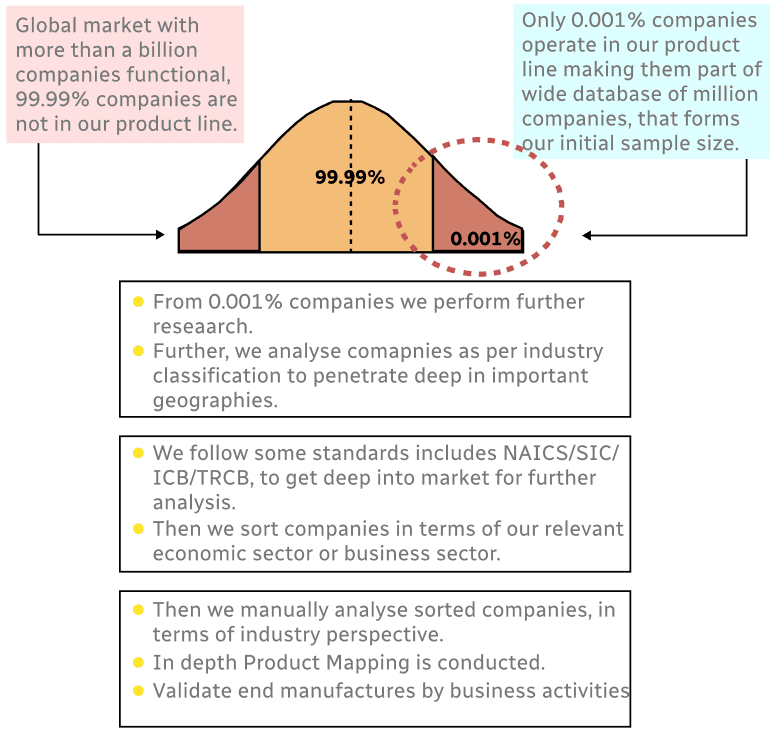
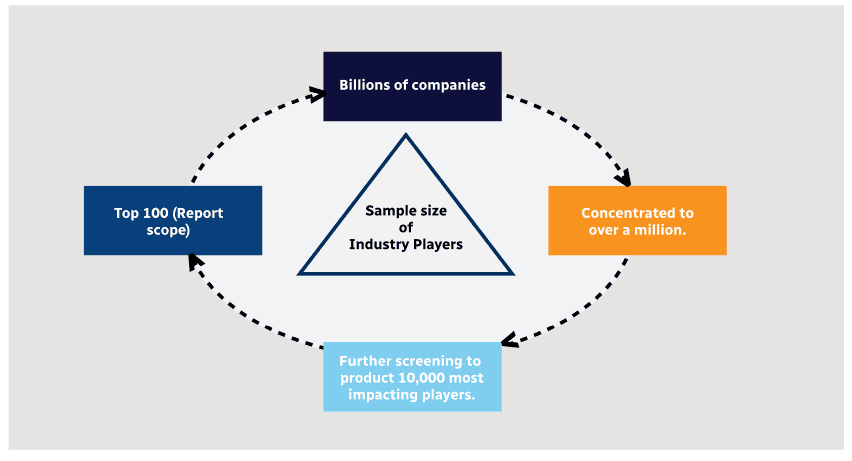
Step 1 - Identification of Relevant Samples Size from Population Database
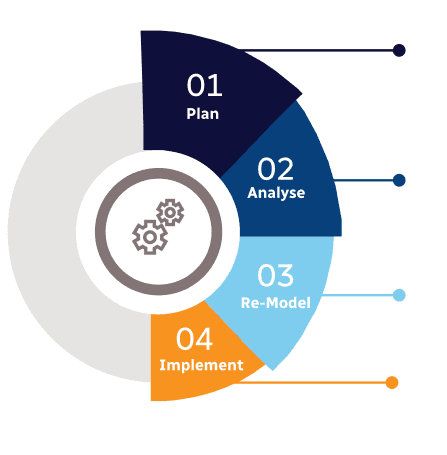
Step 2 - Approaches for Defining Global Market Size (Value, Volume* & Price*)
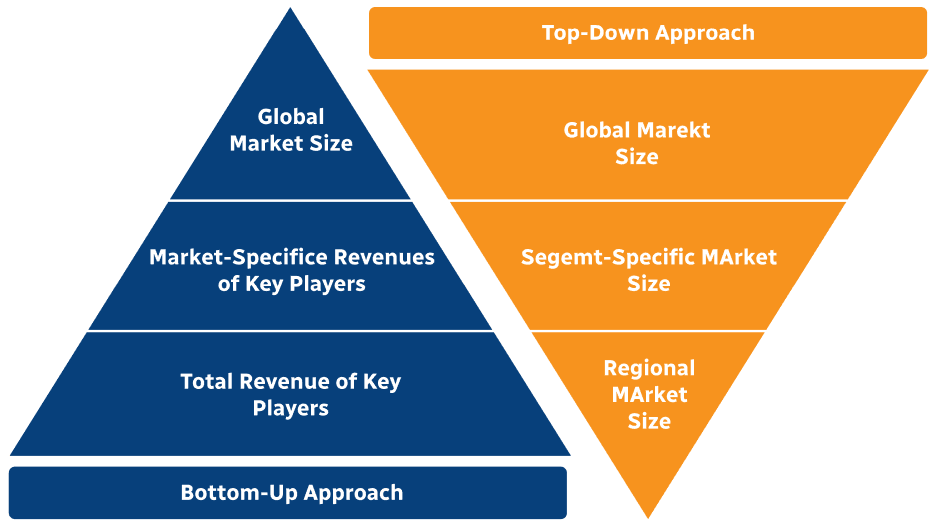
Note*: In applicable scenarios
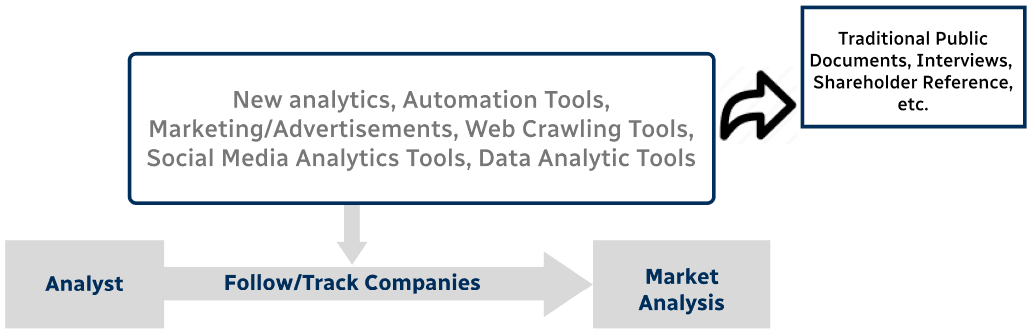
Step 3 - Data Sources
Primary Research
- Web Analytics
- Survey Reports
- Research Institute
- Latest Research Reports
- Opinion Leaders
Secondary Research
- Annual Reports
- White Paper
- Latest Press Release
- Industry Association
- Paid Database
- Investor Presentations
Step 4 - Data Triangulation
Involves using different sources of information in order to increase the validity of a study
These sources are likely to be stakeholders in a program - participants, other researchers, program staff, other community members, and so on.
Then we put all data in single framework & apply various statistical tools to find out the dynamic on the market.
During the analysis stage, feedback from the stakeholder groups would be compared to determine areas of agreement as well as areas of divergence