


Key Insights
The global insect protein market is projected for substantial expansion, anticipated to reach $1.35 billion by 2025. This growth is driven by a Compound Annual Growth Rate (CAGR) of 23.07% during the forecast period (2025-2033). Key growth factors include increasing demand for sustainable and nutrient-rich protein alternatives, particularly in animal feed due to its environmental benefits over conventional ingredients. The food and beverage sector also contributes significantly, integrating insect protein into diverse products like snacks and meals to meet the demand for novel and healthy food options. Growing consumer awareness of insect protein's nutritional value, especially for elder care and medical applications, opens new market opportunities.
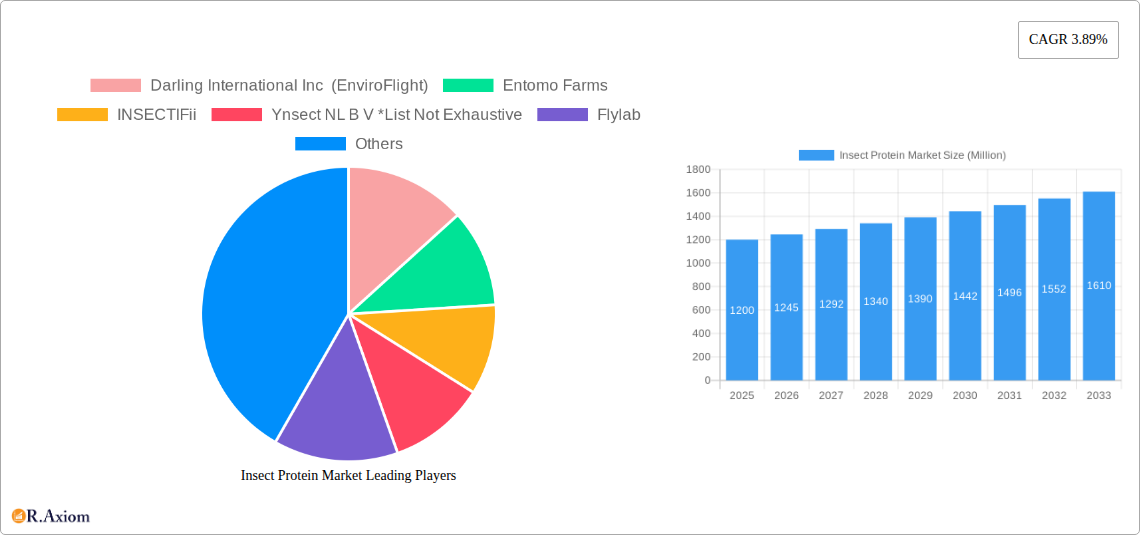
Insect Protein Market Market Size (In Billion)

Challenges to market expansion include consumer acceptance barriers and the need for widespread education on entomophagy. Regulatory complexities across different regions may also pose hurdles. However, advancements in production technologies and innovative product development are expected to overcome these obstacles. Leading companies such as Darling International Inc. (EnviroFlight), Entomo Farms, and Ynsect NL B.V. are actively investing in scaling production and diversifying product offerings. North America and Europe are expected to lead market growth, supported by consumer interest in sustainable food solutions and favorable regulatory environments. The Asia Pacific region, with its large population and rising disposable income, presents significant untapped potential.
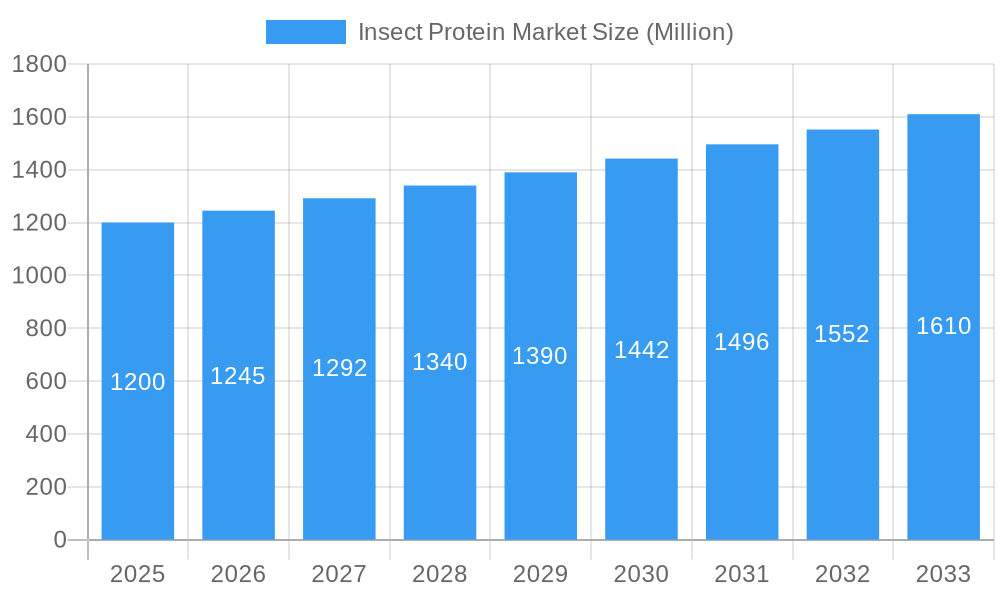
Insect Protein Market Company Market Share
This comprehensive report offers an in-depth analysis of the global insect protein market, covering the period from 2019 to 2033, with 2025 as the base and estimated year. The forecast period spans from 2025 to 2033, building upon historical data from 2019-2024. This analysis is an essential resource for stakeholders aiming to understand market dynamics, identify growth opportunities, and navigate the evolving insect-based protein landscape. With a projected market size of $1.35 billion by 2025 and a CAGR of 23.07% during the forecast period, the insect protein industry is set for significant expansion. The report details key segments, drivers, challenges, and the competitive landscape, providing actionable insights for businesses, investors, and researchers.
Insect Protein Market Market Concentration & Innovation
The global Insect Protein Market is characterized by a moderate level of market concentration, with a growing number of innovative companies entering the space. Innovation is a primary driver, fueled by advancements in insect rearing technologies, processing techniques, and product development for diverse applications. Regulatory frameworks, though still evolving in many regions, are gradually becoming more supportive, paving the way for wider market acceptance. Key innovation areas include optimizing larvae growth for maximum protein yield, developing efficient and sustainable farming practices, and creating palatable and functional insect protein ingredients for both animal feed and human consumption. Product substitutes, primarily traditional animal proteins and plant-based alternatives, present a competitive challenge, but insect protein's unique sustainability profile and nutritional benefits offer a distinct advantage. End-user trends are increasingly favoring sustainable and novel protein sources, particularly in the animal feed sector where cost-effectiveness and reduced environmental impact are paramount. Mergers and Acquisitions (M&A) activities are on the rise as established players and new entrants seek to consolidate market share and leverage technological advancements. Notable M&A deal values are anticipated to grow as the industry matures and investment opportunities become more attractive.
Insect Protein Market Industry Trends & Insights
The Insect Protein Market is experiencing a paradigm shift, driven by a confluence of factors that are reshaping global protein consumption. A primary growth driver is the escalating global demand for sustainable and environmentally friendly protein sources. Insect farming offers a significantly lower carbon footprint, reduced land and water usage, and efficient feed conversion ratios compared to conventional livestock farming. This resonates strongly with environmentally conscious consumers and businesses seeking to align with sustainability goals. Technological disruptions are playing a pivotal role, with advancements in automated insect farming systems, efficient feed formulations, and sophisticated processing techniques enhancing scalability and reducing production costs. These innovations are crucial for meeting the growing demand and making insect protein more competitive. Consumer preferences are evolving, with increasing awareness of the nutritional benefits of insect protein, such as high protein content, essential amino acids, and beneficial fats. While initial adoption for human consumption faced some psychological barriers, the "ick factor" is diminishing, particularly with the increasing availability of insect protein in processed food products and supplements. Competitive dynamics are intensifying, with both established food and feed companies and dedicated insect protein startups vying for market share. Strategic partnerships and collaborations are becoming common, fostering innovation and market penetration. The market penetration of insect protein, especially in the food and beverage sector, is projected to witness substantial growth over the forecast period, driven by product diversification and increased consumer acceptance.
Dominant Markets & Segments in Insect Protein Market
The Animal Feed segment is currently the dominant market within the Insect Protein landscape, accounting for a substantial portion of global consumption.
- Key Drivers for Animal Feed Dominance:
- Cost-Effectiveness: Insect protein meal offers a competitive alternative to conventional protein sources like soybean meal and fishmeal, particularly for aquaculture and poultry.
- Sustainability Mandates: Growing pressure on the livestock industry to reduce its environmental impact makes insect protein an attractive, eco-friendly option.
- Nutritional Value: High protein content and essential amino acid profiles make insect protein ideal for optimizing animal growth and health.
- Regulatory Acceptance: Many regions have already established clear regulatory pathways for the use of insect protein in animal feed.
Within Food and Beverages, the Snacks category is emerging as a significant growth area, with insect-based protein bars, chips, and other convenient food items gaining traction.
- Key Drivers for Snacks Dominance:
- Novelty and Curiosity: Consumers are increasingly open to trying new and adventurous food products.
- Nutritional Fortification: Insect protein offers a way to boost the protein content of popular snack items.
- Growing Health and Wellness Trends: Snacks perceived as healthy and sustainable are in high demand.
The Supplements segment, particularly for Elderly Nutrition and Medical Nutrition, is also showing strong potential.
- Key Drivers for Supplements Dominance:
- Bioavailability and Digestibility: Insect protein can be a valuable source of easily digestible protein for individuals with specific dietary needs.
- Nutrient Density: The rich nutritional profile of insect protein makes it suitable for targeted nutritional interventions.
- Growing Aging Population: The increasing elderly population requires specialized nutritional solutions.
Insect Protein Market Product Developments
Product development in the Insect Protein Market is rapidly advancing, focusing on creating innovative and appealing applications for various end-users. Companies are developing highly refined insect protein flours, isolates, and hydrolysates with improved flavor profiles and textures. These ingredients are being incorporated into a wide range of food products, including baked goods, pasta, confectionery, and ready-to-eat meals. Technological advancements are enabling the creation of novel applications such as insect-based oils for nutraceuticals and cosmetic products. The competitive advantage lies in offering products that are not only nutritionally superior but also meet consumer demands for taste, convenience, and sustainability.
Report Scope & Segmentation Analysis
This report segments the Insect Protein Market by End-User into three primary categories: Animal Feed, Food and Beverages, and Supplements. The Animal Feed segment encompasses applications for aquaculture, poultry, swine, and pet food, exhibiting robust growth driven by cost-effectiveness and sustainability benefits. The Food and Beverages segment is further sub-segmented into Bakery, Condiments/Sauces, Confectionery, RTE/RTC Food Products, and Snacks, with Snacks currently leading in consumer adoption due to novelty and nutritional fortification. The Supplements segment focuses on Elderly Nutrition and Medical Nutrition, catering to specific dietary needs with highly digestible and nutrient-dense protein sources. Growth projections for each segment are analyzed based on current market penetration and anticipated consumer acceptance.
Key Drivers of Insect Protein Market Growth
The Insect Protein Market is propelled by several key drivers, notably the escalating global demand for sustainable and environmentally friendly protein alternatives. Technological advancements in insect rearing, processing, and product formulation are crucial for scalability and cost reduction. Growing consumer awareness regarding the nutritional benefits of insect protein, including its high protein content and essential amino acid profile, is fostering wider acceptance. Supportive regulatory frameworks in various regions are also playing a significant role in enabling market entry and expansion. Furthermore, the increasing need for novel protein sources to address global food security concerns and reduce reliance on conventional animal agriculture presents a substantial growth impetus.
Challenges in the Insect Protein Market Sector
Despite its promising growth, the Insect Protein Market faces several challenges. Regulatory hurdles and varying approval processes across different countries can hinder market access and standardization. Consumer perception and the "ick factor" associated with entomophagy, particularly in Western cultures, remain a significant barrier to widespread adoption in human food applications. Scaling up production to meet large-scale commercial demand requires substantial investment in infrastructure and technology. Supply chain complexities, including consistent sourcing of larvae and efficient processing, need to be optimized. Competitive pressures from established protein sources, both animal and plant-based, also present a challenge in terms of pricing and market share.
Emerging Opportunities in Insect Protein Market
Emerging opportunities in the Insect Protein Market are diverse and rapidly expanding. The development of novel insect species for protein extraction, beyond current dominant species like mealworms and crickets, offers potential for new product profiles and improved farming efficiencies. Advancements in biotechnology and genetic engineering could lead to enhanced protein yields and nutritional compositions. The growing demand for alternative protein ingredients in the burgeoning plant-based food industry presents a significant avenue for insect protein inclusion. Furthermore, the expansion of insect protein applications into pet food and cosmetic industries, along with a growing interest in functional foods and personalized nutrition, unlocks substantial untapped market potential.
Leading Players in the Insect Protein Market Market
- Darling International Inc (EnviroFlight)
- Entomo Farms
- INSECTIFii
- Ynsect NL B V
- Flylab
- Protix B V
- Nutrition Technologies
- Global Bugs
- Agronutris
- Aspire Food Group
- Protenga
Key Developments in Insect Protein Market Industry
- April 2023: Ÿnsect forged a strategic partnership with the Lotte R&D Center, a prominent player in the Korean tech industry. The objective is to accelerate the advancement of insect-based food throughout Asia. This collaboration is marked by the signing of a Memorandum of Understanding (MOU), signifying Ÿnsect's commitment to raising awareness and fostering opportunities for insect-based food and beverages in the region.
- September 2022: Essentia unveiled its cricket protein product under the Omni brand. This innovative addition joins Essentia's existing lineup of nutritional ingredients, which includes collagen peptides and bone broth powders.
- January 2022: Ynsect embarked on an exciting journey with the launch of the ŸNFABRE program. This initiative is dedicated to the development of cutting-edge phenotyping tools tailored for the next generation of the company's breeders, aimed at ensuring a secure and robust supply of larvae to support its insect farms.
Strategic Outlook for Insect Protein Market Market
The strategic outlook for the Insect Protein Market is exceptionally positive, driven by a clear trajectory towards global adoption of sustainable protein solutions. Continued investment in research and development will be critical for enhancing production efficiency, diversifying product applications, and overcoming lingering consumer acceptance challenges. Strategic partnerships between insect protein producers, food manufacturers, and feed companies will accelerate market penetration. The growing regulatory clarity in key markets will foster investor confidence and facilitate larger-scale operations. The market is poised for significant growth fueled by innovation in processing technologies, the development of novel insect species, and the increasing demand for high-quality, nutritious, and environmentally responsible protein sources across all end-user segments.
Insect Protein Market Segmentation
-
1. End-User
- 1.1. Animal Feed
-
1.2. Food and Beverages
- 1.2.1. Bakery
- 1.2.2. Condiments/Sauces
- 1.2.3. Confectionery
- 1.2.4. RTE/RTC Food Products
- 1.2.5. Snacks
-
1.3. Supplements
- 1.3.1. Elderly Nutrition and Medical Nutrition
Insect Protein Market Segmentation By Geography
-
1. North America
- 1.1. United States
- 1.2. Canada
- 1.3. Rest of North America
-
2. Europe
- 2.1. Germany
- 2.2. United Kingdom
- 2.3. Italy
- 2.4. France
- 2.5. Rest of Europe
-
3. Asia Pacific
- 3.1. India
- 3.2. China
- 3.3. Japan
- 3.4. Australia
- 3.5. Rest of Asia Pacific
-
4. South America
- 4.1. Brazil
- 4.2. Argentina
- 4.3. Rest of South America
- 5. Middle East
-
6. United Arab Emirates
- 6.1. Saudi Arabia
- 6.2. Iran
- 6.3. South Africa
- 6.4. Rest of Middle East
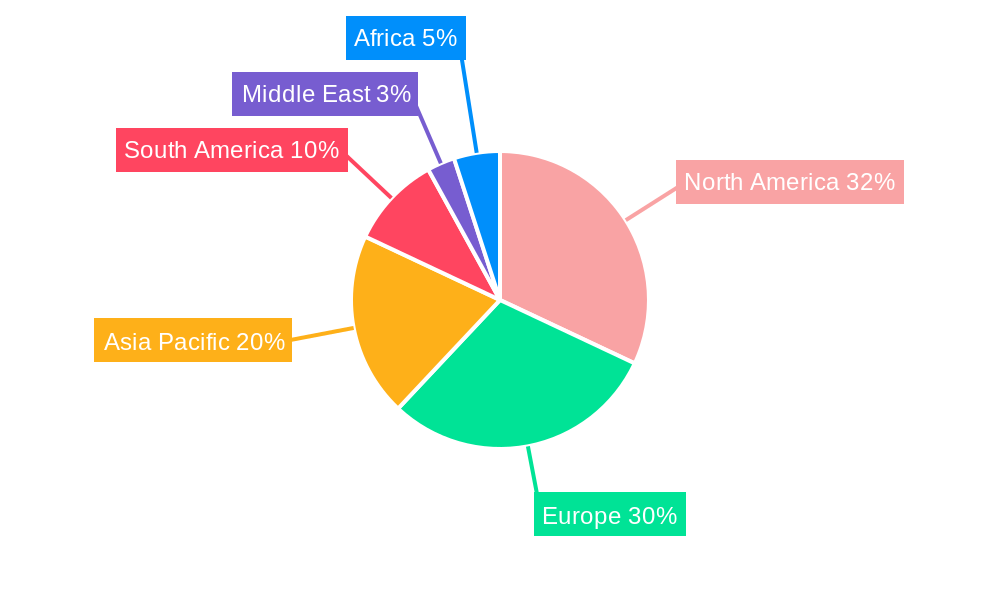
Insect Protein Market Regional Market Share
Geographic Coverage of Insect Protein Market
Insect Protein Market REPORT HIGHLIGHTS
| Aspects | Details |
|---|---|
| Study Period | 2020-2034 |
| Base Year | 2025 |
| Estimated Year | 2026 |
| Forecast Period | 2026-2034 |
| Historical Period | 2020-2025 |
| Growth Rate | CAGR of 23.07% from 2020-2034 |
| Segmentation |
|
Table of Contents
- 1. Introduction
- 1.1. Research Scope
- 1.2. Market Segmentation
- 1.3. Research Methodology
- 1.4. Definitions and Assumptions
- 2. Executive Summary
- 2.1. Introduction
- 3. Market Dynamics
- 3.1. Introduction
- 3.2. Market Drivers
- 3.2.1. Growing Awareness About Insect & Other Alternative Proteins; Increasing Applications Surge Demand for Insect Protein
- 3.3. Market Restrains
- 3.3.1. Augmenting Market Penetration of Other Proteins
- 3.4. Market Trends
- 3.4.1. Increasing Awareness About Insect & Other Alternative Proteins
- 4. Market Factor Analysis
- 4.1. Porters Five Forces
- 4.2. Supply/Value Chain
- 4.3. PESTEL analysis
- 4.4. Market Entropy
- 4.5. Patent/Trademark Analysis
- 5. Insect Protein Market Analysis, Insights and Forecast, 2020-2032
- 5.1. Market Analysis, Insights and Forecast - by End-User
- 5.1.1. Animal Feed
- 5.1.2. Food and Beverages
- 5.1.2.1. Bakery
- 5.1.2.2. Condiments/Sauces
- 5.1.2.3. Confectionery
- 5.1.2.4. RTE/RTC Food Products
- 5.1.2.5. Snacks
- 5.1.3. Supplements
- 5.1.3.1. Elderly Nutrition and Medical Nutrition
- 5.2. Market Analysis, Insights and Forecast - by Region
- 5.2.1. North America
- 5.2.2. Europe
- 5.2.3. Asia Pacific
- 5.2.4. South America
- 5.2.5. Middle East
- 5.2.6. United Arab Emirates
- 5.1. Market Analysis, Insights and Forecast - by End-User
- 6. North America Insect Protein Market Analysis, Insights and Forecast, 2020-2032
- 6.1. Market Analysis, Insights and Forecast - by End-User
- 6.1.1. Animal Feed
- 6.1.2. Food and Beverages
- 6.1.2.1. Bakery
- 6.1.2.2. Condiments/Sauces
- 6.1.2.3. Confectionery
- 6.1.2.4. RTE/RTC Food Products
- 6.1.2.5. Snacks
- 6.1.3. Supplements
- 6.1.3.1. Elderly Nutrition and Medical Nutrition
- 6.1. Market Analysis, Insights and Forecast - by End-User
- 7. Europe Insect Protein Market Analysis, Insights and Forecast, 2020-2032
- 7.1. Market Analysis, Insights and Forecast - by End-User
- 7.1.1. Animal Feed
- 7.1.2. Food and Beverages
- 7.1.2.1. Bakery
- 7.1.2.2. Condiments/Sauces
- 7.1.2.3. Confectionery
- 7.1.2.4. RTE/RTC Food Products
- 7.1.2.5. Snacks
- 7.1.3. Supplements
- 7.1.3.1. Elderly Nutrition and Medical Nutrition
- 7.1. Market Analysis, Insights and Forecast - by End-User
- 8. Asia Pacific Insect Protein Market Analysis, Insights and Forecast, 2020-2032
- 8.1. Market Analysis, Insights and Forecast - by End-User
- 8.1.1. Animal Feed
- 8.1.2. Food and Beverages
- 8.1.2.1. Bakery
- 8.1.2.2. Condiments/Sauces
- 8.1.2.3. Confectionery
- 8.1.2.4. RTE/RTC Food Products
- 8.1.2.5. Snacks
- 8.1.3. Supplements
- 8.1.3.1. Elderly Nutrition and Medical Nutrition
- 8.1. Market Analysis, Insights and Forecast - by End-User
- 9. South America Insect Protein Market Analysis, Insights and Forecast, 2020-2032
- 9.1. Market Analysis, Insights and Forecast - by End-User
- 9.1.1. Animal Feed
- 9.1.2. Food and Beverages
- 9.1.2.1. Bakery
- 9.1.2.2. Condiments/Sauces
- 9.1.2.3. Confectionery
- 9.1.2.4. RTE/RTC Food Products
- 9.1.2.5. Snacks
- 9.1.3. Supplements
- 9.1.3.1. Elderly Nutrition and Medical Nutrition
- 9.1. Market Analysis, Insights and Forecast - by End-User
- 10. Middle East Insect Protein Market Analysis, Insights and Forecast, 2020-2032
- 10.1. Market Analysis, Insights and Forecast - by End-User
- 10.1.1. Animal Feed
- 10.1.2. Food and Beverages
- 10.1.2.1. Bakery
- 10.1.2.2. Condiments/Sauces
- 10.1.2.3. Confectionery
- 10.1.2.4. RTE/RTC Food Products
- 10.1.2.5. Snacks
- 10.1.3. Supplements
- 10.1.3.1. Elderly Nutrition and Medical Nutrition
- 10.1. Market Analysis, Insights and Forecast - by End-User
- 11. United Arab Emirates Insect Protein Market Analysis, Insights and Forecast, 2020-2032
- 11.1. Market Analysis, Insights and Forecast - by End-User
- 11.1.1. Animal Feed
- 11.1.2. Food and Beverages
- 11.1.2.1. Bakery
- 11.1.2.2. Condiments/Sauces
- 11.1.2.3. Confectionery
- 11.1.2.4. RTE/RTC Food Products
- 11.1.2.5. Snacks
- 11.1.3. Supplements
- 11.1.3.1. Elderly Nutrition and Medical Nutrition
- 11.1. Market Analysis, Insights and Forecast - by End-User
- 12. Competitive Analysis
- 12.1. Market Share Analysis 2025
- 12.2. Company Profiles
- 12.2.1 Darling International Inc (EnviroFlight)
- 12.2.1.1. Overview
- 12.2.1.2. Products
- 12.2.1.3. SWOT Analysis
- 12.2.1.4. Recent Developments
- 12.2.1.5. Financials (Based on Availability)
- 12.2.2 Entomo Farms
- 12.2.2.1. Overview
- 12.2.2.2. Products
- 12.2.2.3. SWOT Analysis
- 12.2.2.4. Recent Developments
- 12.2.2.5. Financials (Based on Availability)
- 12.2.3 INSECTIFii
- 12.2.3.1. Overview
- 12.2.3.2. Products
- 12.2.3.3. SWOT Analysis
- 12.2.3.4. Recent Developments
- 12.2.3.5. Financials (Based on Availability)
- 12.2.4 Ynsect NL B V *List Not Exhaustive
- 12.2.4.1. Overview
- 12.2.4.2. Products
- 12.2.4.3. SWOT Analysis
- 12.2.4.4. Recent Developments
- 12.2.4.5. Financials (Based on Availability)
- 12.2.5 Flylab
- 12.2.5.1. Overview
- 12.2.5.2. Products
- 12.2.5.3. SWOT Analysis
- 12.2.5.4. Recent Developments
- 12.2.5.5. Financials (Based on Availability)
- 12.2.6 Protix B V
- 12.2.6.1. Overview
- 12.2.6.2. Products
- 12.2.6.3. SWOT Analysis
- 12.2.6.4. Recent Developments
- 12.2.6.5. Financials (Based on Availability)
- 12.2.7 Nutrition Technologies
- 12.2.7.1. Overview
- 12.2.7.2. Products
- 12.2.7.3. SWOT Analysis
- 12.2.7.4. Recent Developments
- 12.2.7.5. Financials (Based on Availability)
- 12.2.8 Global Bugs
- 12.2.8.1. Overview
- 12.2.8.2. Products
- 12.2.8.3. SWOT Analysis
- 12.2.8.4. Recent Developments
- 12.2.8.5. Financials (Based on Availability)
- 12.2.9 Agronutris
- 12.2.9.1. Overview
- 12.2.9.2. Products
- 12.2.9.3. SWOT Analysis
- 12.2.9.4. Recent Developments
- 12.2.9.5. Financials (Based on Availability)
- 12.2.10 Aspire Food Group
- 12.2.10.1. Overview
- 12.2.10.2. Products
- 12.2.10.3. SWOT Analysis
- 12.2.10.4. Recent Developments
- 12.2.10.5. Financials (Based on Availability)
- 12.2.11 Protenga
- 12.2.11.1. Overview
- 12.2.11.2. Products
- 12.2.11.3. SWOT Analysis
- 12.2.11.4. Recent Developments
- 12.2.11.5. Financials (Based on Availability)
- 12.2.1 Darling International Inc (EnviroFlight)
List of Figures
- Figure 1: Insect Protein Market Revenue Breakdown (billion, %) by Product 2025 & 2033
- Figure 2: Insect Protein Market Share (%) by Company 2025
List of Tables
- Table 1: Insect Protein Market Revenue billion Forecast, by End-User 2020 & 2033
- Table 2: Insect Protein Market Volume k tons Forecast, by End-User 2020 & 2033
- Table 3: Insect Protein Market Revenue billion Forecast, by Region 2020 & 2033
- Table 4: Insect Protein Market Volume k tons Forecast, by Region 2020 & 2033
- Table 5: Insect Protein Market Revenue billion Forecast, by End-User 2020 & 2033
- Table 6: Insect Protein Market Volume k tons Forecast, by End-User 2020 & 2033
- Table 7: Insect Protein Market Revenue billion Forecast, by Country 2020 & 2033
- Table 8: Insect Protein Market Volume k tons Forecast, by Country 2020 & 2033
- Table 9: United States Insect Protein Market Revenue (billion) Forecast, by Application 2020 & 2033
- Table 10: United States Insect Protein Market Volume (k tons) Forecast, by Application 2020 & 2033
- Table 11: Canada Insect Protein Market Revenue (billion) Forecast, by Application 2020 & 2033
- Table 12: Canada Insect Protein Market Volume (k tons) Forecast, by Application 2020 & 2033
- Table 13: Rest of North America Insect Protein Market Revenue (billion) Forecast, by Application 2020 & 2033
- Table 14: Rest of North America Insect Protein Market Volume (k tons) Forecast, by Application 2020 & 2033
- Table 15: Insect Protein Market Revenue billion Forecast, by End-User 2020 & 2033
- Table 16: Insect Protein Market Volume k tons Forecast, by End-User 2020 & 2033
- Table 17: Insect Protein Market Revenue billion Forecast, by Country 2020 & 2033
- Table 18: Insect Protein Market Volume k tons Forecast, by Country 2020 & 2033
- Table 19: Germany Insect Protein Market Revenue (billion) Forecast, by Application 2020 & 2033
- Table 20: Germany Insect Protein Market Volume (k tons) Forecast, by Application 2020 & 2033
- Table 21: United Kingdom Insect Protein Market Revenue (billion) Forecast, by Application 2020 & 2033
- Table 22: United Kingdom Insect Protein Market Volume (k tons) Forecast, by Application 2020 & 2033
- Table 23: Italy Insect Protein Market Revenue (billion) Forecast, by Application 2020 & 2033
- Table 24: Italy Insect Protein Market Volume (k tons) Forecast, by Application 2020 & 2033
- Table 25: France Insect Protein Market Revenue (billion) Forecast, by Application 2020 & 2033
- Table 26: France Insect Protein Market Volume (k tons) Forecast, by Application 2020 & 2033
- Table 27: Rest of Europe Insect Protein Market Revenue (billion) Forecast, by Application 2020 & 2033
- Table 28: Rest of Europe Insect Protein Market Volume (k tons) Forecast, by Application 2020 & 2033
- Table 29: Insect Protein Market Revenue billion Forecast, by End-User 2020 & 2033
- Table 30: Insect Protein Market Volume k tons Forecast, by End-User 2020 & 2033
- Table 31: Insect Protein Market Revenue billion Forecast, by Country 2020 & 2033
- Table 32: Insect Protein Market Volume k tons Forecast, by Country 2020 & 2033
- Table 33: India Insect Protein Market Revenue (billion) Forecast, by Application 2020 & 2033
- Table 34: India Insect Protein Market Volume (k tons) Forecast, by Application 2020 & 2033
- Table 35: China Insect Protein Market Revenue (billion) Forecast, by Application 2020 & 2033
- Table 36: China Insect Protein Market Volume (k tons) Forecast, by Application 2020 & 2033
- Table 37: Japan Insect Protein Market Revenue (billion) Forecast, by Application 2020 & 2033
- Table 38: Japan Insect Protein Market Volume (k tons) Forecast, by Application 2020 & 2033
- Table 39: Australia Insect Protein Market Revenue (billion) Forecast, by Application 2020 & 2033
- Table 40: Australia Insect Protein Market Volume (k tons) Forecast, by Application 2020 & 2033
- Table 41: Rest of Asia Pacific Insect Protein Market Revenue (billion) Forecast, by Application 2020 & 2033
- Table 42: Rest of Asia Pacific Insect Protein Market Volume (k tons) Forecast, by Application 2020 & 2033
- Table 43: Insect Protein Market Revenue billion Forecast, by End-User 2020 & 2033
- Table 44: Insect Protein Market Volume k tons Forecast, by End-User 2020 & 2033
- Table 45: Insect Protein Market Revenue billion Forecast, by Country 2020 & 2033
- Table 46: Insect Protein Market Volume k tons Forecast, by Country 2020 & 2033
- Table 47: Brazil Insect Protein Market Revenue (billion) Forecast, by Application 2020 & 2033
- Table 48: Brazil Insect Protein Market Volume (k tons) Forecast, by Application 2020 & 2033
- Table 49: Argentina Insect Protein Market Revenue (billion) Forecast, by Application 2020 & 2033
- Table 50: Argentina Insect Protein Market Volume (k tons) Forecast, by Application 2020 & 2033
- Table 51: Rest of South America Insect Protein Market Revenue (billion) Forecast, by Application 2020 & 2033
- Table 52: Rest of South America Insect Protein Market Volume (k tons) Forecast, by Application 2020 & 2033
- Table 53: Insect Protein Market Revenue billion Forecast, by End-User 2020 & 2033
- Table 54: Insect Protein Market Volume k tons Forecast, by End-User 2020 & 2033
- Table 55: Insect Protein Market Revenue billion Forecast, by Country 2020 & 2033
- Table 56: Insect Protein Market Volume k tons Forecast, by Country 2020 & 2033
- Table 57: Insect Protein Market Revenue billion Forecast, by End-User 2020 & 2033
- Table 58: Insect Protein Market Volume k tons Forecast, by End-User 2020 & 2033
- Table 59: Insect Protein Market Revenue billion Forecast, by Country 2020 & 2033
- Table 60: Insect Protein Market Volume k tons Forecast, by Country 2020 & 2033
- Table 61: Saudi Arabia Insect Protein Market Revenue (billion) Forecast, by Application 2020 & 2033
- Table 62: Saudi Arabia Insect Protein Market Volume (k tons) Forecast, by Application 2020 & 2033
- Table 63: Iran Insect Protein Market Revenue (billion) Forecast, by Application 2020 & 2033
- Table 64: Iran Insect Protein Market Volume (k tons) Forecast, by Application 2020 & 2033
- Table 65: South Africa Insect Protein Market Revenue (billion) Forecast, by Application 2020 & 2033
- Table 66: South Africa Insect Protein Market Volume (k tons) Forecast, by Application 2020 & 2033
- Table 67: Rest of Middle East Insect Protein Market Revenue (billion) Forecast, by Application 2020 & 2033
- Table 68: Rest of Middle East Insect Protein Market Volume (k tons) Forecast, by Application 2020 & 2033
Frequently Asked Questions
1. What is the projected Compound Annual Growth Rate (CAGR) of the Insect Protein Market?
The projected CAGR is approximately 23.07%.
2. Which companies are prominent players in the Insect Protein Market?
Key companies in the market include Darling International Inc (EnviroFlight), Entomo Farms, INSECTIFii, Ynsect NL B V *List Not Exhaustive, Flylab, Protix B V, Nutrition Technologies, Global Bugs, Agronutris, Aspire Food Group, Protenga.
3. What are the main segments of the Insect Protein Market?
The market segments include End-User.
4. Can you provide details about the market size?
The market size is estimated to be USD 1.35 billion as of 2022.
5. What are some drivers contributing to market growth?
Growing Awareness About Insect & Other Alternative Proteins; Increasing Applications Surge Demand for Insect Protein.
6. What are the notable trends driving market growth?
Increasing Awareness About Insect & Other Alternative Proteins.
7. Are there any restraints impacting market growth?
Augmenting Market Penetration of Other Proteins.
8. Can you provide examples of recent developments in the market?
April 2023: Ÿnsect forged a strategic partnership with the Lotte R&D Center, a prominent player in the Korean tech industry. The objective is to accelerate the advancement of insect-based food throughout Asia. This collaboration is marked by the signing of a Memorandum of Understanding (MOU), signifying Ÿnsect's commitment to raising awareness and fostering opportunities for insect-based food and beverages in the region.
9. What pricing options are available for accessing the report?
Pricing options include single-user, multi-user, and enterprise licenses priced at USD 3800, USD 4500, and USD 5800 respectively.
10. Is the market size provided in terms of value or volume?
The market size is provided in terms of value, measured in billion and volume, measured in k tons.
11. Are there any specific market keywords associated with the report?
Yes, the market keyword associated with the report is "Insect Protein Market," which aids in identifying and referencing the specific market segment covered.
12. How do I determine which pricing option suits my needs best?
The pricing options vary based on user requirements and access needs. Individual users may opt for single-user licenses, while businesses requiring broader access may choose multi-user or enterprise licenses for cost-effective access to the report.
13. Are there any additional resources or data provided in the Insect Protein Market report?
While the report offers comprehensive insights, it's advisable to review the specific contents or supplementary materials provided to ascertain if additional resources or data are available.
14. How can I stay updated on further developments or reports in the Insect Protein Market?
To stay informed about further developments, trends, and reports in the Insect Protein Market, consider subscribing to industry newsletters, following relevant companies and organizations, or regularly checking reputable industry news sources and publications.
Methodology
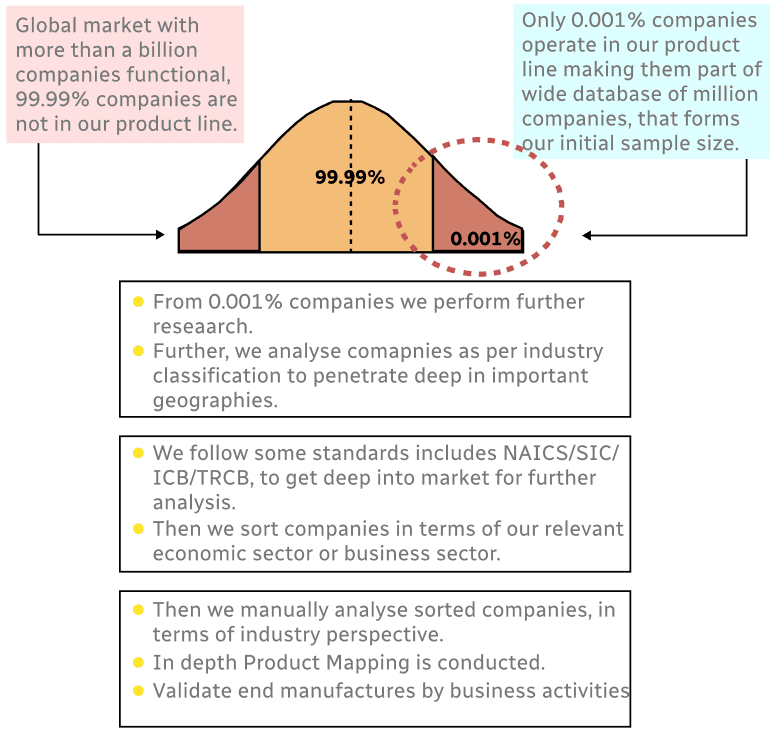
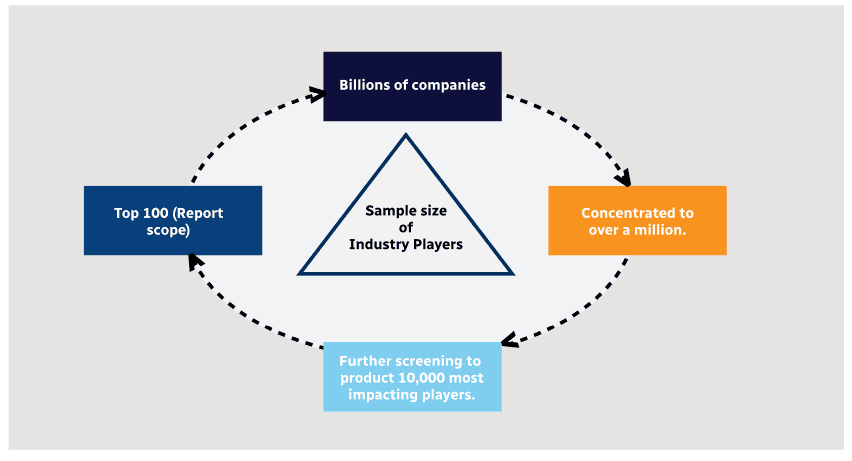
Step 1 - Identification of Relevant Samples Size from Population Database
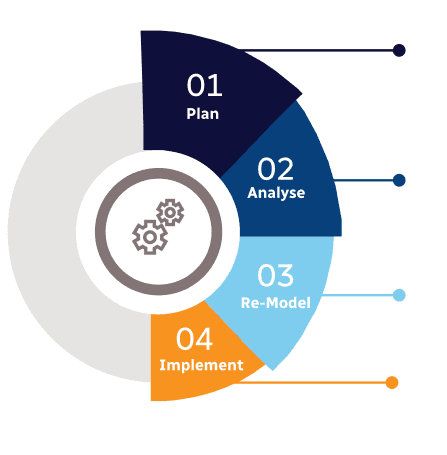
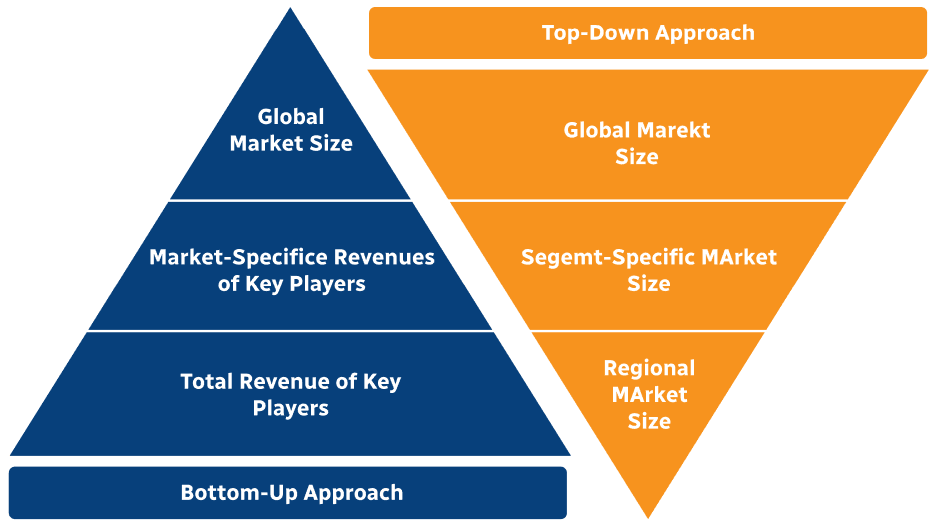
Step 2 - Approaches for Defining Global Market Size (Value, Volume* & Price*)
Note*: In applicable scenarios
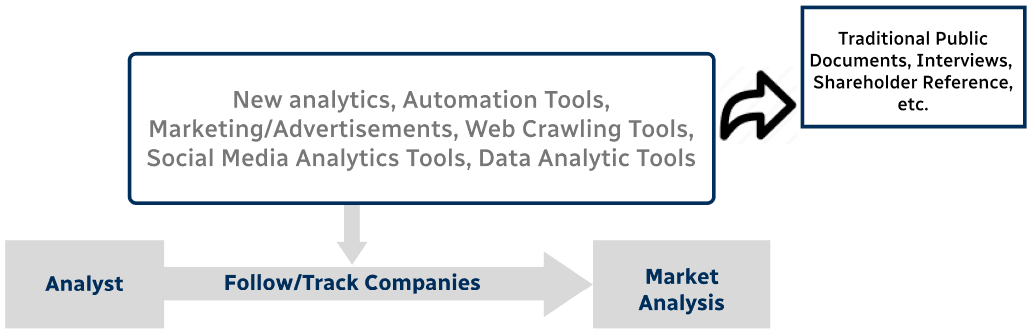
Step 3 - Data Sources
Primary Research
- Web Analytics
- Survey Reports
- Research Institute
- Latest Research Reports
- Opinion Leaders
Secondary Research
- Annual Reports
- White Paper
- Latest Press Release
- Industry Association
- Paid Database
- Investor Presentations
Step 4 - Data Triangulation
Involves using different sources of information in order to increase the validity of a study
These sources are likely to be stakeholders in a program - participants, other researchers, program staff, other community members, and so on.
Then we put all data in single framework & apply various statistical tools to find out the dynamic on the market.
During the analysis stage, feedback from the stakeholder groups would be compared to determine areas of agreement as well as areas of divergence