Key Insights
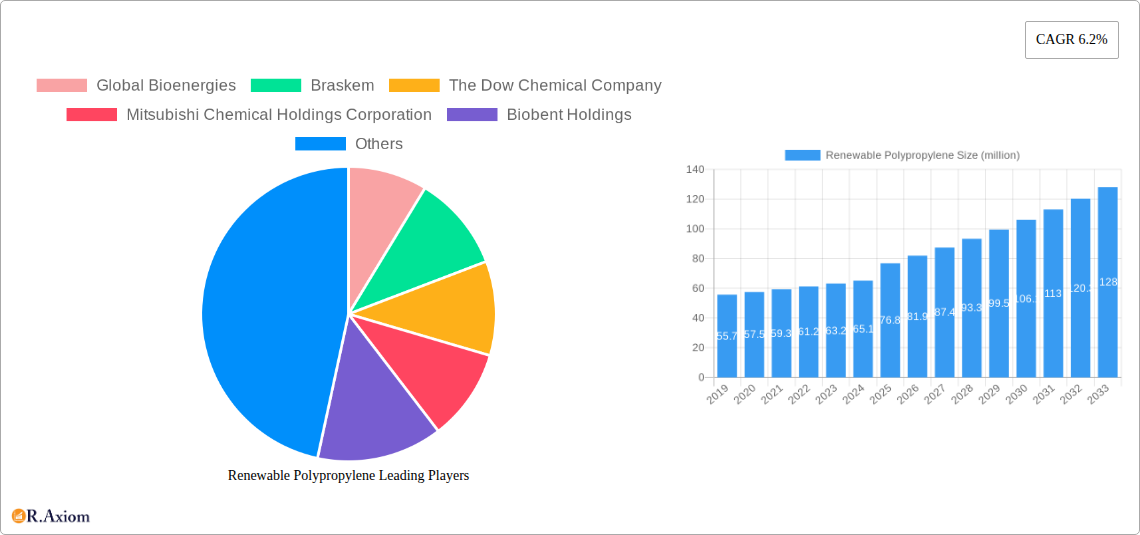
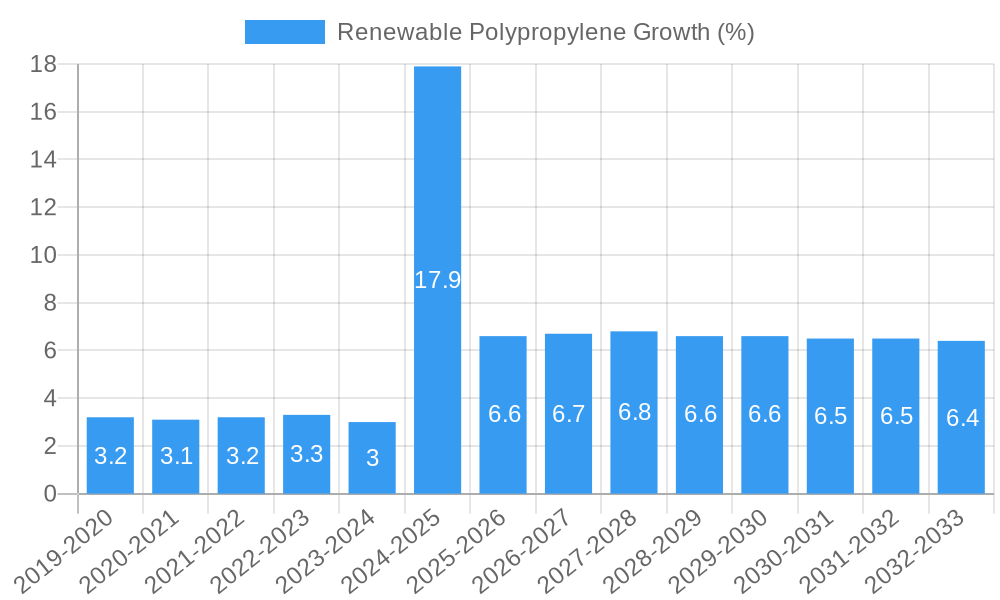
The global Renewable Polypropylene market is poised for significant expansion, projected to reach approximately $76.8 million by 2025, with a robust Compound Annual Growth Rate (CAGR) of 6.2% anticipated through 2033. This impressive trajectory is fueled by a confluence of escalating environmental concerns and a growing demand for sustainable materials across various industries. Key drivers include stringent government regulations promoting the adoption of bio-based alternatives, advancements in bio-refining technologies that enhance the efficiency and cost-effectiveness of renewable polypropylene production, and a discernible consumer shift towards eco-friendly products. The automotive sector is increasingly embracing renewable polypropylene for interior components and under-the-hood applications, driven by the pursuit of lighter, more fuel-efficient vehicles with a reduced carbon footprint. Similarly, the packaging industry is leveraging this sustainable material to meet consumer expectations for reduced plastic waste and more environmentally responsible product presentation.
While the market is experiencing a strong growth phase, certain restraints warrant attention. The initial capital investment required for establishing bio-based production facilities can be substantial, posing a barrier to entry for some manufacturers. Furthermore, fluctuations in the price and availability of feedstock, such as corn, beet, and sugarcane, can impact production costs and market stability. However, ongoing research and development efforts are focused on optimizing feedstock utilization and exploring alternative bio-sources to mitigate these challenges. The market is segmented by application into Architecture, Automobile, IT, Packaging, and Others, with significant contributions expected from the Automobile and Packaging segments. By type, Corn, Beet, Sugarcane, and Others represent the primary bio-based feedstocks, with ongoing innovation likely to expand the "Others" category with novel bio-resources. Leading players like Global Bioenergies, Braskem, and The Dow Chemical Company are at the forefront of innovation, investing in new technologies and strategic partnerships to capitalize on this burgeoning market. The Asia Pacific region, particularly China and India, is anticipated to emerge as a dominant force due to rapid industrialization and supportive government initiatives aimed at promoting sustainable manufacturing.
Renewable Polypropylene Market Concentration & Innovation
The global renewable polypropylene market exhibits a dynamic landscape characterized by moderate to high concentration, driven by a few key innovators and established petrochemical giants venturing into sustainable alternatives. Major players like Braskem, The Dow Chemical Company, Neste Oyj, and LyondellBasell Industries are making significant investments in bio-based and recycled polypropylene technologies. For instance, Braskem has been a pioneer with its "I'm green™" portfolio, achieving substantial market penetration. The Dow Chemical Company is actively exploring advanced recycling technologies to enhance the circularity of polypropylene. Neste Oyj, renowned for its renewable diesel, is expanding its renewable polymers business. LyondellBasell Industries is also investing in chemical recycling solutions.
Innovation is a primary growth catalyst, fueled by extensive research and development in bio-feedstock utilization (corn, beet, sugarcane) and advanced recycling processes. Companies are focused on improving the sustainability profile, performance characteristics, and cost-competitiveness of renewable polypropylene. Regulatory frameworks, particularly those promoting circular economy principles and reducing reliance on fossil fuels, are instrumental in shaping market dynamics. For example, government mandates for recycled content in packaging are driving demand. Product substitutes, such as other bio-plastics or traditional polyolefins, pose a competitive challenge, but the increasing environmental consciousness among consumers and brand owners is tilting the balance towards sustainable options. End-user trends, especially in the packaging, automotive, and architectural sectors, are increasingly demanding materials with a lower carbon footprint. Mergers and acquisitions (M&A) activity is a notable trend, with deal values estimated in the hundreds of millions, as companies seek to acquire innovative technologies or expand their sustainable product offerings. For example, potential M&A activities aimed at securing advanced recycling capabilities or novel bio-feedstock sources are anticipated to be in the range of xx million.
Renewable Polypropylene Industry Trends & Insights
The renewable polypropylene industry is experiencing robust growth, driven by a confluence of factors including escalating environmental consciousness, stringent government regulations, and advancements in bio-based and recycled material technologies. The global market is projected to witness a Compound Annual Growth Rate (CAGR) of approximately xx% during the forecast period of 2025–2033, with the market size estimated to reach xx million by 2033. This expansion is largely attributed to the increasing demand for sustainable materials across various end-use sectors.
Technological disruptions are at the forefront of this evolution. Innovations in chemical recycling, allowing for the depolymerization of waste plastics into their monomeric building blocks, are revolutionizing the ability to produce virgin-quality polypropylene from post-consumer and post-industrial waste. Similarly, advancements in the conversion of biomass, such as corn, sugarcane, and sugar beet, into bio-based propylene are offering viable alternatives to fossil fuel-derived feedstocks. Companies like Global Bioenergies are developing innovative bio-based routes to isobutene, a precursor for isopropanol and potentially propylene. Braskem continues to lead in bio-polypropylene production derived from sugarcane ethanol.
Consumer preferences are playing a pivotal role, with a growing demand for eco-friendly products and packaging. Brands are actively seeking to enhance their sustainability credentials, leading to a surge in the adoption of renewable polypropylene in consumer goods, automotive components, and architectural applications. This shift is compelling manufacturers to invest heavily in the research and development of sustainable materials. The competitive dynamics within the industry are intensifying, with established petrochemical giants like The Dow Chemical Company and Exxon Mobil Corporation actively participating alongside specialized bio-material companies like Biobent Holdings and Trellis Earth Products. The pursuit of cost-efficiency and scalability remains a key challenge, but the long-term outlook for market penetration of renewable polypropylene is highly promising, projected to reach xx% of the total polypropylene market by 2033. The increasing investment in novel production methods and the development of circular economy models are expected to further accelerate this trend.
Dominant Markets & Segments in Renewable Polypropylene
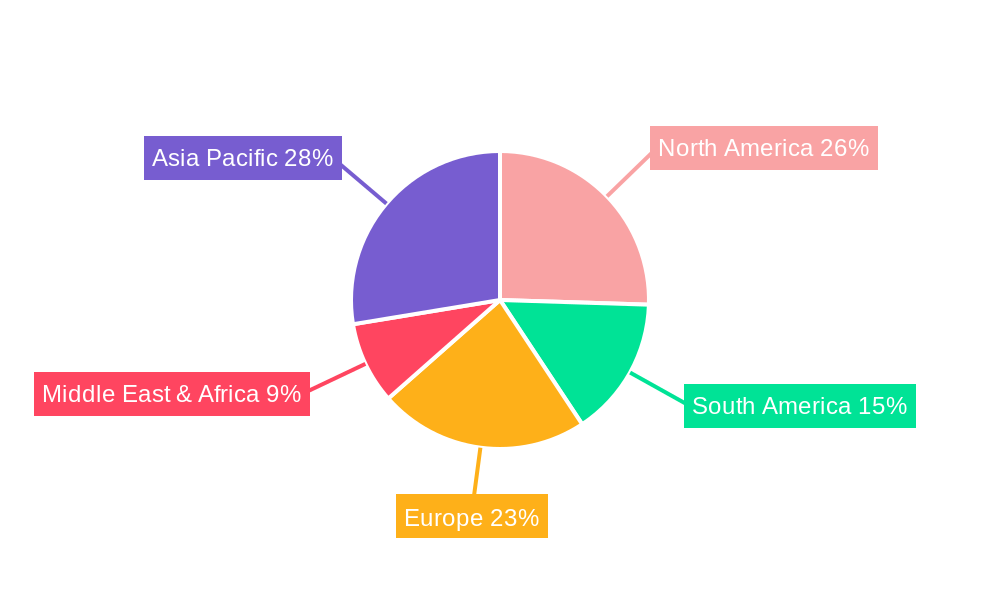
The renewable polypropylene market is experiencing significant traction across various regions and segments, with Asia-Pacific emerging as a dominant force in terms of both production and consumption. Driven by rapid industrialization, burgeoning populations, and supportive government initiatives promoting sustainability and circular economy principles, countries like China and India are at the forefront of this growth. The economic policies encouraging the use of recycled content and the establishment of robust recycling infrastructure are key drivers behind Asia-Pacific's dominance. Infrastructure development related to waste management and the growing awareness among manufacturers regarding the benefits of adopting sustainable materials further bolster this region's leadership.
Within the application segment, Packaging stands out as the largest and fastest-growing sector for renewable polypropylene. The immense demand for sustainable packaging solutions, driven by consumer pressure and regulatory mandates to reduce plastic waste, makes this segment a primary focus. The inherent properties of polypropylene, such as its durability, flexibility, and barrier properties, make it an ideal material for a wide range of packaging applications, from food and beverage containers to consumer goods. The drive towards lightweighting and recyclability in packaging further fuels the adoption of renewable polypropylene.
The Automobile segment is also a significant contributor to the renewable polypropylene market. The automotive industry's commitment to reducing its environmental footprint and meeting increasingly stringent emissions standards is pushing for the use of lighter, more sustainable materials. Renewable polypropylene offers a compelling alternative to traditional plastics and metals, contributing to improved fuel efficiency and reduced greenhouse gas emissions. The development of advanced bio-based and recycled polypropylenes with enhanced mechanical properties and heat resistance is enabling their wider application in interior and exterior automotive components.
The Architectural application segment, while smaller, is demonstrating considerable growth potential. The increasing focus on green building practices and the demand for sustainable materials in construction are driving the adoption of renewable polypropylene in applications such as pipes, insulation, and interior fittings. Its durability, chemical resistance, and recyclability make it an attractive choice for eco-conscious construction projects.
In terms of type, Corn and Sugar Cane are currently leading as primary feedstocks for bio-based polypropylene production, owing to their widespread availability and established conversion technologies. However, advancements in utilizing Beet and other alternative feedstocks are continuously being explored to diversify supply chains and improve sustainability. The "Others" category, encompassing advanced recycling technologies and novel bio-feedstocks, is expected to gain significant prominence in the coming years as these technologies mature and scale up. The estimated market size for renewable polypropylene in the packaging segment alone is projected to reach xx million by 2033, while the automotive segment is expected to contribute xx million, showcasing the substantial economic potential across these key areas.
Renewable Polypropylene Product Developments
Product developments in the renewable polypropylene market are intensely focused on enhancing sustainability and performance. Companies are innovating in both bio-based and recycled polypropylene. Bio-based polypropylene derived from sources like sugarcane and corn is seeing improvements in its carbon footprint and cost-effectiveness. Advanced chemical and mechanical recycling technologies are yielding high-quality recycled polypropylene with properties comparable to virgin material, suitable for demanding applications. Key developments include the introduction of polypropylene grades with improved UV resistance for architectural uses, enhanced heat stability for automotive components, and superior barrier properties for food packaging. The competitive advantage lies in offering a sustainable alternative without compromising on the material's performance, thereby meeting the stringent requirements of diverse end-use industries and aligning with global circular economy goals.
Report Scope & Segmentation Analysis
This report offers a comprehensive analysis of the global renewable polypropylene market, encompassing detailed segmentation to provide actionable insights. The market is segmented by Application into: Architectural, Automobile, IT, Package, and Others. The Package segment is projected to lead the market with an estimated size of xx million by 2033, driven by the burgeoning demand for sustainable packaging solutions. The Automobile segment follows, with an anticipated market size of xx million, propelled by the automotive industry's push for lightweight and eco-friendly materials. The Architectural segment is expected to grow at a healthy CAGR of xx%, reaching xx million, fueled by green building initiatives. The IT segment, though smaller, is also demonstrating steady growth due to the increasing incorporation of sustainable materials in electronic devices. The Others category includes diverse applications like textiles and consumer goods, which are also adopting renewable polypropylene.
The market is further segmented by Type, categorizing renewable polypropylene based on its origin: Corn, Beet, Sugar Cane, and Others. Corn and Sugar Cane currently represent the largest shares due to established production pathways, with projected market sizes of xx million and xx million respectively. The Others category, which includes advanced recycling and novel bio-feedstocks, is expected to witness significant expansion, reflecting ongoing innovation. Growth projections for each segment indicate a robust overall market expansion, with the competitive landscape evolving as new technologies and feedstocks emerge.
Key Drivers of Renewable Polypropylene Growth
The growth of the renewable polypropylene market is propelled by a multifaceted interplay of factors. Technological advancements in bio-based feedstock conversion and sophisticated recycling methods are crucial, enabling the production of high-performance, sustainable polypropylene at competitive price points. Government regulatory frameworks, including mandates for recycled content in packaging and ambitious climate targets, are significantly incentivizing the adoption of renewable alternatives. Furthermore, the increasing economic benefits associated with a circular economy, such as reduced waste disposal costs and the creation of new value chains, are driving investment. The growing consumer demand for eco-friendly products and the corporate commitment to sustainability by major brands are creating substantial market pull, compelling manufacturers to integrate renewable polypropylene into their supply chains.
Challenges in the Renewable Polypropylene Sector
Despite its promising growth, the renewable polypropylene sector faces several significant challenges. Scalability and cost-competitiveness remain primary hurdles; while technologies are advancing, achieving large-scale production that can directly compete with the cost of conventionally produced polypropylene is an ongoing endeavor. Supply chain complexities associated with sourcing consistent volumes of bio-feedstocks or waste plastic for recycling can lead to price volatility and availability issues. Regulatory uncertainties or inconsistencies across different regions can also impede market development. Moreover, consumer perception and education regarding the performance and true sustainability of renewable polypropylene require continuous effort to overcome potential skepticism. The infrastructure for collecting and sorting post-consumer plastic waste for effective recycling also needs further development.
Emerging Opportunities in Renewable Polypropylene
The renewable polypropylene market is ripe with emerging opportunities. The development of novel bio-feedstocks, beyond corn and sugarcane, such as agricultural waste or algae, presents a pathway to enhance sustainability and reduce competition with food production. Advanced chemical recycling technologies offer the potential to process a wider range of plastic waste, including mixed plastics, and produce higher-quality recycled polypropylene. The increasing focus on biodegradable or compostable polypropylene grades for specific applications, though technically challenging, opens new market niches. Furthermore, the growing trend of product-as-a-service models and extended producer responsibility schemes can drive demand for durable and recyclable materials like renewable polypropylene. Collaboration across the value chain, from feedstock suppliers to end-users, is crucial to unlocking these opportunities.
Leading Players in the Renewable Polypropylene Market
- Global Bioenergies
- Braskem
- The Dow Chemical Company
- Mitsubishi Chemical Holdings Corporation
- Biobent Holdings
- Neste Oyj
- Exxon Mobil Corporation
- Trellis Earth Products
- LyondellBasell Industries
- DuPont de Nemours
- Jiangsu Sidike New Materials
Key Developments in Renewable Polypropylene Industry
- 2023/01: Braskem announces expansion of its bio-polypropylene production capacity, citing increased market demand.
- 2023/03: The Dow Chemical Company partners with a leading chemical recycling firm to advance its circular economy initiatives.
- 2023/06: Neste Oyj launches new grades of renewable polypropylene for automotive applications, demonstrating improved performance.
- 2023/09: LyondellBasell Industries invests in a pilot plant for advanced recycling technology to process challenging plastic waste streams.
- 2024/02: Global Bioenergies reports progress in its fermentation process for producing bio-based propylene precursors.
- 2024/05: Mitsubishi Chemical Holdings Corporation highlights its research into novel bio-feedstocks for polypropylene production.
Strategic Outlook for Renewable Polypropylene Market
The strategic outlook for the renewable polypropylene market is overwhelmingly positive, characterized by sustained growth driven by global sustainability imperatives. Future market potential lies in the continued innovation of advanced recycling technologies, enabling true circularity and reducing reliance on virgin fossil fuels. Expansion into new geographical markets, particularly in developing economies where demand for sustainable materials is rapidly growing, presents a significant opportunity. Strategic partnerships and collaborations across the entire value chain will be crucial for overcoming existing challenges and accelerating adoption. The integration of renewable polypropylene into a broader range of high-value applications, coupled with robust policy support and evolving consumer preferences, will solidify its position as a key material in the transition to a low-carbon economy.
Renewable Polypropylene Segmentation
-
1. Application
- 1.1. Achitechive
- 1.2. Automobile
- 1.3. IT
- 1.4. Package
- 1.5. Others
-
2. Type
- 2.1. Corn
- 2.2. Beet
- 2.3. Sugar Cane
- 2.4. Others
Renewable Polypropylene Segmentation By Geography
-
1. North America
- 1.1. United States
- 1.2. Canada
- 1.3. Mexico
-
2. South America
- 2.1. Brazil
- 2.2. Argentina
- 2.3. Rest of South America
-
3. Europe
- 3.1. United Kingdom
- 3.2. Germany
- 3.3. France
- 3.4. Italy
- 3.5. Spain
- 3.6. Russia
- 3.7. Benelux
- 3.8. Nordics
- 3.9. Rest of Europe
-
4. Middle East & Africa
- 4.1. Turkey
- 4.2. Israel
- 4.3. GCC
- 4.4. North Africa
- 4.5. South Africa
- 4.6. Rest of Middle East & Africa
-
5. Asia Pacific
- 5.1. China
- 5.2. India
- 5.3. Japan
- 5.4. South Korea
- 5.5. ASEAN
- 5.6. Oceania
- 5.7. Rest of Asia Pacific
Renewable Polypropylene REPORT HIGHLIGHTS
| Aspects | Details |
|---|---|
| Study Period | 2019-2033 |
| Base Year | 2024 |
| Estimated Year | 2025 |
| Forecast Period | 2025-2033 |
| Historical Period | 2019-2024 |
| Growth Rate | CAGR of 6.2% from 2019-2033 |
| Segmentation |
|
Table of Contents
- 1. Introduction
- 1.1. Research Scope
- 1.2. Market Segmentation
- 1.3. Research Methodology
- 1.4. Definitions and Assumptions
- 2. Executive Summary
- 2.1. Introduction
- 3. Market Dynamics
- 3.1. Introduction
- 3.2. Market Drivers
- 3.3. Market Restrains
- 3.4. Market Trends
- 4. Market Factor Analysis
- 4.1. Porters Five Forces
- 4.2. Supply/Value Chain
- 4.3. PESTEL analysis
- 4.4. Market Entropy
- 4.5. Patent/Trademark Analysis
- 5. Global Renewable Polypropylene Analysis, Insights and Forecast, 2019-2031
- 5.1. Market Analysis, Insights and Forecast - by Application
- 5.1.1. Achitechive
- 5.1.2. Automobile
- 5.1.3. IT
- 5.1.4. Package
- 5.1.5. Others
- 5.2. Market Analysis, Insights and Forecast - by Type
- 5.2.1. Corn
- 5.2.2. Beet
- 5.2.3. Sugar Cane
- 5.2.4. Others
- 5.3. Market Analysis, Insights and Forecast - by Region
- 5.3.1. North America
- 5.3.2. South America
- 5.3.3. Europe
- 5.3.4. Middle East & Africa
- 5.3.5. Asia Pacific
- 5.1. Market Analysis, Insights and Forecast - by Application
- 6. North America Renewable Polypropylene Analysis, Insights and Forecast, 2019-2031
- 6.1. Market Analysis, Insights and Forecast - by Application
- 6.1.1. Achitechive
- 6.1.2. Automobile
- 6.1.3. IT
- 6.1.4. Package
- 6.1.5. Others
- 6.2. Market Analysis, Insights and Forecast - by Type
- 6.2.1. Corn
- 6.2.2. Beet
- 6.2.3. Sugar Cane
- 6.2.4. Others
- 6.1. Market Analysis, Insights and Forecast - by Application
- 7. South America Renewable Polypropylene Analysis, Insights and Forecast, 2019-2031
- 7.1. Market Analysis, Insights and Forecast - by Application
- 7.1.1. Achitechive
- 7.1.2. Automobile
- 7.1.3. IT
- 7.1.4. Package
- 7.1.5. Others
- 7.2. Market Analysis, Insights and Forecast - by Type
- 7.2.1. Corn
- 7.2.2. Beet
- 7.2.3. Sugar Cane
- 7.2.4. Others
- 7.1. Market Analysis, Insights and Forecast - by Application
- 8. Europe Renewable Polypropylene Analysis, Insights and Forecast, 2019-2031
- 8.1. Market Analysis, Insights and Forecast - by Application
- 8.1.1. Achitechive
- 8.1.2. Automobile
- 8.1.3. IT
- 8.1.4. Package
- 8.1.5. Others
- 8.2. Market Analysis, Insights and Forecast - by Type
- 8.2.1. Corn
- 8.2.2. Beet
- 8.2.3. Sugar Cane
- 8.2.4. Others
- 8.1. Market Analysis, Insights and Forecast - by Application
- 9. Middle East & Africa Renewable Polypropylene Analysis, Insights and Forecast, 2019-2031
- 9.1. Market Analysis, Insights and Forecast - by Application
- 9.1.1. Achitechive
- 9.1.2. Automobile
- 9.1.3. IT
- 9.1.4. Package
- 9.1.5. Others
- 9.2. Market Analysis, Insights and Forecast - by Type
- 9.2.1. Corn
- 9.2.2. Beet
- 9.2.3. Sugar Cane
- 9.2.4. Others
- 9.1. Market Analysis, Insights and Forecast - by Application
- 10. Asia Pacific Renewable Polypropylene Analysis, Insights and Forecast, 2019-2031
- 10.1. Market Analysis, Insights and Forecast - by Application
- 10.1.1. Achitechive
- 10.1.2. Automobile
- 10.1.3. IT
- 10.1.4. Package
- 10.1.5. Others
- 10.2. Market Analysis, Insights and Forecast - by Type
- 10.2.1. Corn
- 10.2.2. Beet
- 10.2.3. Sugar Cane
- 10.2.4. Others
- 10.1. Market Analysis, Insights and Forecast - by Application
- 11. Competitive Analysis
- 11.1. Global Market Share Analysis 2024
- 11.2. Company Profiles
- 11.2.1 Global Bioenergies
- 11.2.1.1. Overview
- 11.2.1.2. Products
- 11.2.1.3. SWOT Analysis
- 11.2.1.4. Recent Developments
- 11.2.1.5. Financials (Based on Availability)
- 11.2.2 Braskem
- 11.2.2.1. Overview
- 11.2.2.2. Products
- 11.2.2.3. SWOT Analysis
- 11.2.2.4. Recent Developments
- 11.2.2.5. Financials (Based on Availability)
- 11.2.3 The Dow Chemical Company
- 11.2.3.1. Overview
- 11.2.3.2. Products
- 11.2.3.3. SWOT Analysis
- 11.2.3.4. Recent Developments
- 11.2.3.5. Financials (Based on Availability)
- 11.2.4 Mitsubishi Chemical Holdings Corporation
- 11.2.4.1. Overview
- 11.2.4.2. Products
- 11.2.4.3. SWOT Analysis
- 11.2.4.4. Recent Developments
- 11.2.4.5. Financials (Based on Availability)
- 11.2.5 Biobent Holdings
- 11.2.5.1. Overview
- 11.2.5.2. Products
- 11.2.5.3. SWOT Analysis
- 11.2.5.4. Recent Developments
- 11.2.5.5. Financials (Based on Availability)
- 11.2.6 Neste Oyj
- 11.2.6.1. Overview
- 11.2.6.2. Products
- 11.2.6.3. SWOT Analysis
- 11.2.6.4. Recent Developments
- 11.2.6.5. Financials (Based on Availability)
- 11.2.7 Exxon Mobil Corporation
- 11.2.7.1. Overview
- 11.2.7.2. Products
- 11.2.7.3. SWOT Analysis
- 11.2.7.4. Recent Developments
- 11.2.7.5. Financials (Based on Availability)
- 11.2.8 Trellis Earth Products
- 11.2.8.1. Overview
- 11.2.8.2. Products
- 11.2.8.3. SWOT Analysis
- 11.2.8.4. Recent Developments
- 11.2.8.5. Financials (Based on Availability)
- 11.2.9 LyondellBasell Industries
- 11.2.9.1. Overview
- 11.2.9.2. Products
- 11.2.9.3. SWOT Analysis
- 11.2.9.4. Recent Developments
- 11.2.9.5. Financials (Based on Availability)
- 11.2.10 DuPont de Nemours
- 11.2.10.1. Overview
- 11.2.10.2. Products
- 11.2.10.3. SWOT Analysis
- 11.2.10.4. Recent Developments
- 11.2.10.5. Financials (Based on Availability)
- 11.2.11 Jiangsu Sidike New Materials
- 11.2.11.1. Overview
- 11.2.11.2. Products
- 11.2.11.3. SWOT Analysis
- 11.2.11.4. Recent Developments
- 11.2.11.5. Financials (Based on Availability)
- 11.2.1 Global Bioenergies
List of Figures
- Figure 1: Global Renewable Polypropylene Revenue Breakdown (million, %) by Region 2024 & 2032
- Figure 2: North America Renewable Polypropylene Revenue (million), by Application 2024 & 2032
- Figure 3: North America Renewable Polypropylene Revenue Share (%), by Application 2024 & 2032
- Figure 4: North America Renewable Polypropylene Revenue (million), by Type 2024 & 2032
- Figure 5: North America Renewable Polypropylene Revenue Share (%), by Type 2024 & 2032
- Figure 6: North America Renewable Polypropylene Revenue (million), by Country 2024 & 2032
- Figure 7: North America Renewable Polypropylene Revenue Share (%), by Country 2024 & 2032
- Figure 8: South America Renewable Polypropylene Revenue (million), by Application 2024 & 2032
- Figure 9: South America Renewable Polypropylene Revenue Share (%), by Application 2024 & 2032
- Figure 10: South America Renewable Polypropylene Revenue (million), by Type 2024 & 2032
- Figure 11: South America Renewable Polypropylene Revenue Share (%), by Type 2024 & 2032
- Figure 12: South America Renewable Polypropylene Revenue (million), by Country 2024 & 2032
- Figure 13: South America Renewable Polypropylene Revenue Share (%), by Country 2024 & 2032
- Figure 14: Europe Renewable Polypropylene Revenue (million), by Application 2024 & 2032
- Figure 15: Europe Renewable Polypropylene Revenue Share (%), by Application 2024 & 2032
- Figure 16: Europe Renewable Polypropylene Revenue (million), by Type 2024 & 2032
- Figure 17: Europe Renewable Polypropylene Revenue Share (%), by Type 2024 & 2032
- Figure 18: Europe Renewable Polypropylene Revenue (million), by Country 2024 & 2032
- Figure 19: Europe Renewable Polypropylene Revenue Share (%), by Country 2024 & 2032
- Figure 20: Middle East & Africa Renewable Polypropylene Revenue (million), by Application 2024 & 2032
- Figure 21: Middle East & Africa Renewable Polypropylene Revenue Share (%), by Application 2024 & 2032
- Figure 22: Middle East & Africa Renewable Polypropylene Revenue (million), by Type 2024 & 2032
- Figure 23: Middle East & Africa Renewable Polypropylene Revenue Share (%), by Type 2024 & 2032
- Figure 24: Middle East & Africa Renewable Polypropylene Revenue (million), by Country 2024 & 2032
- Figure 25: Middle East & Africa Renewable Polypropylene Revenue Share (%), by Country 2024 & 2032
- Figure 26: Asia Pacific Renewable Polypropylene Revenue (million), by Application 2024 & 2032
- Figure 27: Asia Pacific Renewable Polypropylene Revenue Share (%), by Application 2024 & 2032
- Figure 28: Asia Pacific Renewable Polypropylene Revenue (million), by Type 2024 & 2032
- Figure 29: Asia Pacific Renewable Polypropylene Revenue Share (%), by Type 2024 & 2032
- Figure 30: Asia Pacific Renewable Polypropylene Revenue (million), by Country 2024 & 2032
- Figure 31: Asia Pacific Renewable Polypropylene Revenue Share (%), by Country 2024 & 2032
List of Tables
- Table 1: Global Renewable Polypropylene Revenue million Forecast, by Region 2019 & 2032
- Table 2: Global Renewable Polypropylene Revenue million Forecast, by Application 2019 & 2032
- Table 3: Global Renewable Polypropylene Revenue million Forecast, by Type 2019 & 2032
- Table 4: Global Renewable Polypropylene Revenue million Forecast, by Region 2019 & 2032
- Table 5: Global Renewable Polypropylene Revenue million Forecast, by Application 2019 & 2032
- Table 6: Global Renewable Polypropylene Revenue million Forecast, by Type 2019 & 2032
- Table 7: Global Renewable Polypropylene Revenue million Forecast, by Country 2019 & 2032
- Table 8: United States Renewable Polypropylene Revenue (million) Forecast, by Application 2019 & 2032
- Table 9: Canada Renewable Polypropylene Revenue (million) Forecast, by Application 2019 & 2032
- Table 10: Mexico Renewable Polypropylene Revenue (million) Forecast, by Application 2019 & 2032
- Table 11: Global Renewable Polypropylene Revenue million Forecast, by Application 2019 & 2032
- Table 12: Global Renewable Polypropylene Revenue million Forecast, by Type 2019 & 2032
- Table 13: Global Renewable Polypropylene Revenue million Forecast, by Country 2019 & 2032
- Table 14: Brazil Renewable Polypropylene Revenue (million) Forecast, by Application 2019 & 2032
- Table 15: Argentina Renewable Polypropylene Revenue (million) Forecast, by Application 2019 & 2032
- Table 16: Rest of South America Renewable Polypropylene Revenue (million) Forecast, by Application 2019 & 2032
- Table 17: Global Renewable Polypropylene Revenue million Forecast, by Application 2019 & 2032
- Table 18: Global Renewable Polypropylene Revenue million Forecast, by Type 2019 & 2032
- Table 19: Global Renewable Polypropylene Revenue million Forecast, by Country 2019 & 2032
- Table 20: United Kingdom Renewable Polypropylene Revenue (million) Forecast, by Application 2019 & 2032
- Table 21: Germany Renewable Polypropylene Revenue (million) Forecast, by Application 2019 & 2032
- Table 22: France Renewable Polypropylene Revenue (million) Forecast, by Application 2019 & 2032
- Table 23: Italy Renewable Polypropylene Revenue (million) Forecast, by Application 2019 & 2032
- Table 24: Spain Renewable Polypropylene Revenue (million) Forecast, by Application 2019 & 2032
- Table 25: Russia Renewable Polypropylene Revenue (million) Forecast, by Application 2019 & 2032
- Table 26: Benelux Renewable Polypropylene Revenue (million) Forecast, by Application 2019 & 2032
- Table 27: Nordics Renewable Polypropylene Revenue (million) Forecast, by Application 2019 & 2032
- Table 28: Rest of Europe Renewable Polypropylene Revenue (million) Forecast, by Application 2019 & 2032
- Table 29: Global Renewable Polypropylene Revenue million Forecast, by Application 2019 & 2032
- Table 30: Global Renewable Polypropylene Revenue million Forecast, by Type 2019 & 2032
- Table 31: Global Renewable Polypropylene Revenue million Forecast, by Country 2019 & 2032
- Table 32: Turkey Renewable Polypropylene Revenue (million) Forecast, by Application 2019 & 2032
- Table 33: Israel Renewable Polypropylene Revenue (million) Forecast, by Application 2019 & 2032
- Table 34: GCC Renewable Polypropylene Revenue (million) Forecast, by Application 2019 & 2032
- Table 35: North Africa Renewable Polypropylene Revenue (million) Forecast, by Application 2019 & 2032
- Table 36: South Africa Renewable Polypropylene Revenue (million) Forecast, by Application 2019 & 2032
- Table 37: Rest of Middle East & Africa Renewable Polypropylene Revenue (million) Forecast, by Application 2019 & 2032
- Table 38: Global Renewable Polypropylene Revenue million Forecast, by Application 2019 & 2032
- Table 39: Global Renewable Polypropylene Revenue million Forecast, by Type 2019 & 2032
- Table 40: Global Renewable Polypropylene Revenue million Forecast, by Country 2019 & 2032
- Table 41: China Renewable Polypropylene Revenue (million) Forecast, by Application 2019 & 2032
- Table 42: India Renewable Polypropylene Revenue (million) Forecast, by Application 2019 & 2032
- Table 43: Japan Renewable Polypropylene Revenue (million) Forecast, by Application 2019 & 2032
- Table 44: South Korea Renewable Polypropylene Revenue (million) Forecast, by Application 2019 & 2032
- Table 45: ASEAN Renewable Polypropylene Revenue (million) Forecast, by Application 2019 & 2032
- Table 46: Oceania Renewable Polypropylene Revenue (million) Forecast, by Application 2019 & 2032
- Table 47: Rest of Asia Pacific Renewable Polypropylene Revenue (million) Forecast, by Application 2019 & 2032
Frequently Asked Questions
1. What is the projected Compound Annual Growth Rate (CAGR) of the Renewable Polypropylene?
The projected CAGR is approximately 6.2%.
2. Which companies are prominent players in the Renewable Polypropylene?
Key companies in the market include Global Bioenergies, Braskem, The Dow Chemical Company, Mitsubishi Chemical Holdings Corporation, Biobent Holdings, Neste Oyj, Exxon Mobil Corporation, Trellis Earth Products, LyondellBasell Industries, DuPont de Nemours, Jiangsu Sidike New Materials.
3. What are the main segments of the Renewable Polypropylene?
The market segments include Application, Type.
4. Can you provide details about the market size?
The market size is estimated to be USD 76.8 million as of 2022.
5. What are some drivers contributing to market growth?
N/A
6. What are the notable trends driving market growth?
N/A
7. Are there any restraints impacting market growth?
N/A
8. Can you provide examples of recent developments in the market?
N/A
9. What pricing options are available for accessing the report?
Pricing options include single-user, multi-user, and enterprise licenses priced at USD 2900.00, USD 4350.00, and USD 5800.00 respectively.
10. Is the market size provided in terms of value or volume?
The market size is provided in terms of value, measured in million.
11. Are there any specific market keywords associated with the report?
Yes, the market keyword associated with the report is "Renewable Polypropylene," which aids in identifying and referencing the specific market segment covered.
12. How do I determine which pricing option suits my needs best?
The pricing options vary based on user requirements and access needs. Individual users may opt for single-user licenses, while businesses requiring broader access may choose multi-user or enterprise licenses for cost-effective access to the report.
13. Are there any additional resources or data provided in the Renewable Polypropylene report?
While the report offers comprehensive insights, it's advisable to review the specific contents or supplementary materials provided to ascertain if additional resources or data are available.
14. How can I stay updated on further developments or reports in the Renewable Polypropylene?
To stay informed about further developments, trends, and reports in the Renewable Polypropylene, consider subscribing to industry newsletters, following relevant companies and organizations, or regularly checking reputable industry news sources and publications.
Methodology
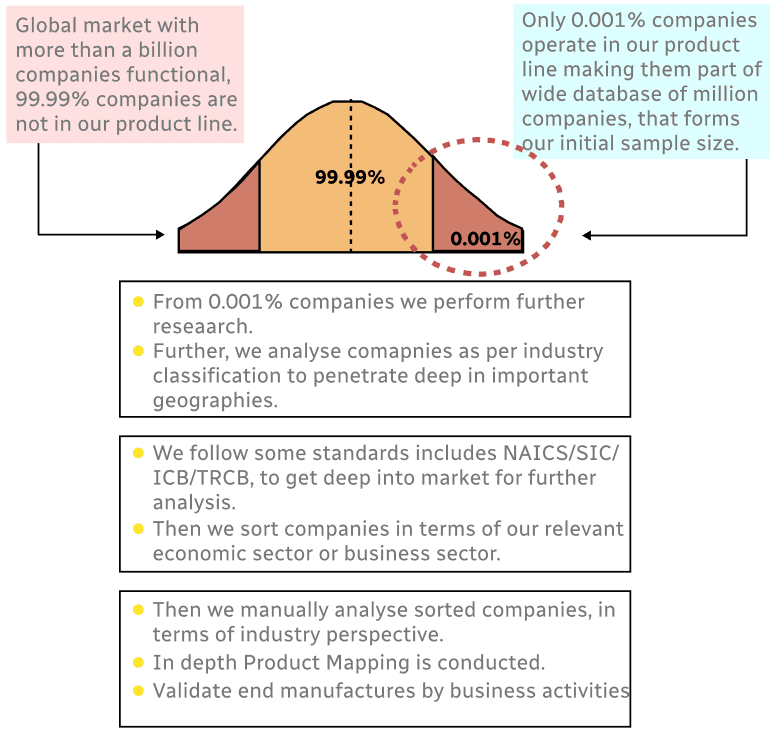
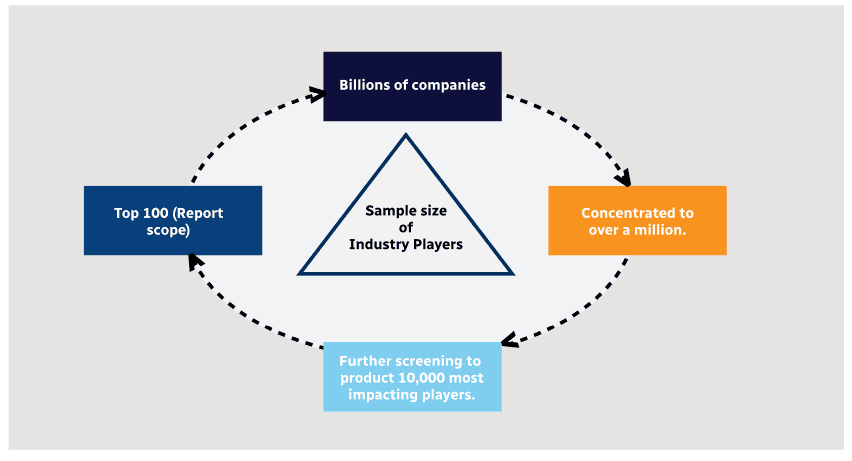
Step 1 - Identification of Relevant Samples Size from Population Database
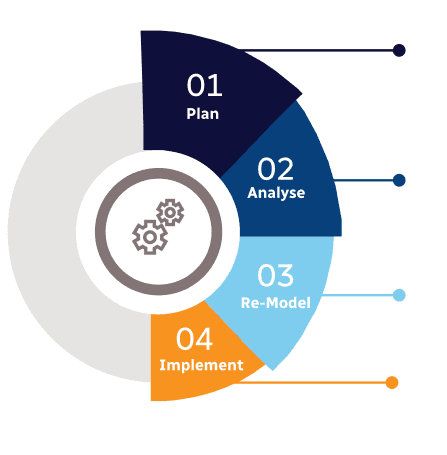
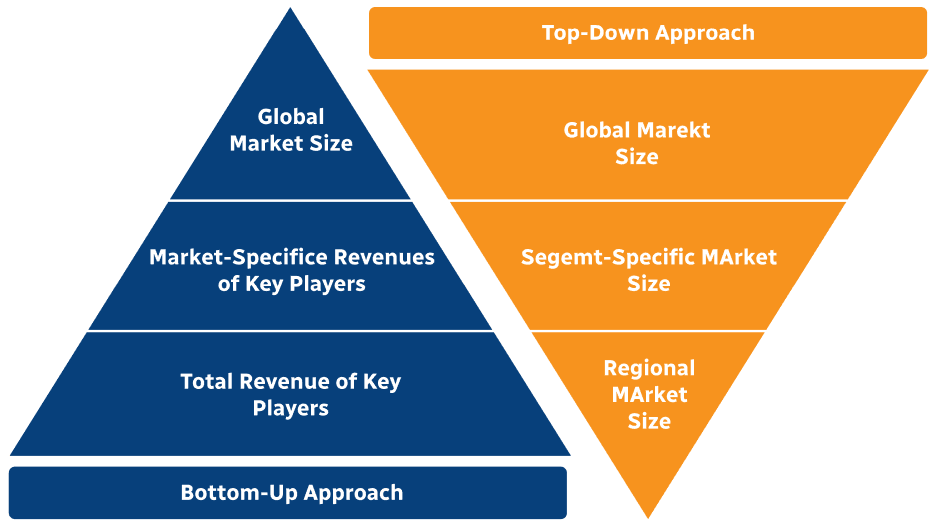
Step 2 - Approaches for Defining Global Market Size (Value, Volume* & Price*)
Note*: In applicable scenarios
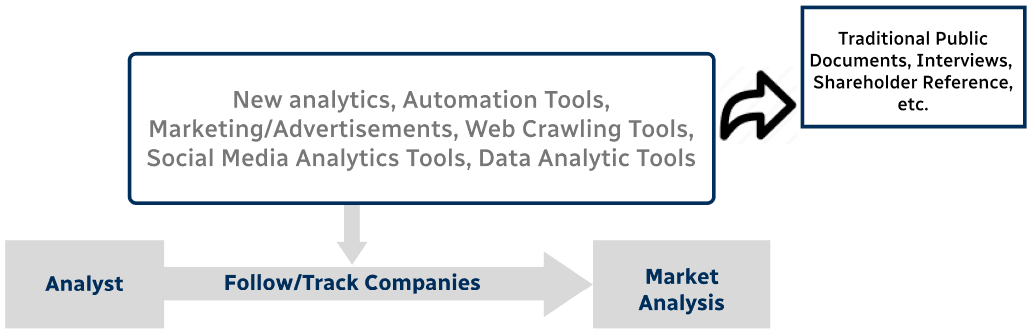
Step 3 - Data Sources
Primary Research
- Web Analytics
- Survey Reports
- Research Institute
- Latest Research Reports
- Opinion Leaders
Secondary Research
- Annual Reports
- White Paper
- Latest Press Release
- Industry Association
- Paid Database
- Investor Presentations
Step 4 - Data Triangulation
Involves using different sources of information in order to increase the validity of a study
These sources are likely to be stakeholders in a program - participants, other researchers, program staff, other community members, and so on.
Then we put all data in single framework & apply various statistical tools to find out the dynamic on the market.
During the analysis stage, feedback from the stakeholder groups would be compared to determine areas of agreement as well as areas of divergence